Россия, Хотьково

СДЕЛАЙТЕ СВОИ УРОКИ ЕЩЁ ЭФФЕКТИВНЕЕ, А ЖИЗНЬ СВОБОДНЕЕ
Благодаря готовым учебным материалам для работы в классе и дистанционно
Скидки до 50 % на комплекты
только до
Готовые ключевые этапы урока всегда будут у вас под рукой
Организационный момент
Проверка знаний
Объяснение материала
Закрепление изученного
Итоги урока

Была в сети 15.03.2019 15:17

Финатова Тамара Викторовна
Учитель английского языка
71 год
 559
559
 99 778
Местоположение
Специализация
«Английская литература. Эпоха Просвещения. Роберт Бернс - народный поэт Шотландии»
Категория:
Английский язык
17.02.2019 19:40

Просмотр содержимого документа
««Английская литература. Эпоха Просвещения. Роберт Бернс - народный поэт Шотландии»»
Муниципальное образовательное учреждение
« Средняя общеобразовательная школа № 26» пос. Реммаш.
Литературная гостиная
«Английская литература. Эпоха Просвещения.
Роберт Бернс - народный поэт Шотландии»
10 «А» класс
( Неделя Науки и Творчества)
Учитель английского языка
Финатова Т.В.
21 апреля 2017 года
Тип урока: обобщающий
Цель урока: знакомство учащихся с эпохой Просвещения в Великобритании и с творчеством выдающегося поэта Шотландии Роберта Бернса; углубление и расширение знаний учащихся по чтению и переводу аутентичных текстов.
Задачи урока
Образовательные
- на базе имеющихся знаний, умений, навыков, совершенствуя их, обучать школьников всем видам чтения;
- формировать навыки перевода на русский и английский языки;
- обогащать словарный запас учащихся;
- совершенствовать навыки работы со справочной литературой, обучать выделять главное и приобретать другие навыки самостоятельной работы
Развивающие
- реализовать интерес к предмету, углублять лингвистические знания по всем видам речевой деятельности;
- расширять представления о социокультурном портрете страны изучаемого языка;
- совершенствовать культуру общения с различными целевыми направлениями и коммуникативными намерениями
Воспитательные
- воспитывать качества личности, ее направленности
- воспитывать творческие возможности каждого ученика
- воспитывать чувство ответственности перед своими одноклассниками.
Ход урока
T- Good morning boys and girls, our guests. I am very glad to see you in our literary hall.
(звучит волынка)
You have just heard the national musical instrument of Scotland. It is a bagpipe Image that you are in Scotland. You know that Scotland’s national poet is Robert Burns. His birthday is celebrated on the 25th of January. It is a national holiday in Scotland. This is Burns’ Night one of the most important and fun nights of the year. On Burns Night Scottish people celebrate the life of Robert Burns. They wear their national costumes, kilt; they recite Burns’ poems, sing his songs, and eat national food.
Кто независим, прям и горд,
В борьбе решителен и тверд,
Кому ровно претит судьба
Рабовладельца и раба,
Кому строжайший приговор-
Своей же совести укор,
Тому, чья сила- правота,
Открой, алтарь свои врата!
This poem was written by Burns and translated by Marshak.
Today we are going to speak about Robert Burns’ life, literature work and try to recite his poems. Burns lived and worked
P1-In the 18th century
T- What kind of literature of the age was?
P2- The Enlightenment
T- What do you know about the Enlightenment?
P3-The writes and philosophers of this age, reflecting the ideology of the middle class, protected the survivals of feudalism, in which they saw the main evils of the time. They could not yet see the contradictions that were to arise within the capitalists system. They thought the man was virtuous by nature and vice due to ignorance people.
The enlightening wanted to bring knowledge that is “light” to the people. To their understanding this would to away with all the evils of society, and social harmony would be achieved.
This movement was called the Enlightenment. The movement of the Enlightenment spread later to the Continent.
The characteristic features of his movement all over Europe were much the same:
a deep hatred of feudalism and its survivals the enlighteners rejected church dogmas;
a love of freedom, a desire for systematic education for all;
A concern for the fate of the common people.
T- Thank you very much. What can you say about the literature of this period?
P4-This period saw a remarkable rise in literature. People wrote on many subjects and great contributions in the fields of philosophy history natural sciences.
Periodical newspaper helped to spread information among the general public. Copies of current newspapers were kept in the coffee-house. Coffee-house became centers of political and literary discussion. English literature of the period may be characterized by the following features:
The period saw the rise of the political pamphlet and essay
The hero was a representative of the middle class.
Literature became very instructive. Writers tried to teach their readers.
T- OK! How many periods may the literature of the age of the enlightenment be divided?
P5-The literature of this age may be divided into three periods.
T- All right. What are they?
P6-The first period lasted from the “Glories revolution” till the end of the seventeen thirties. It is characterized by classism in poetry. The first realistic novels written by Defoe and Swift. Most of the writers of this time wrote political pamphlets but the ablest came from the pens of Defoe and Swift
P7-The second period of the Enlightenment was the most mature period. It embraces the forties and fifties of the 18th century. It was the development of the realistic social novel represented by Richardson, Feilding, and Smollet.
P8-The third period refers to the last decades of the century. It is marked by the appearance of a new trend. This period also saw the rise of the realistic drama and the revival of poetry. The representative of this period was Robert Burns.
T- Great. Do you know who the representative of the Enlightenment of Russian Literature was?
Cl-Yes, we do. Fonvizin. He wrote «Недоросль», Радищев « Путешествие из Петербурга в Москву»
T- Wonderful. So the representative of the third period of the Enlightenment of English literature was Robert Burns. He was the most democratic poet of the 18th century.
Byron said “ Burns was the very first of the poets”
The most talented translator of Burns’ poems Marshak said “ Robert Burns was a poet who came from the people and never left them, a man who knew hard physical labour is and who was at the same time a great poet”
Let’s speak about Burns’ life and his literary work. What have you prepared? Tell the story of him.
P9- Robert Burns was born on the 25th of January 1759 in a clay-built cottage near the River Doon, in Alloway, Ayrshire Burns was born into a poor family. There were seven children in it. Robert was the eldest. His father was the gardener on a small estate nearby. His father loved and understood people. Burns wrote about his father “There was no one who better understood men, their manners and their ways. Robert learned from his father to love people.
From his mother Robert learned something which was to be of value to him. As she worked in the kitchen and dairy, she often sang the old sons and ballads of the country-side. In the evenings she used to tell the children one of the popular folk-tales. Later, Burns remembered and used in his works the songs and stories he had heard in his little cottage home.
Although the Burns’ were poor, William Burns’ greatest wish was to give his children the best education. When Robert was six, he and his brother Gilbert went to school at Alloy Mill. In order to get there, the boys had to walk a mile, but despite this they were happy. Robert read a lot. He was fond of reading. His favourite writer was Shakespeare.
Soon Robert’s father decided to try his hands at farming, and the family moved to the Mount Oliphant farm. When the school was closed Robert’s father found another teacher for his boys. This man was called John Murdoch. He was very a very clever teacher. Robert was capable boy and with help of his new teacher, received a decent education. He learned French and Latin. On the other hand, Robert’s teachers were the folk-songs and ballads of his country; he knew a great number of them by heart. These years Robert read any book he could get.
P19-When Robert was 13, he had to take over most of the work of the farm from his father, who was growing old. Those were hard time. Robert often suffered from illnesses because of the hard work and little food. But despite the hard times, the fifteen-year-old Robert began to write. He composed verses to the melodies of old folk-songs, which he had admired from his early childhood. He sang of wood, fields and wonderful valleys of his native land.
Burns travelled much throughout Scotland collecting folk-tales and ballads. When he was offered money for his work, he refused to take any through he was always short of money. His work was inspired by pure patriotism and love for his people and their poetry.
P11- Robert fell in love with Jean Armour and was going to marry her but the girl’s father did not want to have a poor peasant for his son-in- law. To raise the money, Robert made up his mind to publish some of his poems. The little volume “Poems Chiefly in the Scottish Dialect”, published in 1786 went off rapidly. Robert Burns became famous. He toured Scotland in triumph after the new edition of his poems, Burns returned to his native village with money enough to buy a farm and marry Jean Armour.
After his father’s death Burns had to take care of his brothers and sisters, whom he helped all his life even though he never had much money.
Though Burns’ poems were very popular, he always remained poor: most of his money was spent on the monument to his best friend Robert Fergusson, the rest was hardly enough to support his wife and children. In 1791 he went bankrupt and was obliged to sell the farm and take a position as customs officer. The job was extremely hard. Hard work destroyed the poet’s health. He died in poverty at the age 37. After his death, the widow and children of the great poet left without a shilling. Burns was mourned by all the honest people of his country. And it was those common people who raised enough money by subscription to provide his widow with sustenance for the rest of her life and give his children an education.
Burns’ poems are known and loved by people all over the world because Robert Burns glorified human beings.
T-Thank you very much and now let’s discuss Robert Burns’ literary work. The democratic character of the poet.
Robert Burns was a true son of the Scottish peasantry. His poems embody their thoughts and aspirations, their human dignity, their love of freedom and hatred of all oppressors. He wrote all kinds of poems – beautiful and tender songs in which he showed sympathy for the poor; angry verses in which he showed his dislike for the rich and made fun of the Church.
Let’s read and discuss one of the famous Burn’s poem “ Is there for honest Poverty”
| Is there for honest Poverty |
T- And read the translation of this poem by the most talented translator of Burns’ poems Marshak.
ЧЕСТНАЯ БЕДНОСТЬ
Кто честной бедности своей
Стыдится и все прочее,
Тот самый жалкий из людей,
Трусливый раб и прочее.
При всем при том,
При всем при том,
Пускай бедны мы с вами,
Богатство -
Штамп на золотом,
А золотой -
Мы сами!
Мы хлеб едим и воду пьем,
Мы укрываемся тряпьем
И все такое прочее,
А между тем дурак и плут
Одеты в шелк и вина пьют
И все такое прочее.
При всем при том,
При всем при том,
Судите не по платью.
Кто честным кормится трудом,
Таких зову я знатью,
Вот этот шут - природный лорд.
Ему должны мы кланяться.
Но пусть он чопорен и горд,
Бревно бревном останется!
При всем при том,
При всем при том,
Хоть весь он в позументах, -
Бревно останется бревном
И в орденах, и в лентах!
Король лакея своего
Назначит генералом,
Но он не может никого
Назначить честным малым.
При всем при том,
При всем при том,
Награды, лесть
И прочее
Не заменяют
Ум и честь
И все такое прочее!
Настанет день и час пробьет,
Когда уму и чести
На всей земле придет черед
Стоять на первом месте.
При всем при том,
При всем при том,
Могу вам предсказать я,
Что будет день,
Когда кругом
Все люди станут братья!
What is about this poem?
P12-In his poem “ Is there for honest Poverty” Burns says that it is not wealth and titles , but the excellent qualities of man’s heart and mind that make him “ A Man’s A man for A’ That”
T- OK! What else can you say about Robert Burns’ poems?
P13-Many verses of the poet were inspired by Great French Revolution, which he supported with all his heart. In his poem “The tree of Liberty” Burns praises the French revolutionaries who planted “the tree of Liberty” in their country. The poet felt the injustice of the world, where lands owned the best land. His protest is shown in his poems.
T- Thanks! Please, read the passage of the ballad “John Barleycorn”
There was three kings into the east,
Three kings both great and high,
And they hae sworn a solemn oath
John Barleycorn should die.
His colour sicken'd more and more,
He faded into age;
And then his enemies began
To show their deadly rage.
They've taen a weapon, long and sharp,
And cut him by the knee;
.
John Barleycorn was a hero bold,
Of noble enterprise;
For if you do but taste his blood,
'Twill make your courage rise.
'Twill make a man forget his woe;
'Twill heighten all his joy:
'Twill make the widow's heart to sing,
Tho the tear were in her eye.
Then let us toast John Barleycorn,
Each man a glass in hand;
And may his great posterity
Ne'er fail in old Scotland!
ДЖОН ЯЧМЕННОЕ ЗЕРНО
Трех королей разгневал он,
И было решено,
Что навсегда погибнет Джон
Ячменное Зерно.
Велели выкопать сохой
Могилу короли,
Чтоб славный Джон, боец лихой,
Не вышел из земли.
Травой покрылся горный склон,
В ручьях воды полно,
А из земли выходит Джон
Ячменное Зерно.
Все так же буен и упрям,
С пригорка в летний зной
Грозит он копьями врагам,
Качая головой.
Но осень трезвая идет.
И, тяжко нагружен,
Поник под бременем забот,
Согнулся старый Джон.
Настало время помирать -
Зима недалека.
И тут-то недруги опять
Взялись за старика.
Его свалил горбатый нож
Одним ударом с ног,
И, как бродягу на правеж,
Везут его на ток.
Дубасить Джона принялись
Злодеи поутру.
Потом, подбрасывая ввысь,
Кружили на ветру.
Он был в колодец погружен,
На сумрачное дно.
Но и в воде не тонет Джон
Ячменное Зерно.
Не пощадив его костей,
Швырнули их в костер,
А сердце мельник меж камней
Безжалостно растер.
Бушует кровь его в котле,
Под обручем бурлит,
Вскипает в кружках на столе
И души веселит.
Недаром был покойный Джон
При жизни молодец, -
Отвагу подымает он
Со дна людских сердец.
Он гонит вон из головы
Докучный рой забот.
За кружкой сердце у вдовы
От радости поет...
Так пусть же до конца времен
Не высыхает дно
В бочонке, где клокочет Джон
Ячменное Зерно!
|
|
T-Go on
P15- In many of his poems he sings the beauty of his native land, where he spent all his life For example “ My Heart’s in the Highlands”
May I recite this poem?
My heart in the Highland, my heart is not here,
My heart in the Highlands a-chasing the deer,
A-chasing the wild deer, and following the roe –
My heart’s in the Highlands where I go.
Farewell to the Highlands, farewell to the North,
The birthplace of valour, the country of werth;
Wherever I wonder, wherever I rove,
The hills of the Highlands forever I love.
Farewell to the mountains high covered with snow,
Farewell to the straths and green valleys below,
Farewell to the forests and wild hanging woods;
Farewell to the torrents and loud-pouring floods.
My heart’s in the Highlands, my heart is not here,
My Heart’s in the Highlands a-chasing a deer,
A-chasing the wild deer, and following the roe –
My heart’s in the Highlands wherever I go.
_____________________________________
Перевод:
Не здесь моё сердце - к горам улетело,
За быстрым оленем рванувшись так смело,
За горным оленем, за дикой козой...
И где бы я ни был - оно не со мной.
Вы, горы, прощайте, прощай же, и Север...
Ты родина чести и мужества в деле...
Куда бы я ни был судьбой занесён -
В вершины родные навек я влюблён.
Прощайте, вершины под снежной каймою,
Прощайте, долины с зелёной травою,
Прощайте, деревья в чащобах лесных
И говор потоков в разливах речных.
Не здесь моё сердце - к горам улетело,
За быстрым оленем рванувшись так смело,
За горным оленем, за дикой козой...
И где бы я ни был - оно не со мной.
T- What are the main themes of his lyrics?
P16-Burns was a remarkable lyric poet. Some of his lyric pieces are tender and pathetic.
P17-Burns’ masterful touch upon the human heart-strings is the most characteristic feature of his talent. In his lyric poems and songs Burns glorifies true love and friendship
T- Who wants to recite the poem about love?
P18- May I do?
O my luve's like a red, red rose
That's newly sprung in June;
O mu luve's like the melodie
That's sweetly play'd in tune.
As fair art thou, my bonie lass,
So deep in luve am I;
And I will luve thee still, my dear,
Till a' the seas gang dry.
Till a' the seas gang dry, my dear,
And the rocks melt wi' the sun;
O I will luve thee still, my dear
While the sands o' life shall run.
And fare-thee-weel, my only Luve!
And fare-thee-weel awhile!
And I will come again, my luve,
Tho' 'twere ten thousand miles.
O my luve's like a red, red rose,
That's newly sprung in June;
O my luve's like the melodie
That's sweetly play'd in tune.
Любовь, как роза, роза красная,
Цветет в моем саду.
Любовь моя - как песенка,
С которой в путь иду.
Сильнее красоты твоей
Моя любовь одна.
Она с тобой, пока моря
Не высохнут до дна.
Не высохнут моря, мой друг,
Не рушится гранит,
Не остановится песок,
А он, как жизнь, бежит...
Будь счастлива, моя любовь,
Прощай и не грусти.
Вернусь к тебе, хоть целый свет
Пришлось бы мне пройти!
T- All right. Go on, Alina
In his poems and songs Burns glorifies free from any motives of gain and hypocritical morality. In his lyrical pieces remains the bard of freedom/ Such lyrics as “ A red, red rose” Scots, Wha Hae” “ Auld Lang Syne” “ John Barleycorn” “ My Heart in the Highlands” and many others were composed to the old folk-melodies or later set to music and are popular as songs all over the world.
T- What do know about the song “ Auld Lang Syne”
P1-The song “Auld Lang Syne” was written by Robert Burns, the greatest Scottish poet. He wrote it in Scottish dialect to a traditional Scottish melody. According to the old tradition
“ Auld Lang Syne” is sung on New Year’s Eve, when friends gather to see in the New Year during the Christmas holidays a large brightly lit Christmas tree stands on the Trafalgar Square in London. Thousand of Londoners come to Trafalgar Square on New Year’s Eve and when Big Ben strikes twelve all join hands and sang “ Auld Lang Syne”
T- Let’s try to sing this song
Auld Lang Syne
1. Should auld acquaintance be forgot,
and never brought to mind ?
Should auld acquaintance be forgot,
and auld lang syne ?
Ref:
For auld lang syne, my jo,
for auld lang syne,
we’ll tak a cup o’ kindness yet,
for auld lang syne.
2. And surely ye’ll be your pint-stowp !
and surely I’ll be mine !
And we’ll tak a cup o’ kindness yet,
for auld lang syne.
3. We twa hae run about the braes,
and pu’d the gowans fine ;
But we’ve wander’d mony a weary foot,
sin auld lang syne.
4. We twa hae paidl’d i' the burn,
frae morning sun till dine ;
But seas between us braid hae roar’d
sin auld lang syne.
5. And there’s a hand, my trusty fiere !
and gie's a hand o’ thine !
And we’ll tak a right gude-willy waught,
for auld lang syne.
T- Thank you very much and now let’s sum up Robert Burns was…..
P2-Robert Burns was the representative of the Enlightenment
P3-He was the most democratic poet of the 18th century
P4-Robert learned from his father to love people
P5-The heroes of his poems were the heroes of his mother’s stories
P6-Robert began to write when he was 15 years old
P7-His poems are very popular
P8- Burns wrote about the kindness, honesty of common people, love, friendship, freedom, qualities of man’s heart
P9- Burns glorified human being
P10- His poems are known and loved by people all over the world.
T: There are a lot of monuments to Robert Burns all over the world.
The poetry and songs of Robert Burns are famous all over the world
T: I hope you have learned a lot of interesting facts about Robert Buns- the Scottish national poet. You have enjoyed visiting our literary hall. Thank you very much.
Описание презентации по отдельным слайдам:
1 слайд
Описание слайда:
English literature The Enlightenment ( XVII-XVIII centuries) Robert Burn – the most democratic poet
2 слайд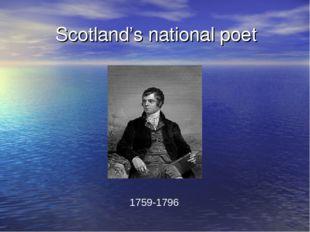
Описание слайда:
Scotland’s national poet 1759-1796
3 слайд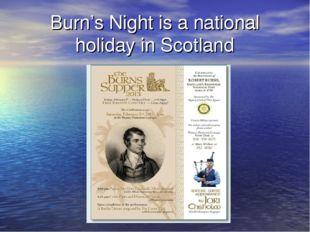
Описание слайда:
Burn’s Night is a national holiday in Scotland
4 слайд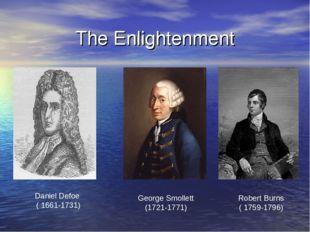
Описание слайда:
The Enlightenment Daniel Defoe ( 1661-1731) Robert Burns ( 1759-1796) George Smollett (1721-1771)
5 слайд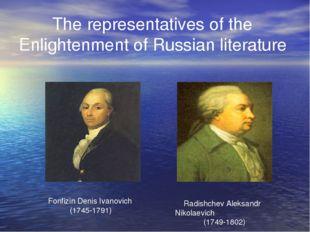
Описание слайда:
The representatives of the Enlightenment of Russian literature Fonfizin Denis Ivanovich (1745-1791) Radishchev Aleksandr Nikolaevich (1749-1802)
6 слайд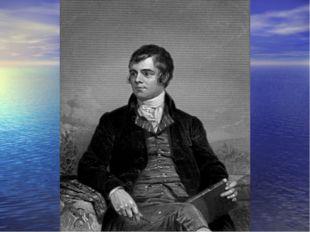
Описание слайда:
7 слайд
Описание слайда:
Byron said : “ Burns was the very first of the poets”
8 слайд
Описание слайда:
Marshak said: “ Robert Burns was a poet who came from the people and never left them, a man who knew hard physical labour is and who was at the same time a great poet”
9 слайд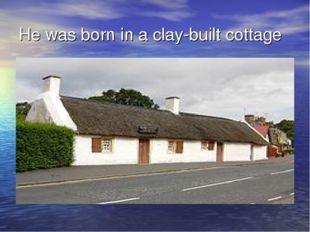
Описание слайда:
He was born in a clay-built cottage
10 слайд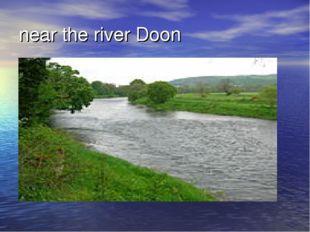
Описание слайда:
near the river Doon
11 слайд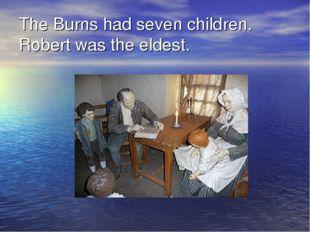
Описание слайда:
The Burns had seven children. Robert was the eldest.
12 слайд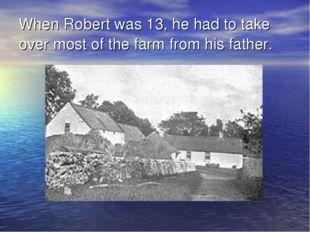
Описание слайда:
When Robert was 13, he had to take over most of the farm from his father.
13 слайд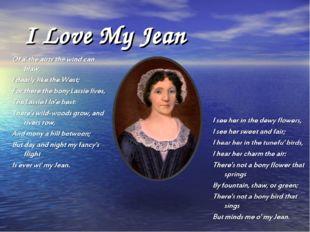
Описание слайда:
I Love My Jean
14 слайд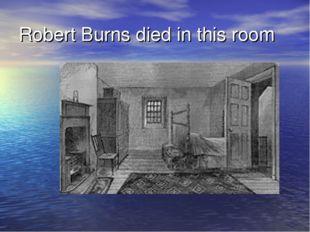
Описание слайда:
Robert Burns died in this room
15 слайд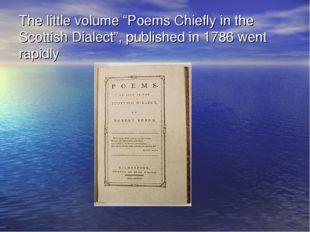
Описание слайда:
The little volume “Poems Chiefly in the Scottish Dialect”, published in 1786 went rapidly
16 слайд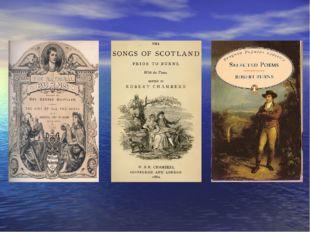
Описание слайда:
17 слайд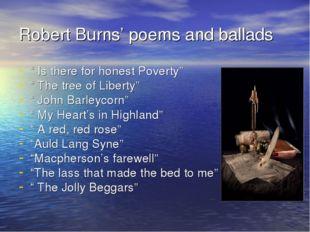
Описание слайда:
Robert Burns’ poems and ballads “ Is there for honest Poverty” “ The tree of Liberty” “ John Barleycorn” “ My Heart’s in Highland” “ A red, red rose” “Auld Lang Syne” “Macpherson’s farewell” “The lass that made the bed to me” “ The Jolly Beggars”
18 слайд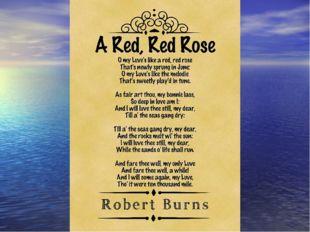
Описание слайда:
19 слайд
Описание слайда:
Christmas tree stands on Trafalgar Square in London
20 слайд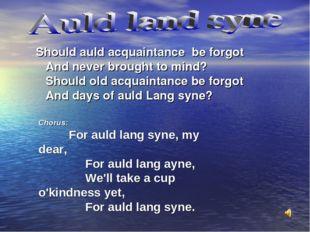
Описание слайда:
Should auld acquaintance be forgot And never brought to mind? Should old acquaintance be forgot And days of auld Lang syne? Chorus: For auld lang syne, my dear, For auld lang ayne, We'll take a cup o'kindness yet, For auld lang syne.
21 слайд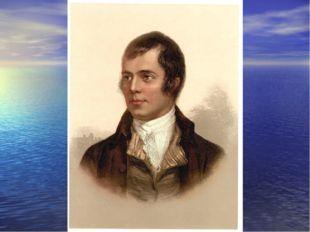
Описание слайда:
22 слайд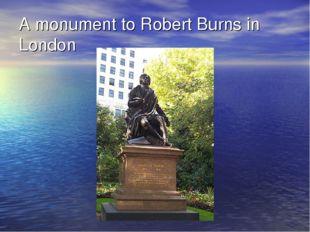
Описание слайда:
A monument to Robert Burns in London
23 слайд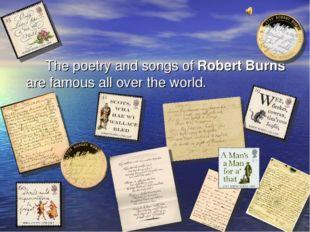
Описание слайда:
The poetry and songs of Robert Burns are famous all over the world.








Вебинар для учителей

Свидетельство об участии БЕСПЛАТНО!