Россия, Ростов-на-Дону

СДЕЛАЙТЕ СВОИ УРОКИ ЕЩЁ ЭФФЕКТИВНЕЕ, А ЖИЗНЬ СВОБОДНЕЕ
Благодаря готовым учебным материалам для работы в классе и дистанционно
Скидки до 50 % на комплекты
только до
Готовые ключевые этапы урока всегда будут у вас под рукой
Организационный момент
Проверка знаний
Объяснение материала
Закрепление изученного
Итоги урока
Была в сети 13.10.2025 09:11

Чистякова Татьяна Михайловна
студент
28 лет
 970
970
 67 175
Местоположение
Бмсквчсанпгршлд
Категория:
География
08.12.2018 18:59

Просмотр содержимого документа
«Бмсквчсанпгршлд»
Education system in England
Чистякова Татьяна
Начальное образование
Preschool education
During the pre-school period, children can stay at home, attend kindergarten (for children aged 2-5 years), day nurseries for children, join groups, or a qualified nanny can look after them
Primary School
Children must attend school from the age of 5. Primary school provides education for children up to 11 years. It is often divided into pre-school (for children aged 5-7 years) and elementary school (for children aged 7-11)
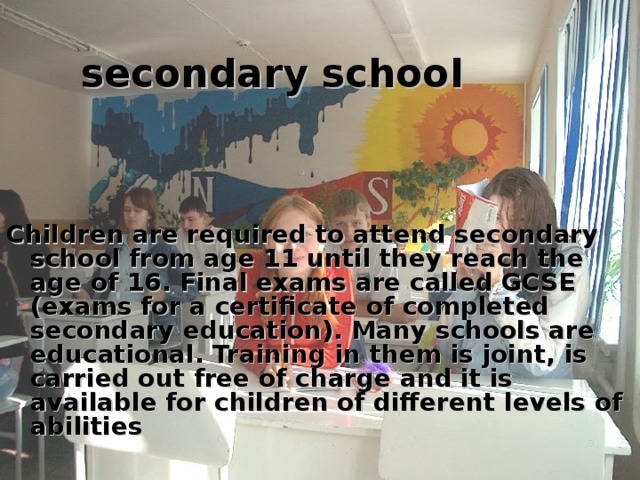
secondary school
Children are required to attend secondary school from age 11 until they reach the age of 16. Final exams are called GCSE (exams for a certificate of completed secondary education). Many schools are educational. Training in them is joint, is carried out free of charge and it is available for children of different levels of abilities
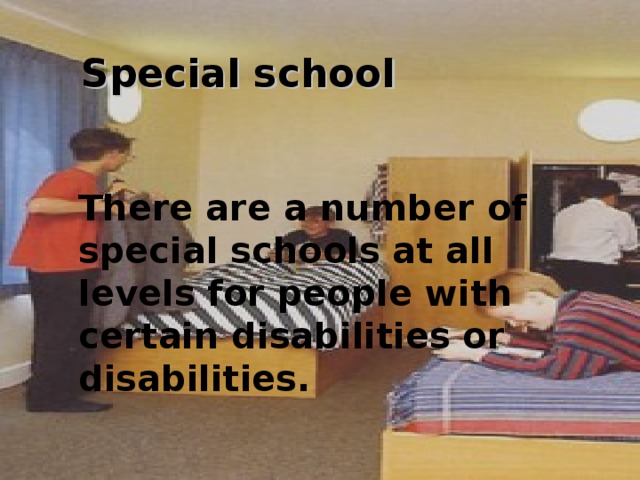
Special school
There are a number of special schools at all levels for people with certain disabilities or disabilities.
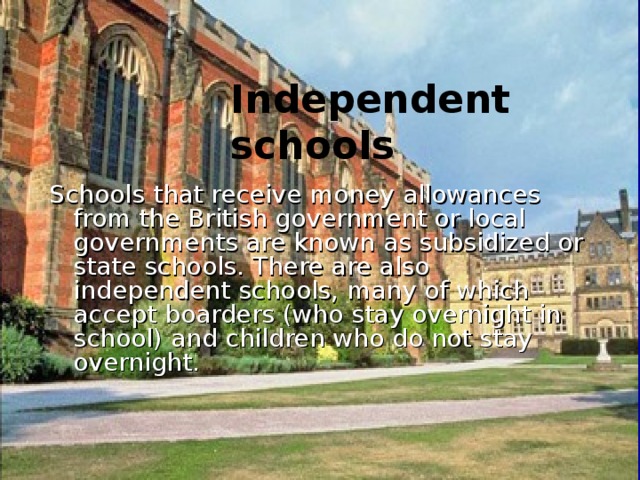
Independent schools
Schools that receive money allowances from the British government or local governments are known as subsidized or state schools. There are also independent schools, many of which accept boarders (who stay overnight in school) and children who do not stay overnight.
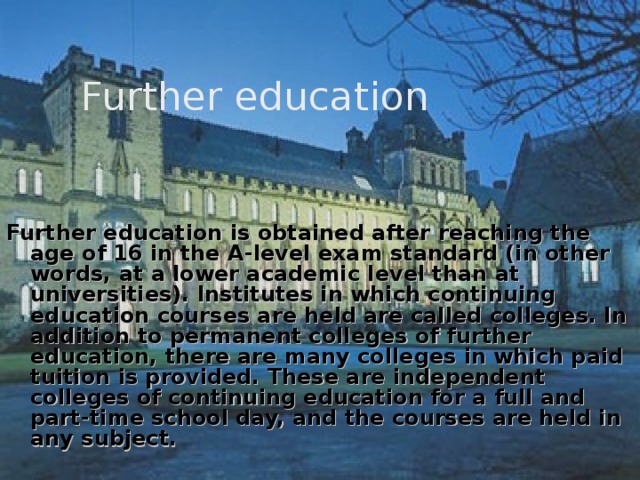
Further education
Further education is obtained after reaching the age of 16 in the A-level exam standard (in other words, at a lower academic level than at universities). Institutes in which continuing education courses are held are called colleges. In addition to permanent colleges of further education, there are many colleges in which paid tuition is provided. These are independent colleges of continuing education for a full and part-time school day, and the courses are held in any subject.
Вебинар для учителей
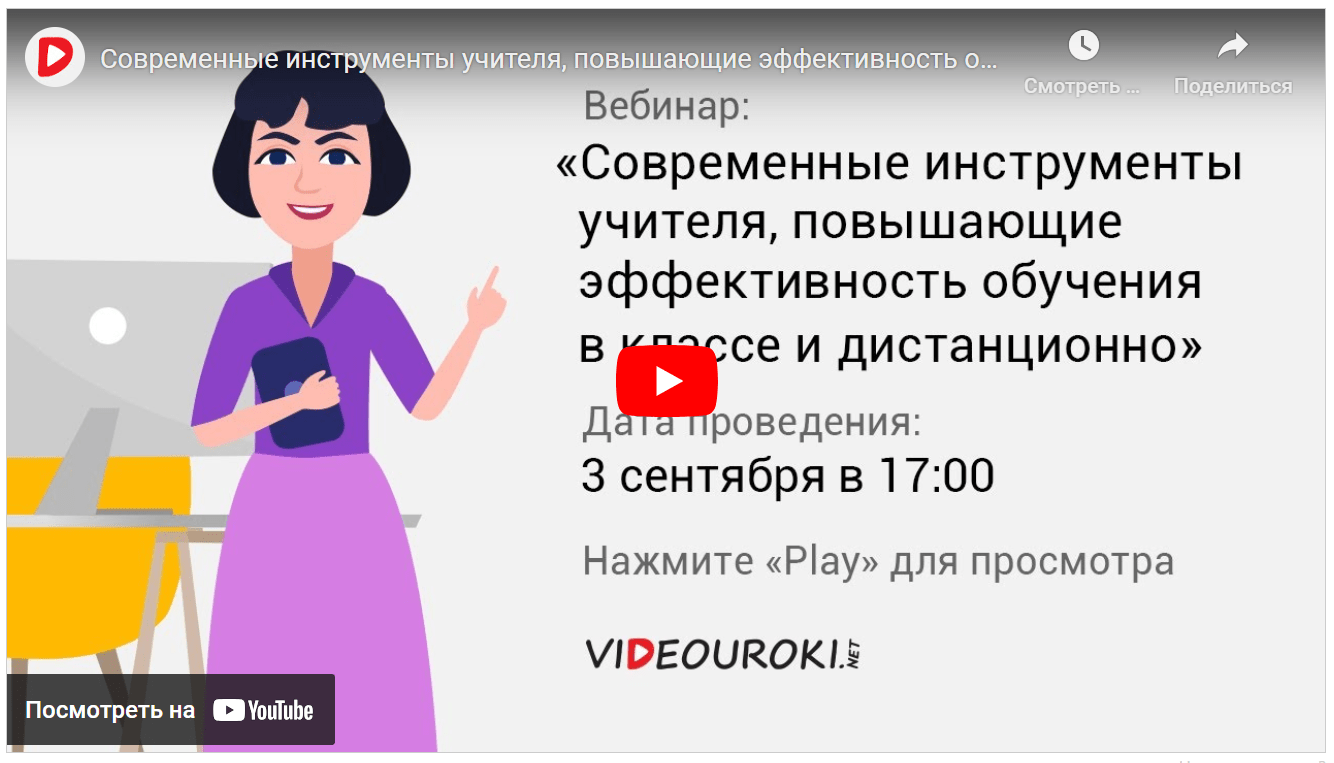
Свидетельство об участии БЕСПЛАТНО!