Россия, Москва

СДЕЛАЙТЕ СВОИ УРОКИ ЕЩЁ ЭФФЕКТИВНЕЕ, А ЖИЗНЬ СВОБОДНЕЕ
Благодаря готовым учебным материалам для работы в классе и дистанционно
Скидки до 50 % на комплекты
только до
Готовые ключевые этапы урока всегда будут у вас под рукой
Организационный момент
Проверка знаний
Объяснение материала
Закрепление изученного
Итоги урока
Была в сети 18.01.2023 20:42

Скалабан Полина Михайловна
учитель английского языка
31 год
 14 376
 2 958
2 958 
Местоположение
Специализация
Brain ring по теме: "Technologies"
Категория:
Английский язык
20.04.2021 11:04

Просмотр содержимого документа
«Brain ring по теме: "Technologies"»

Brain ring “Technologies”

Round 1- “True or False”

Question 1
Scientists ask “what” and “why” questions and answer them.

Question 2
Technology often asks “how” questions and answers them.

Question 3
There are no technologies that developed from old technologies without any help of science.

Question 4
During certain periods in history innovations in technology have grown so fast that they resulted in industrial revolutions.
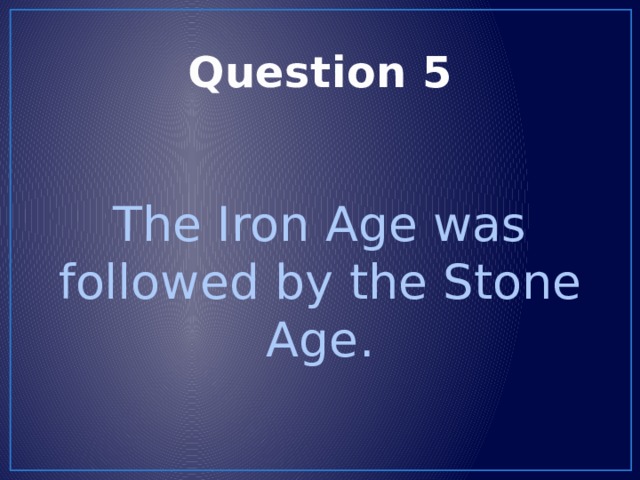
Question 5
The Iron Age was followed by the Stone Age.

Question 6
The Renaissance is the period in Europe from about AD 1100 to about 1500.
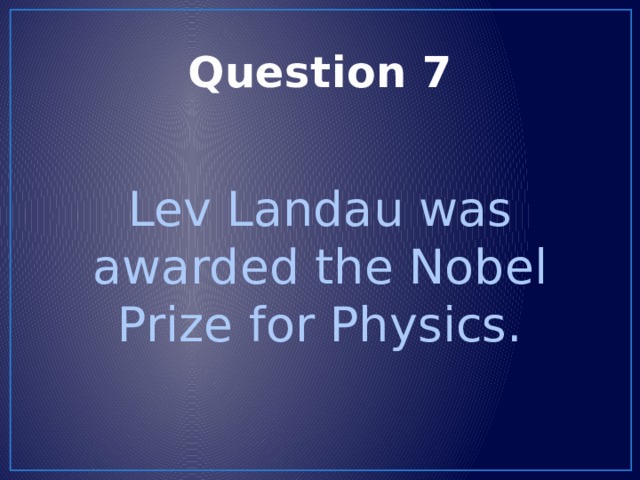
Question 7
Lev Landau was awarded the Nobel Prize for Physics.
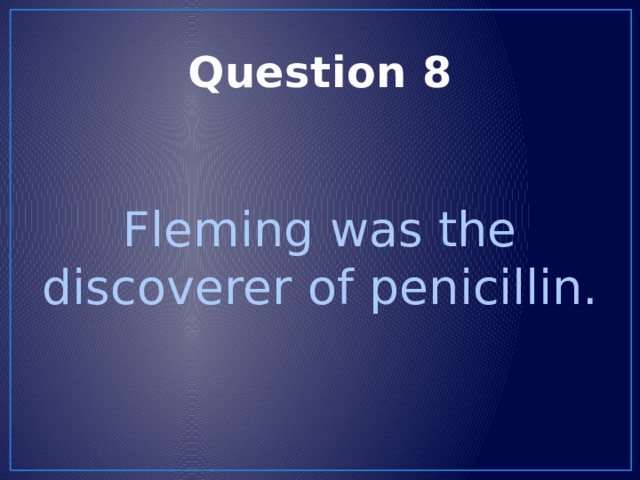
Question 8
Fleming was the discoverer of penicillin.

Question 9
Cars were invented before trains.
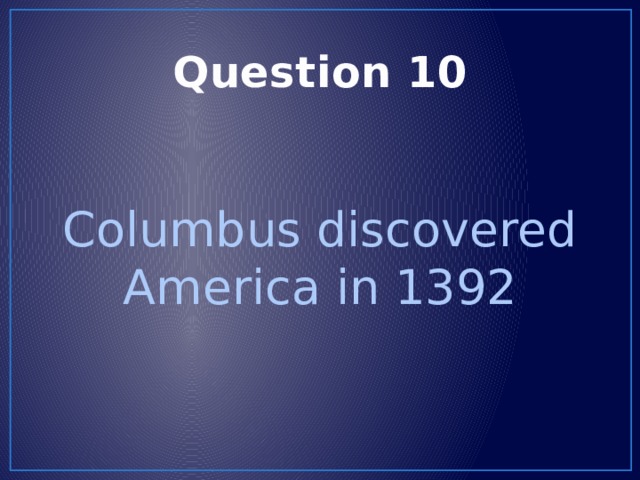
Question 10
Columbus discovered America in 1392

Question 11
Galileo discovered the planet Jupiter.

Question 12
Neptune is the closest planet to the Sun.

Question 13
American astronauts landed on the Moon in 1982.

Question 14
Russia was the first country in the world to send a satellite into space.

Round 2.”What is it?”

Question 1
- The name of a very famous scientist….
- He is one of the first scientists who worked for the war, and the first victim of the war among the people of science.
- His research interests include mathematics, mechanics, optics, and astronomy.
- He said, "Give me a foothold and I'll turn the Earth over.“
- According to legend, he owns the cry " Eureka!” , sounded after the discovery made by him.

Question 2
- This is the physical agent that you are all familiar with, what kind of agent is it?
- You can demonstrate Pascal's law and the elasticity of gases
- It can be used in science to study some physical phenomena.
- Some athletes are friends with it.
- It has the smallest surface area of all geometric shapes of the same volume.
- Tanya was crying for it.

Question 3
- What's it?
- Firstly it swam, then it began to fly.
- It saves many lives as their guide.
- It doesn't like too much heat and too much shaking.
- It is always purposeful.
- It is indifferent to precious metals and diamonds, but gets excited when interacting with iron.

Question 4
- This question is about a unique traveler. Who is he?
- There were about 3 thousand applicants for this trip, but the choice fell on him.
- This trip around the world he made alone.
- He is the son of a peasant, a student of a vocational school, a worker, a student, a cadet of an aeroclub…
- He owns the historical phrase, said before the start of the road: "Let's go!”
Round 3 “Quiz”
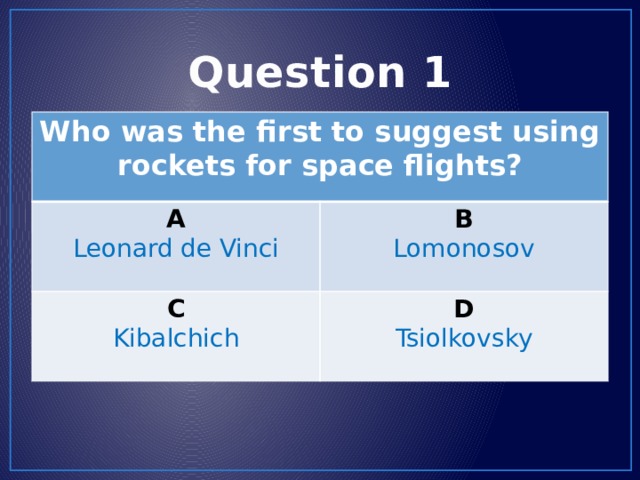
Question 1
Who was the first to suggest using rockets for space flights?
A
Leonard de Vinci
B
C
Lomonosov
Kibalchich
D
Tsiolkovsky

Question 2
When was the world’s first human spaceflight?
A
1957
B
C
1958
1961
D
1963

Question 3
What is the name of the main optical device of the submarine?
A
Spectroscope
B
C
Microscope
Periscope
D
Telescope

Question 4
What is the name of english industrialist who invented and produced a special thick paper to the delight of all draftsmen(чертёжникам) in the 18th century.
A
Vatman
B
C
Grossvenor
Miller
D
Papevick

Question 5
What is the surname of brothers who are considered the inventors of cinema?
A
Disney
B
C
Lumiere
Faraday
D
Stanford

Question 6
What did the Russian emigrant engineer Vladimir Kuzmich Zvorykin invent in America in 1931?
A
Television
B
C
Satellite
Microscope
D
TV tower

Question 7
What invention is famous for the American pharmacist John Pemberton?
A
Coca-cola
B
C
Penicillin
Iodine
D
Fanta

Question 8
What is the surname of inventor of tooth paste?
A
Splat
B
C
Lacalut
Oral-B
D
Colgate
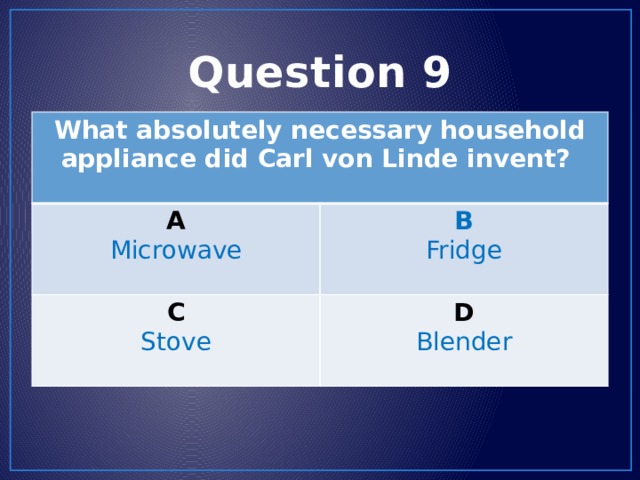
Question 9
What absolutely necessary household appliance did Carl von Linde invent?
A
Microwave
B
C
Fridge
Stove
D
Blender

Question 10
Recently, there has been invented ink in Japan that disappears after 2 days. What are they for?
A
Secret messages
B
C
Notes in offices
Notes in books
D
Different functions of army
Thank you for your participation
Вебинар для учителей
Свидетельство об участии БЕСПЛАТНО!