Россия, Сальск

СДЕЛАЙТЕ СВОИ УРОКИ ЕЩЁ ЭФФЕКТИВНЕЕ, А ЖИЗНЬ СВОБОДНЕЕ
Благодаря готовым учебным материалам для работы в классе и дистанционно
Скидки до 50 % на комплекты
только до
Готовые ключевые этапы урока всегда будут у вас под рукой
Организационный момент
Проверка знаний
Объяснение материала
Закрепление изученного
Итоги урока
Была в сети 17.03.2026 15:02
Байбара Ксения Валерьевна
Учитель иностранных языков
31 год
 3 874
3 874
 16 935
Местоположение
Специализация
British holidays (2)
Категория:
Английский язык
13.12.2022 20:11

Просмотр содержимого документа
«British holidays (2)»

British Holidays

New Year’s day (January, 1)
New Year's Day is on the 1. of January. It is not so popular in England, but it is rather popular in Scotland. On that day people usually visit their friends and there is a lot of dancing and eating. In Scotland people bring a piece of coal for good luck in the New Year.
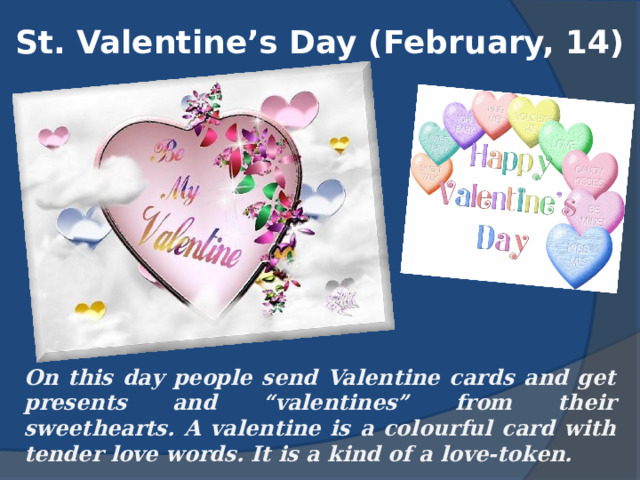
St. Valentine’s Day (February, 14)
On this day people send Valentine cards and get presents and “valentines” from their sweethearts. A valentine is a colourful card with tender love words. It is a kind of a love-token.
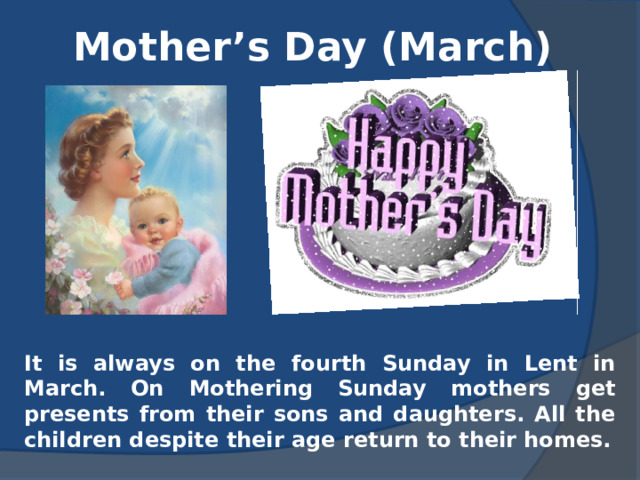
Mother’s Day (March)
It is always on the fourth Sunday in Lent in March. On Mothering Sunday mothers get presents from their sons and daughters. All the children despite their age return to their homes.
April Fool’s Day (April, 1)
On this holiday people play jokes and tricks on each others. April Fools' Day is celebrated in different countries around the world on April 1 every year.
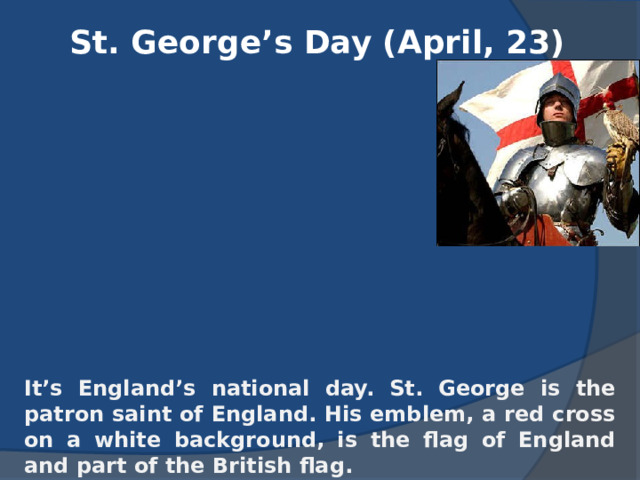
St. George’s Day (April, 23)
It’s England’s national day. St. George is the patron saint of England. His emblem, a red cross on a white background, is the flag of England and part of the British flag.

Easter (April)
In April there is Easter. At Easter children eat chocolate Easter eggs. Sometimes parents hide them in the house or in the garden and children have to look for them.
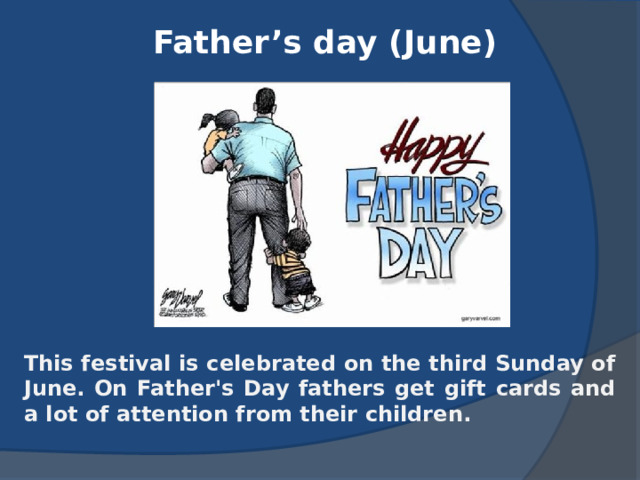
Father’s day (June)
This festival is celebrated on the third Sunday of June. On Father's Day fathers get gift cards and a lot of attention from their children.
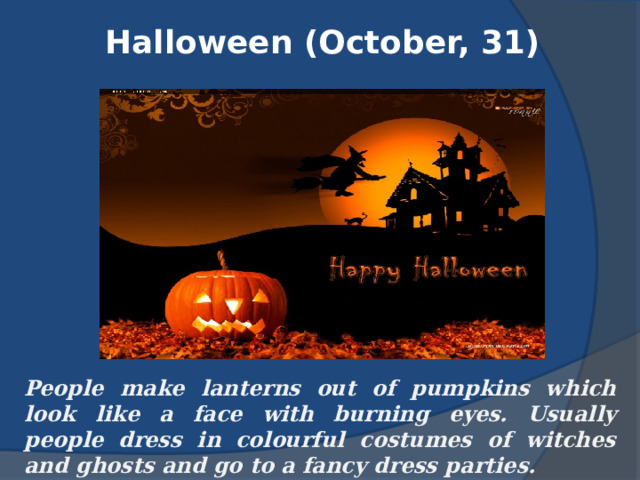
Halloween (October, 31)
People make lanterns out of pumpkins which look like a face with burning eyes. Usually people dress in colourful costumes of witches and ghosts and go to a fancy dress parties.
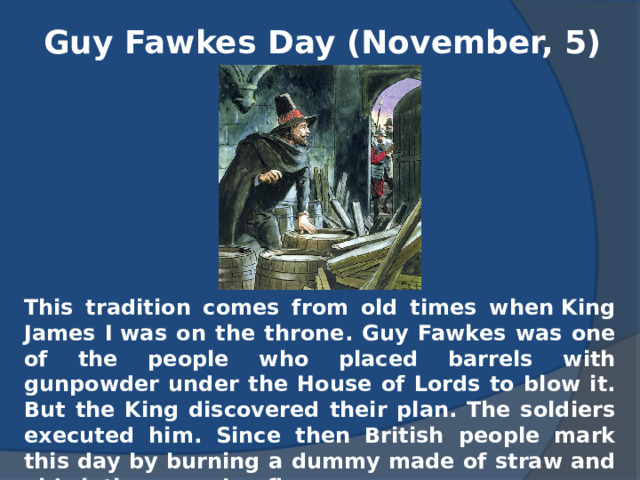
Guy Fawkes Day (November, 5)
This tradition comes from old times when King James I was on the throne. Guy Fawkes was one of the people who placed barrels with gunpowder under the House of Lords to blow it. But the King discovered their plan. The soldiers executed him. Since then British people mark this day by burning a dummy made of straw and old clothes on a bonfire.

Christmas Day (December, 25)
It is the most popular bank holiday. Christmas symbolizes the birth of Jesus Christ. On this day people go to the Churches, get Christmas presents and make a traditional Christmas dinner (roast turkey and pudding).
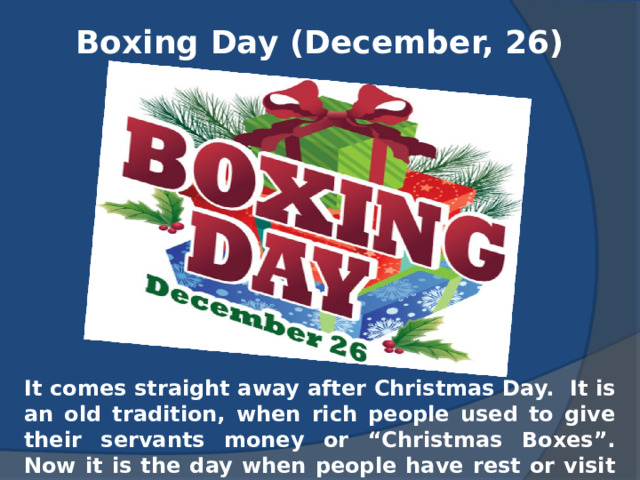
Boxing Day (December, 26)
It comes straight away after Christmas Day. It is an old tradition, when rich people used to give their servants money or “Christmas Boxes”. Now it is the day when people have rest or visit their friends.

Pancake Day
Pancake Day is celebrated on Shrove Tuesday in spring at the beginning of Lent.
On this day English families usually have pancakes for dinner. At school children and teachers have pancakes for school dinner, and in restaurants customers ask for pancakes . W omen cook flat cakes in a frying pan, and run down the street, throwing the pancakes into the air, and catching them in the pans. This competition is called “Pancake race” (1445)

I. What do usually people in Britain do at different celebrations? Match some things.
Christmas Day
People visit their friends and there is a lot of dancing and eating.
St George’s Day
People usually have pancakes for dinner
St Valentine’s Day
People make fancy costumes of witches and ghosts and put them on.
Guy Fawkes Day
People take part in parades.
Halloween
People go to the Churches and stay for the service.
Easter
People send “valentines” or greetings cards without giving their names
Pancake Day
People burn a dummy made of straw and old clothes on a bonfire
New Year Day
Children eat chocolate eggs. Sometimes parents hide them in the house or in the garden and children have to look for them.

II. Match the words with the translation
стрела
Party
Sweetheart
Roast turkey
Arrow
Carols
Frost
Stockings
Hide
Gifts
Admire
мороз
чулки
вечеринка
восхищаться
возлюбленный
песнопения
подарки
жареная индейка
прятать
III. Choose the symbol
Christmas
heart
Halloween
Bunny
egg
Easter
pumpkin
chicken
Santa Claus
Valentine’s day
lantern
Roast turkey
carols
witch
mistletoe
ghost

Check yourself!
Christmas
Halloween
heart
Easter
egg
Bunny
Santa Claus
chicken
pumpkin
Valentine’s day
Roast turkey
carols
lantern
witch
mistletoe
ghost

Try to guess what holiday is meant .
It is a funny tradition. It is celebrated in October.
It was formerly believed that the spirits of the dead appeared at night. At this day people make jack-o’-lanterns: candles are put inside hollow pumpkins which have holes cut into them in the shape of eyes and a mouth.

Read the story and say if New Year parties are as popular as Christmas ones?
In Britain the New Year is not as widely celebrated as Christmas. Some people ignore it completely and go to bed at usual time. Others celebrate it in one way or another. The most common type of celebration is New Year party.
There is a funny tradition connected with the New Year: the First Foot. This is the first visitor to enter a house on New Year’s morning. He is a person of great importance. The first Foot must be a man because it is believed that if a woman first sets foot in the house, bad luck will follow throughout the year. He may be a chance caller or a person who comes on purpose to let the New Year into the house and bring good luck to the family. Traditionally the first visitor of the year must carry food, drink and coal into the house. Coal helps to make a fire in midwinter and there shall never be lack of food and drink during the coming year.
.

Answer the questions.
- Is the first Foot a proper name?
- Who receives the name “the First Foot”?
- What superstitions (предрассудки) do British people have?
- Do the Russians have a similar tradition ?
- Do you like this tradition?
Вебинар для учителей
Свидетельство об участии БЕСПЛАТНО!