


Россия, Воркута


СДЕЛАЙТЕ СВОИ УРОКИ ЕЩЁ ЭФФЕКТИВНЕЕ, А ЖИЗНЬ СВОБОДНЕЕ
Благодаря готовым учебным материалам для работы в классе и дистанционно
Скидки до 50 % на комплекты
только до
Готовые ключевые этапы урока всегда будут у вас под рукой
Организационный момент
Проверка знаний
Объяснение материала
Закрепление изученного
Итоги урока

Была в сети 18.02.2026 12:38

Полуян Оксана Сергеевна
преподаватель английского языка
48 лет
 10 097
 4 928
4 928 
Местоположение
Специализация
Брошюра "How to write a successful CV" (как написать резюме на английском языке).
Категория:
Английский язык
29.11.2018 06:55

Просмотр содержимого документа
«Брошюра "How to write a successful CV" (как написать резюме на английском языке).»
One survey of employers found that the following aspects were most looked for
| 45% | Previous related work experience |
| 35% | Qualifications & skills |
| 25% | Easy to read |
| 16% | Accomplishments |
| 14% | Spelling & grammar |
| 9% | Education (these were not just graduate recruiters or this score would be much higher!) |
| 9% | Intangibles: individuality/desire to succeed |
| 3% | Clear objective |
| 2% | Keywords added |
| 1% | Contact information |
| 1% | Personal experiences |
| 1% | Computer skills |

VORKUTA, 2015
How to write a successful CV
What is CV?
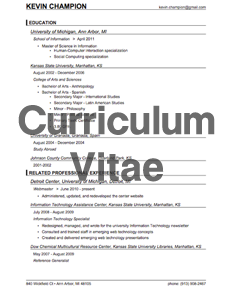
Curriculum Vitae (лат. «путь жизни»): an outline of a person's educational and professional history, usually prepared for job applications. Another name for CV is a résumé.
CV is the most flexible and convenient way to make applications. It conveys your personal details in the way that presents you in the best possible light. CV is a marketing document in which you are marketing something: yourself! You need to "sell" your skills, abilities, qualifications and experience to employers.
What information should CV include?
Here are the summarized points of what has been written here.
1. Personal data/details
2. Objective / Position applied for
3. Experience
4. Education
5. Special skills
6. Personal traits
7. References
1
Personal detailsNormally these would be your name, address, date of birth, age, marital status (single, married, separated, divorced), number of children, telephone number and email.
British CVs don't usually include a photograph unless you are an actor. In European countries such as France, Belgium and Germany it’s common for CVs to include a passport-sized photograph in the top right-hand corner. 
If you do include a photograph it should be a head and shoulders shot, you should be dressed suitably and smiling: it's not for a passport!
Objective
Include kind of position and professional responsibilities you are looking for.
Experience
Names of jobs, places, dates, and descriptions of what exactly you did and were responsible for.
List of educational institutions you attended (specifying the dates); subject areas you studied
2
When asked what would make them automatically reject a candidate, employers said:
CVs with spelling mistakes or typos 61%
CVs that copied large amounts of wording from the job posting 41%
CVs with an inappropriate email address 35%
CVs that don’t include a list of skills 30%
CVs that are more than two pages long 22%
CVs printed on decorative paper 20%
CVs that detail more tasks than results for previous positions 16%
CVs that include a photo 13%
CVs that have large blocks of text with little white space 13%
7
Use а dictionary or any reference grammar book if you are not absolutely sure about the word or grammar forms;
Top quality paper;
Attractive layout.
What mistakes do candidates make in their CV?
One survey of employers found the following mistakes were most common:
Spelling and grammar 56% of employers found this
Not tailored to the job 21%
Length not right & poor work history 16%
Poor format and no use of bullets 11%
No accomplishments 9%
Contact & email problems 8%
Objective/profile was too vague 5%
Lying 2%
Having a photo 1%
Others 3% (listing all memberships, listing personal hobbies, using abbreviations)
6
and degrees you got.
Use action words such as developed, planned and organised.
Even work in a shop, bar or restaurant will involve working in a team, providing a quality service to customers, and dealing tactfully with complaints. Don't mention the routine, non-people tasks (cleaning the tables) unless you are applying for a casual summer job in a restaurant or similar.
Try to relate the skills to the job. A finance job will involve numeracy, analytical and problem solving skills so focus on these whereas for a marketing role you would place a bit more emphasis on persuading and negotiating skills.
Keep this section short and to the point. As you grow older, your employment record will take precedence and interests will typically diminish greatly in length and importance.
Special skills
Any information which could bе helpful (computer skills, special skills, languages you speak, driver's' license, hobbies, etc.) The usual ones to mention are languages (good conversational French, basic Spanish), computing (e.g. "good working knowledge of MS Access and Excel, plus basic web page design skills" and driving ("full current clean driving licence").
Personal traits
Bullets can be used to separate interests into different types: sporting, creative etc.
3
Don't use the old boring cliches here: "socialising with friends".
Don't put many passive, solitary hobbies (reading, watching TV, stamp collecting) or you may be perceived as lacking people skills.
Show a range of interests to avoid coming across as narrow: if everything centres around sport they may wonder if you could hold a conversation with a client who wasn't interested in sport.

Hobbies that are a little out of the ordinary can help you to stand out from the crowd: skydiving or mountaineering can show a sense of wanting to stretch yourself and an ability to rely on yourself in demanding situations
Any evidence of leadership is important to mention: captain or coach of a sports team, course representative, chair of a student society, scout leader.
Anything showing evidence of employability skills such as team working, organizing, planning, persuading, negotiating etc.
References
Names and addresses of two or three references (people who can recommend you for the position and confirm your characteristics). Many employers don’t check references at the application stage so unless the vacancy specifically requests referees it's fine to omit this
4
section completely if you are running short of space or to say «References are available on request».
Normally two referees are sufficient: one academic (perhaps your tutor or a project supervisor) and one from an employer (perhaps your last part-time or summer job).
How long should CV be? There are no absolute rules but, in general, a new graduate's CV should cover no more than two sides of A4 paper. In a survey of American employers 35% preferred one page CV and 19% two page CV with the others saying it depends upon the position.
Remember:
The first impression is very important. That is why you should think over everything which you are going to include into the text of your letter. The basic requirements for a good resume are:
CV should be informative, short and businesslike. It reflects not only your experience, but also you as a personality and tells much about you. Describe yourself, your qualifications, and your experience clearly, in а laconic way. One page is preferable, but not more than two pages;
Find suitable words and do not make it too long;
Туре the letter neatly оn good stationery;
Check for spelling, grammar and stylistic mistakes.
5
Вебинар для учителей

Свидетельство об участии БЕСПЛАТНО!



