ДНР, Кировское

СДЕЛАЙТЕ СВОИ УРОКИ ЕЩЁ ЭФФЕКТИВНЕЕ, А ЖИЗНЬ СВОБОДНЕЕ
Благодаря готовым учебным материалам для работы в классе и дистанционно
Скидки до 50 % на комплекты
только до
Готовые ключевые этапы урока всегда будут у вас под рукой
Организационный момент
Проверка знаний
Объяснение материала
Закрепление изученного
Итоги урока
Была в сети 04.02.2026 19:52

Щербакова Наталья Николаевна
учитель английского языка
44 года
 2 619
2 619
 26 459
Местоположение
Специализация
Business Etiquette
Категория:
Английский язык
11.03.2025 22:02

Просмотр содержимого документа
«Business Etiquette»

Business Etiquette: A Guide for Young Professionals
Introduction
This presentation will cover key aspects of business etiquette crucial for success in today's professional world. We'll explore communication styles, appropriate attire, meeting conduct, and digital etiquette – essential skills for navigating the complexities of the business environment. Understanding and applying these principles will greatly enhance your professional image and interactions.

Professional Appearance
- Dress code varies by industry and company culture, but always aim for neat, clean, and appropriate attire.
- Avoid overly casual clothing, such as jeans and t-shirts, unless explicitly permitted.
- Pay attention to details like clean shoes, well-maintained hair, and minimal jewelry.
- Consider the setting – a formal meeting requires more formal attire than a casual office environment.
- First impressions are crucial; dress to project confidence and professionalism.

Punctuality and Time Management
- Punctuality demonstrates respect for others' time and professionalism.
- Arrive on time for meetings, appointments, and work commitments.
- Plan your travel time to account for potential delays.
- If you anticipate being late, notify those involved as soon as possible.
- Effective time management ensures you're prepared and meet deadlines efficiently.

Communication Skills
- Active listening is key; pay close attention and avoid interrupting.
- Communicate clearly and concisely, both verbally and in writing.
- Use appropriate language and tone for the context and audience.
- Be mindful of body language; maintain eye contact and use open postures.
- Practice good email etiquette: use professional language and proofread carefully.
Workplace Interactions
- Maintain a respectful and courteous demeanor with colleagues, clients, and superiors.
- Use polite language and avoid gossip or negativity.
- Be mindful of your tone of voice and body language.
- Learn to work effectively in a team and contribute positively.
- Respect individual differences and perspectives.
Meeting Etiquette
- Prepare beforehand by reviewing the agenda and relevant materials.
- Arrive on time and be attentive during the meeting.
- Contribute constructively to discussions and actively participate.
- Avoid side conversations and interrupting others.
- Respect the meeting leader and follow established procedures.
Digital Etiquette
- Use professional email addresses and maintain a professional online presence.
- Respond to emails promptly and appropriately.
- Be mindful of your tone in written communication.
- Avoid using inappropriate language or emojis in professional communications.
- Respect others' time and avoid sending unnecessary emails.
Networking Skills
- Build professional relationships with colleagues and industry contacts.
- Attend networking events and participate actively.
- Introduce yourself confidently and engage in meaningful conversations.
- Exchange business cards and follow up after networking events.
- Maintain professional connections through social media platforms.
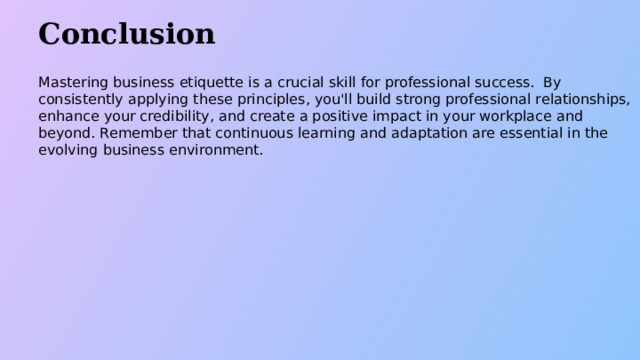
Conclusion
Mastering business etiquette is a crucial skill for professional success. By consistently applying these principles, you'll build strong professional relationships, enhance your credibility, and create a positive impact in your workplace and beyond. Remember that continuous learning and adaptation are essential in the evolving business environment.



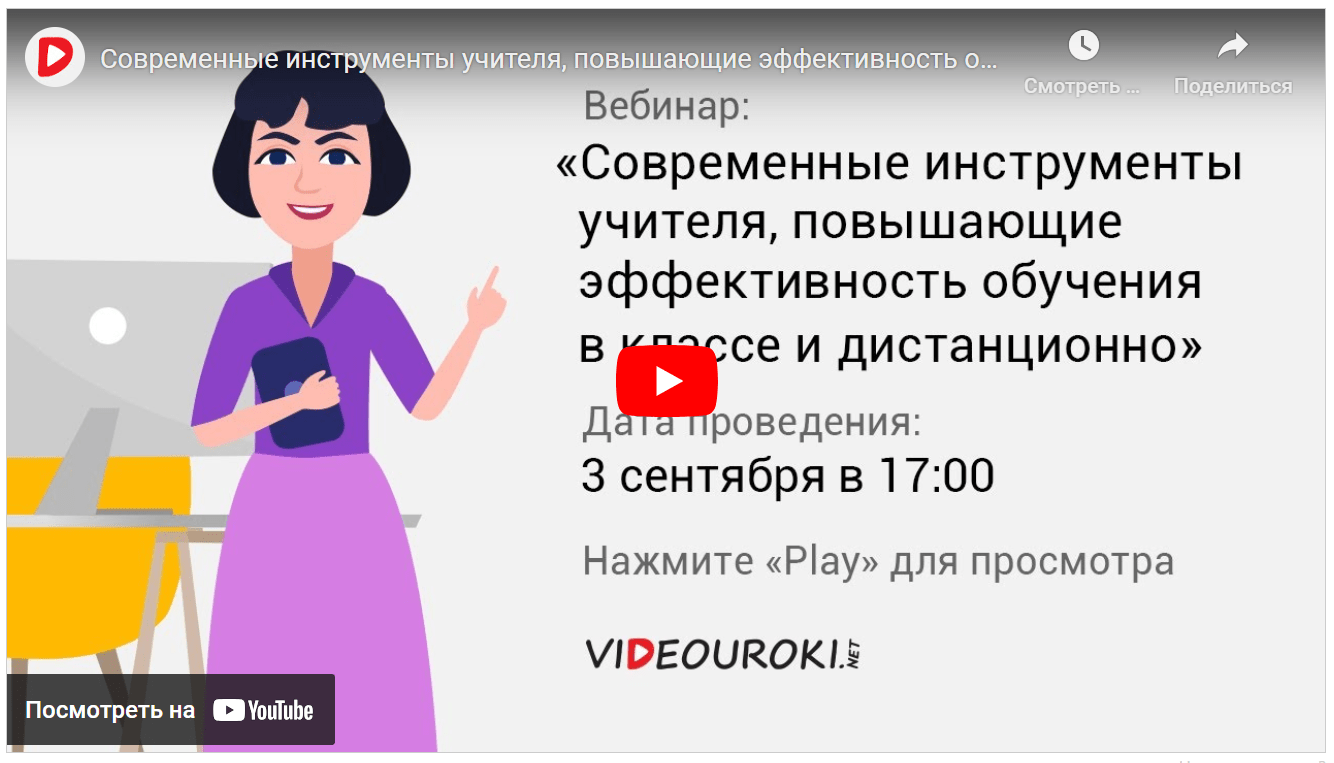
Вебинар для учителей
Свидетельство об участии БЕСПЛАТНО!