Россия, Нижний Новгород


СДЕЛАЙТЕ СВОИ УРОКИ ЕЩЁ ЭФФЕКТИВНЕЕ, А ЖИЗНЬ СВОБОДНЕЕ
Благодаря готовым учебным материалам для работы в классе и дистанционно
Скидки до 50 % на комплекты
только до
Готовые ключевые этапы урока всегда будут у вас под рукой
Организационный момент
Проверка знаний
Объяснение материала
Закрепление изученного
Итоги урока
Была в сети 16.08.2022 14:41

Кузнецова Светлана Ивановна
Преподаватель английского языка
61 год
 7 809
7 809
 7 108
7 108 
Местоположение
Специализация
Credit Card Transaction Processing Basics
Категория:
Английский язык
19.11.2020 11:44

Просмотр содержимого документа
«Credit Card Transaction Processing Basics»

Credit Card Transaction Processing Basics
Выполнена Кузнецовой Светланой Ивановной,
преподавателем английского языка
«Нижегородского губернского колледжа»
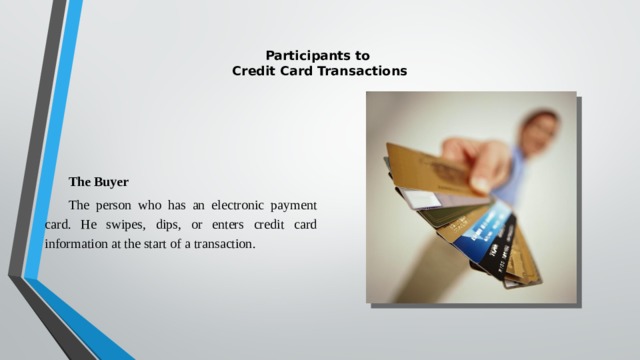
Participants to Credit Card Transactions
The Buyer
The person who has an electronic payment card. He swipes, dips, or enters credit card information at the start of a transaction.

Participants to Credit Card Transactions
The Merchant.
This is the person or company that sells what you’re buying.

The Acquirer .
The merchant pays the merchant acquirer to route payment
card information to the correct parties, and to ensure
that funds are deposited into merchants’ accounts
once each transaction is complete.

The Issuer (the issuing bank)
- manages credit or debit card accounts on behalf of buyers;
- approves and extend lines of credit (for credit card accounts);
- distributes payment cards;
- bills customers for purchases they make.

The Network or Association
It serves as a clearinghouse and backer for member institutions
(acquirers and issuers) and their customers.


The Credit Card Payment Process
1. Authorization
- The customer provides card information to the merchant, whether by swiping or dipping in person, or providing digits online or over the phone.
- The merchant’s payment processing terminal electronically sends the card number, transaction amount, and merchant ID number to the acquirer.
- The acquirer routes the information to the customer’s issuing bank.
- This serves as a request to authorize the transaction for the specified amount.

- The issuing bank checks that the customer has adequate funds or credit. It also checks for red flags, such as near-simultaneous in-person transactions in distant locations, that may indicate the transaction is fraudulent.
- If sufficient funds or credit are present, and the transaction does not appear to be fraudulent, the issuer sends an authorization code through the network to the acquirer.
- The acquirer authorizes the transaction and informs the merchant.
- The merchant provides the requested product or service to the customer.

2. Batching
Batching is the next step in the process.
- Throughout the business day, the merchant electronically stores payment information
for each authorized transaction. Each day’s set of stored transactions is known as a batching
- At the end of the business day, the merchant sends the batch to the acquirer.
- The acquirer temporarily holds the batch in its own secure, electronic system.
- Since acquirers typically have thousands of individual merchant clients,
they may store multiple batches according to their own needs and schedules.

3.Clearing
1.The acquirer sends the batch to the card network or association.
2. The card network or association requests payment for the transaction
from the customer’s issuer.
3. The issuer deducts a transaction fee from the total transaction amount.
4. The issuer routes the net amount through the card network to the acquirer.

4. Funding
The final step in the transaction is funding.
This is the part where the merchant receives funding
for the transaction







Вебинар для учителей
Свидетельство об участии БЕСПЛАТНО!