



© 2018, Стрюк Евгения Владимировна 908 1

СДЕЛАЙТЕ СВОИ УРОКИ ЕЩЁ ЭФФЕКТИВНЕЕ, А ЖИЗНЬ СВОБОДНЕЕ
Благодаря готовым учебным материалам для работы в классе и дистанционно
Скидки до 50 % на комплекты
только до
Готовые ключевые этапы урока всегда будут у вас под рукой
Организационный момент
Проверка знаний
Объяснение материала
Закрепление изученного
Итоги урока
Была в сети 24.03.2018 15:35

Стрюк Евгения Владимировна
Преподаватель
 104
104
 217 313
Специализация
English for Law Enforcement
Категория:
Английский язык
07.03.2018 00:07

Просмотр содержимого документа
«English for Law Enforcement»
МІНІСТЕРСТВО ВНУТРІШНІХ СПРАВ УКРАЇНИ
ДНІПРОПЕТРОВСЬКИЙ ДЕРЖАВНИЙ УНІВЕРСИТЕТ
ВНУТРІШНІХ СПРАВ
Кафедра українознавства та іноземних мов
МЕТОДИЧНА РОЗРОБКА
з тем 1, 10 з навчальної дисципліни
«Іноземна мова»
спеціальність 081 «Право»
для здобувачів вищої освіти 1 курсу факультету підготовки фахівців для підрозділів кримінальної поліції, факультету підготовки фахівців економіко-правової безпеки, факультету підготовки фахівців для превентивної діяльності, факультету підготовки фахівців для органів досудового розслідування, факультету заочного навчання працівників поліції Навчально-наукового інституту післядипломної освіти та заочного навчання, що навчаються на першому (бакалаврському) рівні вищої освіти
Дніпро
2017
Методична розробка для здобувачів з навчальної дисципліни «Іноземна мова» для здобувачів вищої освіти 1 курсу факультету підготовки фахівців для підрозділів кримінальної поліції, факультету підготовки фахівців економіко-правової безпеки, факультету підготовки фахівців для превентивної діяльності, факультету підготовки фахівців для органів досудового розслідування, факультету заочного навчання працівників поліції Навчально-наукового інституту післядипломної освіти та заочного навчання, що навчаються на першому (бакалаврському) рівні вищої освіти, спеціальності 081 «Право» / Дніпро: Дніпропетровський державний університет внутрішніх справ, 2017. – 36 с.
РОЗРОБНИК:
Стрюк Є. В., викладач кафедри українознавства та іноземних мов Дніпропетровського державного університету внутрішніх справ.
Розглянуто на засіданні кафедри українознавства та іноземних мов
протокол №9 від 18.12.2017
Завідувач кафедри українознавства та іноземних мов
_______________________ (Т.В. Крашеніннікова)
«18» грудня 2017 р.
©Стрюк Є.В., 2017 рік
©ДДУВС, 2017 рік
ПЕРЕДМОВА
Методична розробка з англійської мови становить за мету систематизацію лексико-граматичного матеріалу та вдосконалення вмінь та навичок, набутих слухачами у середній школі задля їхнього подальшого використання у професійному напрямку. Новий лексичний матеріал загально-юридичної тематики органічно поєднується з вже відомими граматичними конструкціями, що сприяє більш ефективному використанню цього матеріалу у монологічному та діалогічному мовленні.
Кожний урок цієї розробки містить тренувальні вправи, націлені на закріплення навичок вимови та правопису, тренувальні граматичні вправи, а також дотекстові лексико-граматичні вправи.
Для розвитку навичок монологічного та діалогічного мовлення передбачені завдання на самостійне опрацювання матеріалу з метою підготовки стислих повідомлень на базі текстів та їхнього обговорення у групах.
Після завершення роботи з цією методичною розробкою проводиться тематичний тестовий контроль.
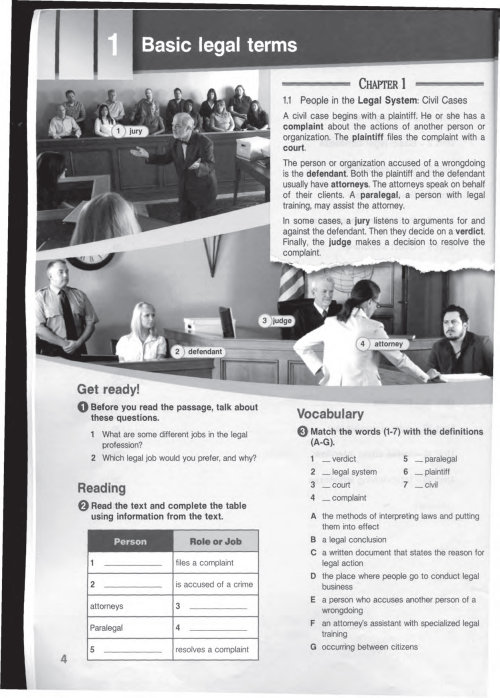
Read the text and translate.
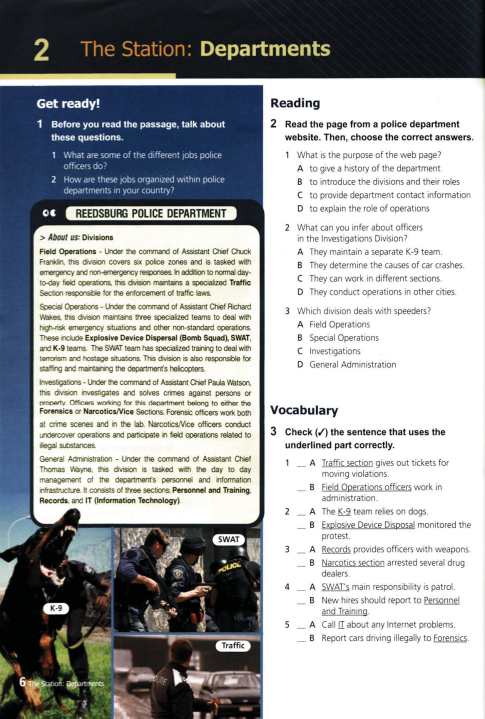
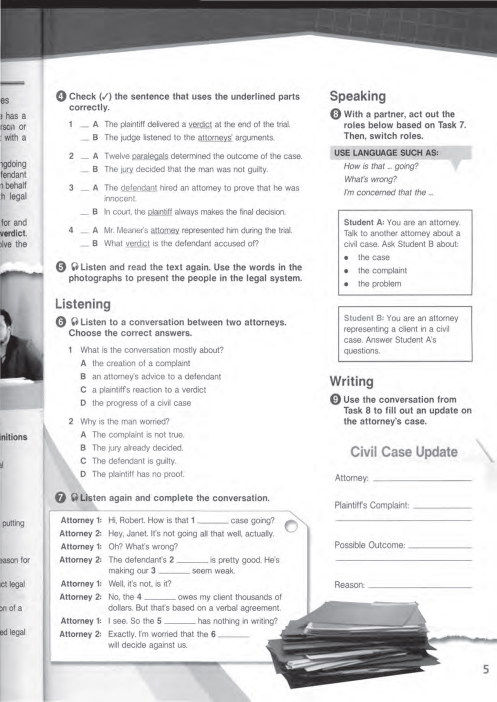
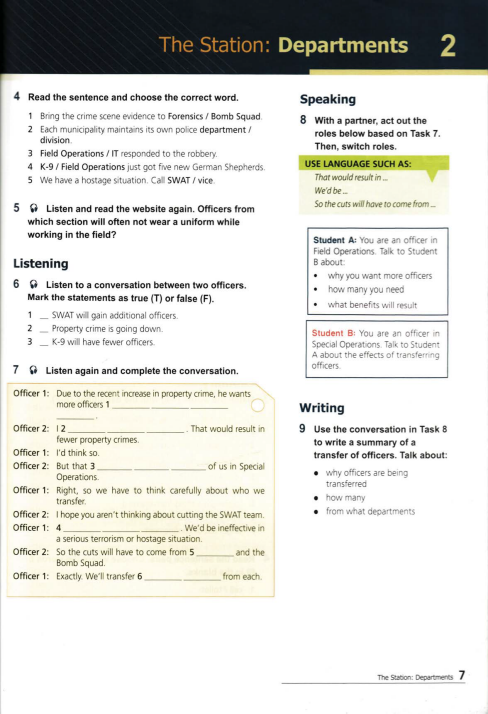
Grammar
AFFIRMATIVE FORMS OF THE
VERB «TO BE»
| Present | Past | Future | ||||
| I | am | I | was | I | will be | |
| He | is | He | He | |||
| She | She | She | ||||
| It | It | It | ||||
| We | are | We | were | We | ||
| You | You | You | ||||
| They | They | They | ||||
We use the verb «be» to talk about:
1. ages - I am 16.
2. occupations – She is a student and her mother is a lawyer.
3. prices – This book is 10$.
4. the time – It is nine o’clock.
5. feelings and states – I am hungry and he is cold.
6. nationality – We are Ukrainians.
7. colours – His eyes are blue.
8. place – I am in the court.
EXERCISES
1. Complete the sentences with the right form of «to be» in Present Simple Tense.
1. Law ___the body of rules. 2. Laws ___ necessary to govern a society. 3. The main branches of law ___ constitutional law, administrative law, civil law, criminal law, tort law, employment law and international law. 4. A lawyer ___ someone who studied law. 5. Judges ___ trained lawyers. 6. A case ___ a legal action. 7. A police officer ___ a person who works for police. 8. Attorney ___ American word to describe a lawyer.
2. Make the following sentences plural with «to be» in Present Simple.
Model: I am an attorney.
All members of my family are attorneys.
1. A lawyer is a specialist in law. 2. I am a solicitor. 3. A barrister is a lawyer who works in court. 4. The defense lawyer is a defending lawyer. 5. The prosecutor is the lawyer who prosecutes. 6. The judge is a person who presides. 7. The coroner is a person who investigates violent or unnatural deaths. 8. The judge is a person who passes sentence.
3. Make sentences with the singular or plural forms of «to be» in Past Simple.
Model: I am at University now (an hour ago).
An hour ago I was at University.
1. I am a student now (two years ago). 2. We are late for the trial (yesterday). 3. She is a lawyer (last year). 4. Defense lawyers are very confident of victory (last time). 5. The case is very hard (last month).
8
4. Make sentences with «to be» in Future Simple.
Model: I am a cadet now (be a police officer).
I will be a police officer in three years.
1. He is in court now, he (be back) in two hours. 2. The police officer is busy now, he (be free) in three hours. 3. She is a student now, she (be) an attorney after University. 4. An attorney is on holiday now, he (be here) tomorrow. 5. The prosecutor is very confident of victory, the case (be) very interesting tomorrow.
5. Translate the following sentences into English.
1. Право ― це звід правил і норм. 2. Закони є необхідними для суспільства. 3. Основними галузями права є: конституційне право, адміністративне право, цивільне право, кримінальне право, деліктне право, трудове право та міжнародне право. 4. Минулого місяця справа була досить складною. 5. Через два роки вона стане юрисконсультом. 6. Цивільне право – галузь права, яка регулює відносини між фізичними особами. 7. Зараз він у суді, через дві години він буде тут. 8. Вчора ми запізнились до суду. 9. Кримінальне право – галузь права, яка визначає злочини і покарання злочинців.
9
DEMONSTRATIVE PRONOUNS
A demonstrative pronoun is a pronoun that is used to point to something specific within a sentence. These pronouns can indicate items in space or time, and they can be either singular or plural.


THIS pistol THAT pistol

THESE pistols THOSE pistols
| This/These | That/Those | |
| 1. we use that (for singular) and those (for plural) when we talk about people or things which are far from us: Ex.: That is a police officer. Those are suspects. 2-for past situations: Ex.: We were here that year. 3-when we refer to something mentioned before: Ex.: She was there. That is good. |
CONSTRUCTION «THERE IS/ARE»
We use there is/are to say that something exists.
Models:
There is a witness who can give evidence.
There are many people who work for police.
There is a problem with that criminal trial.
There are police officers who were from Investigation department.
There is much work for police next year.
EXERCISES
1. Fill in the gaps with the appropriate form of construction there is/are.
1.____________a Police Department, which fights against crimes in our city. 2. ___________ many divisions where police officers work. 3. __________ a Traffic Section responsible for enforcement of traffic laws. 4. ___________a strict police hierarchy. 5. ___________five dogs, which help investigate
10
crimes. 6. ___________so many rules that regulate our life. 7. ___________a SWAT Team, which deals with terrorism and hostage situations.
2. Translate the following sentences into English.
1. Існує багато підрозділів поліції, які забезпечують правопорядок. 2. Існує чітка поліцейська ієрархія. 3. Є чимало законів, які регулюють відносини у суспільстві. 4. Є два офіцера поліції, які розслідують цей злочин. 5. Є свідок, який дає свідчення. 6. Існує відділ поліції, де є багато собак.
3. Make the following sentences plural with appropriate demonstrative pronouns.
Model: This case is interesting.
These cases are interesting.
1. This division is very important for police work. 2. This police officer is a professional. 3. That person was at Police Department yesterday. 4. This constable will be here tomorrow. 5. That person is a lawyer. 6. That cadet will be a police officer in 3 years. 7. This person was very suspicious.
4. Make the following sentences singular with appropriate demonstrative pronouns.
Model: These people will be here tomorrow.
This person will be here tomorrow.
1. Those people were in the Police Department yesterday. 2. These cases are interesting. 3. These police officers are professionals. 4. Those people were very suspicious. 5. Those cadets are from Police Academy. 6. These police officers are from SWAT. 7. Those criminals were guilty of a crime. 8. Those officers were from Traffic Section. 9. These people are very suspicious.
5. Translate the following sentences into Ukrainian.
1. There are many divisions in police. 2. There is a strict hierarchy in the police. 3. This officer works in Traffic Section. 4. That person is a suspect. 5. These people are from the court. 6. Those cases were interesting. 7. There is a police officer who works for Vice. 8. There are many divisions where police officers can work. 9. This person is very suspicious. 10. Those criminals were guilty of a crime. 11. That person is from K-9 team.
11
Вебинар для учителей
Свидетельство об участии БЕСПЛАТНО!