Россия, Верхняя Пышма

СДЕЛАЙТЕ СВОИ УРОКИ ЕЩЁ ЭФФЕКТИВНЕЕ, А ЖИЗНЬ СВОБОДНЕЕ
Благодаря готовым учебным материалам для работы в классе и дистанционно
Скидки до 50 % на комплекты
только до
Готовые ключевые этапы урока всегда будут у вас под рукой
Организационный момент
Проверка знаний
Объяснение материала
Закрепление изученного
Итоги урока
Была в сети 10.02.2023 17:00

Литовских Ольга Николаевна
учитель английского и немецкого языка
 4 053
4 053
 16 028
Местоположение
Festive time (6кл, англ.яз.)
Категория:
Английский язык
22.03.2021 13:54

Просмотр содержимого документа
«Festive time (6кл, англ.яз.)»
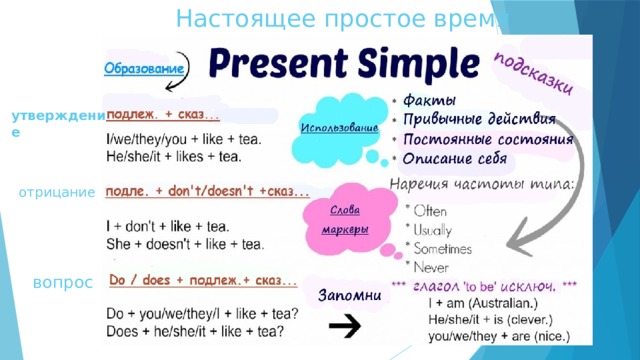
Настоящее простое время
утверждение
отрицание
вопрос
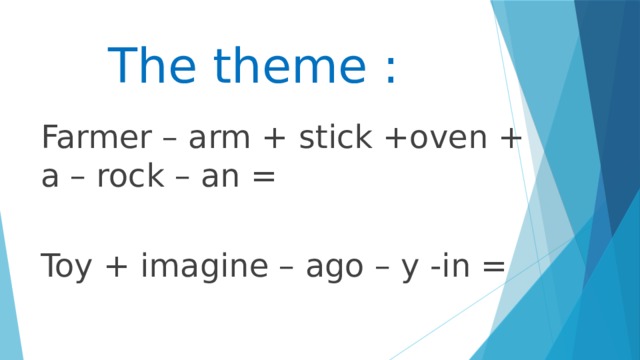
The theme :
Farmer – arm + stick +oven + a – rock – an =
Toy + imagine – ago – y -in =
![Festive time [ˈfestɪv] Праздничное время](https://fsd.multiurok.ru/html/2021/03/22/s_605877706bba4/img2.jpg)
Festive time [ˈfestɪv]
Праздничное время
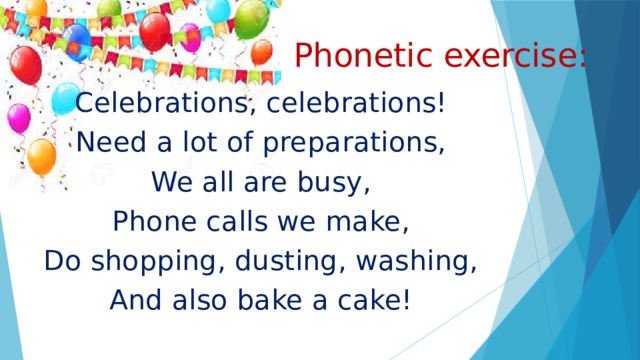
Phonetic exercise:
Celebrations, celebrations!
Need a lot of preparations,
We all are busy,
Phone calls we make,
Do shopping, dusting, washing,
And also bake a cake!
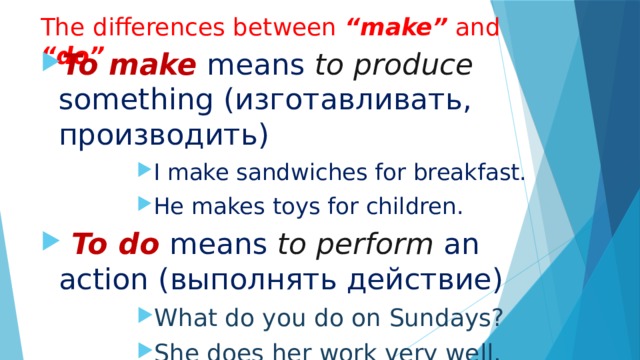
The differences between “make” and “do”
- To make means to produce something ( изготавливать , производить )
- I make sandwiches for breakfast. He makes toys for children.
- I make sandwiches for breakfast. He makes toys for children.
- I make sandwiches for breakfast. He makes toys for children.
- I make sandwiches for breakfast. He makes toys for children.
- I make sandwiches for breakfast.
- He makes toys for children.
- To do means to perform an action ( выполнять действие ) What do you do on Sundays? She does her work very well.
- What do you do on Sundays? She does her work very well.
- What do you do on Sundays? She does her work very well.
- What do you do on Sundays? She does her work very well.
- What do you do on Sundays?
- She does her work very well.
Learn fixed expressions:
- Do this exercise in your copybooks.
(do exercise)
- Can I make a phone call?
(make a phone call)
Повторите фразы хором:
- Make the decorations (делать украшения)
- Do the dusting (вытирать пыль)
- Do your homework
- Make a phone call (позвонить)
- Do the gardening (заниматься садоводством)
- Make tea
- Make a special dish (приготовить особое блюдо)
- Do the washing-up (мыть посуду)
- Do the shopping
- Make a cake
What are the people in the picture doing? (Page 46, ex.1b)
For example:
- The woman in picture 1 is making tea.
- The woman in picture 2 is …
- The people in picture 3 are …
- The man in picture 4 is …
- The woman in picture 5 is…
- The children in picture 6 are…
![Vocabulary of the email Fried baby eels [fraɪd ˈbeɪbɪ iːlz] – жареные молодые угри Delicious [dɪˈlɪʃəs] = tasty Grapes – Excited = happy, interested Mean = have a meaning (значить) Wish – желать Be busy [ˈbɪzɪ] – быть занятым Celebrate [ˈselɪbreɪt] – праздновать Blow a horn – дуть в рожок Council workers [kaʊnsl] – работники городских служб](https://fsd.multiurok.ru/html/2021/03/22/s_605877706bba4/img8.jpg)
Vocabulary of the email
- Fried baby eels [fraɪd ˈbeɪbɪ iːlz] – жареные молодые угри
- Delicious [dɪˈlɪʃəs] = tasty
- Grapes –
- Excited = happy, interested
- Mean = have a meaning (значить)
- Wish – желать
- Be busy [ˈbɪzɪ] – быть занятым
- Celebrate [ˈselɪbreɪt] – праздновать
- Blow a horn – дуть в рожок
- Council workers [kaʊnsl] – работники городских служб
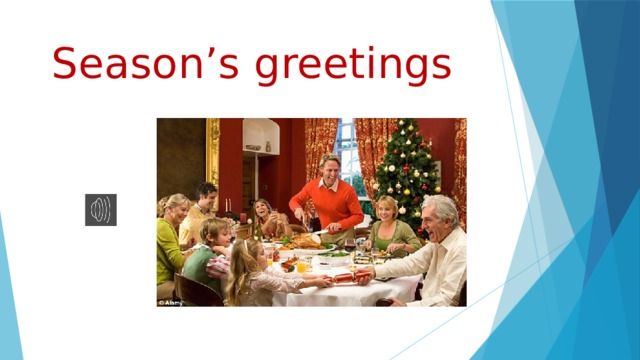
Season’s greetings
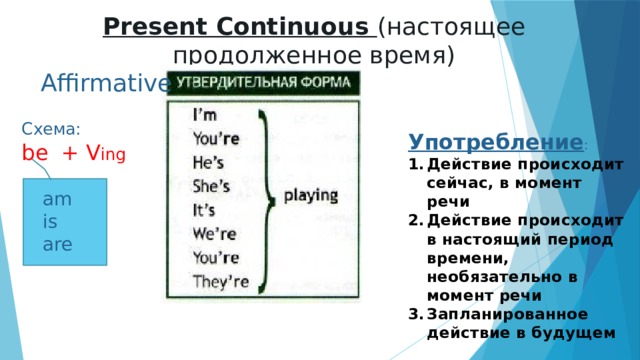
Present Continuous (настоящее продолженное время)
Affirmative
Схема:
be + V ing
am
is
are
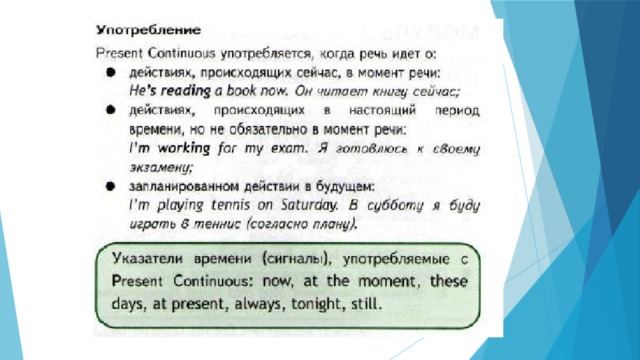
Употребление :
- Действие происходит сейчас, в момент речи
- Действие происходит в настоящий период времени, необязательно в момент речи
- Запланированное действие в будущем
Mother’s Day
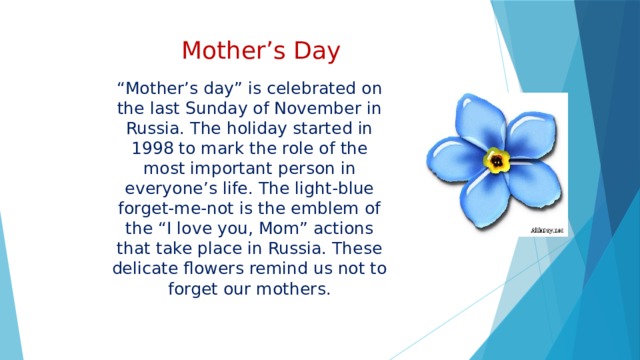
“ Mother’s day” is celebrated on the last Sunday of November in Russia. The holiday started in 1998 to mark the role of the most important person in everyone’s life. The light-blue forget-me-not is the emblem of the “I love you, Mom” actions that take place in Russia. These delicate flowers remind us not to forget our mothers.
The results of the lesson:
- we’ve learnt:
- the new words,
- the differences between “make” and “do” ,
- information about some holidays,
- We’ve done lexical and phonetic exercises,
- We’ve made a joint
greeting card,
- We’ve made a lot of
progress.

That’s all for today, thank you, goodbye!
Вебинар для учителей
Свидетельство об участии БЕСПЛАТНО!