

Россия, Анапа

СДЕЛАЙТЕ СВОИ УРОКИ ЕЩЁ ЭФФЕКТИВНЕЕ, А ЖИЗНЬ СВОБОДНЕЕ
Благодаря готовым учебным материалам для работы в классе и дистанционно
Скидки до 50 % на комплекты
только до
Готовые ключевые этапы урока всегда будут у вас под рукой
Организационный момент
Проверка знаний
Объяснение материала
Закрепление изученного
Итоги урока

Была в сети 22.07.2026 17:31

Навроцкая Ева Игоревна
учитель английского
 58
58
 247 779
Местоположение
Специализация
Films and movies
Категория:
Английский язык
05.05.2026 09:30

Просмотр содержимого документа
«Films and movies»
Films and Music
Exploring the connection between films and musical genres
Introduction
This presentation delves into the fascinating world of films and their relationship with various music genres, exploring their historical context and impact.

01
Films
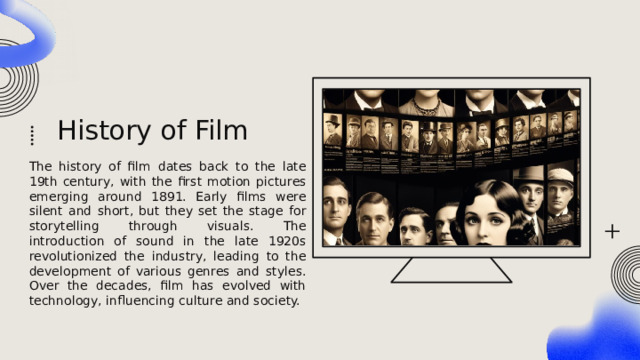
History of Film
The history of film dates back to the late 19th century, with the first motion pictures emerging around 1891. Early films were silent and short, but they set the stage for storytelling through visuals. The introduction of sound in the late 1920s revolutionized the industry, leading to the development of various genres and styles. Over the decades, film has evolved with technology, influencing culture and society.
Celebrities
Beautiful woman/model –красивая женщина/модель
Handsome man – симпатичный мужчина
Rich actor – богатый актер
Attractive model – привлекательная модель
Famous film director – известный режиссер
Successful athlete – успешный спортсмен
Great achievement - великое достижение
Talented performer – талантливый исполнитель
Well-known actress – известная актриса
Intelligent person – умный человек
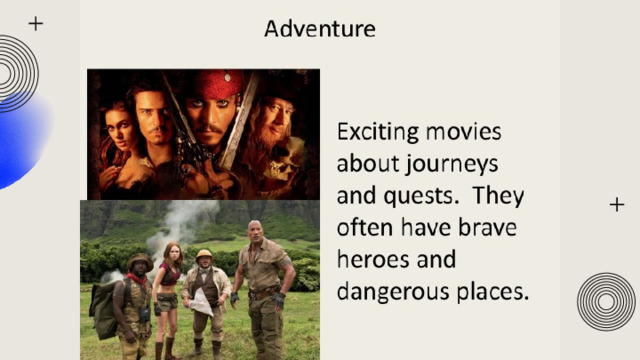
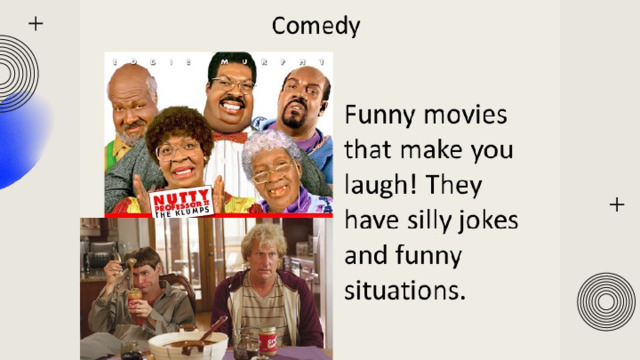
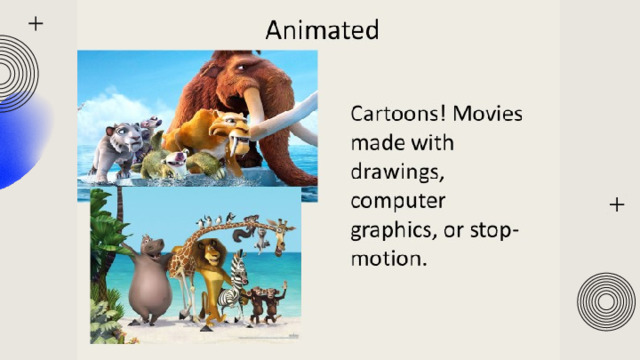
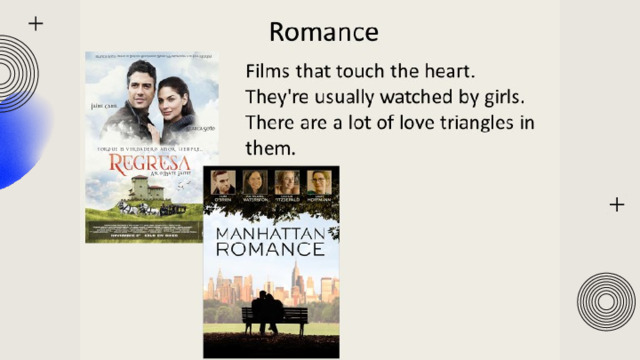
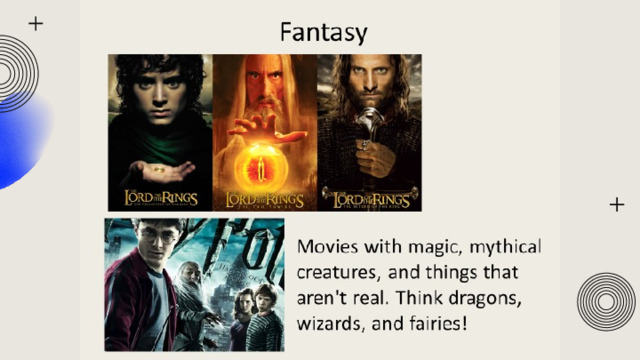
Film Genres
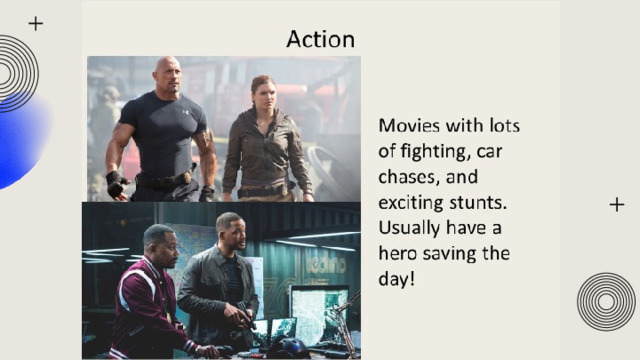
Film genres categorize movies based on similarities in narrative elements, themes, and styles. Common genres include action, comedy, drama, horror, sci-fi, and romance. Each genre has distinct characteristics, evoking different emotions and catering to varying audience preferences. Understanding genres helps audiences select films that align with their tastes and expectations.
Impact of Technology in Film
Technology has really changed how movies are made. A long time ago, films started using sound and color. Now, we have digital cameras and computer tricks to make cool effects. Things like motion capture (where actors wear special suits) and virtual reality (where you feel like you're in the movie) let filmmakers tell stories in new ways. Also, websites that let you watch movies online have changed how we see films, and not as many people go to movie theaters now.


02
Music
Genres of Music
Music genres reflect the diverse styles and forms of music. Common genres include classical, rock, pop, jazz, hip-hop, and electronic. Each genre has unique characteristics, instrumentation, and cultural significance, influencing listeners' emotions and experiences. Genres often merge, leading to new styles and trends in the music industry.
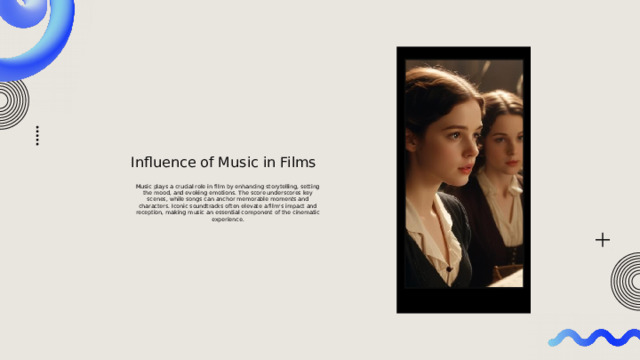
Influence of Music in Films
Music plays a crucial role in film by enhancing storytelling, setting the mood, and evoking emotions. The score underscores key scenes, while songs can anchor memorable moments and characters. Iconic soundtracks often elevate a film's impact and reception, making music an essential component of the cinematic experience.
Music Composition Techniques
Composing music for films involves various techniques, including thematic development, motifs, and orchestration. Composers create scores that match the film's emotional tone and narrative, often using instruments to evoke specific feelings. Collaboration with directors and sound designers ensures that the music enhances the visual storytelling effectively.
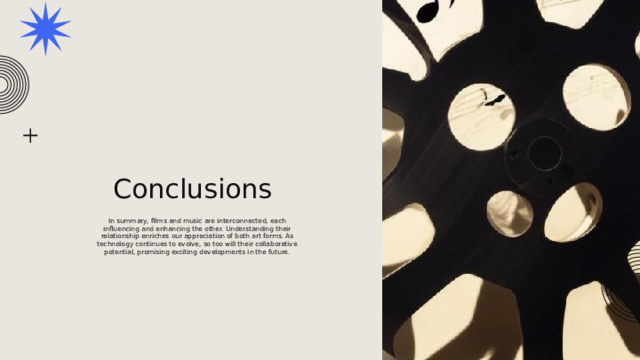
Conclusions
In summary, films and music are interconnected, each influencing and enhancing the other. Understanding their relationship enriches our appreciation of both art forms. As technology continues to evolve, so too will their collaborative potential, promising exciting developments in the future.

Thank you!
Do you have any questions?







Вебинар для учителей

Свидетельство об участии БЕСПЛАТНО!



