
© 2026, Косулина Ирина Геннадьевна 40 0

СДЕЛАЙТЕ СВОИ УРОКИ ЕЩЁ ЭФФЕКТИВНЕЕ, А ЖИЗНЬ СВОБОДНЕЕ
Благодаря готовым учебным материалам для работы в классе и дистанционно
Скидки до 50 % на комплекты
только до
Готовые ключевые этапы урока всегда будут у вас под рукой
Организационный момент
Проверка знаний
Объяснение материала
Закрепление изученного
Итоги урока
Была в сети 29.04.2026 13:15

Косулина Ирина Геннадьевна
преподаватель английского языка
 13 797
 3 104
3 104 
Специализация
How to prepare for a Business Meeting
Категория:
Английский язык
18.03.2026 08:21

Просмотр содержимого документа
«How to prepare for a Business Meeting»

Business Meetings
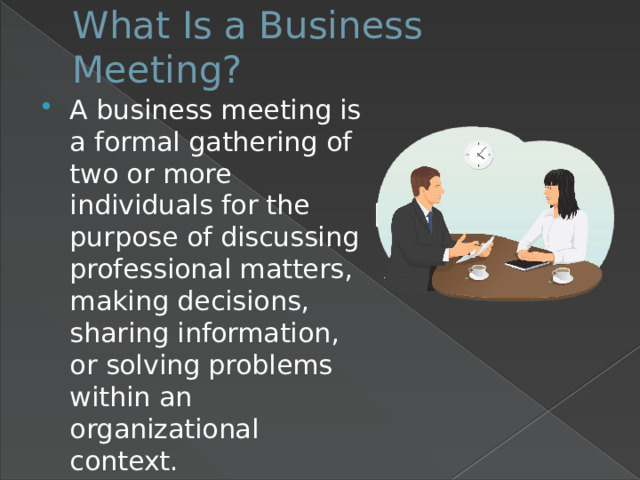
What Is a Business Meeting?
- A business meeting is a formal gathering of two or more individuals for the purpose of discussing professional matters, making decisions, sharing information, or solving problems within an organizational context.
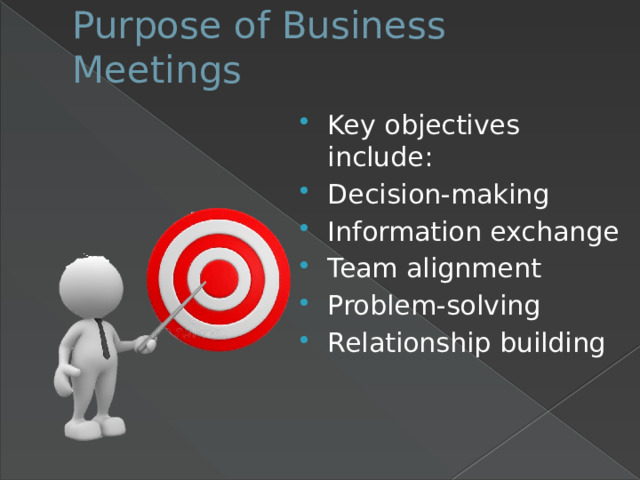
Purpose of Business Meetings
- Key objectives include:
- Decision-making
- Information exchange
- Team alignment
- Problem-solving
- Relationship building
Types of Business Meetings
- Status Update Meetings – Routine progress reviews
- Decision-Making Meetings – Focused on choices (e.g., budget, strategy)
- Brainstorming Sessions – Creative idea generation
- Client/Partner Meetings – External stakeholder engagement
- Board Meetings – Governance-level discussions
Formal Requirements for a Business Meeting
- A formal business meeting requires:
- Clear agenda distributed in advance
- Defined participants (roles: facilitator, note-taker, decision-makers)
- Scheduled time and duration
- Appropriate venue (physical or virtual)
- Follow-up documentation
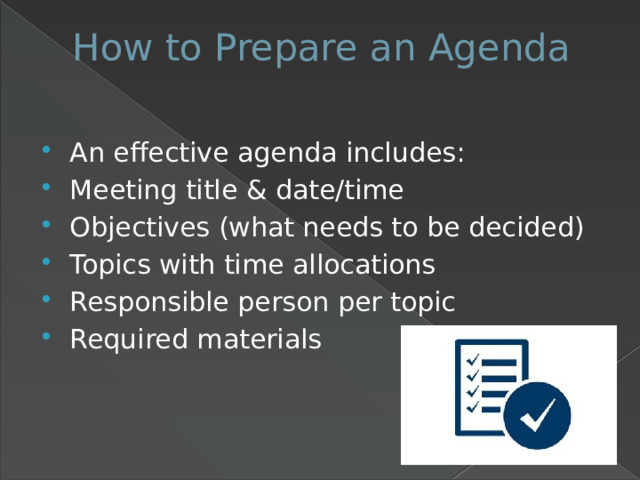
How to Prepare an Agenda
- An effective agenda includes:
- Meeting title & date/time
- Objectives (what needs to be decided)
- Topics with time allocations
- Responsible person per topic
- Required materials
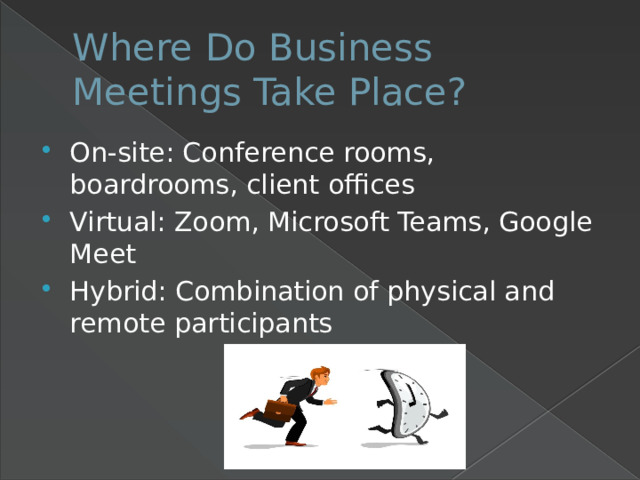
Where Do Business Meetings Take Place?
- On-site: Conference rooms, boardrooms, client offices
- Virtual: Zoom, Microsoft Teams, Google Meet
- Hybrid: Combination of physical and remote participants
Meeting Protocol & Etiquette
- Professional conduct includes:
- Arriving on time
- Turning off mobile notifications
- Addressing participants by name/title
- Avoiding interruptions
- Respecting cultural norms (e.g., silence in Japan, directness in Germany)
The Role of the Chairperson/Facilitator
- Start and end on time
- Guide discussion without dominating
- Ensure all voices are heard
- Keep focus on agenda items
- Summarize decisions and action items
Documentation: Minutes & Action Items
- Meeting minutes must include:
- Date, time, attendees, absentees
- Decisions made
- Action items (who, what, deadline)
- Next meeting date Minutes should be circulated within 24 hours.
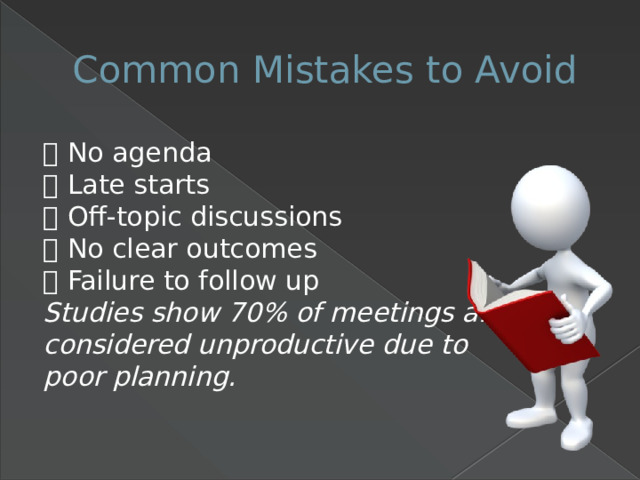
Common Mistakes to Avoid
❌ No agenda ❌ Late starts ❌ Off-topic discussions ❌ No clear outcomes ❌ Failure to follow up Studies show 70% of meetings are considered unproductive due to poor planning.
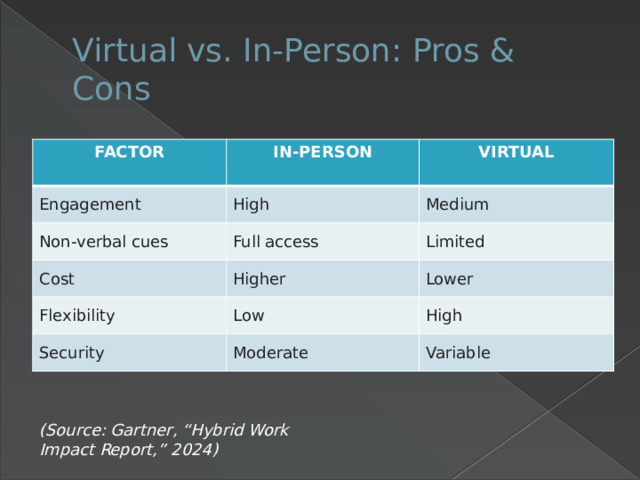
Virtual vs. In-Person: Pros & Cons
FACTOR
IN-PERSON
Engagement
VIRTUAL
High
Non-verbal cues
Full access
Cost
Medium
Limited
Higher
Flexibility
Low
Lower
Security
High
Moderate
Variable
(Source: Gartner, “Hybrid Work Impact Report,” 2024)
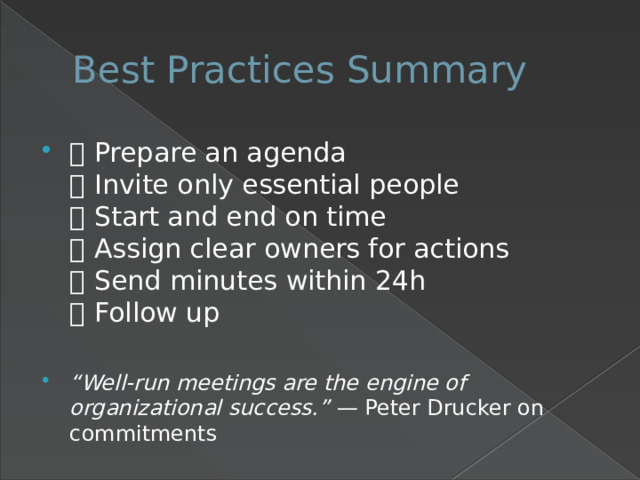
Best Practices Summary
- ✅ Prepare an agenda ✅ Invite only essential people ✅ Start and end on time ✅ Assign clear owners for actions ✅ Send minutes within 24h ✅ Follow up
- “ Well-run meetings are the engine of organizational success.” — Peter Drucker on commitments
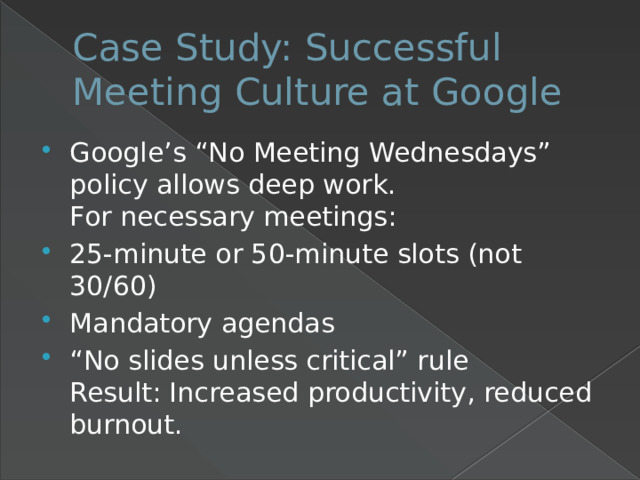
Case Study: Successful Meeting Culture at Google
- Google’s “No Meeting Wednesdays” policy allows deep work. For necessary meetings:
- 25-minute or 50-minute slots (not 30/60)
- Mandatory agendas
- “ No slides unless critical” rule Result: Increased productivity, reduced burnout.
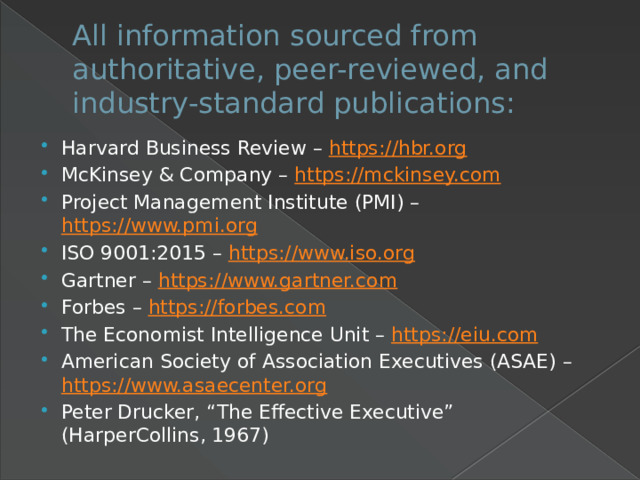
All information sourced from authoritative, peer-reviewed, and industry-standard publications:
- Harvard Business Review – https://hbr.org
- McKinsey & Company – https://mckinsey.com
- Project Management Institute (PMI) – https://www.pmi.org
- ISO 9001:2015 – https://www.iso.org
- Gartner – https://www.gartner.com
- Forbes – https://forbes.com
- The Economist Intelligence Unit – https://eiu.com
- American Society of Association Executives (ASAE) – https://www.asaecenter.org
- Peter Drucker, “The Effective Executive” (HarperCollins, 1967)
Вебинар для учителей
Свидетельство об участии БЕСПЛАТНО!