


Россия, Санкт-Петербург


СДЕЛАЙТЕ СВОИ УРОКИ ЕЩЁ ЭФФЕКТИВНЕЕ, А ЖИЗНЬ СВОБОДНЕЕ
Благодаря готовым учебным материалам для работы в классе и дистанционно
Скидки до 50 % на комплекты
только до
Готовые ключевые этапы урока всегда будут у вас под рукой
Организационный момент
Проверка знаний
Объяснение материала
Закрепление изученного
Итоги урока

Была в сети 11.04.2026 01:08

Тюттина Лариса Викторовна
Учитель английского языка
 632
632
 92 792
Местоположение
Специализация
Hypothetical Situations
Категория:
Английский язык
20.05.2021 19:41

Просмотр содержимого документа
«Hypothetical Situations»
Hipothetical situations
lesson 48
Tyuttinna LV

You will listen, read, and talk about your interests.
You will learn about conditionals and will be able to use them in speech.
You will also revise how to form tenses.
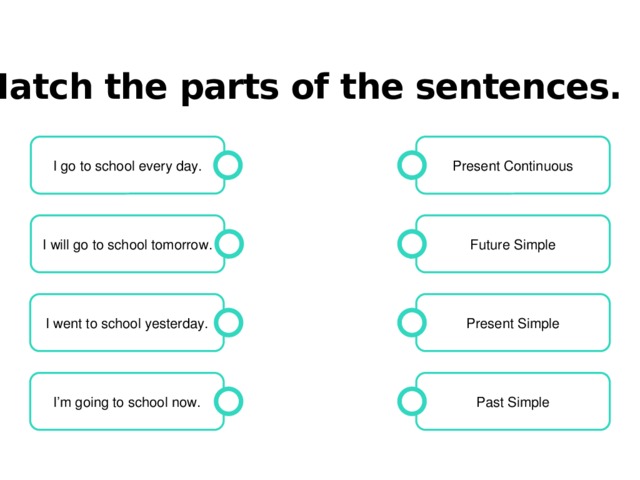
Match the parts of the sentences.
I go to school every day.
Present Continuous
I will go to school tomorrow.
Future Simple
I went to school yesterday.
Present Simple
I’m going to school now.
Past Simple

Check up:
I go to school every day.
Present Continuous
I will go to school tomorrow.
Future Simple
I went to school yesterday.
Present Simple
Past Simple
I’m going to school now.
Конспект объясняющего модуля.
Ключевые слова: conditionals, Zero Conditional, First Conditional, Second Conditional, Third Conditional hypothetical situations, if I were you, well known truth, imaginary past, imaginary future, if, when, unless.
Речевой материал: введение грамматического понятия conditionals разных типов, случаи их употребления, тренировка использования conditionals в речи
Пояснения:
- В английском языке существует 4 типа условных предложений. Они называются нулевой, первый, второй и третий.
- Нулевой тип условных предложений описывает общеизвестные истины. В обоих частях условного предложения данного типа используется Present Simple.
- Первый тип условных предложений рассказывает планы на будущее. В придаточной части условного предложения первого типа используется Present Simple, а в главной — Future Simple.
- Второй тип условных предложений рассказывает о нереальных ситуациях в настоящем или будущем. В придаточной части предложения этого типа используется Past Simple, а в главной — could/would + V1.
- Третий тип условных предложений выражает сожаления о прошлом, или нереальные ситуации в прошлом. В придаточном предложении такого типа используется Past Perfect, а в главном — would/could + have + V3/Ved in the main part.
- Помимо “if”, для введения придаточных предложений можно использовать “when” и “unless”. Unless означает «до тех пор, пока нет»

Fill in the gaps using numbers and words from the list.
1) There are _______ types of conditionals.
2) We use the _______ Conditional when we talk about something which is well known to everybody.
3) The Second Conditional is used when we want to talk about some situation in the _______ or in the future that is not real.

Fill in the gaps using numbers and words from the list.
1) There are 4 types of conditionals.
2) We use the 0 Conditional when we talk about something which is well known to everybody.
3) The Second Conditional is used when we want to talk about some situation in the present or in the future that is not real.

Put the verbs in brackets in the correct form.
If the weather is fine, we _______ (go) for a walk.
If I had a lot of money, I _______(buy) a house of my dream.
If he _______ (not hurry) so much, he wouldn’t have had an accident.
If you _______(heat) water, it boils.
If I see her, I _______(tell) her the news.

Complete the sentences with the correct present forms of the verbs in brackets.
We _______ (have) some coffee if we have a break.
If we had vacation in summer, we _______ (spend) it in Peru.
If she _______ (listen) carefully, she wouldn’t have made so many mistakes in her project.
I _______ (never do) such a terrible thing if I were you.
He _______ (find) a good job if he studies well.
Fill in the gaps and send the result to the teacher

Match the parts of the sentences.
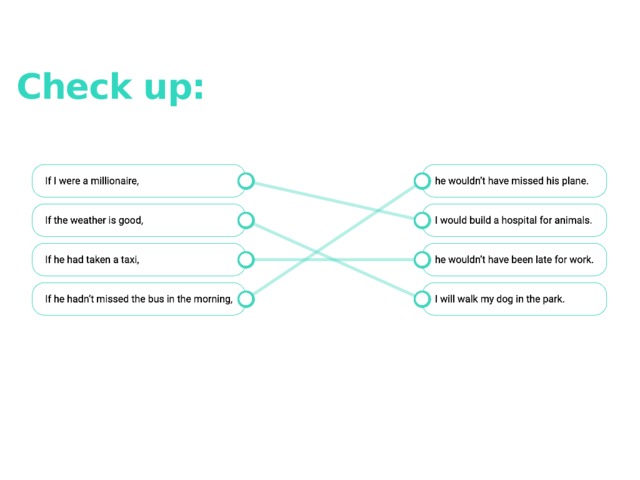
Check up:
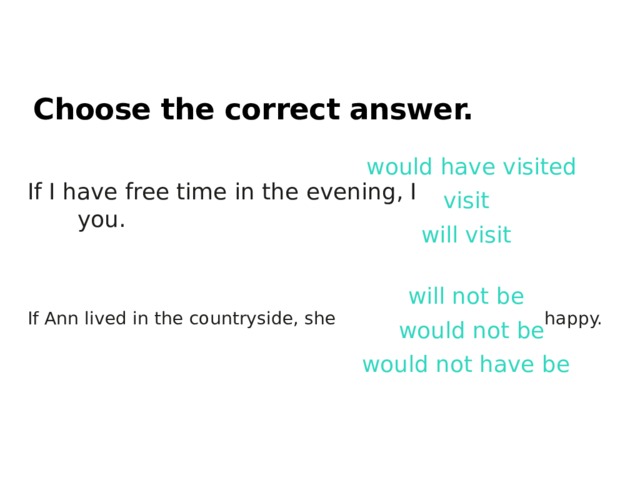
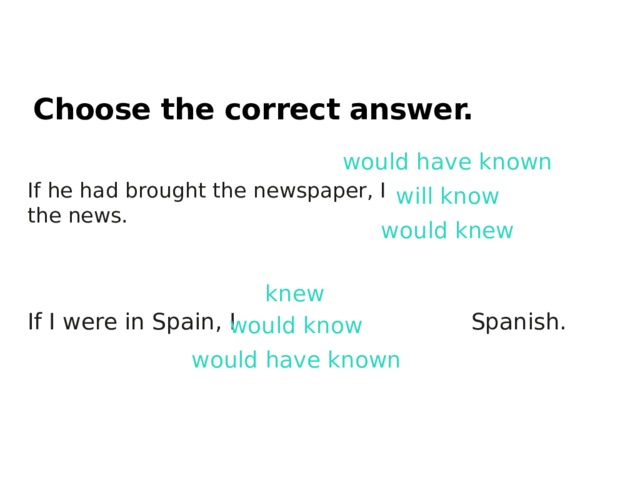
Choose the correct answer.
would have visited
If I have free time in the evening, I you.
visit
will visit
will not be
If Ann lived in the countryside, she happy.
would not be
would not have be
Choose the correct answer.
would have known
If he had brought the newspaper, I the news.
will know
would knew
knew
If I were in Spain, I Spanish.
would know
would have known






Вебинар для учителей

Свидетельство об участии БЕСПЛАТНО!



