
Россия, Мелеуз

СДЕЛАЙТЕ СВОИ УРОКИ ЕЩЁ ЭФФЕКТИВНЕЕ, А ЖИЗНЬ СВОБОДНЕЕ
Благодаря готовым учебным материалам для работы в классе и дистанционно
Скидки до 50 % на комплекты
только до
Готовые ключевые этапы урока всегда будут у вас под рукой
Организационный момент
Проверка знаний
Объяснение материала
Закрепление изученного
Итоги урока

Была в сети 15.03.2026 21:38

Щербакова Ольга Александровна
учитель английского языка
41 год
 918
918
 70 427
Местоположение
Исследовательская работа на тему: Grammatical differences in American and British English
Категория:
Английский язык
17.08.2020 17:10

Просмотр содержимого документа
«Исследовательская работа на тему: Grammatical differences in American and British English»
12
Исследовательская работа на тему:
Grammatical differences in American and British English
Выполнила: Шарахмедова Камила
ученица 9б класса
МОБУ СОШ №5
Работу проверила: Щербакова О.А.
учитель английского языка
МОУ СОШ №5
2019 г.
Contents
Introduction……………………………………………………………………………….…….3
Part1. Reasons causing the differences in American and British English………………………3
Part2. Grammatical differences in American and British English….……………………….…..5
2.1. Using of tenses……………………………………………………………………….5
2.2. Verb agreement with collective nouns….……………………………………………5
2.3. Use of delexical verbs have and take……….…………………………………..……7
2.4. Use of auxiliaries and modals……….……………………………………………….7
2.5. Use of prepositions…………………………………………………………………..8
2.6. Past tense forms………………….…………………………………………………..9
Conclusion…………………………..…………………………………………………………11
List of literature ……………………………………………………………………………….12
Introduction
English is widely used in the world. Time magazine recently suggested that by the turn of the millennium, English will be the Lingua Franca for one quarter of the world’s population. Already today sixty percent of the world’s television and radio broadcasts are produced and delivered in English. Seventy percent of the world’s mail is addressed in English. And it is the language of choice for almost every byte of computer data sent across the globe. As we know, language is a part of culture, and it reflects the characteristic of a nation. Thus, in different countries, even in different regions of the same country, English has many differences. The striking differences happen in American English & British English. The aim of this work is to find grammatical differences in American and British English. Because it is very important for English learners to understand these differences. Besides it is interesting to find these differences in almost similar languages.
Part 1.
Reasons causing the differences.
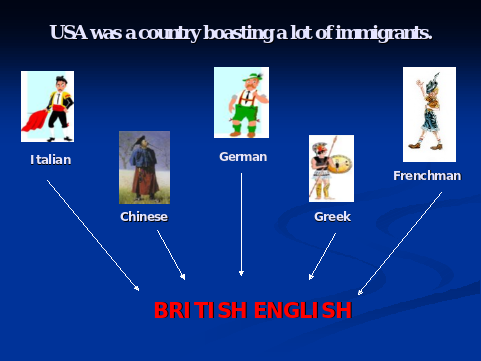
Though the differences of American English and British English are becoming smaller, their differences still exist. As I have already said it is very important for English learners to understand these differences. American English is different from British English. It also reflects the history background of a nation. USA is a country boasting a lot of immigrants. Since the17th century, so many immigrants have come from Britain. British immigrants reached 4 million since 18th century, and they spoke British English. At the same time more and more immigrants from other countries have come to America, such as Germany and France. In addition, there were some immigrants from Japan and China. They needed to speak English to communicate with each other. Accents of these people had influences over English. People from all around the world spoke different languages with different accents. Therefore, as time goes by, British English and American English have many differences. However, generally speaking, American English is the same as British English, and they merge each other in grammar, vocabulary and so on.
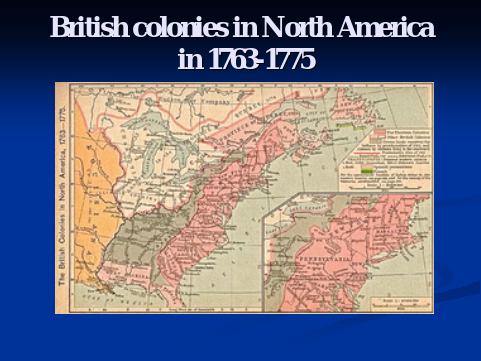
Before American independence, North America was a colony of Britain. London was the center of politics and economy and decided the standard of language. At that time, English of colony and English of native country had no difference. After American independence the mood of nationalism gradually grew. Some people thought besides independence of politics, language should get independence. Even some people held the idea that America should regard Greek as native language, but it was unrealistic. In order to show the differences between American English and British English, Americans reformed the pronunciation, spelling and grammar. Official language of America was British English. As time goes by, American English and British English have so many differences. Generally, Americans speak very slowly with different tone and stress and do not abide by grammatical rules too much. For example, they often omit prepositions and change nouns into verbs, making the sentences simpler.
So, let’s compare these two languages.
Grammatical differences in American English and British English are not obvious, and there are no rules. However, it is important for people to understand these differences. American English and British English do not differ from each other very much, but there is still the most noticeable difference in the using of tenses.
Part 2. Grammatical differences in American and British English.
2.1. Using of tenses.
Speakers of American English generally use the present perfect tense (have/has + past participle) far less than speakers of British English. In spoken American English it is very common to use the simple past tense as an alternative in situations where the present perfect would usually have been used in British English. The two situations where this is especially likely are:
(i) In sentences which talk about an action in the past that has an effect in the present:
American English / British English
Jenny feels ill. She ate too much.
Jenny feels ill. She's eaten too much.
I can't find my keys. Did you see them anywhere?
I can't find my keys. Have you seen them anywhere?
(ii) In sentences which contain the words already, just or yet:
American English / British English
A: Are they going to the show tonight?
B: No. They already saw it.
A: Are they going to the show tonight?
B: No. They've already seen it.
A: Is Samantha here?
B: No, she just left.
A: Is Samantha here?
B: No, she's just left.
2.2. Verb agreement with collective nouns
In British English collective nouns can be followed by a singular or plural verb depending on whether the group is thought of as one idea, or as many individuals , e.g.:
My team is winning.
The other team are all sitting down.
In American English collective nouns are always followed by a singular verb, so an American would usually say:
Which team is losing?
whereas in British English both plural and singular forms of the verb are possible, as in:
Which team is/are losing?
2.3. Use of delexical verbs have and take
In British English, the verb have frequently functions as what is technically referred to as a delexical verb, i.e. it is used in contexts where it has very little meaning in itself but occurs with an object noun which describes an action, e.g.:
I'd like to have a bath.
Have is frequently used in this way with nouns referring to common activities such as washing or resting, e.g.:
She's having a little nap.
I'll just have a quick shower before we go out.
In American English, the verb take, rather than have, is used in these contexts, e.g.:
Joe's taking a shower.
I'd like to take a bath.
Let's take a short vacation.
2.4. Use of auxiliaries and modals
In British English, the auxiliary do is often used as a substitute for a verb when replying to a question, e.g.:
A: Are you coming with us?
B: I might do.
In American English, do is not used in this way, e.g.:
A: Are you coming with us?
B: I might.
In British English needn't is often used instead of don't need to, e.g.:
They needn't come to school today.
They don't need to come to school today.
In American English needn't is very unusual and the usual form is don't need to, i.e.:
They don't need to come to school today.
In British English, shall is sometimes used as an alternative to will to talk about the future, e.g.:
I shall/will be there later.
In American English, shall is unusual and will is normally used.
In British English shall I / we is often used to ask for advice or an opinion, e.g.:
Shall we ask him to come with us?
In American English should is often used instead of shall, i.e.:
Should we ask him to come with us?
2.5. Use of prepositions
In British English, at is used with many time expressions, e.g.:
at Christmas/five 'o' clock
at the weekend
In American English, on is always used when talking about the weekend, not at, e.g.:
Will they still be there on the weekend?
She'll be coming home on weekends.
In British English, at is often used when talking about universities or other institutions, e.g.:
She studied chemistry at university.
In American English, in is often used, e.g.:
She studied French in high school.
In British English, to and from are used with the adjective different, e.g.:
This place is different from/to anything I've seen before.
In American English from and than are used with different, e.g.:
This place is different from/than anything I've seen before.
In British English to is always used after the verb write, e.g.:
I promised to write to her every day.
In American English, to can be omitted after write, i.e.:
I promised to write her every day.
2.6. Past tense forms
Below is a table showing verbs which have different simple past and past participle forms in American and British English. Note that the irregular past forms burnt, dreamt and spoilt are possible in American English, but less common than the forms ending in -ed.
|
Note that have got is possible in American English, but is used with the meaning 'have', gotten is the usual past participle of get, e.g.
|
Conclusion
English is widely used in the world. Cultural and historical influences from different regions have caused the appearance of many English varieties. English is spoken in many countries. English spoken in the UK is very different in every region within the United Kingdom. It is very important for English learners to understand and grasp the differences. Of course, differences in those aspects are not a big problem for even speakers of English as a second language. However, sometimes people will be very confused if they do not know differences between British English and American English in meanings and usage. If you want to use British English, you should try to be consistent in spelling, pronunciation, grammar and vocabulary. As to the development of American English, we should see it from the point of view of history and development. In 1607, British established the first colonial region in America. In 1620, puritans of Britain took a boat named “Mayflower” and established another colonial region. These puritans took the English of Shakespeare and Milton to America. Therefore, American English based itself on British English in the 17th century, and reserved some language characteristics that do not exist in Britain now, such as fall, autumn, sick, ill. After World War II, British English merges into American English. On the one hand, American English influences world greatly. Though British English still plays an important role in literature, its place is less important than before in science and technology. American English tends to replace British English in science and technology. On the other hand, America developed faster than Britain and achieved many things. Its scale of economy exceeds that of Britain. Many books on economy, science, technology and communication are written in American English. In spite of this, Americans and British people still use mostly same words , and there is no obvious boundary. At the same time many words in British English are used by Americans. Therefore, we should take pains to study and understand the differences and avoid some embarrassing situations.
List of literature
Евдокимов М.С., Шлеев Г.М. Краткий справочник американо-британских соответствий. М., 2000.
Клементьева Т.Б., Шенон Д.Happy English 2. Обнинск: Титул, 1996.
Томахин Г.Д. По странам изучаемого языка. М., 1999.
Трофимов З.С. Словарь новых слов и значений в английском языке. М., 1993.
Adrian R.W. Room. The Dictionary of Great Britain. UK, 1999.
Courtney R. Longman Dictionary of Phrasal Verbs. Courtney R., Harlow, UK.
Longman Dictionary of American English. New ed. USA and Harlow, UK,1997
Muller K. Modern English-Russian Dictionary. 5th stereotype ed. 1998
Povey J. Phrasal Verbs and How to Use Them. M., 1990.
Shahbagova J. British-American-Russian glossary.
Вебинар для учителей

Свидетельство об участии БЕСПЛАТНО!