Россия, Пушкино


СДЕЛАЙТЕ СВОИ УРОКИ ЕЩЁ ЭФФЕКТИВНЕЕ, А ЖИЗНЬ СВОБОДНЕЕ
Благодаря готовым учебным материалам для работы в классе и дистанционно
Скидки до 50 % на комплекты
только до
Готовые ключевые этапы урока всегда будут у вас под рукой
Организационный момент
Проверка знаний
Объяснение материала
Закрепление изученного
Итоги урока

Была в сети 21.03.2025 16:01

Kkkkk Uuuuuuuu Vvvvv
Учитель
37 лет
 1 520
1 520
 45 771
Местоположение
Jivany house museum
Категория:
Английский язык
25.06.2020 19:59

Просмотр содержимого документа
«Jivany house museum»
Jivani House- museum
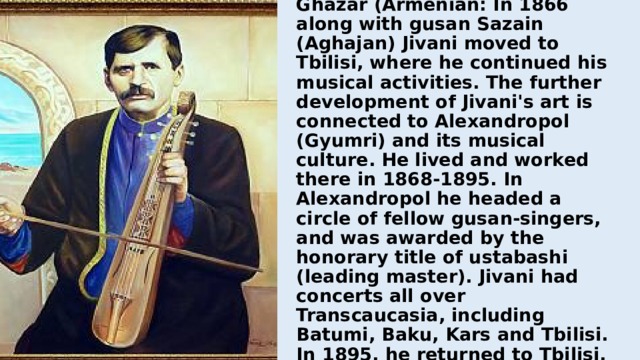
Jivani was born in Kartsakh, near Akhalkalaki, Javakheti. He became an orphan when he was 8, his uncle looked after him. He learned music composition and performance on kemanche and violin with the support of master Ghara-Ghazar (Armenian: In 1866 along with gusan Sazain (Aghajan) Jivani moved to Tbilisi, where he continued his musical activities. The further development of Jivani's art is connected to Alexandropol (Gyumri) and its musical culture. He lived and worked there in 1868-1895. In Alexandropol he headed a circle of fellow gusan-singers, and was awarded by the honorary title of ustabashi (leading master). Jivani had concerts all over Transcaucasia, including Batumi, Baku, Kars and Tbilisi. In 1895, he returned to Tbilisi.
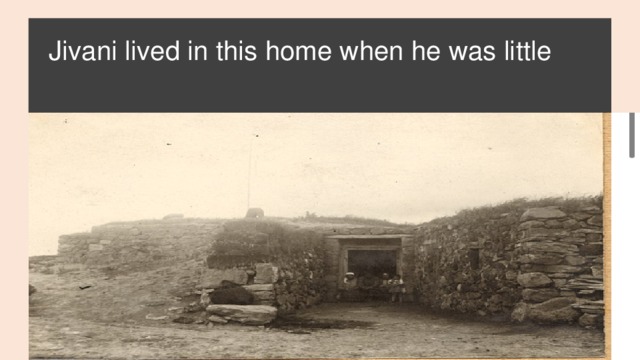
Jivani lived in this home when he was little
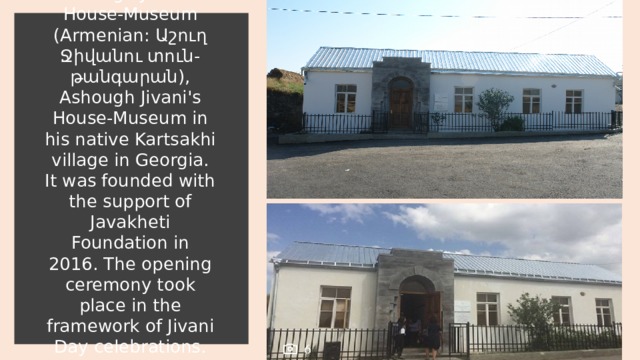
Ashough Jivani's House-Museum (Armenian: Աշուղ Ջիվանու տուն-թանգարան), Ashough Jivani's House-Museum in his native Kartsakhi village in Georgia. It was founded with the support of Javakheti Foundation in 2016. The opening ceremony took place in the framework of Jivani Day celebrations.
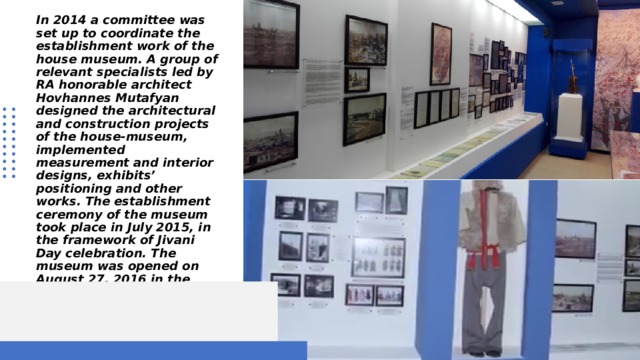
In 2014 a committee was set up to coordinate the establishment work of the house museum. A group of relevant specialists led by RA honorable architect Hovhannes Mutafyan designed the architectural and construction projects of the house-museum, implemented measurement and interior designs, exhibits’ positioning and other works. The establishment ceremony of the museum took place in July 2015, in the framework of Jivani Day celebration. The museum was opened on August 27, 2016 in the framework of the Jivani Day celebrations.
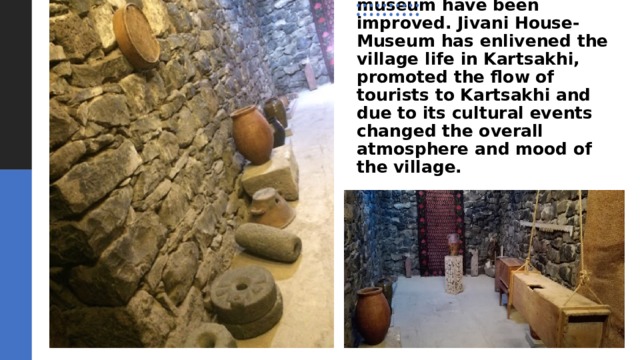
During the construction work the yard, fences and roads of the house-museum have been improved. Jivani House-Museum has enlivened the village life in Kartsakhi, promoted the flow of tourists to Kartsakhi and due to its cultural events changed the overall atmosphere and mood of the village.
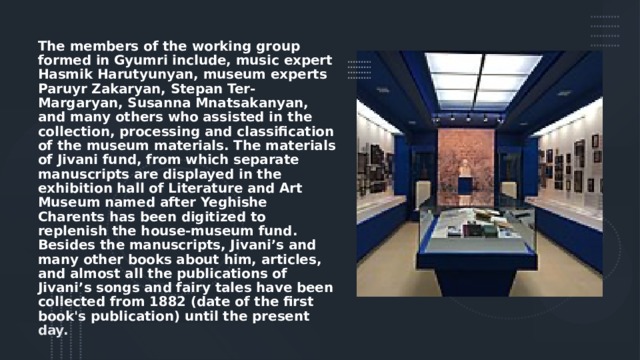
The members of the working group formed in Gyumri include, music expert Hasmik Harutyunyan, museum experts Paruyr Zakaryan, Stepan Ter-Margaryan, Susanna Mnatsakanyan, and many others who assisted in the collection, processing and classification of the museum materials. The materials of Jivani fund, from which separate manuscripts are displayed in the exhibition hall of Literature and Art Museum named after Yeghishe Charents has been digitized to replenish the house-museum fund. Besides the manuscripts, Jivani’s and many other books about him, articles, and almost all the publications of Jivani’s songs and fairy tales have been collected from 1882 (date of the first book's publication) until the present day.
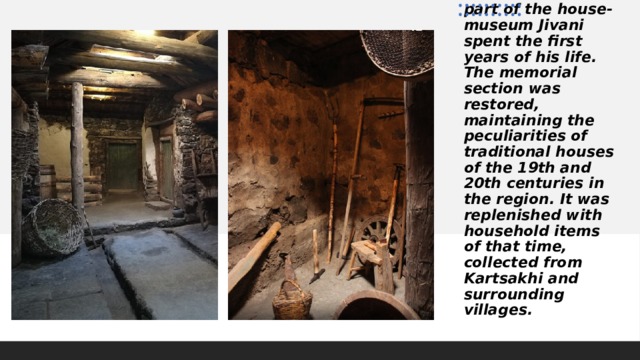
On August 27, 2017, Support to Javakheti Foundation opened the memorial section of the house-museum. In this part of the house-museum Jivani spent the first years of his life. The memorial section was restored, maintaining the peculiarities of traditional houses of the 19th and 20th centuries in the region. It was replenished with household items of that time, collected from Kartsakhi and surrounding villages.
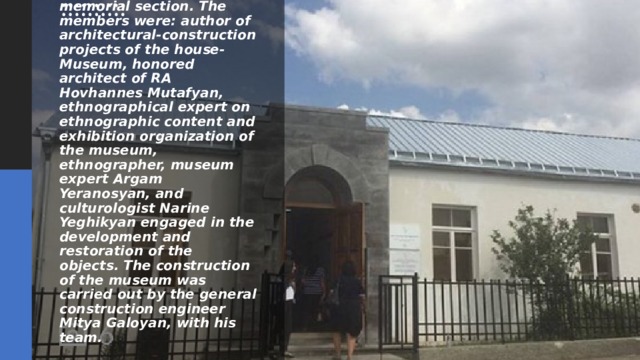
Through the efforts of the executive board of “Support to Javakheti” Foundation, a team of highly qualified and dedicated professionals has been involved in the reconstruction of the memorial section. The members were: author of architectural-construction projects of the house-Museum, honored architect of RA Hovhannes Mutafyan, ethnographical expert on ethnographic content and exhibition organization of the museum, ethnographer, museum expert Argam Yeranosyan, and culturologist Narine Yeghikyan engaged in the development and restoration of the objects. The construction of the museum was carried out by the general construction engineer Mitya Galoyan, with his team.
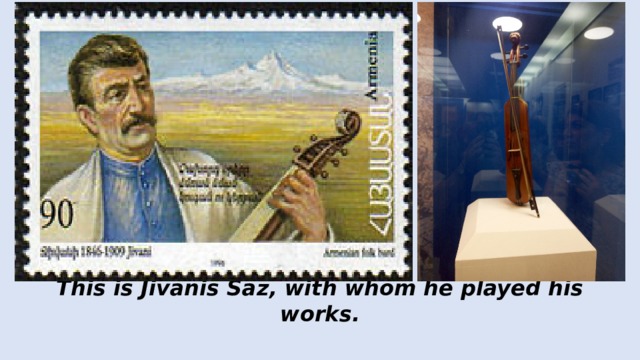
This is Jivanis Saz, with whom he played his works.





Вебинар для учителей

Свидетельство об участии БЕСПЛАТНО!