


Россия, с. Сажино

СДЕЛАЙТЕ СВОИ УРОКИ ЕЩЁ ЭФФЕКТИВНЕЕ, А ЖИЗНЬ СВОБОДНЕЕ
Благодаря готовым учебным материалам для работы в классе и дистанционно
Скидки до 50 % на комплекты
только до
Готовые ключевые этапы урока всегда будут у вас под рукой
Организационный момент
Проверка знаний
Объяснение материала
Закрепление изученного
Итоги урока
Была в сети 02.09.2026 16:18
Заводова Екатерина Александровна
Учитель английского языка
 4 975
4 975
 12 897
Местоположение
Специализация
Комплекс лексико-грамматических упражнений по английскому языку по теме: "Inventions", 11 класс
Категория:
Английский язык
19.05.2018 14:28

Просмотр содержимого документа
«Комплекс лексико-грамматических упражнений по английскому языку по теме: "Inventions", 11 класс»
ENGLISH WORKSEETS
Date_______________
Name_______________________________________________
Class________________
Topic “Inventions”
Exercise 1. Answer the questions:
a) What gadgets are useful in the kitchen?
b) What gadgets help in getting information?
c) What gadgets help do a lot of things faster and better?
d) What gadgets help connect people who lives so far away from each other?
Exercise 2. Make up short dialogs to present the given information in the right way.
card 1
Who was…?
What did he (they) invent?
Who was its designer?
| INVENTIONS AND THEIR INVENTORS - to invent telephone (Alexander Graham Bell; an American engineer; 1876) - to produce the world’s first petrol driven motor car (Karl Benz; Germany; 1885) - to built the first airplane (Wilbur and Orville Wright; the USA; 1903) - to develop the first personal stereo – Sony Walkman (Akita Morita; Japan; 1979) - to built the first vacuum cleaner (James M. Spangler; the USA; 1908) - to create the world’s first car assembly line (Henry Ford; an automobile manufacturer; the USA; 1908) - to design the first artificial satellite (Sergei Korolyev; Russia; 1957) - to create Microsoft-DOS or Disk Operating System (Bill gates; the USA; 1980) - to pioneer photography (Nicephore Niepce; France; 1829) - to open the world`s first cinema (the Lumiere brothers; France; Paris; 1895) - to invent television (john Logie Baird; Scotland; 1926) - to develop the idea of cloning (Ian Wilmat; Scotland; 1997) |
Exercise 3. Match the gadgets and machines people use with their functions. Name the gadgets people use (“in chain”).
card 2
| MODERN INVENTIONS IN PEOPLE’S LIFE | |
| Gadgets and machines people use | What do people use them for? |
| 1- a computer | a- to cut and collect grass |
| 2- a TV set | b- to do roller skating in the streets, in parks |
| 3- a vacuum cleaner | c- to wake up people and tell the time |
| 4- a mobile telephone | d- to write programmes, to play computer games, to find and use information |
| 5- a microwave | e- to take photographs |
| 6- a TV remote-control unit | f- to perform everyday cleaning tasks |
| 7- a talking alarm clock | g- to sew clothes, to do embroidery |
| 8- a video recorder or player | h- to operate the TV set from a distance |
| 9- a camera | i- to receive or make calls from any place; to send and receive messages |
| 10- a solar powered calculator | j- to build up one’s strength |
| 11- a dishwasher | k- to see TV programmes, to have fun and entertain |
| 12- a mower | l- to record a TV programme on a different channel; to watch pre-recorded videos |
| 13- a body building machine | m- to do calculations in sunlight or daylight |
| 14- a sewing machine | n- to wash dishes |
| 15- roller blades | o-to cook, to defrost, to reheat pre-prepared food |
| 1- ; 2- ; 3- ; 4- ; 5- ; 6- ; 7- ; 8- ; 9- ; 10- ; 11- ; 12- ; 13- ; 14- ; 15- . | |
Exercise 4. A conversation at a shop. Discuss the situation (see the example).
Dialogue.
1.(shop assistant) - Hello. What can I do for you?
2.(shopper) - I’d like to buy a camera.
1.- What kind of camera would you prefer to buy?
2.- I think a digital camera.
1. - Here you are.
2. -Thank you.
1. - Good bye. I am so happy to have helped you.
2. - Good bye. Have a nice day.


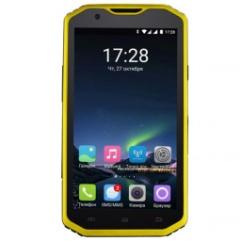
Exercise 5. Listen to five short texts about modern appliances and match their numbers with the names of the appliances given below. Choose the names of five appliances only. There is one EXTRA (лишнее) name which you don’t need to use.
| A – a car; B – a microwave oven; C – a cordless phone; D – a mobile telephone; E – a camera; F – a computer |
|
Exercise 6. What inventions had been made by the end of the 19- 20th century?
1. ……………..… ..had been invented by the end of the 19th century.
2. ……………...…. had been pioneered by the end of the 19th century.
3. ……………..…. .had been patented by the end of the 20th century.
4. ……………..….. had been produced by the end of the 19th century.
5. ……………..….. had been designed by the end of the 20th century.
6. ………………… had been tested by the end of the 20th century.
Reflexion.
- Can we imagine our life without inventions?
- Will they change the world?
- What modern inventions do you know?
- How often do you use them?
- Do inventions make our life easier?
3
Вебинар для учителей

🎓 Свидетельство об участии ✨БЕСПЛАТНО!✨



