Россия, Улан-Удэ

СДЕЛАЙТЕ СВОИ УРОКИ ЕЩЁ ЭФФЕКТИВНЕЕ, А ЖИЗНЬ СВОБОДНЕЕ
Благодаря готовым учебным материалам для работы в классе и дистанционно
Скидки до 50 % на комплекты
только до
Готовые ключевые этапы урока всегда будут у вас под рукой
Организационный момент
Проверка знаний
Объяснение материала
Закрепление изученного
Итоги урока
Была в сети 23.12.2024 10:41

Банзарова Туяна Алексеевна
учитель английского языка
52 года
 477
477
 110 412
Местоположение
Специализация
Лекция 2. Self care for stronger teachers by Jennifer Eidum
Категория:
Английский язык
12.12.2024 15:04

Просмотр содержимого документа
«Лекция 2. Self care for stronger teachers by Jennifer Eidum»
Social Emotional Learning:
Self-Care for Stronger Teachers
February 22, 2024 Dr. Jennifer Eidum
Associate Professor of English, Elon University English Language Specialist
Teacher Self-Care Practices
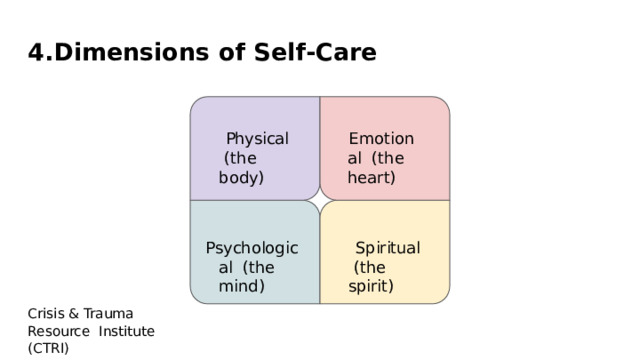
4 . Dimensions of Self-Care
Physical (the body)
Emotional (the heart)
Ps y chological (the mind)
Spiritual (the spirit)
Crisis & Trauma Resource Institute (CTRI)

What is Self-Care?
Myth
Reality
Self-care is treating or pampering yourself
Self-care is taking care of your physical and mental health (i.e. going to the doctor or dentist, replacing exercise clothing, or having a healthy lunch)
Self-care is selfish Self-care seeks balance between the needs of the
people you care about and your individual needs
You can find a list of good Self-care depends on YOU!
self-care behaviors
The best self-care is Self-care is often social, sharing important parts of
spending time with yourself yourself with others
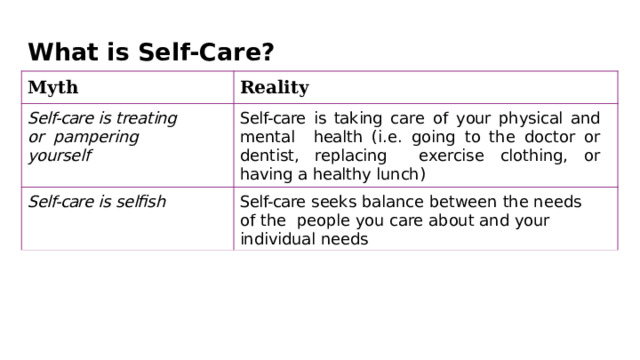
What is Self-Care?
Myth
Reality
Self-care is treating or pampering yourself
Self-care is taking care of your physical and mental health (i.e. going to the doctor or dentist, replacing exercise clothing, or having a healthy lunch)
Self-care is selfish
Self-care seeks balance between the needs of the people you care about and your individual needs
You can find a list of good Self-care depends on YOU!
self-care behaviors
The best self-care is Self-care is often social, sharing important parts of
spending time with yourself yourself with others
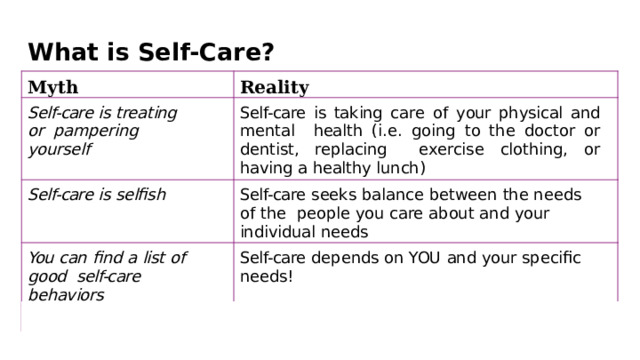
What is Self-Care?
Myth
Reality
Self-care is treating or pampering yourself
Self-care is taking care of your physical and mental health (i.e. going to the doctor or dentist, replacing exercise clothing, or having a healthy lunch)
Self-care is selfish
Self-care seeks balance between the needs of the people you care about and your individual needs
You can find a list of good self-care behaviors
Self-care depends on YOU and your specific needs!
The best self-care is Self-care is often social, sharing important parts of
spending time with yourself yourself with others
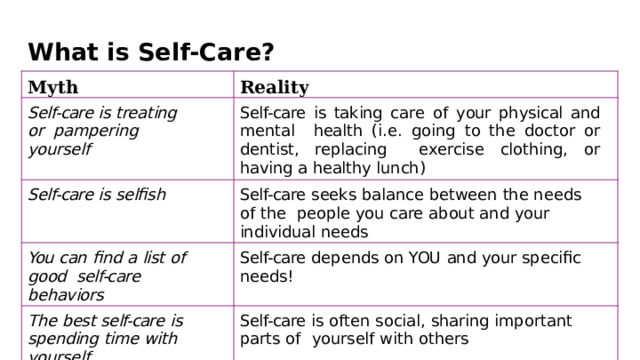
What is Self-Care?
Myth
Reality
Self-care is treating or pampering yourself
Self-care is taking care of your physical and mental health (i.e. going to the doctor or dentist, replacing exercise clothing, or having a healthy lunch)
Self-care is selfish
Self-care seeks balance between the needs of the people you care about and your individual needs
You can find a list of good self-care behaviors
Self-care depends on YOU and your specific needs!
The best self-care is spending time with yourself
Self-care is often social, sharing important parts of yourself with others
![Self-Care Definition “ [...] self-care is further defined as the ability to care for oneself through awareness, self-control, and self-reliance in order to achieve, maintain, or promote optimal health and well-being. Three attributes were identified: awareness, self-control, and self-reliance.” Martínez et al. (2021)](https://static.multiurok.ru/multiurok/html/2024/12/12/s_675ad0de01403/img7.jpg)
Self-Care Definition
“ [...] self-care is further defined as the ability to care for oneself through awareness, self-control, and self-reliance in order to achieve, maintain, or promote optimal health and well-being. Three attributes were identified: awareness,
self-control, and self-reliance.”
Martínez et al. (2021)
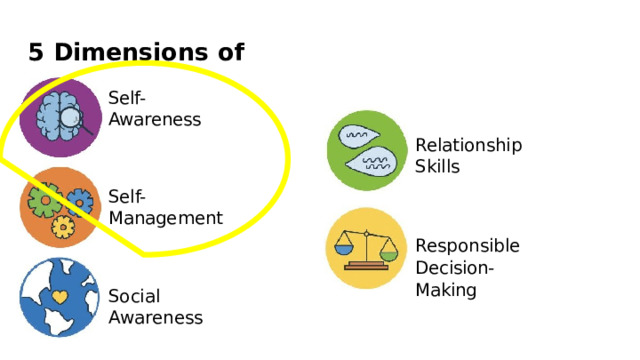
5 Dimensions of SEL
Self-Awareness
Relationship Skills
Self-Management
Responsible Decision-Making
Social Awareness
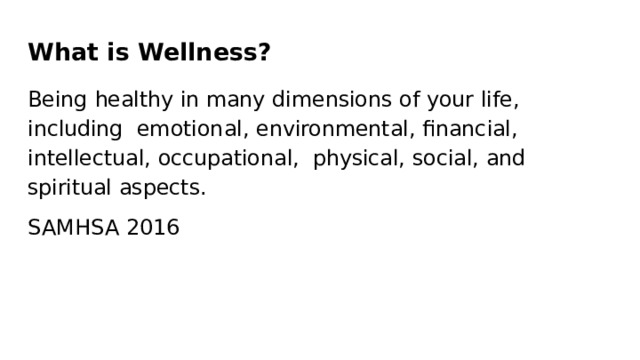
What is Wellness?
Being healthy in many dimensions of your life, including emotional, environmental, financial, intellectual, occupational, physical, social, and spiritual aspects.
SAMHSA 2016

Teacher Self-Care Practices
1. Self Assessments
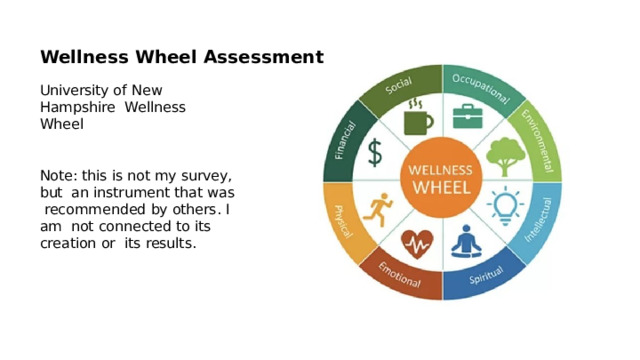
Wellness Wheel Assessment
University of New Hampshire Wellness Wheel
Note: this is not my survey, but an instrument that was recommended by others. I am not connected to its creation or its results.
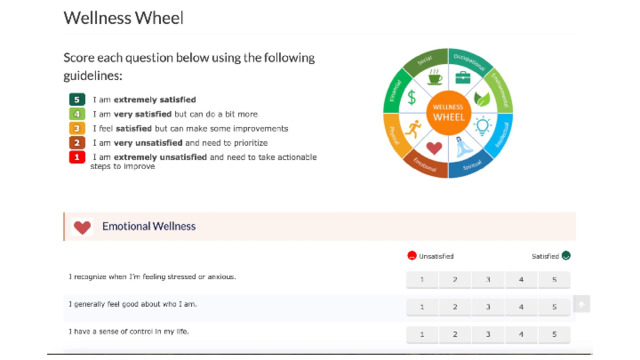
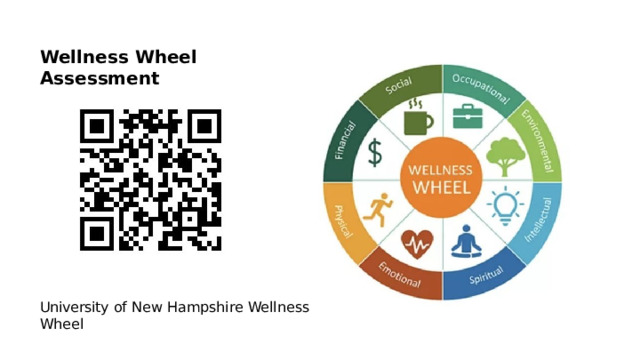
Wellness Wheel Assessment
University of New Hampshire Wellness Wheel
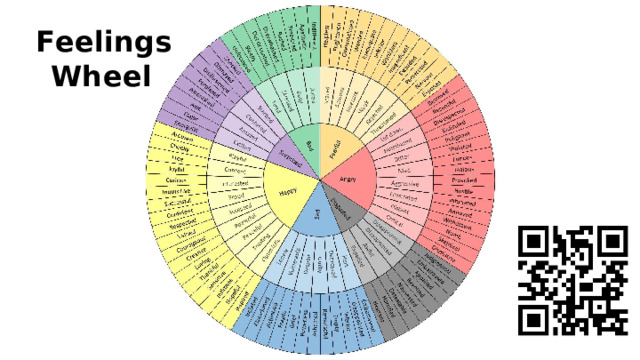
F eelings Wheel
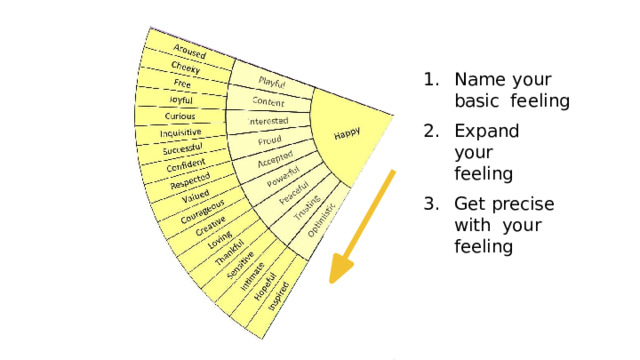
- Name your basic feeling
- Expand your feeling
- Get precise with your feeling
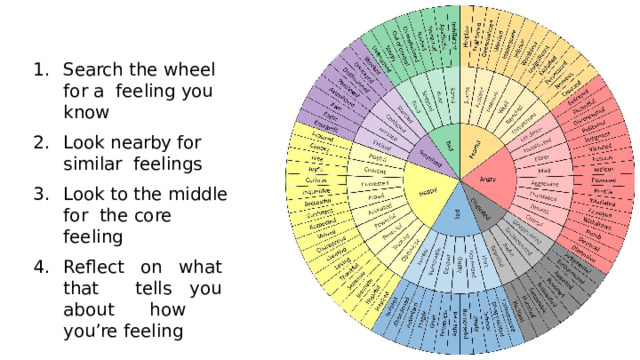
- Search the wheel for a feeling you know
- Look nearby for similar feelings
- Look to the middle for the core feeling
- Reflect on what that tells you about how you’re feeling
2. Work Prioritization
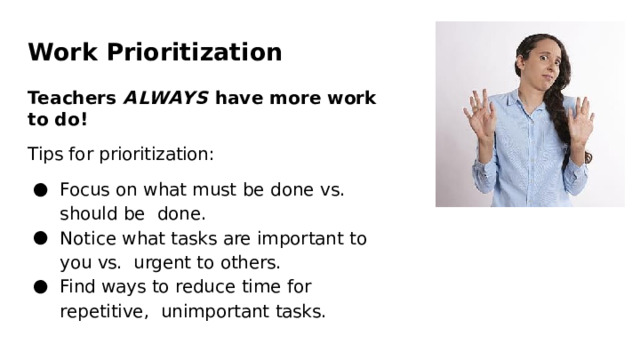
Work Prioritization
Teachers ALWAYS have more work to do!
Tips for prioritization:
- Focus on what must be done vs. should be done.
- Notice what tasks are important to you vs. urgent to others.
- Find ways to reduce time for repetitive, unimportant tasks.

Work Prioritization
Teachers ALWAYS have more work to do!
Tips for prioritization:
- Celebrate completing 1-3 “must do” tasks each day.
- Schedule uninterrupted time for important tasks (more time than you’d think!).
- Take breaks to refresh your mood & energy (which also helps you look at the big picture).

Your job will never love you back.
3. Integrate Self-Care Strategies
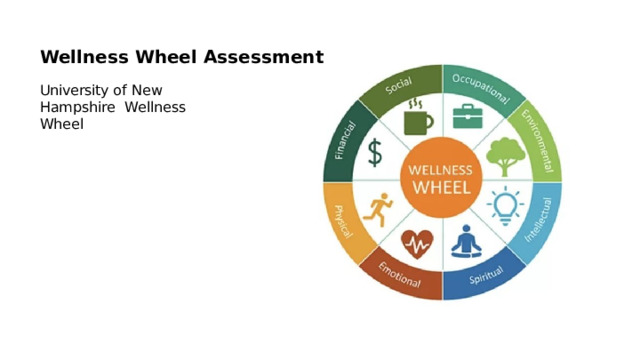
Wellness Wheel Assessment
University of New Hampshire Wellness Wheel
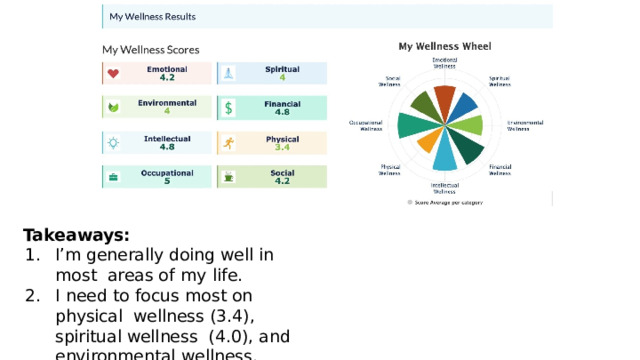
Takeaways:
- I’m generally doing well in most areas of my life.
- I need to focus most on physical wellness (3.4), spiritual wellness (4.0), and environmental wellness.
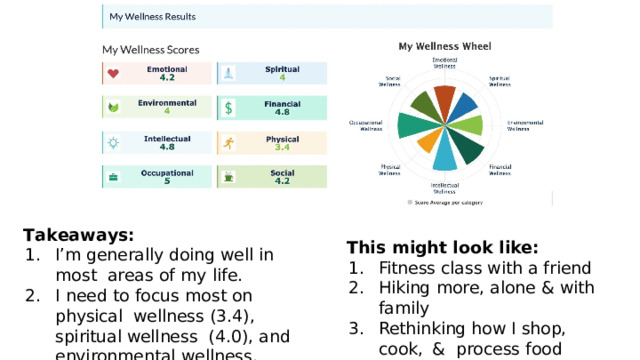
T a k eaw a ys:
This might look like:
- I’m generally doing well in most areas of my life.
- I need to focus most on physical wellness (3.4), spiritual wellness (4.0), and environmental wellness.
- Fitness class with a friend
- Hiking more, alone & with family
- Rethinking how I shop, cook, & process food waste

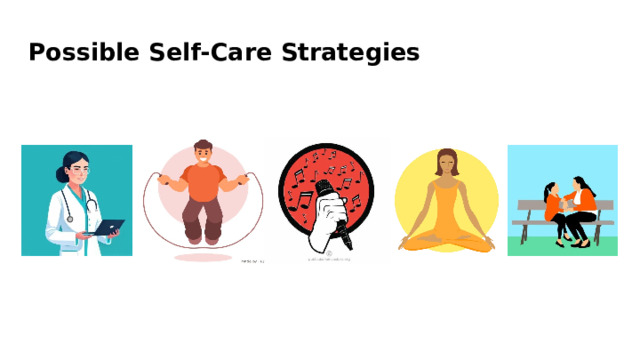
Possible Self-Care Strategies
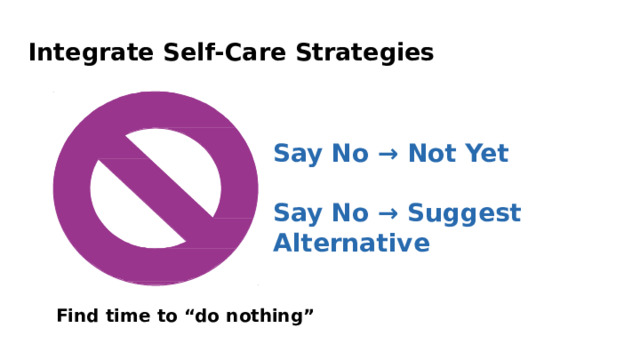
Integrate Self-Care Strategies
Say No → Not Yet
Say No → Suggest Alternative
Find time to “do nothing”
Thank you!
Dr. Jennifer Eidum
Associate Professor of English, Elon University English Language Specialist
jeidum@elon.edu




Вебинар для учителей
Свидетельство об участии БЕСПЛАТНО!