Россия, Воронеж


СДЕЛАЙТЕ СВОИ УРОКИ ЕЩЁ ЭФФЕКТИВНЕЕ, А ЖИЗНЬ СВОБОДНЕЕ
Благодаря готовым учебным материалам для работы в классе и дистанционно
Скидки до 50 % на комплекты
только до
Готовые ключевые этапы урока всегда будут у вас под рукой
Организационный момент
Проверка знаний
Объяснение материала
Закрепление изученного
Итоги урока

Был в сети 29.06.2020 15:30

Ермаков Сергей Алексеевич
преподаватель английского языка
58 лет
 1 788
1 788
 39 244
Местоположение
Специализация
Mechanical Properties of Metals
Категория:
Английский язык
14.12.2019 05:45

Просмотр содержимого документа
«Mechanical Properties of Metals»
Mechanical Properties of Metals
ГБПОУ ВО «Воронежский политехнический техникум»
Ермаков Сергей Алексеевич
Преподаватель иностранного языка
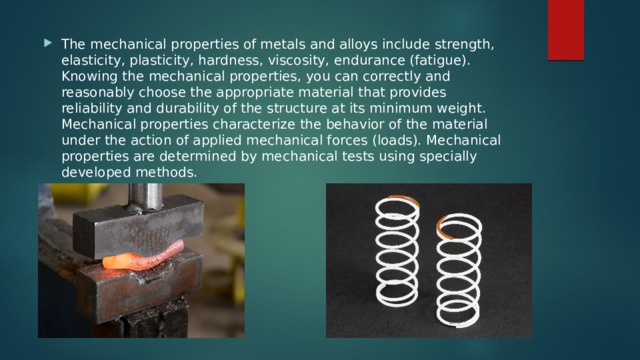
- The mechanical properties of metals and alloys include strength, elasticity, plasticity, hardness, viscosity, endurance (fatigue). Knowing the mechanical properties, you can correctly and reasonably choose the appropriate material that provides reliability and durability of the structure at its minimum weight. Mechanical properties characterize the behavior of the material under the action of applied mechanical forces (loads). Mechanical properties are determined by mechanical tests using specially developed methods.
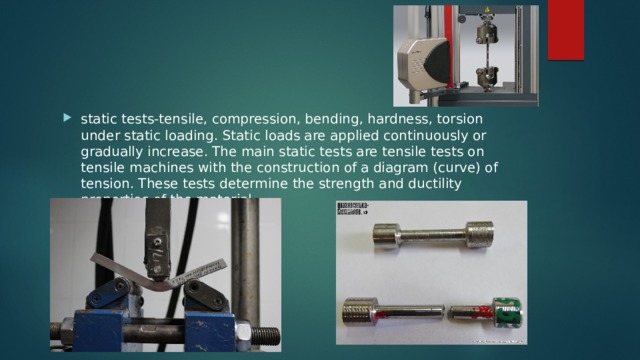
- static tests-tensile, compression, bending, hardness, torsion under static loading. Static loads are applied continuously or gradually increase. The main static tests are tensile tests on tensile machines with the construction of a diagram (curve) of tension. These tests determine the strength and ductility properties of the material.
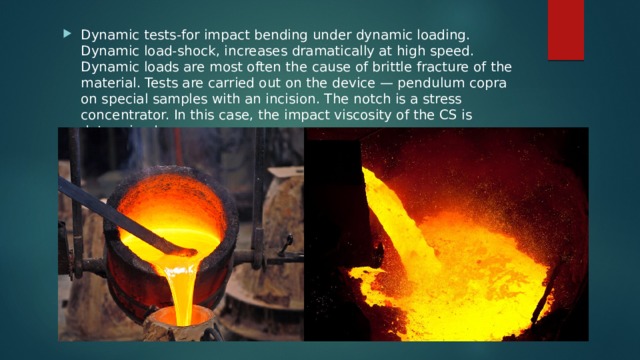
- Dynamic tests-for impact bending under dynamic loading. Dynamic load-shock, increases dramatically at high speed. Dynamic loads are most often the cause of brittle fracture of the material. Tests are carried out on the device — pendulum copra on special samples with an incision. The notch is a stress concentrator. In this case, the impact viscosity of the CS is determined.
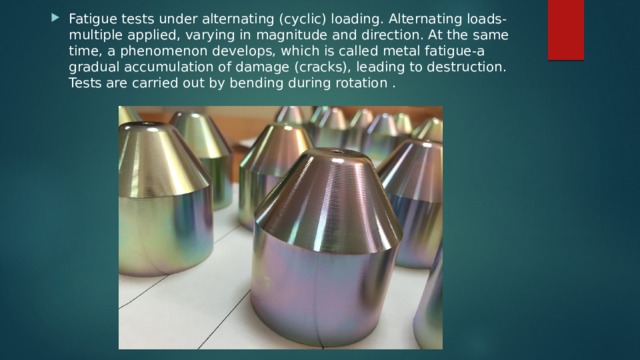
- Fatigue tests under alternating (cyclic) loading. Alternating loads-multiple applied, varying in magnitude and direction. At the same time, a phenomenon develops, which is called metal fatigue-a gradual accumulation of damage (cracks), leading to destruction. Tests are carried out by bending during rotation .
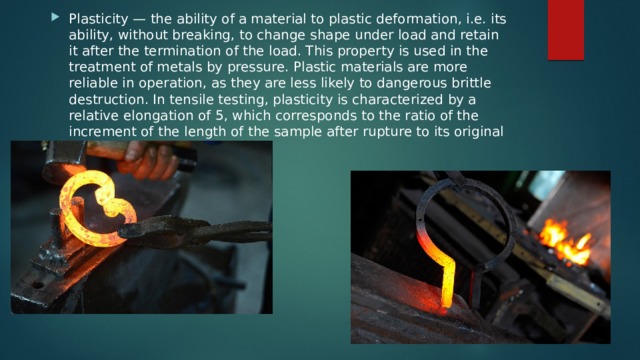
- Plasticity — the ability of a material to plastic deformation, i.e. its ability, without breaking, to change shape under load and retain it after the termination of the load. This property is used in the treatment of metals by pressure. Plastic materials are more reliable in operation, as they are less likely to dangerous brittle destruction. In tensile testing, plasticity is characterized by a relative elongation of 5, which corresponds to the ratio of the increment of the length of the sample after rupture to its original length as a percentage.
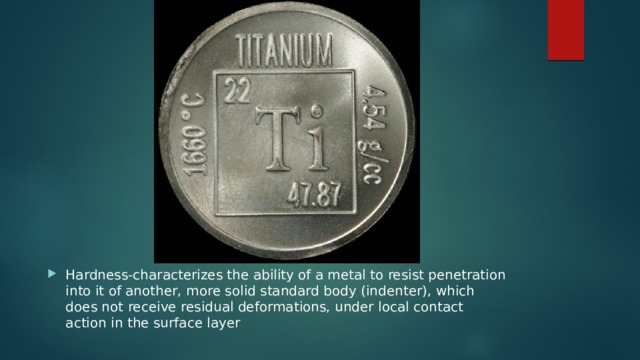
- Hardness-characterizes the ability of a metal to resist penetration into it of another, more solid standard body (indenter), which does not receive residual deformations, under local contact action in the surface layer
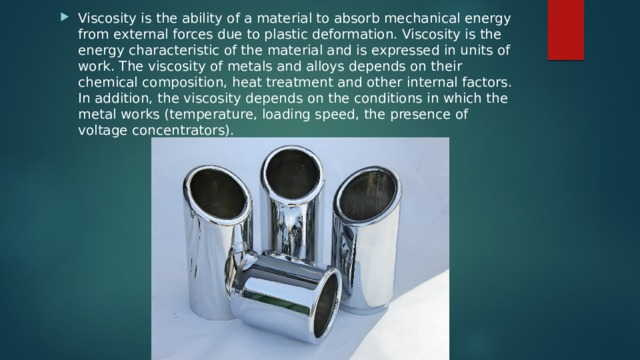
- Viscosity is the ability of a material to absorb mechanical energy from external forces due to plastic deformation. Viscosity is the energy characteristic of the material and is expressed in units of work. The viscosity of metals and alloys depends on their chemical composition, heat treatment and other internal factors. In addition, the viscosity depends on the conditions in which the metal works (temperature, loading speed, the presence of voltage concentrators).
- Cold brittleness — the tendency of metal to the transition to the brittle state with decreasing temperature. With increasing temperature, the viscosity of the metal increases . When the temperature changes, the yield strength of the SRT 2 also changes significantly, and the tear resistance of the SRT does not depend on the temperature. At a temperature above GV yield strength is less than the tear resistance. When the load increases, first plastic deformation occurs, and then destruction. The metal is in a viscous state.
- fatigue is the destruction of a material under repeated alternating stresses, the value of which does not exceed the yield strength.
- Fatigue strength — the ability of a material to resist fatigue. Fatigue strength characteristics are determined by cyclic tests "bending during rotation". The main characteristics of the fatigue strength:
- * endurance limit — the maximum stress sustained by the metal for an arbitrarily large number of loading cycles;
- * limited endurance limit — the maximum stress sustained by the metal for a certain number of loading cycles or time;
- * survivability — the difference between the number of cycles to complete failure and the number of cycles to fatigue crack.
THE END THANKS FOR ATTENTION








Вебинар для учителей

Свидетельство об участии БЕСПЛАТНО!