Россия, Воронеж


СДЕЛАЙТЕ СВОИ УРОКИ ЕЩЁ ЭФФЕКТИВНЕЕ, А ЖИЗНЬ СВОБОДНЕЕ
Благодаря готовым учебным материалам для работы в классе и дистанционно
Скидки до 50 % на комплекты
только до
Готовые ключевые этапы урока всегда будут у вас под рукой
Организационный момент
Проверка знаний
Объяснение материала
Закрепление изученного
Итоги урока

Был в сети 29.06.2020 15:30

Ермаков Сергей Алексеевич
преподаватель английского языка
58 лет
 1 789
1 789
 39 244
Местоположение
Специализация
Milling machine
Категория:
Английский язык
14.12.2019 06:06

Просмотр содержимого документа
«Milling machine»
Milling machine
ГБПОУ ВО «Воронежский политехнический техникум»
Ермаков Сергей Алексеевич
Преподаватель иностранного языка
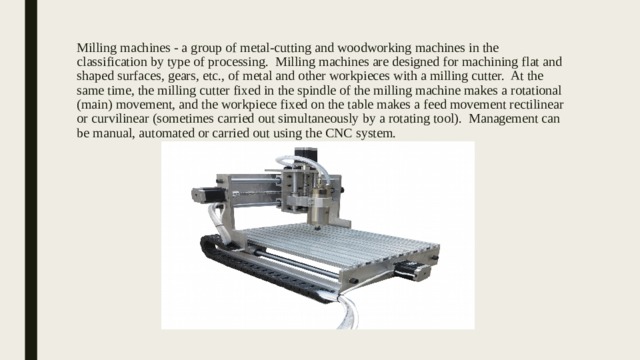
Milling machines - a group of metal-cutting and woodworking machines in the classification by type of processing. Milling machines are designed for machining flat and shaped surfaces, gears, etc., of metal and other workpieces with a milling cutter. At the same time, the milling cutter fixed in the spindle of the milling machine makes a rotational (main) movement, and the workpiece fixed on the table makes a feed movement rectilinear or curvilinear (sometimes carried out simultaneously by a rotating tool). Management can be manual, automated or carried out using the CNC system.
Types of milling machines
- universal (with a rotary table);
- horizontal milling cantilever (with a horizontal spindle and console);
- widely universal (with additional milling heads);
- Shirokouniversalnye instrumental (with the vertical working plane of the main table and the transverse movement of the spindle units);
- vertically milling (with a vertical spindle), including cantilever;
- non-console (also called with a cross table);
- with a mobile portal;
- copy milling; continuous milling, including rotary milling; drum milling .
Main parts of the milling machine
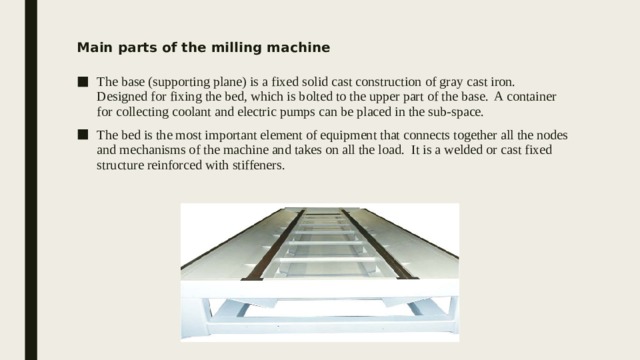
- The base (supporting plane) is a fixed solid cast construction of gray cast iron. Designed for fixing the bed, which is bolted to the upper part of the base. A container for collecting coolant and electric pumps can be placed in the sub-space.
- The bed is the most important element of equipment that connects together all the nodes and mechanisms of the machine and takes on all the load. It is a welded or cast fixed structure reinforced with stiffeners.
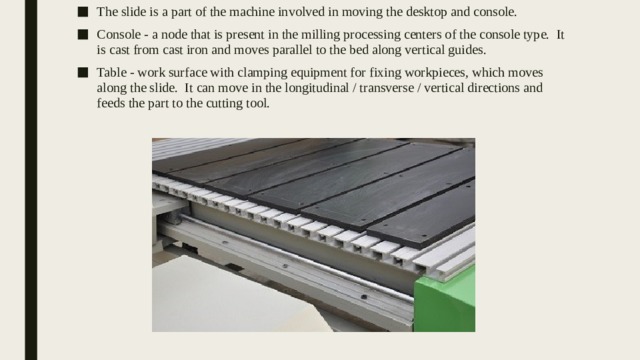
- The slide is a part of the machine involved in moving the desktop and console.
- Console - a node that is present in the milling processing centers of the console type. It is cast from cast iron and moves parallel to the bed along vertical guides.
- Table - work surface with clamping equipment for fixing workpieces, which moves along the slide. It can move in the longitudinal / transverse / vertical directions and feeds the part to the cutting tool.
Electrical equipment - this category includes machine elements that are responsible for the mobility of mechanical parts and the operation of auxiliary elements:
- feed / main / auxiliary drive drives;
- alarm system for equipment malfunctions;
- work area lighting;
- other auxiliary electrical controls.
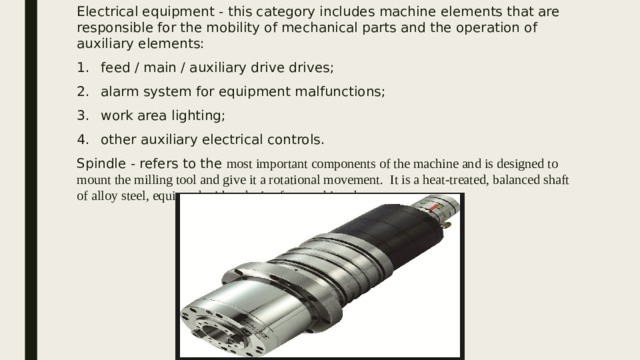
Spindle - refers to the most important components of the machine and is designed to mount the milling tool and give it a rotational movement. It is a heat-treated, balanced shaft of alloy steel, equipped with a device for attaching the cutter.
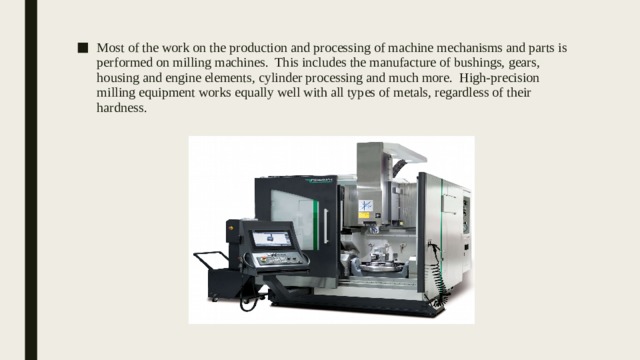
- Most of the work on the production and processing of machine mechanisms and parts is performed on milling machines. This includes the manufacture of bushings, gears, housing and engine elements, cylinder processing and much more. High-precision milling equipment works equally well with all types of metals, regardless of their hardness.
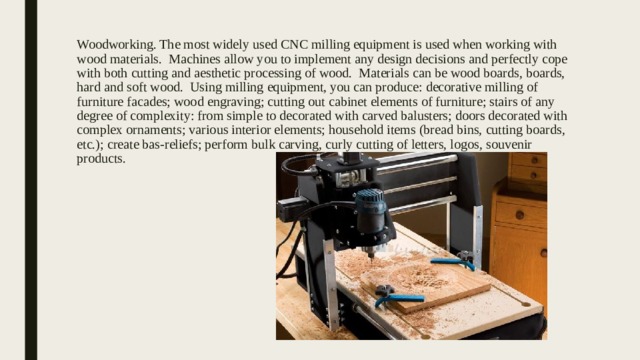
Woodworking. The most widely used CNC milling equipment is used when working with wood materials. Machines allow you to implement any design decisions and perfectly cope with both cutting and aesthetic processing of wood. Materials can be wood boards, boards, hard and soft wood. Using milling equipment, you can produce: decorative milling of furniture facades; wood engraving; cutting out cabinet elements of furniture; stairs of any degree of complexity: from simple to decorated with carved balusters; doors decorated with complex ornaments; various interior elements; household items (bread bins, cutting boards, etc.); create bas-reliefs; perform bulk carving, curly cutting of letters, logos, souvenir products.
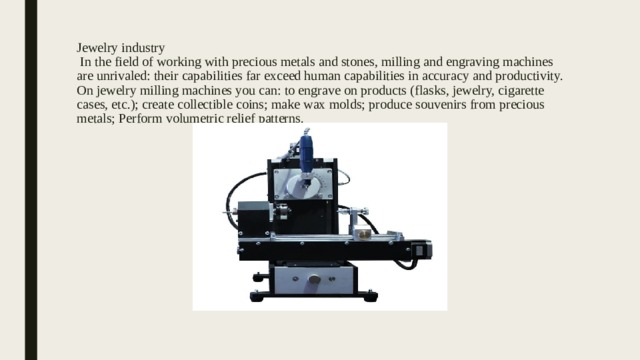
Jewelry industry In the field of working with precious metals and stones, milling and engraving machines are unrivaled: their capabilities far exceed human capabilities in accuracy and productivity. On jewelry milling machines you can: to engrave on products (flasks, jewelry, cigarette cases, etc.); create collectible coins; make wax molds; produce souvenirs from precious metals; Perform volumetric relief patterns.
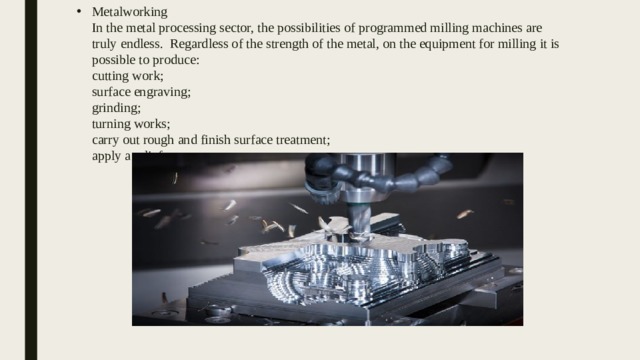
- Metalworking In the metal processing sector, the possibilities of programmed milling machines are truly endless. Regardless of the strength of the metal, on the equipment for milling it is possible to produce: cutting work; surface engraving; grinding; turning works; carry out rough and finish surface treatment; apply a relief pattern.


Вебинар для учителей

Свидетельство об участии БЕСПЛАТНО!