

Россия, Ковернино

СДЕЛАЙТЕ СВОИ УРОКИ ЕЩЁ ЭФФЕКТИВНЕЕ, А ЖИЗНЬ СВОБОДНЕЕ
Благодаря готовым учебным материалам для работы в классе и дистанционно
Скидки до 50 % на комплекты
только до
Готовые ключевые этапы урока всегда будут у вас под рукой
Организационный момент
Проверка знаний
Объяснение материала
Закрепление изученного
Итоги урока
Была в сети 11.03.2026 15:51

Померанцева Юлия Викторовна
учитель английского языка
 7 515
7 515
 7 528
7 528 
Местоположение
Специализация
"Модальные глаголы"
Категория:
Английский язык
04.05.2016 14:54

Просмотр содержимого документа
«"Модальные глаголы"»
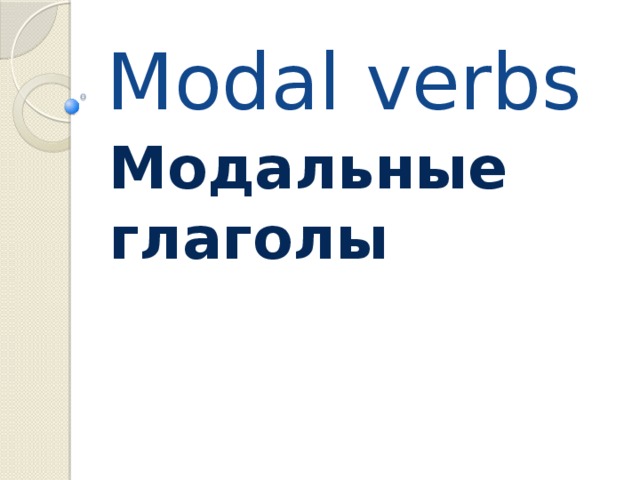
Modal verbs
Модальные глаголы
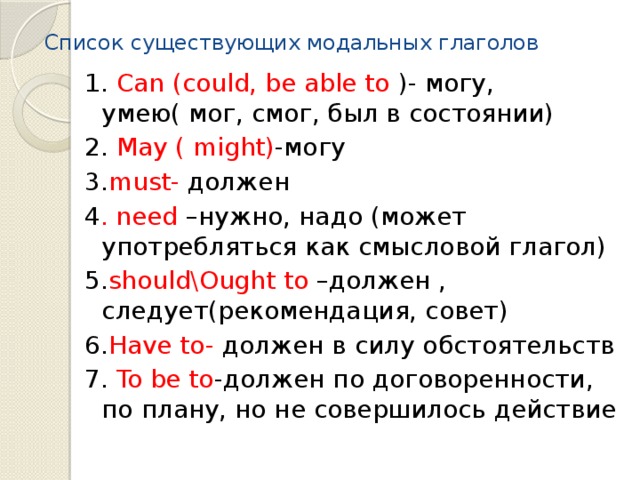
Список существующих модальных глаголов
1. Can (could, be able to )- могу, умею( мог, смог, был в состоянии)
2. May ( might) -могу
3. must- должен
4 . need –нужно, надо (может употребляться как смысловой глагол)
5. should\Ought to –должен , следует(рекомендация, совет)
6. Have to- должен в силу обстоятельств
7. To be to -должен по договоренности, по плану, но не совершилось действие
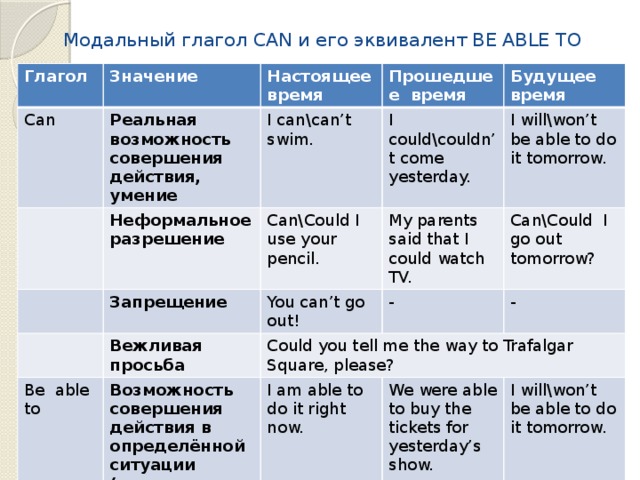
Модальный глагол CAN и его эквивалент BE ABLE TO
Глагол
Значение
Can
Настоящее время
Реальная возможность совершения действия, умение
Прошедшее время
I can\can’t swim.
Неформальное разрешение
Запрещение
Будущее время
I could\couldn’t come yesterday.
Can\Could I use your pencil.
Вежливая просьба
You can’t go out!
My parents said that I could watch TV.
I will\won’t be able to do it tomorrow.
Be able to
Can\Could I go out tomorrow?
-
Could you tell me the way to Trafalgar Square, please?
Возможность совершения действия в определённой ситуации (часто преодолевая трудности)
-
I am able to do it right now.
We were able to buy the tickets for yesterday’s show.
I will\won’t be able to do it tomorrow.
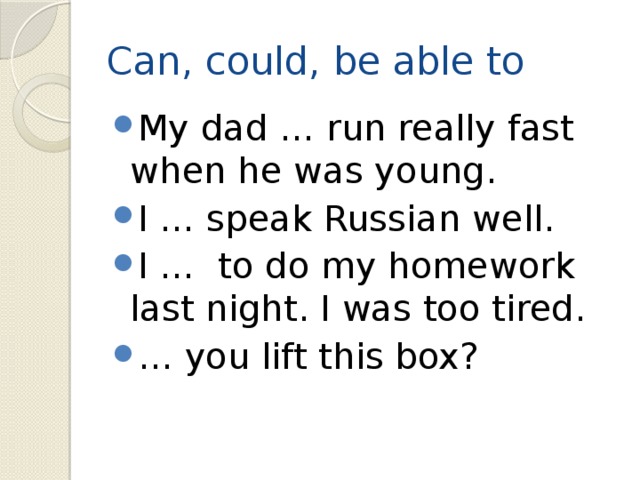
Can, could, be able to
- My dad … run really fast when he was young.
- I … speak Russian well.
- I … to do my homework last night. I was too tired.
- … you lift this box?
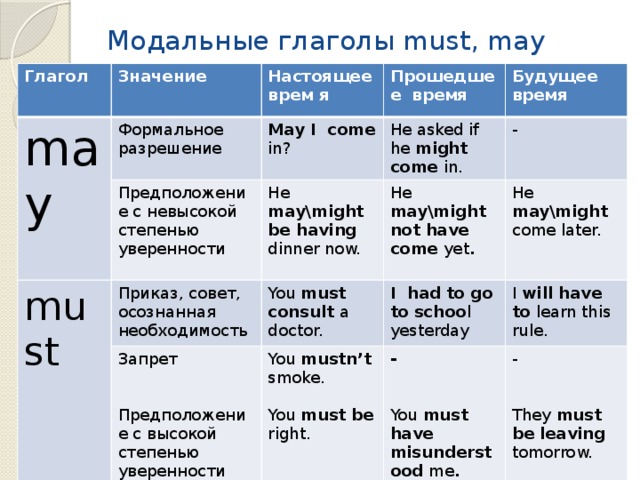
Модальные глаголы must, may
Глагол
Значение
may
Настоящее врем я
Формальное разрешение
must
Прошедшее время
May I come in?
Предположение с невысокой степенью уверенности
Будущее время
He asked if he might come in.
He may\might be having dinner now.
Приказ, совет, осознанная необходимость
Запрет
You must consult a doctor.
-
He may\might not have come yet .
You mustn’t
I had to go to schoo l yesterday
He may\might come later.
-
smoke.
I will have to learn this rule.
Предположение с высокой степенью уверенности
-
You must be right.
You must have misunderstood me .
They must be leaving tomorrow.
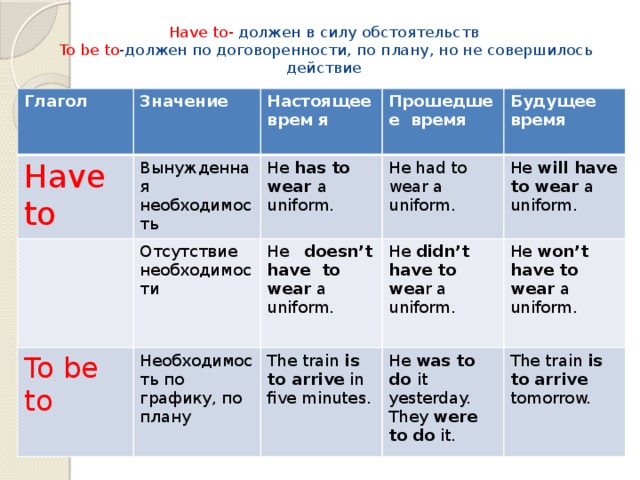
Have to- должен в силу обстоятельств To be to -должен по договоренности, по плану, но не совершилось действие
Глагол
Значение
Have to
Вынужденная необходимость
Настоящее врем я
To be to
Отсутствие необходимости
He has to wear a uniform.
Прошедшее время
Будущее время
He doesn’t have to wear a uniform.
He had to wear a uniform.
Необходимость по графику, по плану
He will have to wear a uniform.
He didn’t have to wea r a uniform.
The train is to arrive in five minutes.
He was to do it yesterday.
He won’t have to wear a uniform.
They were to do it.
The train is to arrive tomorrow.
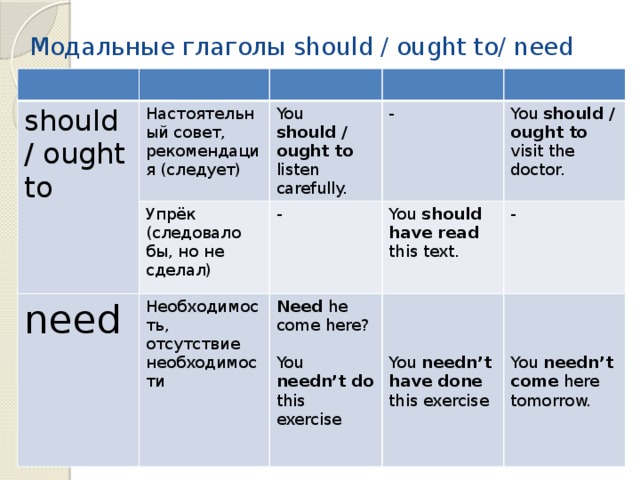
Модальные глаголы should / ought to/ need
should / ought to
Настоятельный совет, рекомендация (следует)
need
You should / ought to listen carefully.
Упрёк (следовало бы, но не сделал)
-
-
Необходимость, отсутствие необходимости
Need he come here?
You should have read this text.
You should / ought to visit the doctor.
-
You needn’t do this exercise
You needn’t have done this exercise
You needn’t come here tomorrow.
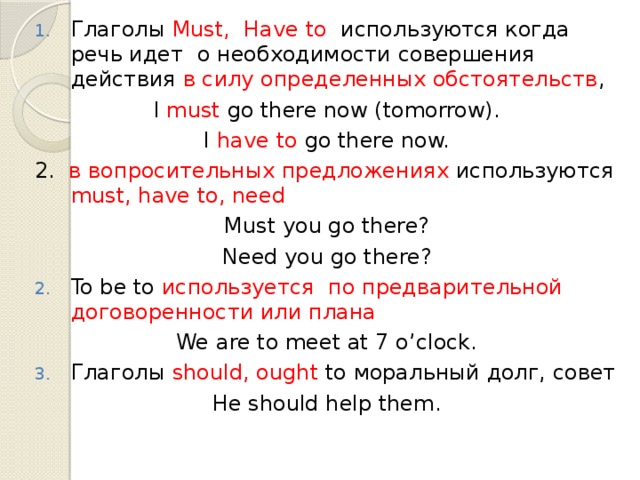
- Глаголы Must, Have to используются когда речь идет о необходимости совершения действия в силу определенных обстоятельств ,
I must go there now (tomorrow).
I have to go there now.
2. в вопросительных предложениях используются must, have to, need
Must you go there?
Need you go there?
- To be to используется по предварительной договоренности или плана
We are to meet at 7 o’clock.
- Глаголы should, ought to моральный долг, совет
He should help them.
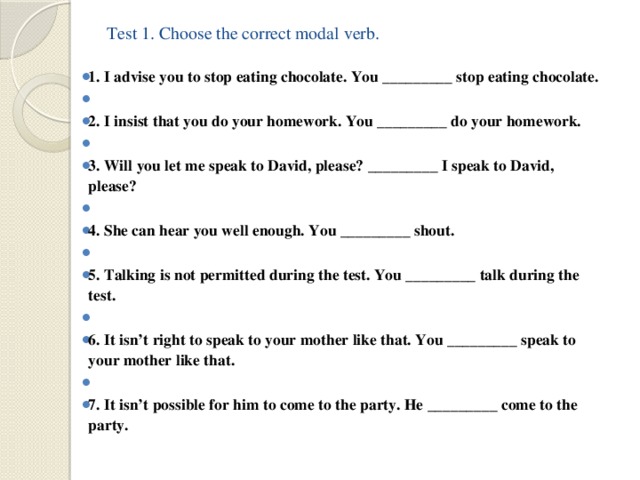
Test 1. Choose the correct modal verb.
- 1. I advise you to stop eating chocolate. You _________ stop eating chocolate.
- 2. I insist that you do your homework. You _________ do your homework.
- 3. Will you let me speak to David, please? _________ I speak to David, please?
- 4. She can hear you well enough. You _________ shout.
- 5. Talking is not permitted during the test. You _________ talk during the test.
- 6. It isn’t right to speak to your mother like that. You _________ speak to your mother like that.
- 7. It isn’t possible for him to come to the party. He _________ come to the party.
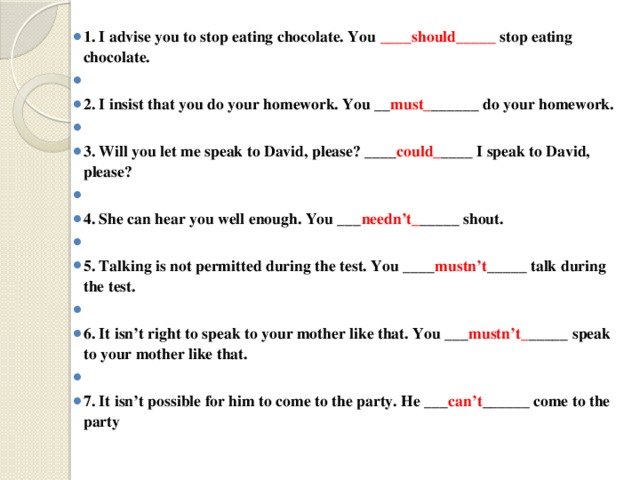
- 1. I advise you to stop eating chocolate. You ____should_____ stop eating chocolate.
- 2. I insist that you do your homework. You __ must_ ______ do your homework.
- 3. Will you let me speak to David, please? ____ could_ ____ I speak to David, please?
- 4. She can hear you well enough. You ___ needn’t_ _____ shout.
- 5. Talking is not permitted during the test. You ____ mustn’t _____ talk during the test.
- 6. It isn’t right to speak to your mother like that. You ___ mustn’t_ _____ speak to your mother like that.
- 7. It isn’t possible for him to come to the party. He ___ can’t ______ come to the party

Вебинар для учителей

Свидетельство об участии БЕСПЛАТНО!



