Россия, Екатеринбург

СДЕЛАЙТЕ СВОИ УРОКИ ЕЩЁ ЭФФЕКТИВНЕЕ, А ЖИЗНЬ СВОБОДНЕЕ
Благодаря готовым учебным материалам для работы в классе и дистанционно
Скидки до 50 % на комплекты
только до
Готовые ключевые этапы урока всегда будут у вас под рукой
Организационный момент
Проверка знаний
Объяснение материала
Закрепление изученного
Итоги урока
Была в сети 07.06.2023 20:06

Макарова Галина Ивановна
учитель английского языка
 5 210
5 210
 11 785
Местоположение
Специализация
Модальные глаголы
Категория:
Английский язык
30.08.2017 18:21

Просмотр содержимого документа
«Модальные глаголы»
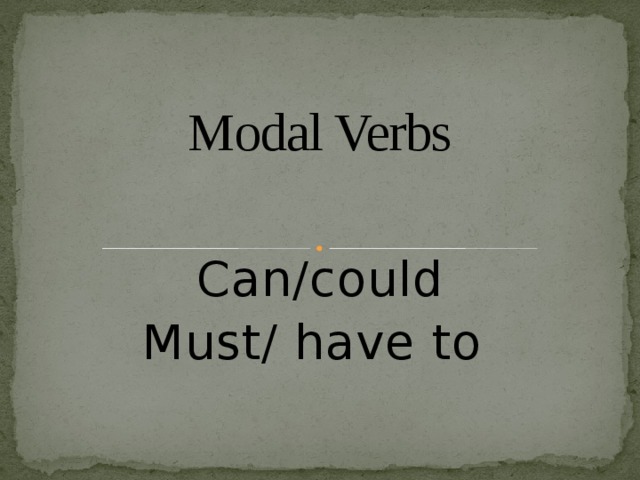
Modal Verbs
Can/could
Must/ have to
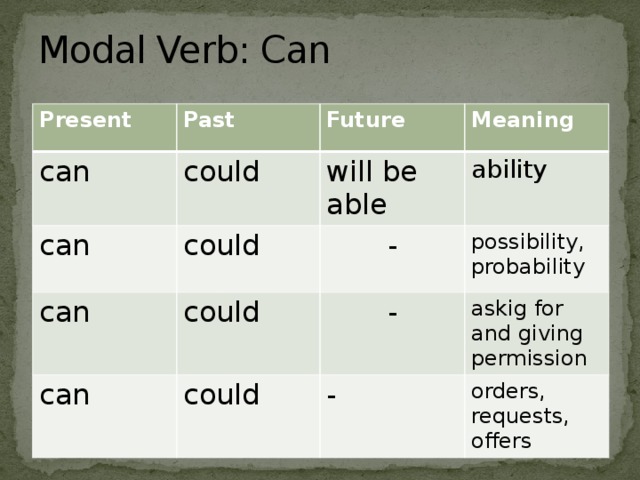
Modal Verb: Can
Present
can
Past
could
Future
can
will be able
could
Meaning
can
ability
could
can
-
could
possibility,
-
askig for and giving permission
probability
-
orders, requests, offers
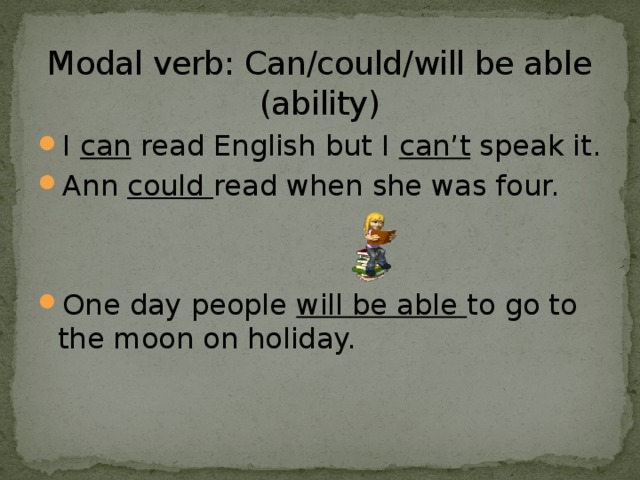
Modal verb: Can/could/will be able (ability)
- I can read English but I can’t speak it.
- Ann could read when she was four.
- One day people will be able to go to the moon on holiday.
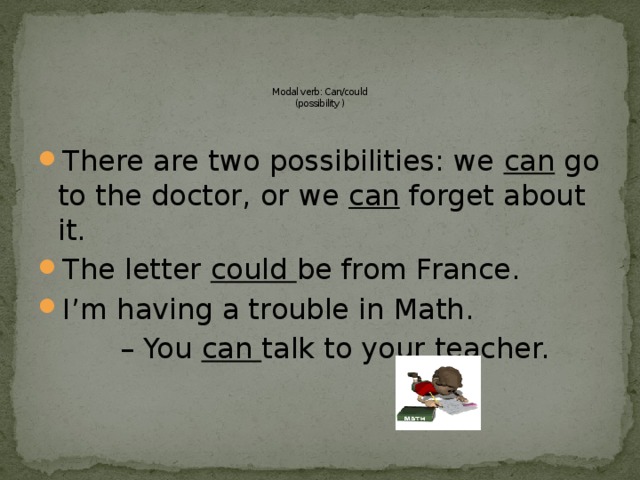
Modal verb: Can/could (possibility )
- There are two possibilities: we can go to the doctor, or we can forget about it.
- The letter could be from France.
- I’m having a trouble in Math.
– You can talk to your teacher.
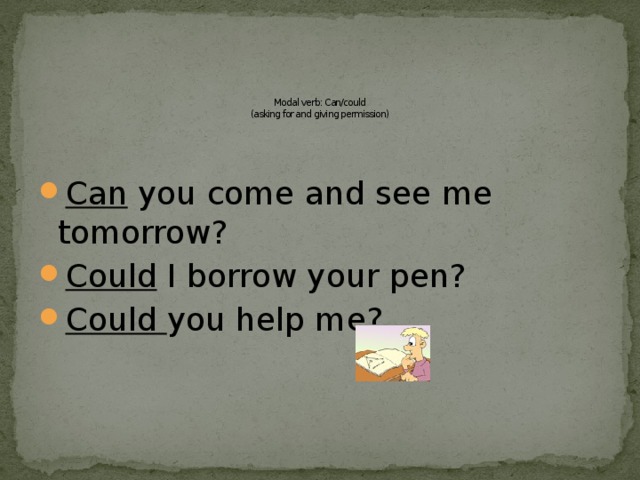
Modal verb: Can/could (asking for and giving permission)
- Can you come and see me tomorrow?
- Could I borrow your pen?
- Could you help me?
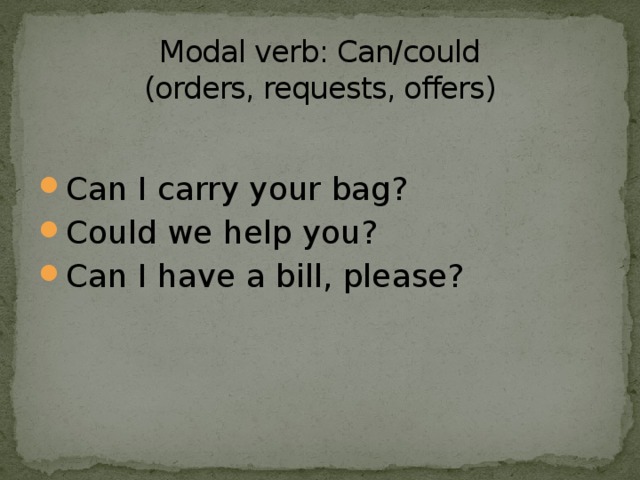
Modal verb: Can/could (orders, requests, offers)
- Can I carry your bag?
- Could we help you?
- Can I have a bill, please?
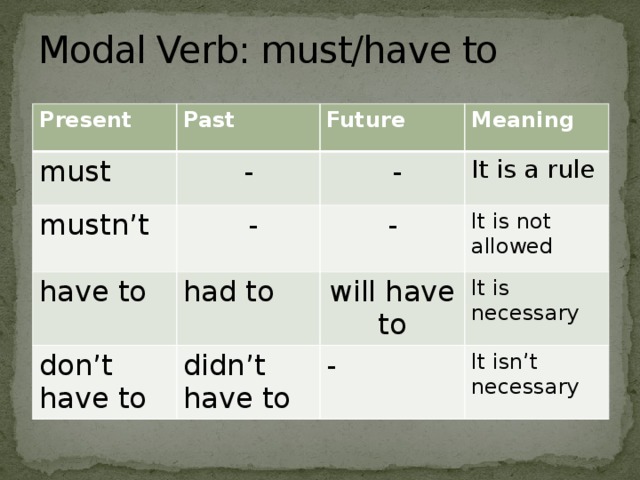
Modal Verb: must/have to
Present
Past
must
-
Future
mustn’t
-
-
Meaning
have to
It is a rule
had to
don’t have to
-
will have to
didn’t have to
It is not allowed
It is necessary
-
It isn’t necessary
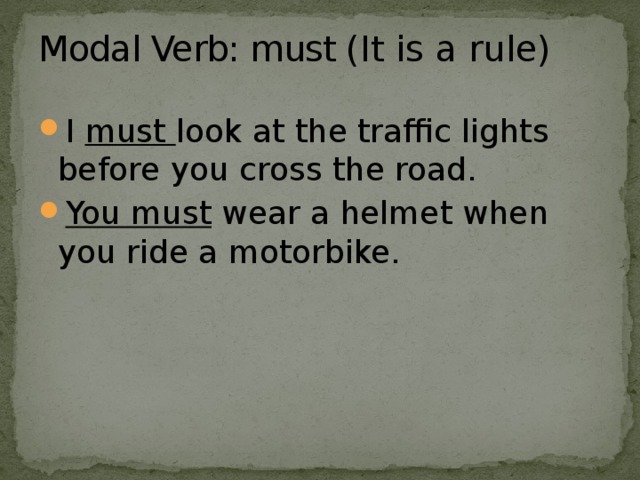
Modal Verb: must ( It is a rule)
- I must look at the traffic lights before you cross the road.
- You must wear a helmet when you ride a motorbike.
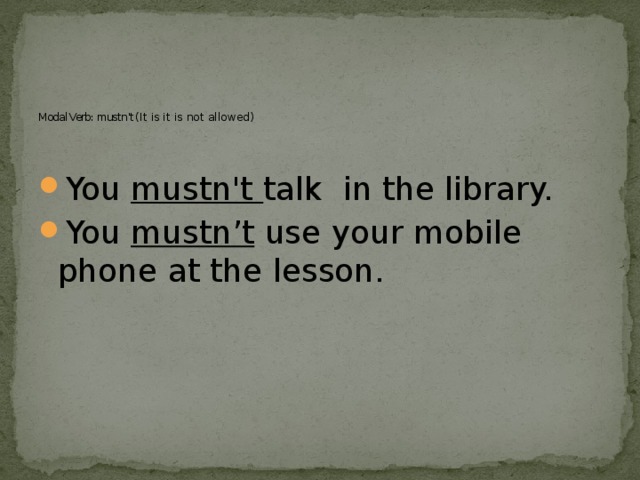
Modal Verb: mustn’t ( It is it is not allowed)
- You mustn't talk in the library.
- You mustn’t use your mobile phone at the lesson.
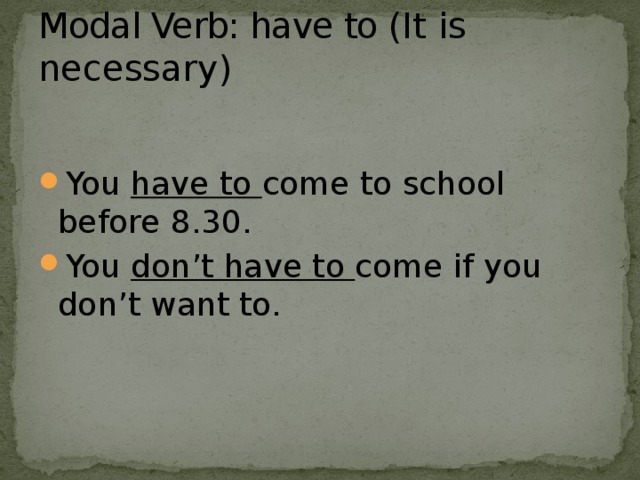
Modal Verb: have to ( It is necessary)
- You have to come to school before 8.30.
- You don’t have to come if you don’t want to.
Вебинар для учителей

Свидетельство об участии БЕСПЛАТНО!