


 311
311 141 510

© 2020, id22941223 896 0

СДЕЛАЙТЕ СВОИ УРОКИ ЕЩЁ ЭФФЕКТИВНЕЕ, А ЖИЗНЬ СВОБОДНЕЕ
Благодаря готовым учебным материалам для работы в классе и дистанционно
Скидки до 50 % на комплекты
только до
Готовые ключевые этапы урока всегда будут у вас под рукой
Организационный момент
Проверка знаний
Объяснение материала
Закрепление изученного
Итоги урока
Modal Verbs:to have,must
Категория:
Английский язык
08.04.2020 18:29

Просмотр содержимого документа
«Modal Verbs:to have,must»
Инновационная школа - гимназия комплекс №87 им. Сыдык Алайчы уулу Учитель английского языка: Даникулова Рахат Таджимаматовна
Topic of the lesson: Madal Verbs Модальные глаголы
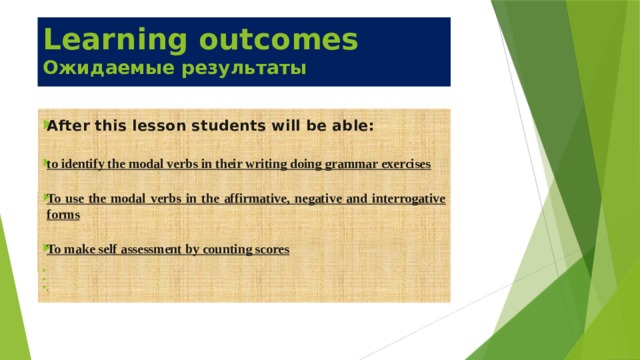
Learning outcomes Ожидаемые результаты
- After this lesson students will be able:
- to identify the modal verbs in their writing doing grammar exercises
- To use the modal verbs in the affirmative, negative and interrogative forms
- To make self assessment by counting scores
- Today we will speak only about modal verbs. -I will explain you the difference between these modals. -While I am speaking, please write down the rules that are on the slide in your copybooks. - Put points in your sheets of self-control for this lesson. (будем оценивать себя сами)
Warm up: Motivation
Let’s start our lesson with a tongue-twister.
We will practice our pronunciation.
- Repeat the tongue-twister after me:
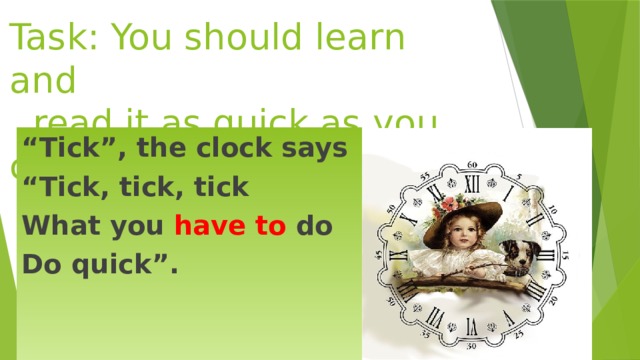
Task: You should learn and read it as quick as you can.
“ Tick”, the clock says
“ Tick, tick, tick
What you have to do
Do quick”.
Introduction : Giving information
- Modal verbs:
- Have to
- Must
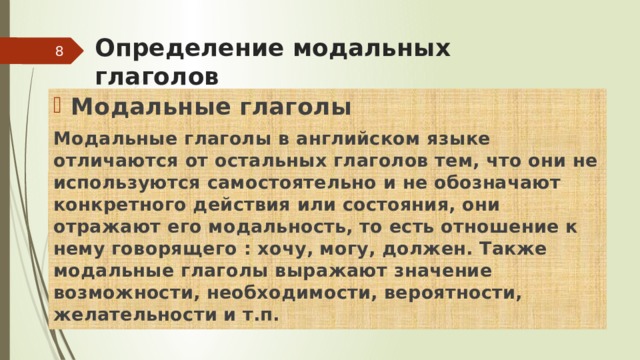
Определение модальных глаголов
- Модальные глаголы
Модальные глаголы в английском языке отличаются от остальных глаголов тем, что они не используются самостоятельно и не обозначают конкретного действия или состояния, они отражают его модальность, то есть отношение к нему говорящего : хочу, могу, должен. Также модальные глаголы выражают значение возможности, необходимости, вероятности, желательности и т.п.
Список основных модальных глаголов в английском языке

Сегодня ребята мы будем говорить о модальных глаголах
- have to -must

Have to
- Have to-употребляется ,чтобы выразить необходимость “надо “ “нужно “
- – то есть когда действие совершается под влиянием обстоятельств,необходимости

Утвердительное предложение
- We have to be in
the theatre on time.
- Мы должны быть в театре вовремя.
Подлежащее
Второстепенные члены
Модальный глагол
Смысловой глагол
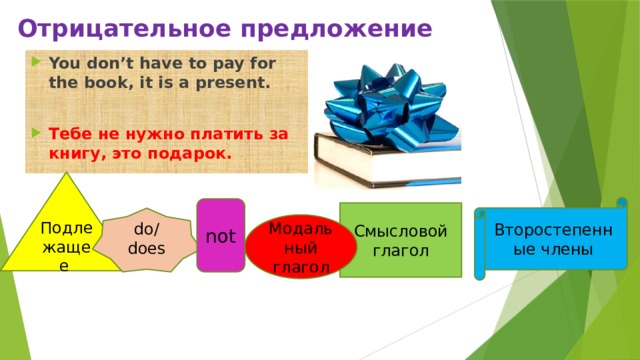
Отрицательное предложение
- You don’t have to pay for the book, it is a present.
- Тебе не нужно платить за книгу, это подарок.
Подлежащее
Второстепенные члены
not
Смысловой глагол
do/ does
Модальный глагол
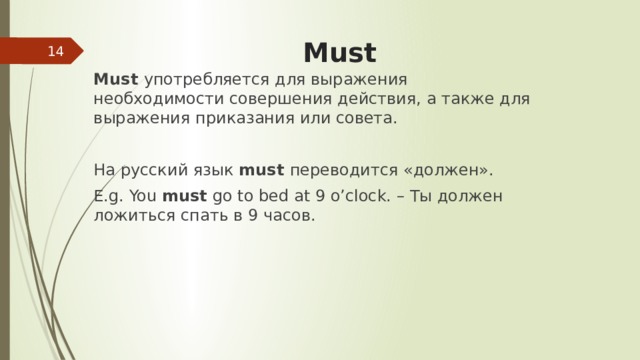
Must
Must употребляется для выражения необходимости совершения действия, а также для выражения приказания или совета.
На русский язык must переводится «должен».
E.g. You must go to bed at 9 o’clock. – Ты должен ложиться спать в 9 часов.
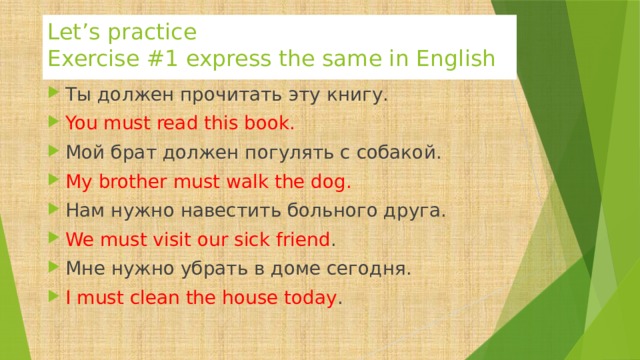
Let’s practice Exercise #1 express the same in English
- Ты должен прочитать эту книгу.
- You must read this book.
- Мой брат должен погулять с собакой.
- My brother must walk the dog.
- Нам нужно навестить больного друга.
- We must visit our sick friend .
- Мне нужно убрать в доме сегодня.
- I must clean the house today .
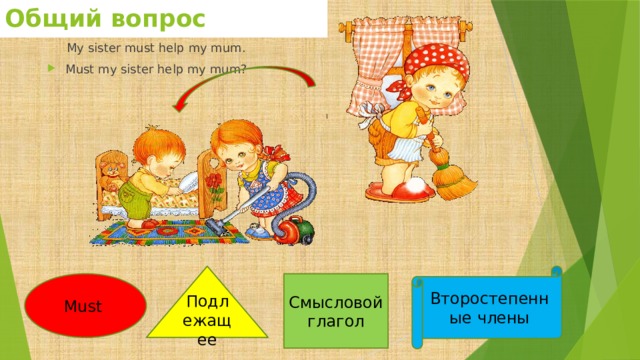
Общий вопрос
My sister must help my mum.
- Must my sister help my mum?
Подлежащеe
Второстепенные члены
Must
Смысловой глагол
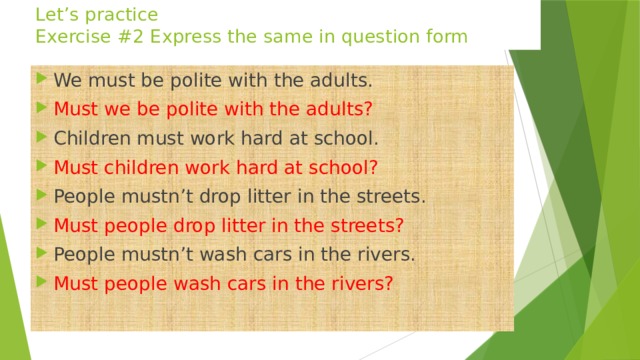
Let’s practice Exercise #2 Express the same in question form
- We must be polite with the adults.
- Must we be polite with the adults?
- Children must work hard at school.
- Must children work hard at school?
- People mustn’t drop litter in the streets.
- Must people drop litter in the streets?
- People mustn’t wash cars in the rivers.
- Must people wash cars in the rivers?
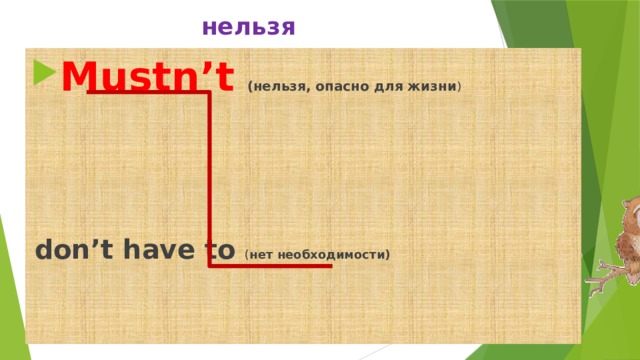
нельзя
- Mustn’t (нельзя, опасно для жизни )
don’t have to ( нет необходимости)
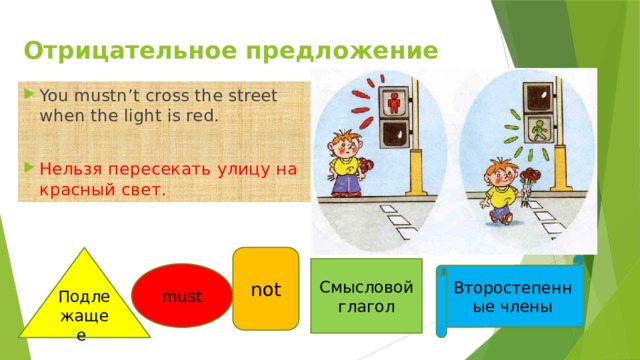
Отрицательное предложение
- You mustn’t cross the street when the light is red.
- Нельзя пересекать улицу на красный свет.
Подлежащее
not
Второстепенные члены
Смысловой глагол
must

Let’s practice Exercise #3 express the same in English
- Нельзя ходить по льду, это опасно.
- You mustn’t walk on the ice, it is dangerous .
- Нельзя управлять машиной, если тебе 12.
- You mustn’t drive the car if you are 12.
- Нельзя играть на дороге, это опасно.
- You mustn’t play on the road, it is dangerous.
- Нельзя ходить по крыше, ты можешь упасть.
- You mustn’t walk on the roof, you may fall down.
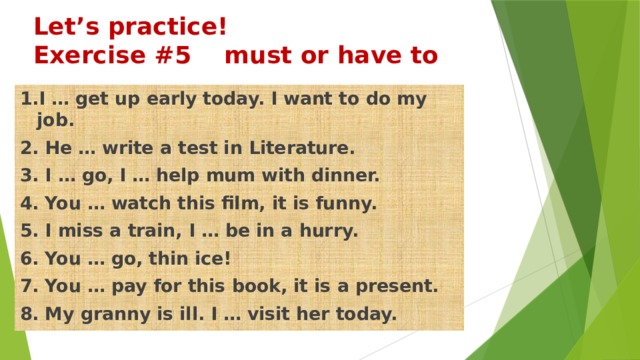
Let’s practice! Exercise #5 must or have to
1.I … get up early today. I want to do my job.
2. He … write a test in Literature.
3. I … go, I … help mum with dinner.
4. You … watch this film, it is funny.
5. I miss a train, I … be in a hurry.
6. You … go, thin ice!
7. You … pay for this book, it is a present.
8. My granny is ill. I … visit her today.

must or have to (keys)
1.I must get up early today. I want to do my job.
2. He has to write a test in Literature.
3. I must go, I must help mum with dinner.
4. You must watch this film, it is funny.
5. I miss a train, I have to be in a hurry.
6. You mustn’t go, thin ice!
7. You don’t have to pay for this book, it is a present.
8. My granny is ill. I must visit her today.
- Let's summarise the lesson. Thank you for your work! I like how you’ve worked today. Everyone was good at every aspect of our lesson. You are my brilliant students
Well done
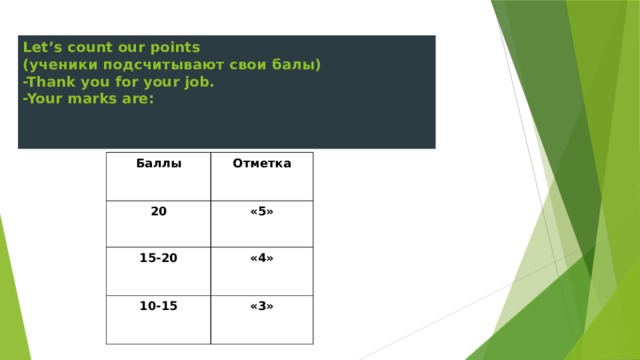
Let’s count our points (ученики подсчитывают свои балы) -Thank you for your job. -Your marks are:
Баллы
20
Отметка
15-20
«5»
«4»
10-15
«3»
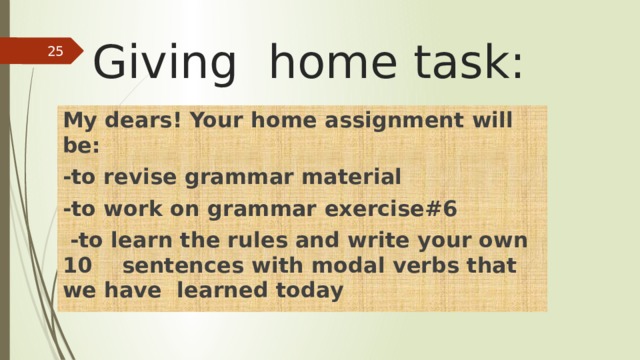
Giving home task:
My dears! Your home assignment will be:
-to revise grammar material
-to work on grammar exercise#6
-to learn the rules and write your own 10 sentences with modal verbs that we have learned today
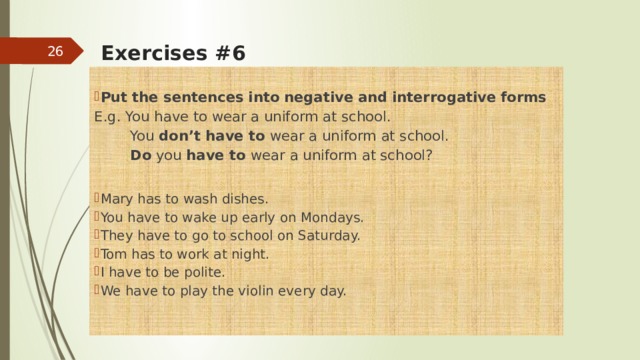
Exercises #6
- Put the sentences into negative and interrogative forms
E.g. You have to wear a uniform at school.
You don’t have to wear a uniform at school.
Do you have to wear a uniform at school?
- Mary has to wash dishes.
- You have to wake up early on Mondays.
- They have to go to school on Saturday.
- Tom has to work at night.
- I have to be polite.
- We have to play the violin every day.
Thank you for your attention!
Вебинар для учителей

Свидетельство об участии БЕСПЛАТНО!



