Россия, р.п. Дальнее Константиново-5

СДЕЛАЙТЕ СВОИ УРОКИ ЕЩЁ ЭФФЕКТИВНЕЕ, А ЖИЗНЬ СВОБОДНЕЕ
Благодаря готовым учебным материалам для работы в классе и дистанционно
Скидки до 50 % на комплекты
только до
Готовые ключевые этапы урока всегда будут у вас под рукой
Организационный момент
Проверка знаний
Объяснение материала
Закрепление изученного
Итоги урока
Была в сети 12.03.2026 16:43
Телегина Валентина Николаевна
учитель английского языка
62 года
 557
557
 100 153
Местоположение
Специализация
Моя будущая профессия
Категория:
Английский язык
15.01.2018 22:59

Просмотр содержимого документа
«Моя будущая профессия»
Lesson 7.
| Stage, time |
What teacher says.
|
Types of interaction |
| Introduction
Warming up. Discussion. Reading.
Listening for specific information.
Reading for specific information.
Writing.
HW.
Warming up. Discussion.
Listening for specific information.
Discussion.
Reading for specific information. Discussion.
Writing.
Discussion.
HW.
Introduction
Discussion.
Writing.
Reading for specific information.
Writing.
Discussion.
Listening for specific information.
Discussion.
HW. | Today we are going to speak about dangerous jobs. Then we are going to listen to the text and fill in the gaps. After that we will read the text and discuss it.
Look at the pictures. Which of these jobs are dangerous? Are there jobs that should be done only by men? Why? What qualities do you need to be a bullfighter? Read the summery of the text.
Listen to the text and fill in the gaps.
We are going to read a newspaper article. What is the story about? Read and get ready to choose the answers to the questions. Compare your answers with your partner.
Read the text once again and make notes under the headings: -training, -problems, -fitness routine, -dangers, -qualities needed .
Get ready to speak about the career of a bullfighter.
Lesson 8.
Do you pay attention to people s hands? Can hands tell you about a person? Look at the pictures; match them with sentences given below. What can you say about each person s age and job?
Listen to the people whose hands are in the picture. Which speaker is a nurse, a farmer, a guitarist? Listen again and fill in the table.
About which of your friends or relatives can you tell the same? Look at the list of jobs. Could you have bad experience in these jobs? What kind of bad experience?
Read the article and compare your ideas with the stories each person tells. Are there similar ideas?
Do you know anybody who has had to work under conditions like these? What is the worst job in the world do you think? Some people are under so much stress. How do you cope with stress? Make a list of words you do to cope with stress, for example, cry, talk to a friend, eat.
Compare your list with a classmate and discuss which things are healthy and which are not. We are going to read an article about stress. First, look at the exercise and match the words with their definitions.
Read the article and answer the question: What are the ways to cope with stress?
Lesson 11.
Today we are going to speak about personal qualities. Then we are going to read the advertisement and discuss it. After that we will listen to the dialogues.
When you apply for a job you need to provide a curriculum vitae (CV), which gives the employer important information about you. What kind of info an employer might need?
Make a list of this info and compare it with your partner.
Read the advertisement and find the answers to the questions below.
Here is Emily Lewis s CV. She is applying for one of the above positions Read it. Which of the above advertised jobs would be most suitable for Emily? Why?
Now, write your own CV, using the model above.
Look at the list of personal qualities. Which of them are necessary for the occupation you have chosen? Which of the qualities describes you?
A business executive, a fire-fighter and a nurse are talking about the qualities they need to be good at their jobs and the advantages and disadvantages of their jobs. Listen to their dialogues and fill in the missing info.
What are the qualities, advantages and disadvantages of being a pilot, a miner and a fashion model?
Make up a story
|
Full class interaction.
Individual work.
Individual work.
Full class interaction.
Pair work
Individual work.
Full class interaction.
Full class interaction.
Full class interaction.
Individual work.
Full class interaction.
Individual work.
Pair work
Individual work.
Individual work.
Full class interaction.
Pair work
Individual work.
Full class interaction.
Individual work.
Full class interaction.
|
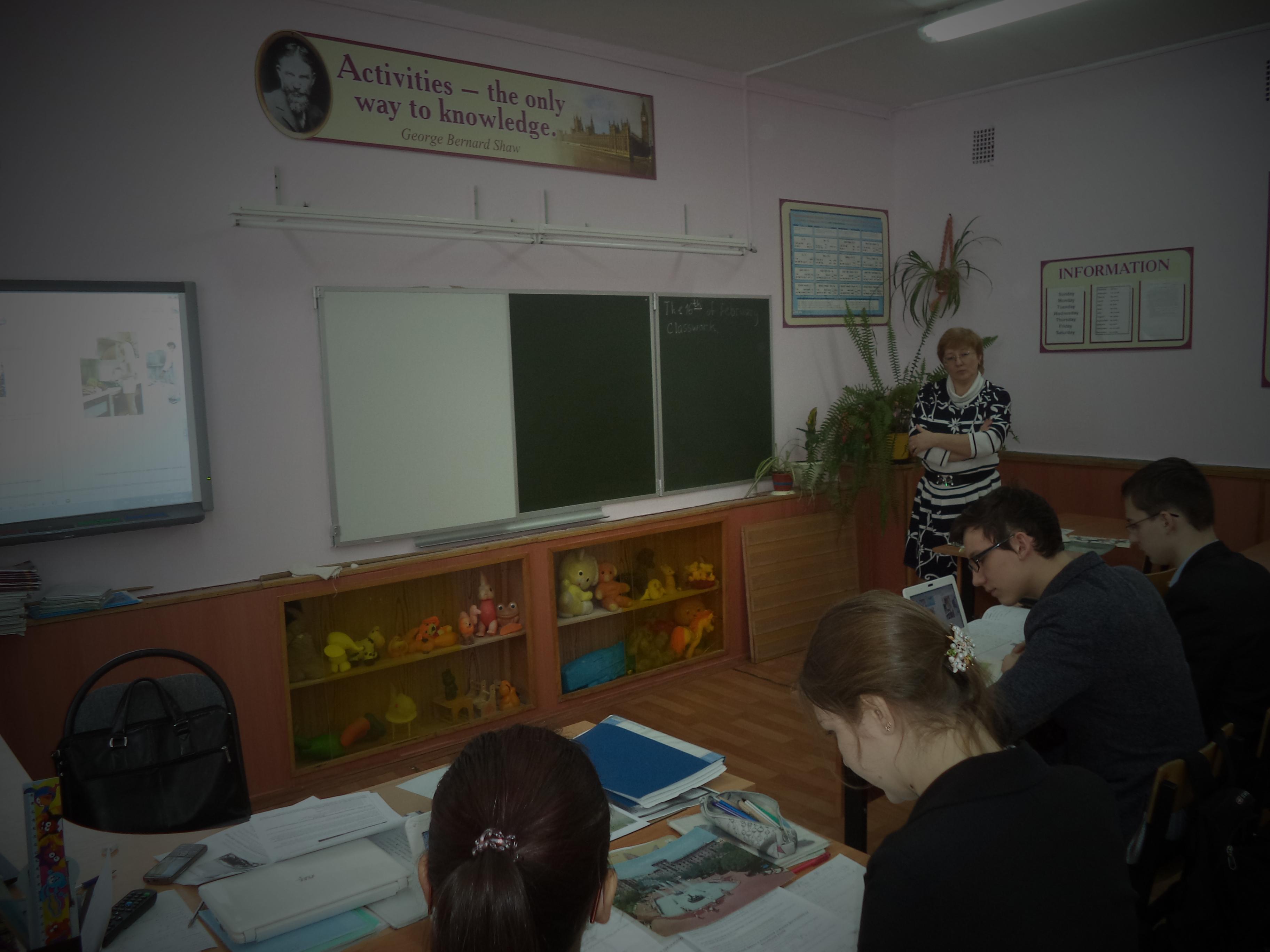
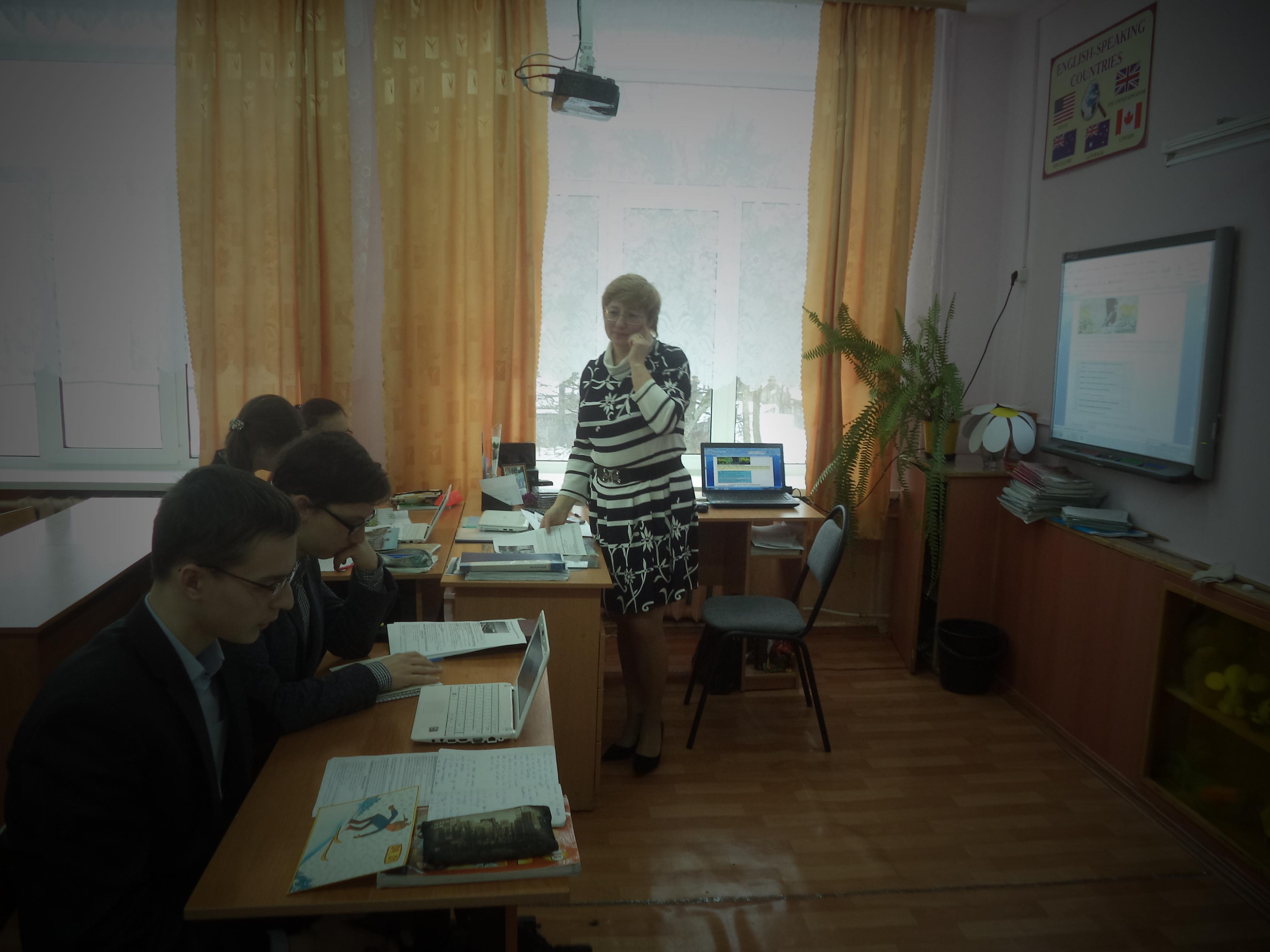
Руководитель РМО Антонова Т.А.
I work in a secondary school and use the textbook by M.Z.Biboletova. One of the topics in this book deals with travelling. And the text I have chosen is a good supplementary material for this topic and for developing reading skills. I like the way this topic is presented, nevertheless, there are not enough texts for reading and for further discussion, that is why I use materials from other sources.
I’d like to work with this text, because it contains some useful information, the content is rather interesting, not too complicated, it’s not large, up-to-date and authentic. The text is appropriate for the age. The text is designed to revise previously taught structures. It will be a good opportunity to complement grammar revision with the practice of new lexis.
This lesson is planned for the 10th formers, it is a mixed ability group and they are interested in English and ready to communicate.
By the end of the lesson the students will be able
-to use key-words;
-to extract the main idea;
-to extract specific information;
-to speak about disasters;
-to write a report about disasters;
The aims of reading activities are as follows to motivate students to read, to stimulate their interests, create expectations, activate their background knowledge, involve different reading skills and strategies, check understanding, evaluate the content and relate it to their own experience, integrate reading with speaking and writing.
There can be some problems. They may forget the correct pronunciation of past forms of regular verbs ([t],[d],[id]), but the good way to overcome this problem is to revise the rule.
| stage | instructions | Interaction pattern | Subsidiary aims | timing |
| greeting |
|
|
|
|
| Warming up | This year there have been plane crashes, fires, earthquakes, floods and other disasters. Today we are going to read about people who have survived disasters. |
| To introduce the topic | 1min |
| Pre-reading | 1. Look at the key-words and guess what the story might be about. 2.There are some questions for you to answer 3. Cover the texts and look at the pictures. Make a list of words to describe one of the pictures 4. Listen to my sentences and decide which picture they refer to | Full-class interaction
Full-class interaction
Group work
Full-class interaction
| To extract the main idea, to develop predicting skills
To use the key-words, to activate their background knowledge To find words for further speaking , to anticipate some of the main points, to enrich the vocabulary To get ready for picture description, to form expectation about the text | 1min
2min
5min
2min |
| While-reading | Read the story and fill in the table | Individual work | To extract specific information, to list the events | 10min |
| Post-reading | 1.Complete the sentences as in the example 2.fill in the table using the past tense of regular verbs 3. make up sentences in the past tense 4. rate each disaster in terms of criteria given below the texts 5. You are a journalist. Make a report for a news program about one of the disasters
| Pair work
Individual work
Full-class interaction
Pair work
Individual work
| To use the words
To revise Past Simple Tense
To use correct grammar forms, to practice the pronunciation To express their opinions about disasters using new words To describe a disaster | 4min
2min
2min
5min
8min |
| HW | At home you are to write down 10 rules, which can help you to survive a disaster. |
|
|
3min |
| Finishing the lesson |
|
|
|
.
Вебинар для учителей
Свидетельство об участии БЕСПЛАТНО!