Россия, Москва

СДЕЛАЙТЕ СВОИ УРОКИ ЕЩЁ ЭФФЕКТИВНЕЕ, А ЖИЗНЬ СВОБОДНЕЕ
Благодаря готовым учебным материалам для работы в классе и дистанционно
Скидки до 50 % на комплекты
только до
Готовые ключевые этапы урока всегда будут у вас под рукой
Организационный момент
Проверка знаний
Объяснение материала
Закрепление изученного
Итоги урока
Была в сети 04.04.2022 21:47
Леонова Антонина Александровна
Учитель английского языка
41 год
 1 461
1 461
 48 096
Местоположение
Специализация
Олимпиада к Дню космонавтики
Категория:
Английский язык
30.03.2017 22:11

Просмотр содержимого документа
«Олимпиада к Дню космонавтики»
SPACE EXPLORATION
1. The history of space exploration in Russia started with Konstantin Tsiolkovsky, a maths teacher from Kaluga. Tsiolkovsky never built or launched a rocket, but he was the first person to understand the main ideas behind rocket science – as early as 1903. He predicted and solved many of the problems in rocket engineering, and he made designs for several rockets. He dreamt of a space age.
2. It was nearly 60 years before Tsiolkovsky’s dream came true. On 12th April, 1961, at exactly 9.07 a. m. Vostok 1 lifted off for its 108-minute flight. There was one man inside – Yuri Gagarin, a Soviet pilot and the first person in the world to fly into outer space. During his one orbit around the earth, Gagarin had some food and water; so he was also the first person to eat and drink in conditions of weightlessness. He didn’t have a camera to take photos, but he observed different parts of the earth.
3. Gagarin’s flight started a new stage in the history of exploration. It made more space travel possible. Now, 50 years later, many cosmonauts and engineers from different countries have made flights to outer space. Some of them have stayed in space for several months. They have done a lot of research and experiments.
4. In the 1990s Russian scientists started thinking about sending tourists into outer space. The world’s first space tourist was American millionaire, Dennis Tito. He went on an eight-day holiday in May 2001 in a Russian spaceship. He visited the International Space Station and landed afterwards in Kazakhstan with the two other members of the flight team. ‘I was worried that I might not feel well in space’, he said, ‘but I felt the best I’ve felt in my whole life. It was a trip to paradise’. Space scientists are now discussing the next idea: two-week space holidays with a trip around the moon, for $100 million… anyone interested?
1. Read the text and choose the headline to each paragraph
Holiday-makers in space
Yuri Gagarin, the first cosmonaut
Outer space as a workplace
Father of rocket science
The flight that changed the world
2. Match letters to numbers.
|
|
3. True or false?
Konstantin Tsiolkovsky was the first person to build a rocket.
Yuri Gagarin went round the Earth once.
During his flight Gagarin took photos of the Earth.
Space flight is now international.
Space engineers do a lot of scientific work.
The Americans took the first tourist into space.
4. Fill the words from the exercise 2 into the phrases
Cosmonauts and engineers have done a lot of … and experiments.
The history of … in Russia started with Konstantin Tsiolkovsky.
Tsiolkovsky predicted and solved many of the problems in ….
Tsiolkovsky’s dream … on 12th April, 1961.
Yuri Gagarin was the first person in the world to fly into ….

5.Space quiz
How many billion miles across does our Solar System have? seven six eight
Our Solar System is home to how many planets? seven eight nine
The Solar System is ...... billion years old. 3.4 6.4 4.6
The eight planets in our Solar System grew out of tiny specks of..... . dust mud sand
The Solar System is divided into how many distinct regions? 2 4 3
Jupiter, Saturn, Uranus and Neptune make up... the Inner Solar System the Outer Solar System the Middle Solar System
The four planets of the Outer Solar System make up ...... of the known mass orbiting the Sun. 90% 99% 98%
For almost how many years was Pluto known as a planet? 88 89 80
A space object must have three distinct characteristics in order to be called a planet. Circle one such characteristic below. the object must contain water the object must orbit the Sun the object must have its own moons
After discovering that Pluto doesn't meet all three characteristics of a planet, it has been demoted to a ..... asteroid dwarf planet meteorite
Astronomers believe there may be as many as ...... dwarf planets in our solar system. 44 42 24
Kuiper Belt is ........... our planetary system. the same size as larger than smaller than
There are more than ...... known comets in our Solar System. 3350 3550 3530
The Scattered Disk is..... an immense magnetic bubble a belt of strangely orbiting objects, like minor planets the disk surrounding Saturn
The Heliosphere is...... an immense magnetic bubble a scattered disk an interstellar wind
The outer edge of our Solar System is formed by..... the two dwarf planets Eris and Ceres the Kuiper Belt the Heliosphere
Our Solar System is part of....... Aurora Borealis the Milky Way the Inner Solar System
The letters in the words are confused as well as the words in the sentences. Rebuild the phrases.
asw istrf rinGaga senrop in cepas.____________________________________________
netapl si ruo the nuS morf rithd the.___________________________________________
dellca uor xylaga si ywa likym._______________________________________________
layp leor a ttetilessa gib in flie denorm_________________________________________
Across
1. The kind of planet that Earth and Mars are.
6. Star at the center of our solar system.
9. This planet is known as the red planet.
10. A hole in the ground caused by a meteor hitting a planet.
13. An outer layer of gas on a terrestrial planet.
15. Planet between Saturn and Neptune.
17. Planets like Jupiter, Saturn, Uranus, and Neptune.
20. A rock that crashes into Earth's atmosphere.
21. The largest planet in the solar system.
Down
2. Something that both Saturn and Uranus have.
3. Our planet.
4. An instrument that scientists use to observe planets.
5. Our galaxy.
6. Our sun is this.
7. The farthest planet from the sun.
8. Planet closest to the sun.
11. Planet named after the sea god.
12. Planet known as the evening star.
14. The path that a planet takes around the sun.
16. One of many 'rocks' in a belt between Mars and Jupiter.
17. The force that holds planets in their orbits.
18. Planet famous for its rings.
19. An icy rock that has bright tail when it comes close to the sun.
20. Earth's companion.
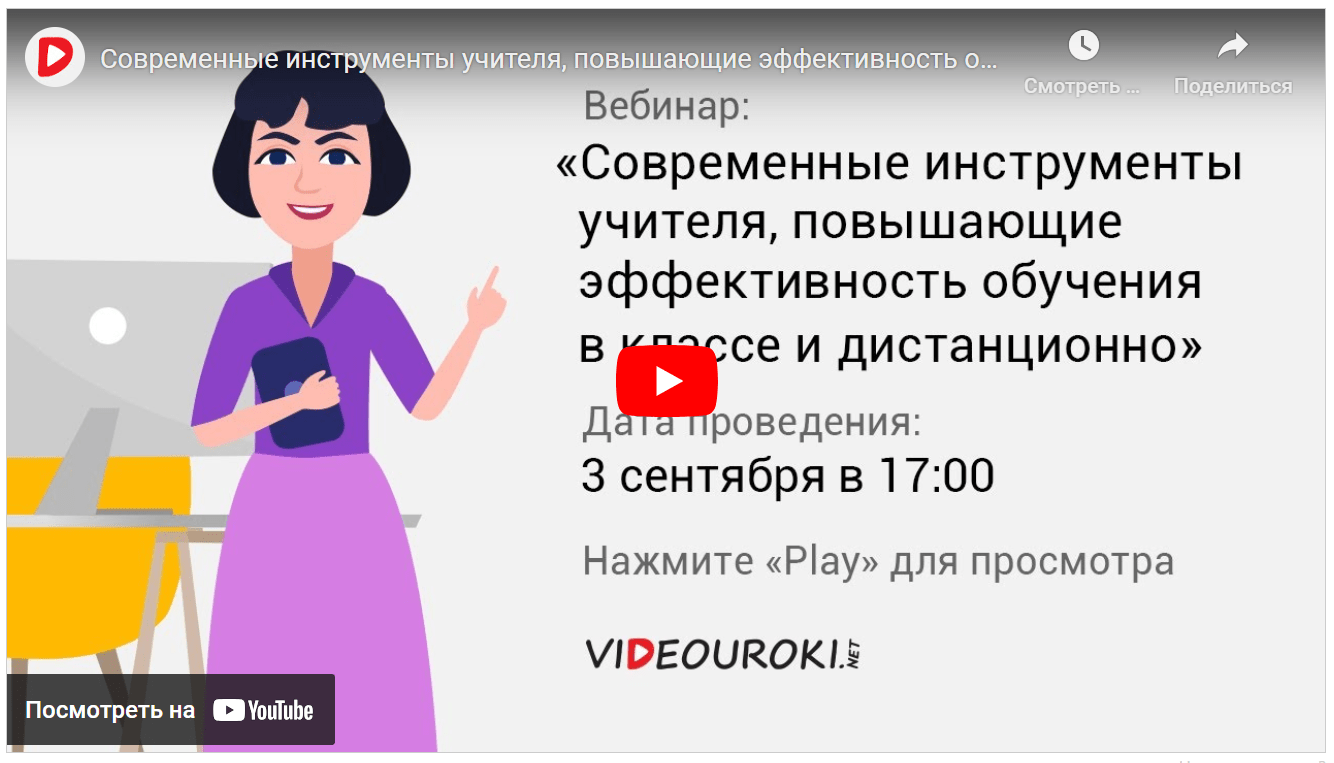
Вебинар для учителей
Свидетельство об участии БЕСПЛАТНО!