Россия, Клинцы

СДЕЛАЙТЕ СВОИ УРОКИ ЕЩЁ ЭФФЕКТИВНЕЕ, А ЖИЗНЬ СВОБОДНЕЕ
Благодаря готовым учебным материалам для работы в классе и дистанционно
Скидки до 50 % на комплекты
только до
Готовые ключевые этапы урока всегда будут у вас под рукой
Организационный момент
Проверка знаний
Объяснение материала
Закрепление изученного
Итоги урока
Была в сети 21.05.2026 21:40

Шевченко Татьяна Викторовна
Учитель английского языка
 7 805
7 805
 7 123
7 123 
Местоположение
Специализация
Pocket money 8 класс
Категория:
Английский язык
16.10.2018 20:41

Просмотр содержимого документа
«Pocket money 8 класс»
Тема: «Pocket money”
Цели и задачи:
- Ознакомить учащихся с форматом ОГЭ по английскому языку
- Формирование навыков чтения: трудные случаи чтения ough, интонационный рисунок повествовательных предложений
- Введение и первичное закрепление новой лексики в серии рецептивных и продуктивных упражнений
- Формирование умений работы с текстом - поисковое чтение, умение извлекать главное, строить монологическое высказывание на основе прочитанного.
- Формирование навыков спонтанной устной речи и устного высказывания по заданному образцу
- Формирование навыков аудирования с пониманием запрашиваемой информации
- Знакомство со словообразованием : dis/obey, dis/obedience, dis/obedient, economy – economic/economical , фразовые глаголы do without, spend away
- Развитие навыков художественного перевода
- Развитие умения работать в группе
- Воспитание бережного отношения к деньгам.
|
Примерный план урока (в примечаниях при необходимости внести корректировки в зависимости от уровня языковой подготовки учащихся, общего темпа работы, места урока в данной теме, и т. д.)
Good morning! Sit down, please. I’m glad to see you today and not only today, of course. Are you nervous? Calm down, relax and take it easy. I‘m a bit nervous too, but I hope you’ll help me and we’ll help each other. In groups it will be easier for us today. So we have three groups. How are you?
To start our lesson I’d like you to watch a short video. Включить видео. What is it about? How many people are there? What does the girl want? What about father?
What will be the topic of our lesson? Тему записать на доске. What will you do? You are right. We will do a lot of things.
Доска I’ve bought enough food. Pay attention to these letters. @ough@. How is it pronounced? Let’s practice and remember some words with similar pattern. Слайд /ʌf/ – enough (достаточно), rough (грубый, жесткий) /ɔf/ – cough (кашель) /au/ – bough (сук), drought (засуха) /ou/ – dough (тесто), though (хотя) /o:/ – bought (купил), brought (принёс) /u:/ through (через)
Доска : записать звуки вразброс. Match words and sounds. (карточки распечатать и разрезать на отдельные слова) bought rough drought dough through brought though bough cough enough
Слайд – Pocket money
Listen and mark pauses and intonation. Включить аудиозапись Small children can understand money. They get the idea that in order to buy something you have to pay for it. Also, they know that in order to have money you have to earn it. Of course, kids can’t earn their own money yet and that is why parents start giving pocket money to their children at а certain age. Apart from fun, pocket money can be а great tool for teaching children the art of budgeting, saving money and setting goals. Besides, children can be taught how to donate small sums to charity. In other words, pocket money can be used to teach small children decision-making but children should not be paid for obeying their parents or for helping them about the house.
Who will read aloud? (2 человека на оценку).
I think that this text is difficult enough, so I help you. a) Слайды со значением слов. b) Match to make correct expression. 1) A great tool A) idea 2) Earn B) the house 3) Set C) money 4) Own D) charity 5) Help about E) for dinner 6) At a certain F) money 7) Save G) methods 8) Donate to H) of learning 9) Get the I) from this 10) Obey J) age 11) Apart K) money 12) Budgeting L) your mother 13) Pay M) goals Выключить проектор.
Let’s come back to our text and remember the information from it. (1 человек на оценку.) True False Not Stated 1. Children can earn their own money. 2. Pocket money teach children to save money. 3. Small children can not understand money. 4. All parents pay children for helping them.
Do you agree that small children can understand money? How? When should parents start giving pocket money to their children? What certain age? Should children earn their pocket money? For example, help about the house, be obedient? Is pocket money their own? Can they donate it to charity if parents don’t agree or just spend it away? Pocket money can be a great tool. How do you understand it?
Be ready to answer some more questions. Your time is limited – only 40 seconds for each questions. Electronic assistant: Hello! This is the electronic assistant of the Youth Club. We kindly ask you to take part in our survey. We need to find out what teenagers think about pocket money. Please answer our six questions. The survey is anonymous — you don’ t have to give your name. So, let’s get started. Electronic assistant: Who usually gives you pocket money? Student:___________________________________________________ Electronic assistant: Do you do anything about the house to earn pocket money? What is it? Student:___________________________________________________ Electronic assistant: Have you ever tried summer jobs to earn some pocket money? Student:___________________________________________________ Electronic assistant: What do you usually spend your money on? Student:___________________________________________________ Electronic assistant: Can you do without pocket money? Explain why. Student:___________________________________________________ Electronic assistant: I f you saved some money, would you spend it on your education or entertainment? Give reasons. Student:___________________________________________________ Electronic assistant: This is the end o f the survey. Thank you very much fo r your time.
(1-2 человека на оценку.)
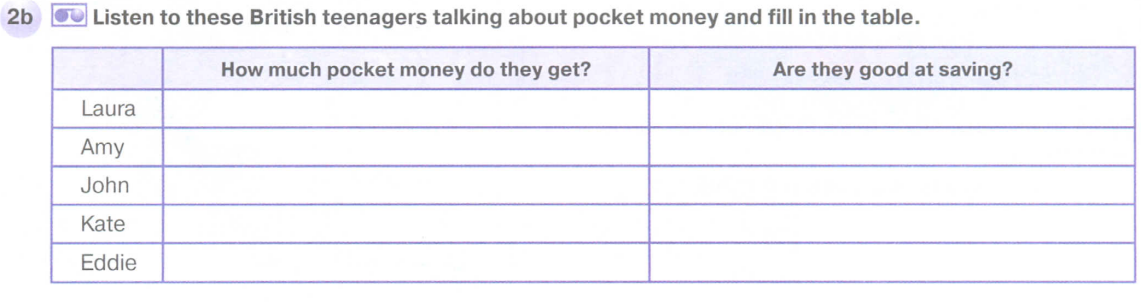
Ok, I know all about you and your pocket money. Let’s find out what British teenagers can tell us about their pocket money. Textbook p. 34 № 2b,
(1 человек на оценку.)
Textbook p. 34 № 2с So we get pocket money, how much – is your personal business, but what about saving? How can we save our pocket money? Make a shopping list. What else? Work in groups and present your ideas to the whole class. For our guest it will be interesting too, I think.
Economic/econimical
Now we are ready for our most difficult task.
You are going to give а talk about managing money. You will have to start in 1.5 minutes and speak for not more than 2 minutes. Remember to say: • why managing and saving your money is important • where your own money comes from • what goals of spending your money you set for yourself You have to talk continuously. (1 - 2 человек на оценку.)
You have received a letter from your English-speaking pen friend, Ben. ...I saved some of my pocket money and have bought a new computer game. I’m glad that I didn’t have to ask my parents to buy it for me. It would be great to find a job next summer …. …How do you get your pocket money? What do Russian teenagers usually buy with their pocket money? Would you like to get a summer job or not, why? … Write him a letter and answer his 3 questions. Write 100–120 words. Remember the rules of letter writing.
WHAT CAN MONEY BUY? Money can buy a bed but not s…. Books but not r..s.. Food but not .p…i.. Finery but not b…t. A house but not a h… Medicine but not .e…. A companion but not a …..d Flattery but not r..p…
WHAT CAN MONEY BUY? Money can buy a bed but not sl--p Books but not re-s-n Food but not app-tite Finery but not be-uty A house but not a h--e Medicine but not he--th A companion but not a fr--nd Flattery but not resp--t
WHAT CAN MONEY BUY? Money can buy a bed but not sleep Books but not reason Food but not appetite. Finery but not beauty A house but not a home Medicine but not health A companion but not a friend Flattery but not respect
Was it interesting/useful for you? Why?
It is my piggy bank. Please, choose a «coin» and stick it. Red – excellent Green – good Yellow – not so good
Thank you very much for the lesson. Good bye and good luck.
При разработке урока использовались следующие материалы:
https://www.youtube.com/watch?v=MSv7yTlu37k
Аудиоприложение к учебнику
http://www.fipi.ru/content/otkrytyy-bank-zadaniy-oge
1. Формирование навыков спонтанной речи. And what about you? What do you do with money? Do you spend it or save it? Do you keep money in a piggy bank or do you have a bank account? Do you get pocket money from your parents or do you work to earn money? How much money do you get per week/month? What do you usually spend it on? Do you save money? What for? Would you like to have more pocket money? Why? Money don’t grow on trees. What can we do with money?
|
При меча ния
9.20
9.21
9.23
9.24
9.26
9.27
9.30
9.32
9.34
9.35
9.37
9.43
9.49
9.53
9.56
9.58
9.59
|
Вр ем мя
1
2
1
2
1
3
2
2
1
2
6
6
4
3
2
1
1 |


2
Комплекты видеоуроков для учителей
Скачать
© 2018, Шевченко Татьяна Викторовна 5809 51
Похожие файлы
Вебинар для учителей
Свидетельство об участии БЕСПЛАТНО!