Россия, Новосибирск

СДЕЛАЙТЕ СВОИ УРОКИ ЕЩЁ ЭФФЕКТИВНЕЕ, А ЖИЗНЬ СВОБОДНЕЕ
Благодаря готовым учебным материалам для работы в классе и дистанционно
Скидки до 50 % на комплекты
только до
Готовые ключевые этапы урока всегда будут у вас под рукой
Организационный момент
Проверка знаний
Объяснение материала
Закрепление изученного
Итоги урока
Была в сети 19.09.2024 06:36
Шупило Людмила Сергеевна
Учитель английского языка, методист, заместитель директора по УВР
 3 765
3 765
 17 839
Местоположение
Специализация
Present Perfect
Категория:
Английский язык
25.04.2022 18:21

Просмотр содержимого документа
«Present Perfect»

- https:// learningapps.org/view1849499

Food
- I usually have four meals a day. In the morning I have breakfast. At school I have lunch. At home I have dinner and in the evening I have supper. Besides, I like to eat an apple or a banana, or to drink a glass of juice between meals, if I'm thirsty.
- Yesterday I got up at 7 o'clock, washed, cleaned teeth and dressed. Then I had breakfast. I had mashed potatoes with meat, a cheese sandwich and a cup of tea for breakfast. At school we had a pie and a glass of orange juice. I'm always hungry when I come home after school. Yesterday my mother, cooked cabbage soup, roast chicken and rice, made pudding and tea. It was so tasty. I ate everything with pleasure.
- For supper we had pancakes with jam and sour cream . These are my favourite things.
- My mother thinks that an apple a day keeps the doctor away. That's why she buys fruit and vegetables every day. Yesterday she bought oranges and kiwi. I have a sweet tooth and my parents often buy me ice-cream, sweets, chocolate, cakes, cookies and other tasty things. I like them very much.

Make a plan
- I usually have four meals a day. In the morning I have breakfast. At school I have lunch. At home I have dinner and in the evening I have supper. Besides, I like to eat an apple or a banana, or to drink a glass of juice between meals, if I'm thirsty.

Make a plan
- Yesterday I got up at 7 o'clock, washed, cleaned teeth and dressed. Then I had breakfast. I had mashed potatoes with meat, a cheese sandwich and a cup of tea for breakfast. At school we had a pie and a glass of orange juice. I'm always hungry when I come home after school. Yesterday my mother, cooked cabbage soup, roast chicken and rice, made pudding and tea. It was so tasty. I ate everything with pleasure.

Make a plan
- For supper we had pancakes with jam and sour cream . These are my favourite things.

Make a plan
- My mother thinks that an apple a day keeps the doctor away. That's why she buys fruit and vegetables every day. Yesterday she bought oranges and kiwi. I have a sweet tooth and my parents often buy me ice-cream, sweets, chocolate, cakes, cookies and other tasty things. I like them very much.
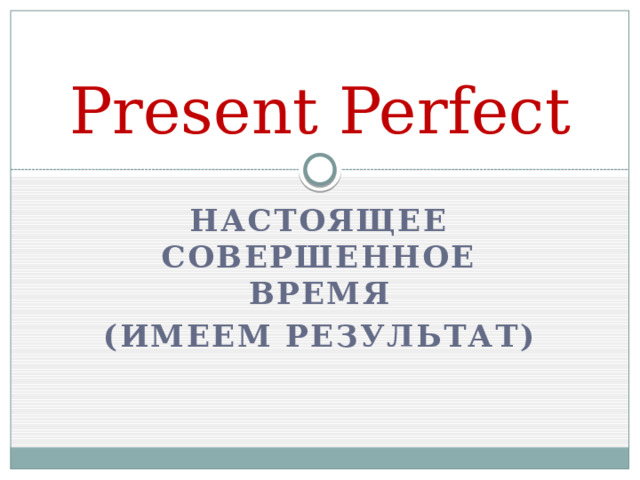
Present Perfect
Настоящее совершенное время
(имеем результат)

Употребление
- Действия, которые произошли в прошлом и связаны с настоящим через результат . Когда конкретно произошло действие, не важно.
- Kim has bought a new mobile phone.
- Ким купила телефон: когда – не важно, у нее есть телефон.
Употребление
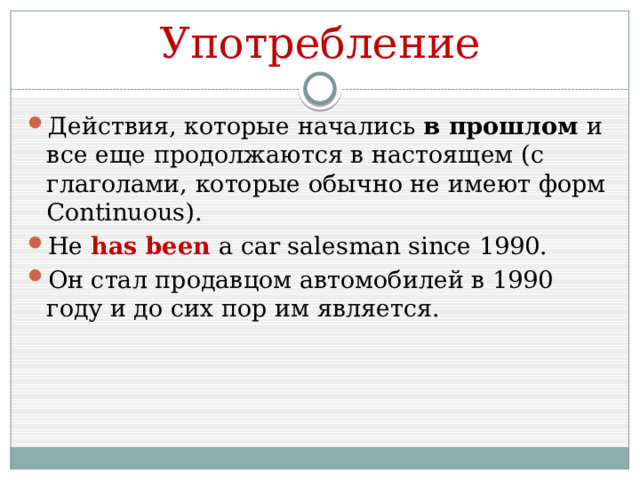
- Действия, которые начались в прошлом и все еще продолжаются в настоящем (с глаголами, которые обычно не имеют форм Continuous).
- He has been a car salesman since 1990.
- Он стал продавцом автомобилей в 1990 году и до сих пор им является.
Употребление
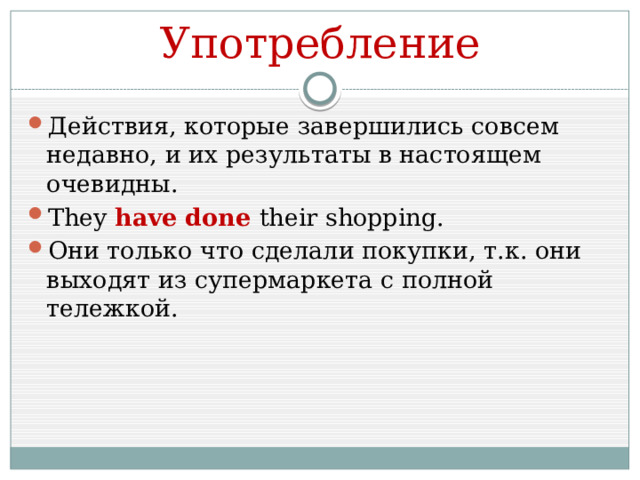
- Действия, которые завершились совсем недавно, и их результаты в настоящем очевидны.
- They have done their shopping.
- Они только что сделали покупки, т.к. они выходят из супермаркета с полной тележкой.

Употребление
- Так же употребляется со словами today, this morning/ afternoon и т.д., когда обозначенное ими время в момент речи еще не закончилось.
- He has made ten pots this morning.
- В это утро он сделал 10 горшков – но утро еще идет, еще не закончилось.

Схема образования

Маркеры времени
- ever (когда-либо), never, once, before (раньше), today, often, lately, already (уже), yet (еще, пока что), not yet, just (только что), so far (уже, до этого момента), many times, several times, this week, this afternoon, for an hour, for a long time, since twelve o’clock, since 12 April
- В утверждении: for (в течение – период времени), since (с какого-то времени), already, just (только что), always, recently (в последнее время)
- В вопросах: ever (когда-либо), how long, yet, lately
- В отрицаниях: for, since, yet, lately, never

Fill in since or for
- … ten years
- … I was 5
- … eight o’clock
- … two hours
- … ages
- … 6 months
- … lunch-time
- … we moved to this town
- … three minutes
- Предлог since используется, чтобы обозначить отправную точку во времени и в том случае, если отправной точкой является и какое-то действие (только Pr.Perf)
- Предлог for обозначает период , на протяжении которого длилось событие и имеет значение «в течение определенного времени»
Make sentences ( with not )
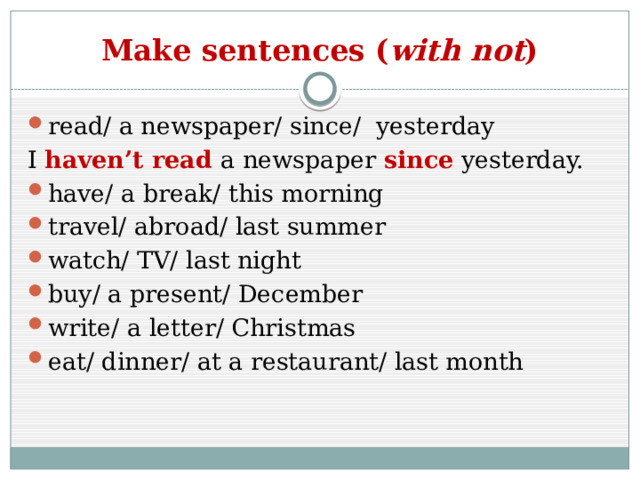
- read/ a newspaper/ since/ yesterday
I haven’t read a newspaper since yesterday.
- have/ a break/ this morning
- travel/ abroad/ last summer
- watch/ TV/ last night
- buy/ a present/ December
- write/ a letter/ Christmas
- eat/ dinner/ at a restaurant/ last month

Make sentences ( with not )
- read/ a newspaper/ since/ yesterday
I haven’t read a newspaper since yesterday.
- have/ a break/ this morning
- travel/ abroad/ last summer
- watch/ TV/ last night
- buy/ a present/ December
- write/ a letter/ Christmas
- eat/ dinner/ at a restaurant/ last month

Sam hasn’t seen John for a long time. He wants to know what John has done since they last met.
- Find / a new job (+)
- Have you found a new job?
- Yes, I have .
- Buy/ a bigger car (+)
- Move/ house (-)
- Get/ married (-)
- Finish/ your studies (+)
- Start/ taking karate lessons (+)

Вебинар для учителей
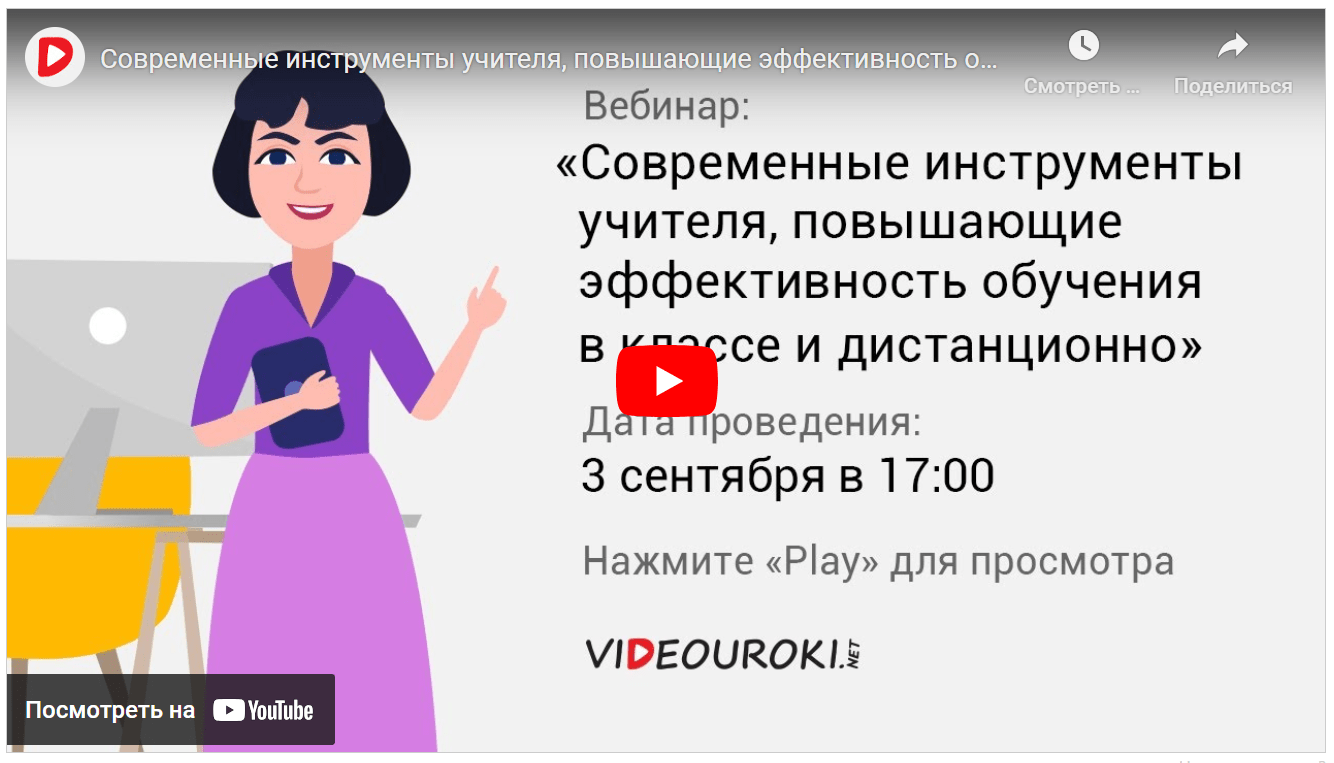
Свидетельство об участии БЕСПЛАТНО!