


Российская федерация, Североуральск


СДЕЛАЙТЕ СВОИ УРОКИ ЕЩЁ ЭФФЕКТИВНЕЕ, А ЖИЗНЬ СВОБОДНЕЕ
Благодаря готовым учебным материалам для работы в классе и дистанционно
Скидки до 50 % на комплекты
только до
Готовые ключевые этапы урока всегда будут у вас под рукой
Организационный момент
Проверка знаний
Объяснение материала
Закрепление изученного
Итоги урока

Была в сети 17.09.2025 17:21

Зыкова Ольга Геннадьевна
учитель английского языка
 2 548
2 548
 27 829
Местоположение
Специализация
Presentation to the priject "It`s raining cats and dogs"
Категория:
Английский язык
08.04.2016 17:38

Просмотр содержимого документа
«Presentation to the priject "It`s raining cats and dogs"»

« It’s raining
cats and dogs »
The author of the project:
The pupil of the 7 th form Anna Gonchar.
The consultant :
The teacher of English Olga Gennad`evna Zykova.
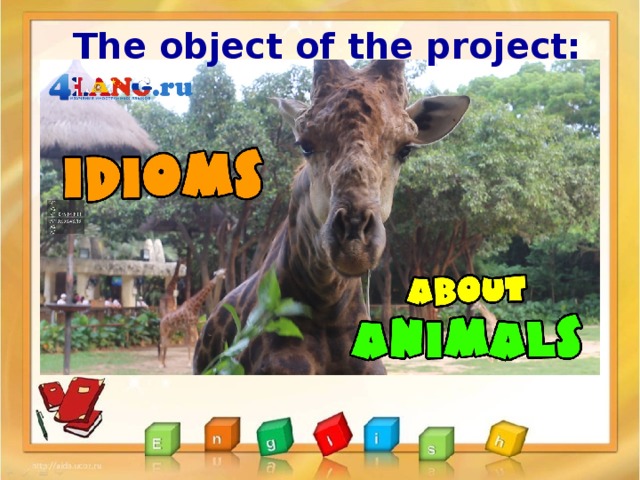
The object of the project:

The purpose of my investigation is
improving my knowledge of English
with the help of animal idioms.
The tasks of my investigation are
- To collect and analyze the English animal idioms, to compare their literally translation and real meaning;
- To find Russian equivalents to them;
- To find out the level of understanding of idioms among our schoolchildren;
- To find out if they use the English idioms in their speech;
- To prepare the product for a practical usage while learning the English idioms.

The hypothesis:
The first: We can understand the meaning of the idioms only by finding out their origin.
The second: If schoolchildren know the origin of English idioms, they will understand them better and will start to use them oftener that will make their speech brighter and more interesting.

The relevance
of my project
"He who does not know a foreign language, he does not know his hometown. " I.Gette
English now is very important
but the motivation to learning it
is not high among the pupils of our school. I`m sure, my work will help our children to realize the importance of knowing
the English language.

Определение идиомы В. Даля:
В Современном толковом словаре русского языка под редакцией С.А. Кузнецова дано следующее определение идиомы: «Идиома ( греч. idioma – своеобразное выражение) – оборот речи, не передаваемый дословно на другой язык.»
идиома – особенность или
отличительность языка
(Даль В.И. Толковый словарь
живого великорусского языка,
с.197).
Идиома
заимствовано в конце XVIII в. из французского языка, где idiome - греч. idiōma "особый, своеобразный оборот" - "своеобразие", суф. производного от idios " особый, собственный ")
- это свойственное только данному языку устойчивое, неделимое словосочетание, значение которого не определяется значением входящих в него слов взятых по отдельности. Это образное выражение, устойчивый оборот речи, имеющее переносный смысл и неразложимое на составляющие.
Idiom
is an undivided expression which has the meaning that does not coincide with the meaning of the words in it

To have a fun
Очень легкий

The idioms don`t match with Russian ones. We can only find the Russian equivalents to them.
The same construction and meaning in both languages.
The similar structure and meaning with Russian idioms but the animals in these expressions are different
Classification


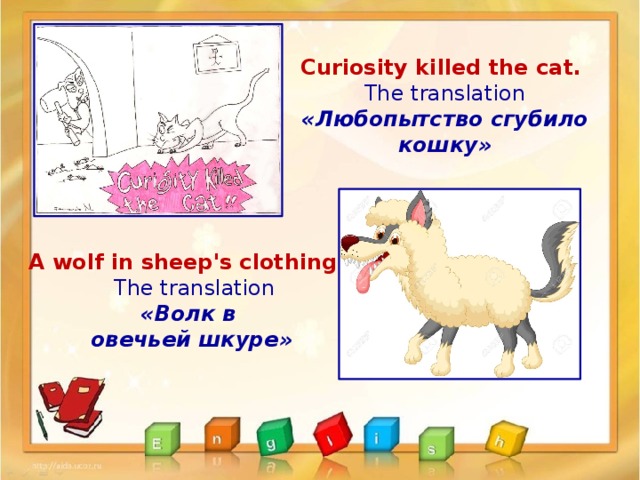
Curiosity killed the cat.
The translation
«Любопытство сгубило кошку»
A wolf in sheep's clothing –
The translation
«Волк в
овечьей шкуре»
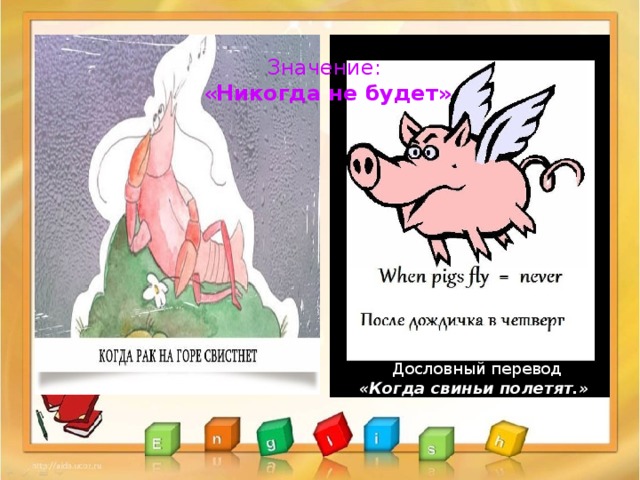
Значение:
« Никогда не будет»
Дословный перевод
«Когда свиньи полетят.»
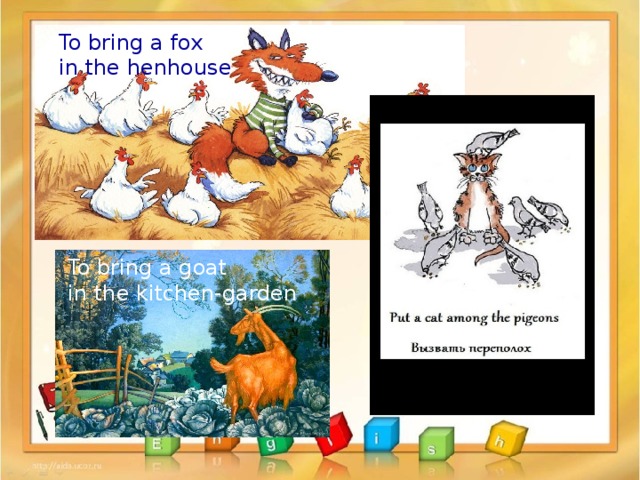
To bring a fox
in the henhouse
To bring a goat
in the kitchen-garden
8


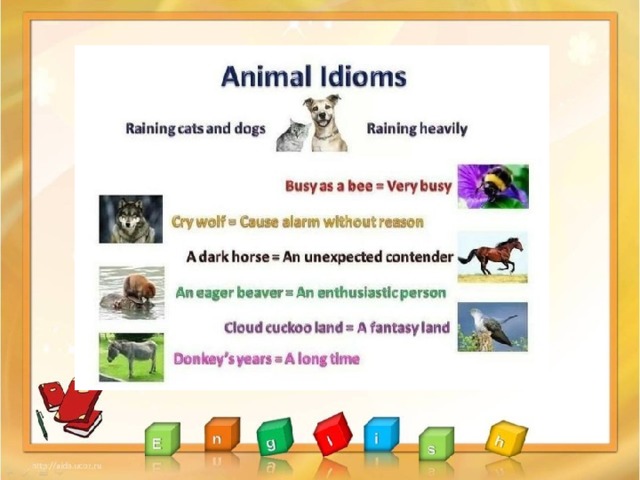
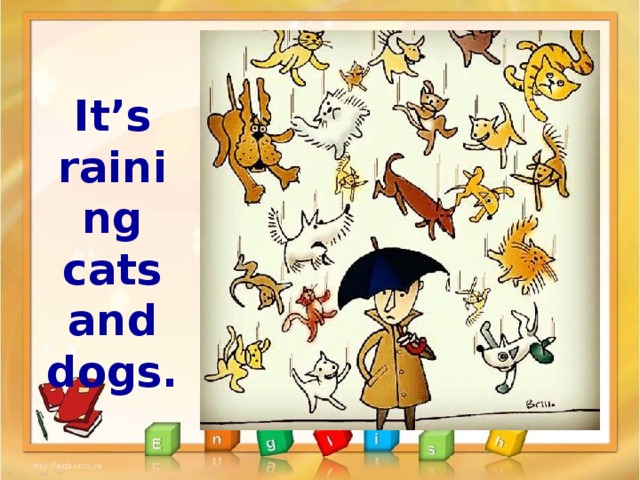
It’s raining
cats
and dogs.

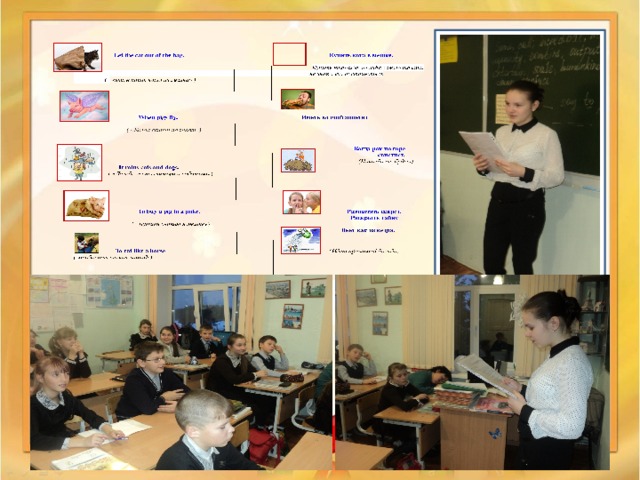
«There’s No Room to Swing a Cat» («Негде кошкой замахнуться»)
Означает букв. - «нет места, чтобы кошку качать»)
Соответствует идиоме русского языка
«Негде повернуться, негде яблоку упасть».
Эта фраза используется для того, чтобы подчеркнуть, что в одном месте собралось очень много людей.


Russian equivalent:
« To buy a cat
in the sack»
Buy a pig in a poke –
Meaning:
«To buy something without knowing
the thing itself»

« Cat Got Your Tongue?» -
«Has the cat taken
your tongue off?”
It means: “Why is it so quiet?”
It is like the Russian expression
«проглотить язык».

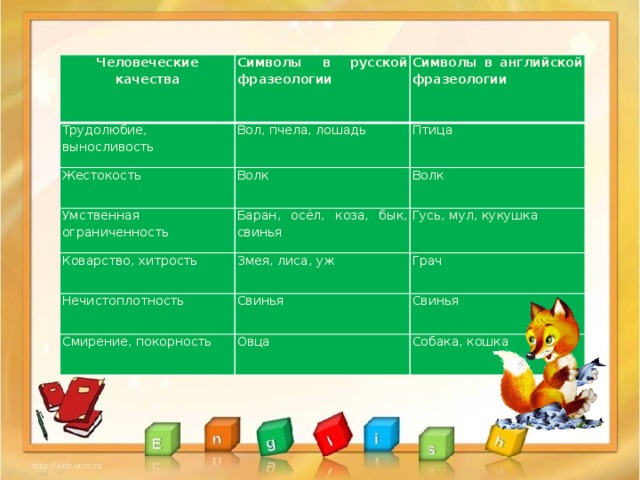
Человеческие качества
Символы в русской фразеологии
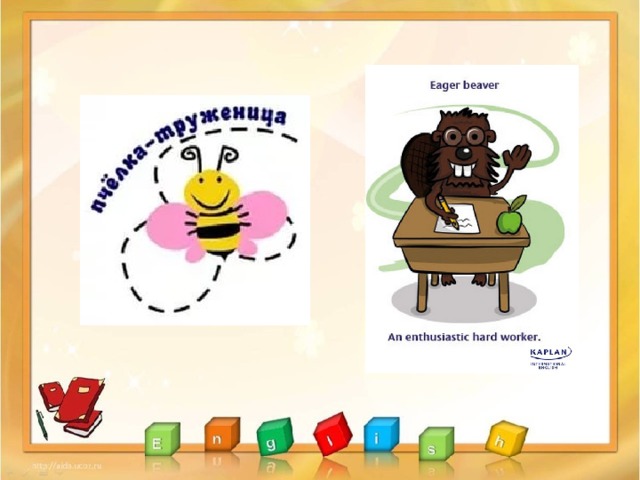
Трудолюбие, выносливость
Символы в английской фразеологии
Вол, пчела, лошадь
Жестокость
Умственная ограниченность
Птица
Волк
Коварство, хитрость
Баран, осёл, коза, бык, свинья
Волк
Гусь, мул, кукушка
Змея, лиса, уж
Нечистоплотность
Грач
Свинья
Смирение, покорность
Свинья
Овца
Собака, кошка
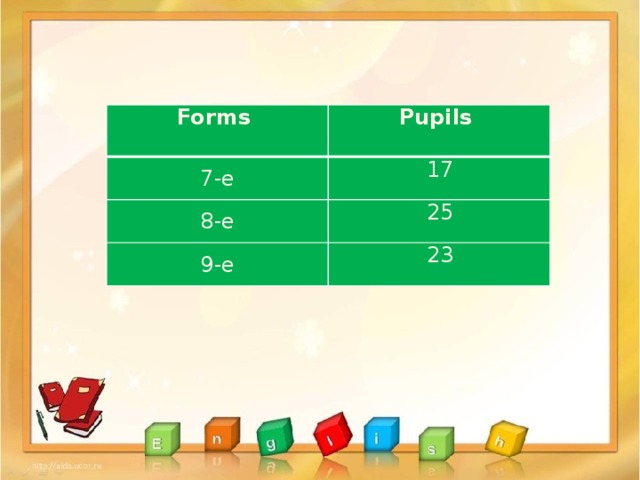
Forms
Pupils
7-е
17
8-е
25
9-е
23

В 7-9 классах школьники отвечали на вопросы анкеты, а так же им было предложено перевести 7 английских идиом и написать их значения на русском языке.
АНКЕТА ________________________ ______ « ___» класс

The results of my researches


Learning of the idioms is a very important part of learning the foreign language because:
- It helps to understand the national history;
- It helps to understand the speaker;
- It helps make the speech bright and emotional.
CONCLUSION
The first hypothess: We can understand the meaning of the idioms only by finding out their origin .
In the result of my researches the first hypothesis has found only the partial approval.
The second hypothess: If schoolchildren know the origin of English idioms, they will understand them better and will start to use them oftener that will make their speech brighter and more interesting.
In the result of my researches the second hypothesis has found the full approval.

Thanks for
your attention.










Вебинар для учителей

Свидетельство об участии БЕСПЛАТНО!



