Россия, Севастополь

СДЕЛАЙТЕ СВОИ УРОКИ ЕЩЁ ЭФФЕКТИВНЕЕ, А ЖИЗНЬ СВОБОДНЕЕ
Благодаря готовым учебным материалам для работы в классе и дистанционно
Скидки до 50 % на комплекты
только до
Готовые ключевые этапы урока всегда будут у вас под рукой
Организационный момент
Проверка знаний
Объяснение материала
Закрепление изученного
Итоги урока

Была в сети 19.02.2026 15:26

Иванова Ирина Григорьевна
 4 664
4 664
 13 530
Местоположение
Специализация
Презентация Food poisoning
Категория:
Английский язык
21.05.2019 15:53

Просмотр содержимого документа
«Презентация Food poisoning»
 250 known foodborne diseases The food supply in the United States is one of the safest in the world but the CDC states that 76 million individuals each year become ill due to the food they eat. More than 300,000 are hospitalized, and 5,000 Americans die each year from food borne illness. Keep in mind that the Young, Elderly, and Immune Compromised are highly susceptible to getting ill. " width="640"
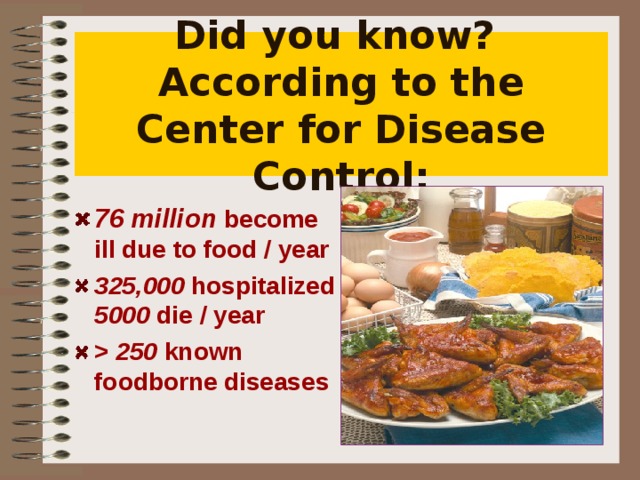
Did you know? According to the Center for Disease Control:
- 76 million become ill due to food / year
- 325,000 hospitalized 5000 die / year
- 250 known foodborne diseases
The food supply in the United States is one of the safest in the world but the CDC states that 76 million individuals each year become ill due to the food they eat. More than 300,000 are hospitalized, and 5,000 Americans die each year from food borne illness. Keep in mind that the Young, Elderly, and Immune Compromised are highly susceptible to getting ill.
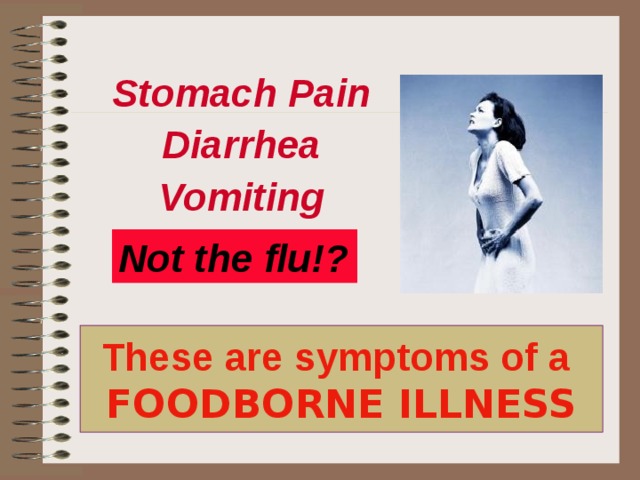
Stomach Pain
Diarrhea
Vomiting
- Stomach Pain Diarrhea Vomiting
Not the flu!?
Some of the most common symptoms of a food borne illness are stomach pain, diarrhea, vomiting, but because there are more than 250 food borne illness these symptoms vary greatly. The time it takes for you feel ill varies greatly also. You may feel ill immediately if you have a chemical poisoning or it could take days after ingesting bacteria to make you ill. Influenza (The Flu) is primarily a respiratory illness, while diarrhea and vomiting may occur; coughing, ‘tiredness‘, being achy (caused by high fever), and just all around misery for a week to ten days are typical. This is generally not the case with foodborne illness. You get sick for a couple days, feel better, probably don’t even seek any medical treatment, and continue on going about your business.
These are symptoms of a FOODBORNE ILLNESS
Food Poisoning and Foodborne Illness
Can be caused by eating food contaminated with:
- BACTERIA
- VIRUS
- TOXINS
- CHEMICALS
The Food and Drug Administration estimates that two to three percent of all food borne illnesses lead to secondary long-term illnesses such as kidney disease or arthritis. There are more than 250 food borne diseases, which can be traced, back to bacteria, viruses, parasites and chemicals.
The Most Common Foodborne
Bacterial Illnesses are Caused by:
E-coli 0157:H7
This is commonly referred to as “Food Related Infection.”
Campylobacter
Salmonella
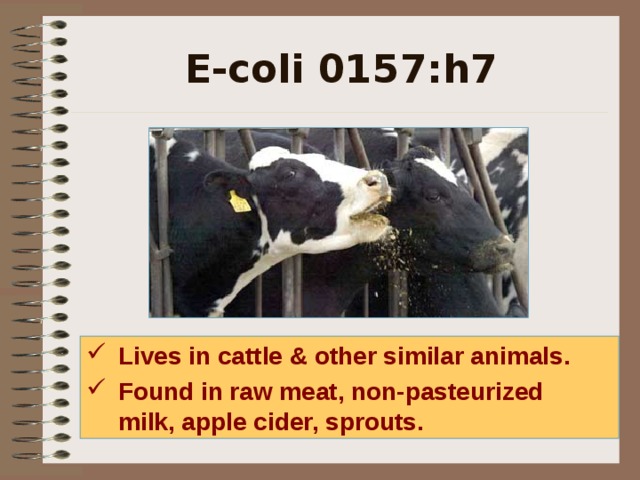
E-coli 0157:h7
E-coli0157: H7 frequently lives in cattle and other similar animals – in fact most animals GI tracts (including humans) are typically colonized by bacteria that aid the digestion process. These bacteria can enter the food chain in various ways, during the slaughtering process (meats) – or as the result of fertilizer/manure being applied to fields where our vegetables and fruits are grown.
- Lives in cattle & other similar animals.
- Found in raw meat, non-pasteurized milk, apple cider, sprouts.
E-coli 0157:h7
- Causes severe bloody diarrhea & cramps.
- Causes hemolytic uremic syndrome (HUS).
- Kidneys fail Red blood cells are destroyed
- Kidneys fail
- Red blood cells are destroyed
- Onset of illness 2-5 days .
- Lasts 5-10 days .
It can be found in raw meats and milk that has not been pasteurized. This bacteria can cause severe bloody diarrhea, abdominal cramps, without much fever. E-coli 0157:H7 can cause an illness called hemolytic uremic syndrome (HUS). HUS is a condition where the red blood cells are destroyed and the kidneys fail. E-Coli 0157:H7 can cause anemia, profuse bleeding, and kidney failure. The onset of the illness is typically 2-5 days and lasts 5-10 days.
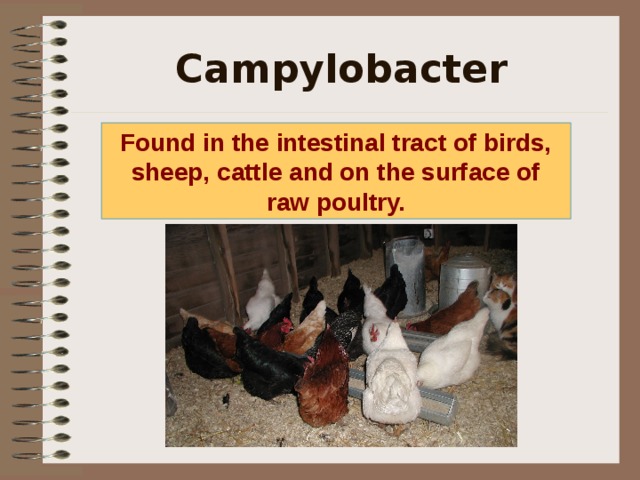
Campylobacter
Found in the intestinal tract of birds, sheep, cattle and on the surface of raw poultry.
Campylobacter is found in the intestinal tract of birds, sheep cattle and on the surface of raw poultry.
Campylobacter
- Causes abdominal cramps, diarrhea and fever
- Onset is 2-5 days
- Lasts 7-10 days
This bacteria causes abdominal cramps, diarrhea (sometimes bloody), and fever. The onset of the illness is typically 2-5 days and lasts 7-10 days.
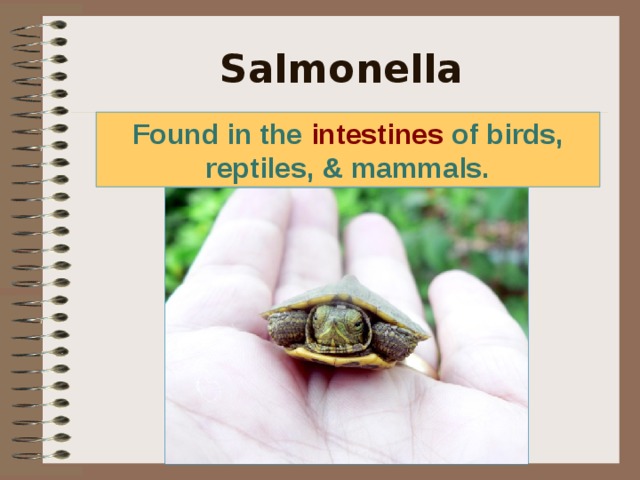
Salmonella
Found in the intestines of birds, reptiles, & mammals.
This is why you commonly see hand washing warnings at petting zoo’s or your teacher reminded you to wash your hands before having lunch. Well guess what? Salmonella is very common in poultry products. Nobody eats raw chicken, but the juice from the package or your hands can contaminate you and others.
Salmonella
- Causes fever, diarrhea & abdominal cramps.
- Can cause severe dehydration in infants and elderly.
- Onset is 6 hours - 2 days
- Lasts 1- 3 days.
It causes, fever, diarrhea and abdominal cramps. It can invade the bloodstream and cause life-threatening infections.

Some people call this FOOD POISONING.

Biological Toxins
Biological Toxins are produced by some pathogens found in food contamination.
They could also come from a plant or animal.
Bacterial Toxins
Some bacteria produce
poisons or toxins that cause:
FOODBORNE ILLNESS (sometimes intentional)

Staphylococcus aureus
Staph is the most common food bacteria that causes food intoxication. Typically caused by cross contamination of foods or foods left out to long before they are placed in the refrigerator. Cooking or reheating the food will likely kill the live organism, but the toxins that the organism produced through its life cycle remain. Cool right! Eat this stuff and you will be feeling ill probably by the end of your meal, or shortly after.
Commonly associated with food service.
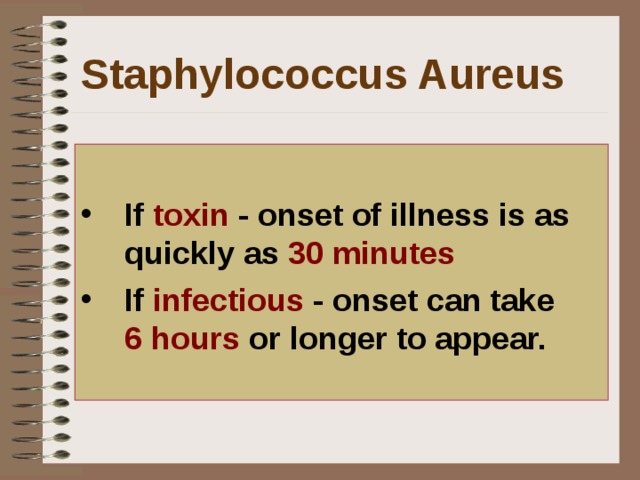
Staphylococcus Aureus
- If toxin - onset of illness is as quickly as 30 minutes
- If infectious - onset can take 6 hours or longer to appear.
Staphylococcus Aureus
produces a toxin that causes
serious vomiting and
stomach cramps .
Many affected by this organism or toxin require hospitalization.
 60%) are expected with untreated or delayed treatment victims. Same type of Toxin used in BOTOX injections, but a specific lab grown weakened strain. " width="640"
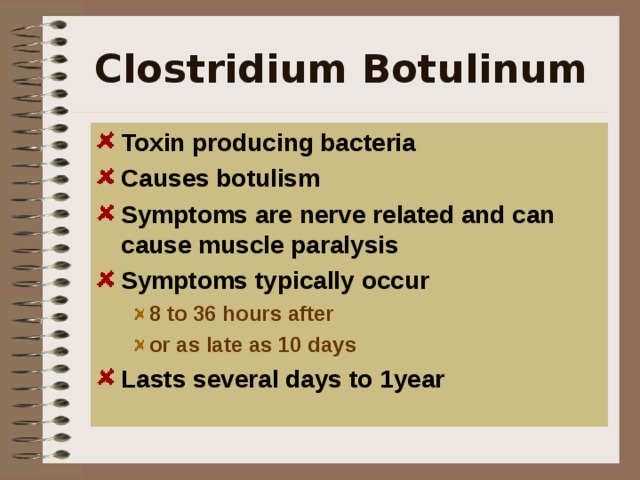
Clostridium Botulinum
- Toxin producing bacteria
- Causes botulism
- Symptoms are nerve related and can cause muscle paralysis
- Symptoms typically occur
- 8 to 36 hours after or as late as 10 days
- 8 to 36 hours after
- or as late as 10 days
- Lasts several days to 1year
Origin in food industry typically results from poor processing or improperly sealed cans. Those dented cans that we think are okay, but know should be thrown out. This organism is of high concern due to is potential use as a bioweapon. Infective dose -- a very small amount (a few nanograms) of toxin can cause illness. High fatality (60%) are expected with untreated or delayed treatment victims. Same type of Toxin used in BOTOX injections, but a specific lab grown weakened strain.
Influenz

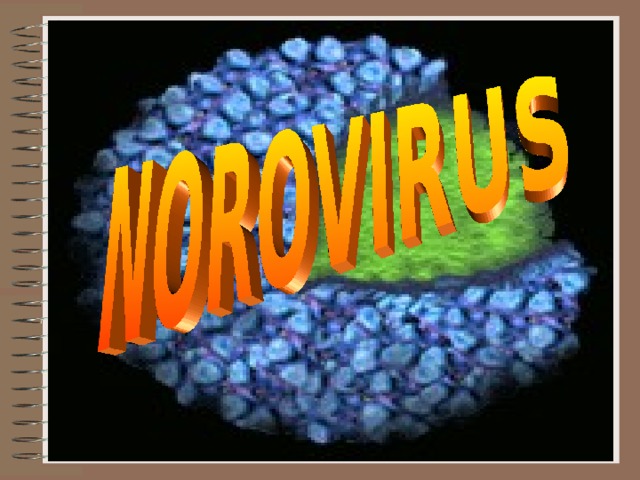
Norovirus
- The cause of HALF of all foodborne illness.
- Spread by
- hand contact with food food placed on a surface that is contaminated by the virus or when virus is airborne.
- hand contact with food
- food placed on a surface that is contaminated by the virus
- or when virus is airborne.
According to the CDC, Norovirus is believed to cause of HALF of all food borne illnesses.
Norovirus is spread by hand contact with food, food that is placed on a surface that is contaminated by the virus, or when virus is airborne.
Cold foods such as sandwiches and salads are often associated with this virus.
Norovirus is easily spread among people and common on cruise lines.
Cold foods such as sandwiches & salads are often associated with Norovirus.
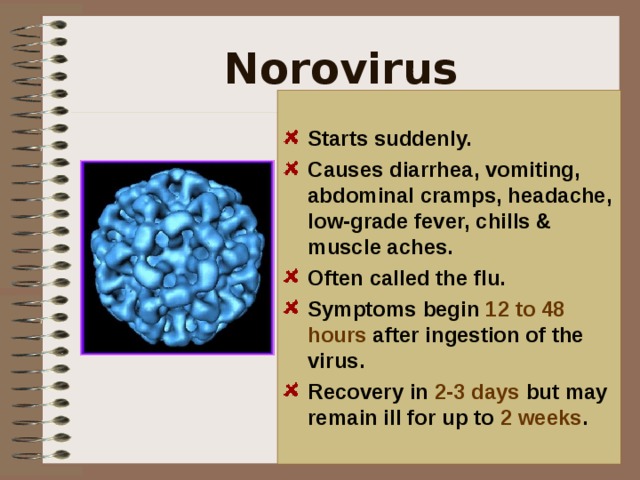
Norovirus
- Starts suddenly.
- Causes diarrhea, vomiting, abdominal cramps, headache, low-grade fever, chills & muscle aches.
- Often called the flu.
- Symptoms begin 12 to 48 hours after ingestion of the virus.
- Recovery in 2-3 days but may remain ill for up to 2 weeks .
People often call this the flu. Well its not! Plan on worshipping the wastebasket or water closet for at least two days. This bug may be simply picked up from a door knob, shopping cart, light switch, or handrail inoculated by the infected person. You come along and touch the surface, eat your lunch without washing your hands and now your infected too. *Norovirus is a common illness but, is not always found with food. It is better associated with close person to person contact. Food is only the accidental transfer media.
Another Foodborne Illness Virus
- Possible sources include by shellfish, salads, deli meats fruits, milk and milk products
- Symptoms include sudden onset of fever, general discomfort, fatigue, headache, nausea, loss of appetite, vomiting, abdominal pain & jaundice after several days.
- Lasts 1 to 2 weeks (severe cases up to several months).
A word of advice.. Don’t drink un-pasteurized milk or juices or eat raw fish and oysters. Save yourself!
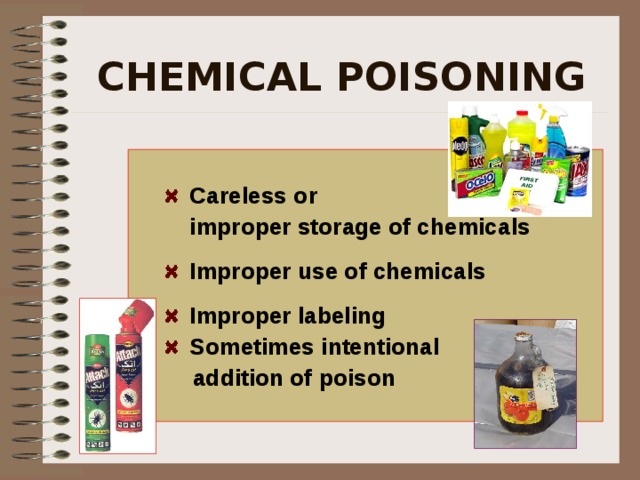
CHEMICAL POISONING
- Careless or
improper storage of chemicals
- Improper use of chemicals
- Improper labeling
- Sometimes intentional
addition of poison
Poisoning from Toxins due to:
Carelessness or improper storage of chemicals, and improper use of chemicals. Commercial cleaners look the same as food additives such as salt or sugar. Labeling is important to eliminate any mix up.
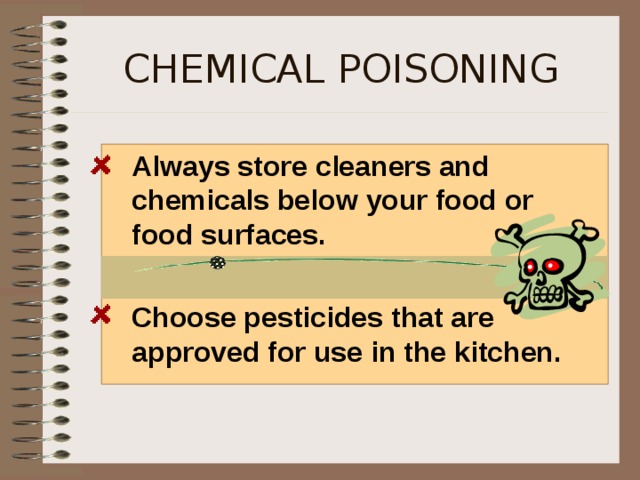
CHEMICAL POISONING
Always store cleaners and chemicals below your food or food surfaces.
Choose pesticides that are approved for use in the kitchen.
Vandals sometimes intentionally poison the food we eat too. Always purchase food from reputable stores.
There are several ways that we can protect ourselves by taking these words of advice.
26
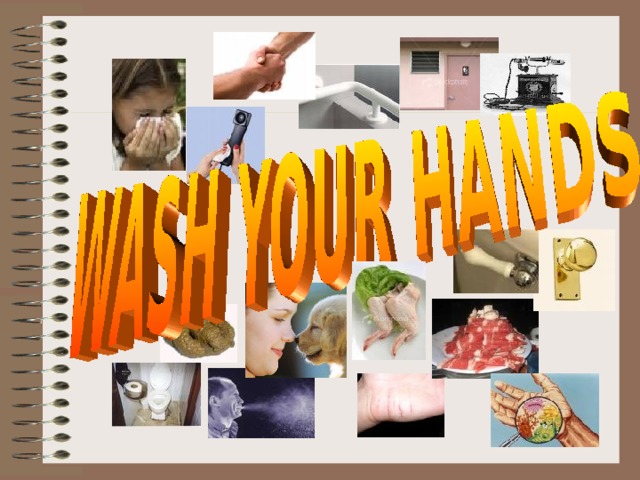
The most important step to protecting our health. Did you wash your hands when your left the bathroom? Did you wash your hands before you had a snack or ate lunch? Think about all the objects you touched where others more than likely did not wash there hands either. Scary Stuff !
26
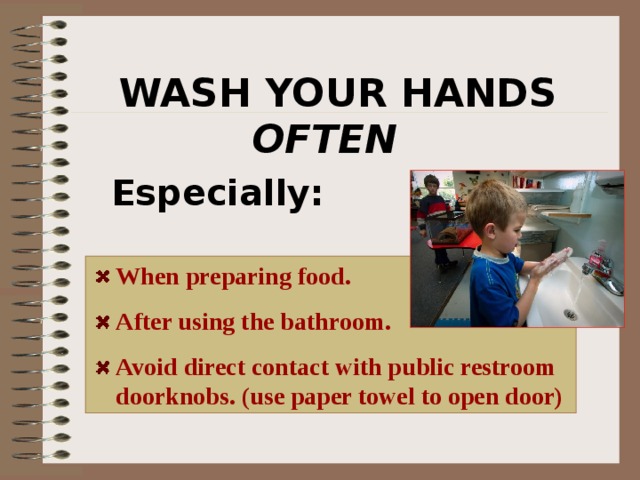
WASH YOUR HANDS OFTEN
Especially:
- When preparing food.
- After using the bathroom.
- Avoid direct contact with public restroom doorknobs. (use paper towel to open door)
viruses on door knobs can easily be transmitted to you if present.
26
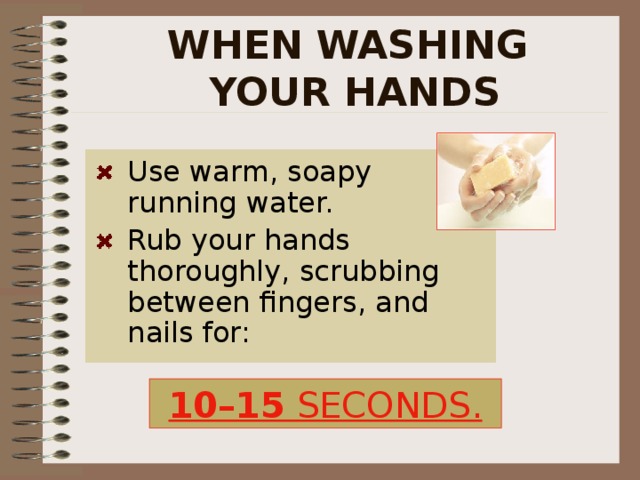
WHEN WASHING YOUR HANDS
- Use warm, soapy running water.
- Rub your hands thoroughly, scrubbing between fingers, and nails for:
When Handling Fresh Fruits and Vegetables: The Center for Disease Control (CDC) Recommends that:
You wash you hands. Your hands should be washed with clean soapy water before handling or eating your food.
Items such as knives and cutting boards that your food comes into contact with are clean.
You always rinse fresh fruits and vegetables with water before eating them. Do not use bleach or soap, as these items are not meant for eating.
When you eat fresh fruits or vegetables make sure they are not bruised or damaged.
10–15 SECONDS.
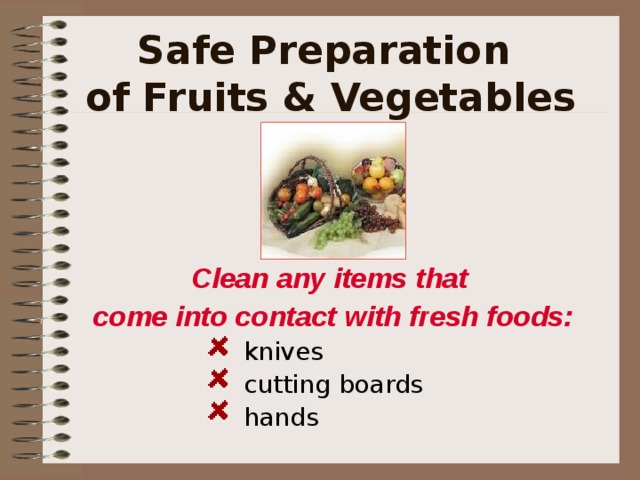
Safe Preparation of Fruits & Vegetables
Clean any items that
come into contact with fresh foods:
knives
cutting boards
hands
- knives cutting boards hands
- knives cutting boards hands
- knives cutting boards hands
- knives cutting boards hands
It is recommended that we have several servings of fresh fruits and vegetables each day but we need to handle them properly.
According to the FDA cut fruits and vegetables such as salads and melons should be refrigerated at a temperature of 40 o F. You should NOT eat fresh cut items that are not refrigerated. All cut or pealed items should be thrown away if they have been not cooked or refrigerated after 2 hours
 2 hours. Do not eat bruised or damaged fruits & vegetables. Do not prepare food for others if you yourself have diarrhea . Do not use bleach or soap on fruits & vegetables. Do NOT eat fresh cut items left un-refrigerated for 2 hours. Do not eat bruised or damaged fruits & vegetables. " width="640"
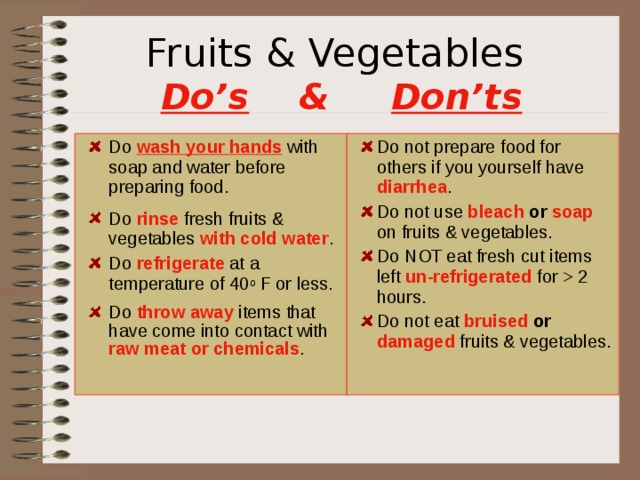
Fruits & Vegetables Do’s & Don’ts
- Do wash your hands with soap and water before preparing food. Do rinse fresh fruits & vegetables with cold water . Do refrigerate at a temperature of 40 o F or less. Do throw away items that have come into contact with raw meat or chemicals .
- Do wash your hands with soap and water before preparing food.
- Do rinse fresh fruits & vegetables with cold water .
- Do refrigerate at a temperature of 40 o F or less.
- Do throw away items that have come into contact with raw meat or chemicals .
- Do not prepare food for others if you yourself have diarrhea . Do not use bleach or soap on fruits & vegetables. Do NOT eat fresh cut items left un-refrigerated for 2 hours. Do not eat bruised or damaged fruits & vegetables.
- Do not prepare food for others if you yourself have diarrhea .
- Do not use bleach or soap on fruits & vegetables.
- Do NOT eat fresh cut items left un-refrigerated for 2 hours.
- Do not eat bruised or damaged fruits & vegetables.
Safe Preparation of Raw Meats
A few simple precautions can reduce the risk of foodborne diseases:
- COOK SEPARATE CHILL REPORT
- COOK SEPARATE CHILL REPORT
- COOK SEPARATE CHILL REPORT
- COOK
- SEPARATE
- CHILL
- REPORT
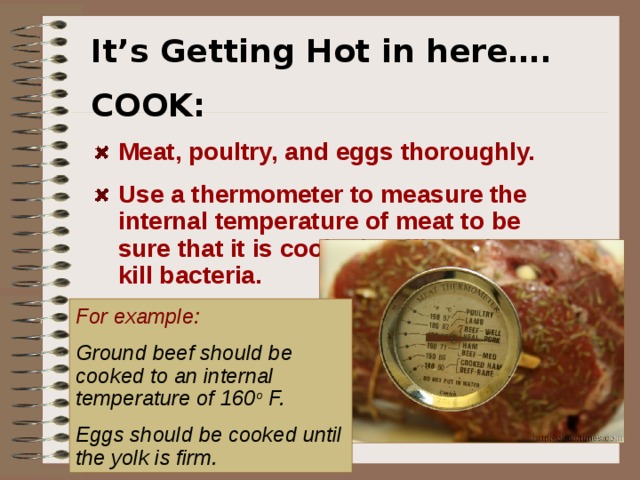
It’s Getting Hot in here….
COOK:
- Meat, poultry, and eggs thoroughly.
- Use a thermometer to measure the internal temperature of meat to be sure that it is cooked sufficiently to kill bacteria.
For example:
Ground beef should be cooked to an internal temperature of 160 o F.
Eggs should be cooked until the yolk is firm.
Cook and order your foods thoroughly done.
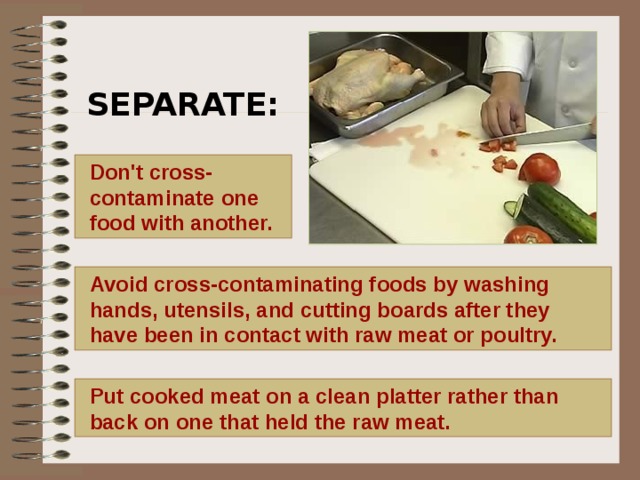
SEPARATE:
Don't cross- contaminate one food with another.
Avoid cross-contaminating foods by washing hands, utensils, and cutting boards after they have been in contact with raw meat or poultry.
Put cooked meat on a clean platter rather than back on one that held the raw meat.
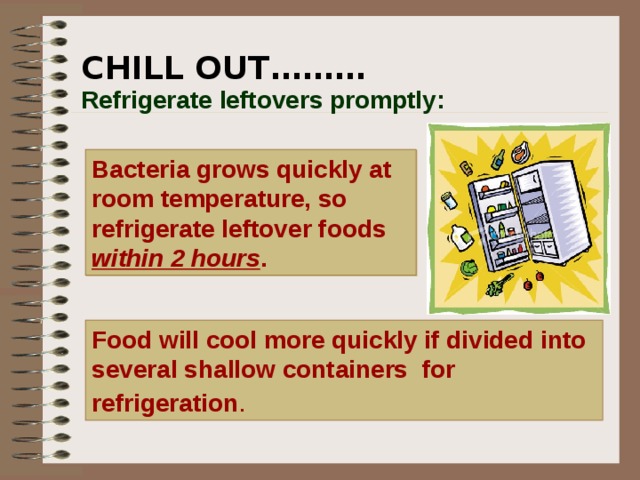
CHILL OUT………
Refrigerate leftovers promptly:
Bacteria grows quickly at room temperature, so refrigerate leftover foods within 2 hours .
Don’t leave your food out on the counter like Grandma and Grandpa does. They have a stomach for this and you don’t! Right!
Food will cool more quickly if divided into several shallow containers for refrigeration .

If in doubt as to the safety of your food,
THROW IT OUT!!
If fresh fruit or vegetables have come into contact with raw meats or chemicals or the surfaces that raw meat and chemicals throw them out.
If in doubt throw it out
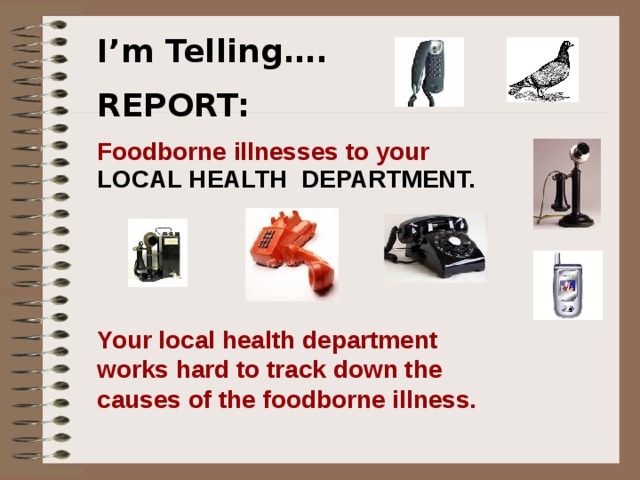
I’m Telling….
REPORT:
Foodborne illnesses to your LOCAL HEALTH DEPARTMENT.
I’m Telling Foodborne illnesses should be called in to your local health department .
Public health departments help track down the causes of foodborne illnesses.
Should a public health department call you to find out more about an illness you or others have had your cooperation is important.
Your local health department works hard to track down the causes of the foodborne illness.
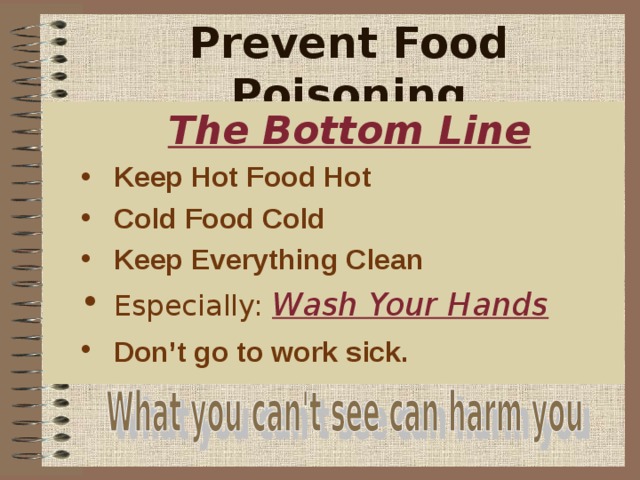
Prevent Food Poisoning
The Bottom Line
- The Bottom Line
- The Bottom Line
- The Bottom Line
- The Bottom Line
- Keep Hot Food Hot Cold Food Cold Keep Everything Clean
- Keep Hot Food Hot Cold Food Cold Keep Everything Clean
- Keep Hot Food Hot Cold Food Cold Keep Everything Clean
- Keep Hot Food Hot Cold Food Cold Keep Everything Clean
- Keep Hot Food Hot
- Cold Food Cold
- Keep Everything Clean
- Especially: Wash Your Hands
- Especially: Wash Your Hands
- Especially: Wash Your Hands
- Especially: Wash Your Hands
- Especially: Wash Your Hands
- Don’t go to work sick.
- Don’t go to work sick.
- Don’t go to work sick.
- Don’t go to work sick.
- Don’t go to work sick.
Also, if you work for a restaurant don’t go to work sick. You can make many others ill from your mistake and possibly be financially liable, if you make others ill.
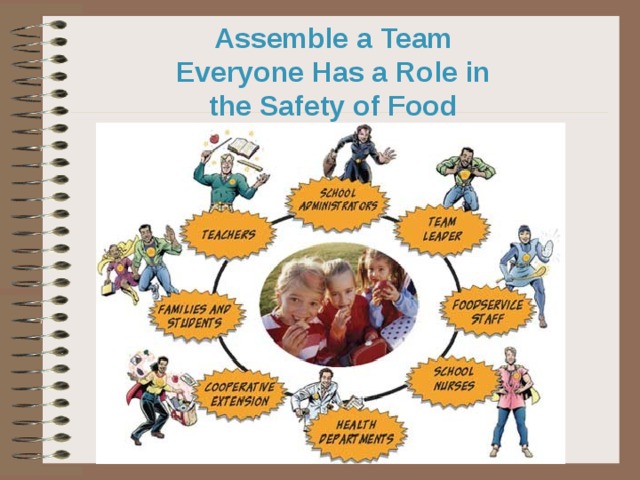
Assemble a Team
Everyone Has a Role in the Safety of Food
- Taking a team approach is invaluable for addressing a variety of issues in our programs.
- The team can include school food service staff, teachers, principals and/or administrators, the school nurse, the health department, cooperative extension and students and families. School Nurse and Public Health Departments are FIRST RESPONDERS
- They should address the safety of foods throughout the entire school, not just in the cafeteria but in vending machines, school stores, at fund raising events, foods brought to pot luck lunches and foods brought to the classroom by students to be shared.
- Once the team has built a relationship, the group can deal with issues larger than food safety, including food defense, emergency preparedness and response and school health policies.








Вебинар для учителей

Свидетельство об участии БЕСПЛАТНО!