


Россия, Мелеуз

СДЕЛАЙТЕ СВОИ УРОКИ ЕЩЁ ЭФФЕКТИВНЕЕ, А ЖИЗНЬ СВОБОДНЕЕ
Благодаря готовым учебным материалам для работы в классе и дистанционно
Скидки до 50 % на комплекты
только до
Готовые ключевые этапы урока всегда будут у вас под рукой
Организационный момент
Проверка знаний
Объяснение материала
Закрепление изученного
Итоги урока

Была в сети 15.03.2026 21:38

Щербакова Ольга Александровна
учитель английского языка
 937
937
 70 255
Местоположение
Презентация " Grammatical differences in American and British English"
Категория:
Английский язык
17.08.2020 17:16

Просмотр содержимого документа
«Презентация " Grammatical differences in American and British English"»

Grammatical differences in American and British English .

Famous Time Magazine.
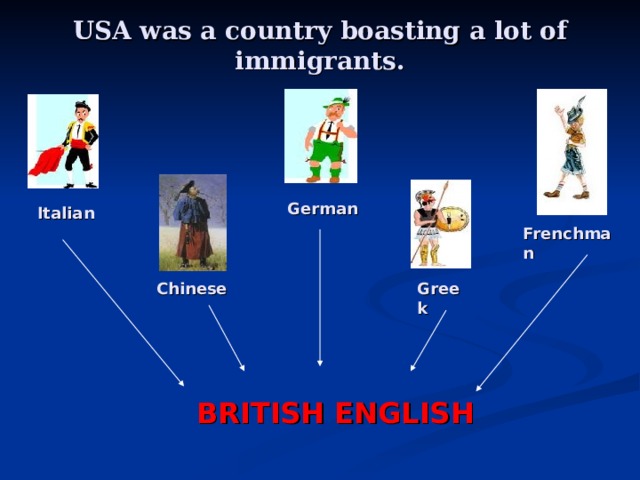
USA was a country boasting a lot of immigrants.
German
Italian
Frenchman
Chinese
Greek
BRITISH ENGLISH

British colonies in North America in 1763-1775

1. Using of tenses.
American English/British English
- Jenny feels ill. She ate too much.
- Jenny feels ill. She has eaten too much.
- I can’t find my keys. Did you see them anywhere?
- I can’t find my keys. Have you seen them anywhere?

American English/British English
- Are they going to the show tonight?
No. They already saw it.
- Are they going to the show tonight?
No. They have already seen it.
- Is Samantha here?
No, she just left.
- Is Samantha here?
No, she has just left.

2. Verb agreement with collective nouns.
- My team is winning.
The other team are all sitting down.
- Which team is losing?
- Which team is/are losing?

3. Use of verbs have and take.
- I’d like to have a bath.
- She’s having a little nap.
- Joe is taking a shower.
I’d like to take a bath.
Let’s take a short vocation .

4. Use of auxiliaries and modals.
- Are you coming with us? I might do .
- Are you coming with us? I might.
- They needn’t come to school today. They don’t need to come to school today.
- They don’t need to come to school today.
- I shall/will be there later.
- Shall we ask him to come with us?
- Should we ask him to come with us?

5. Use of prepositions.
- At Christmas/five o’clock, at the weekend
- She’ll be coming home on weekends.
- She studied chemistry at university.
- She studied French in high school.
- This place is different from/to anything I’ve seen before.
- This place is different from/than anything I’ve seen before.
- I promised to write to her every day.
- I promised to write her every day.

English is widely used in the world.


Thank you
for your attention !


Вебинар для учителей

Свидетельство об участии БЕСПЛАТНО!



