Россия, Татарск

СДЕЛАЙТЕ СВОИ УРОКИ ЕЩЁ ЭФФЕКТИВНЕЕ, А ЖИЗНЬ СВОБОДНЕЕ
Благодаря готовым учебным материалам для работы в классе и дистанционно
Скидки до 50 % на комплекты
только до
Готовые ключевые этапы урока всегда будут у вас под рукой
Организационный момент
Проверка знаний
Объяснение материала
Закрепление изученного
Итоги урока
Была в сети 01.05.2024 19:49

Поротникова Альбина Александровна
Учитель английского языка
37 лет
 1 582
1 582
 44 028
Местоположение
Специализация
Презентация "IRELAND"
Категория:
Английский язык
06.08.2019 07:25

Просмотр содержимого документа
«Презентация "IRELAND"»
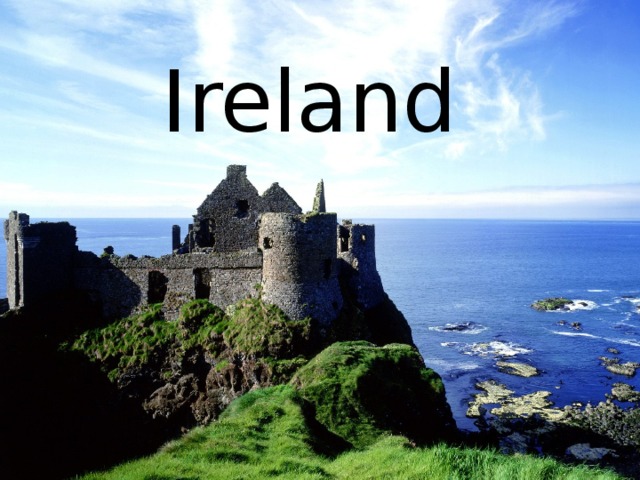
Ireland
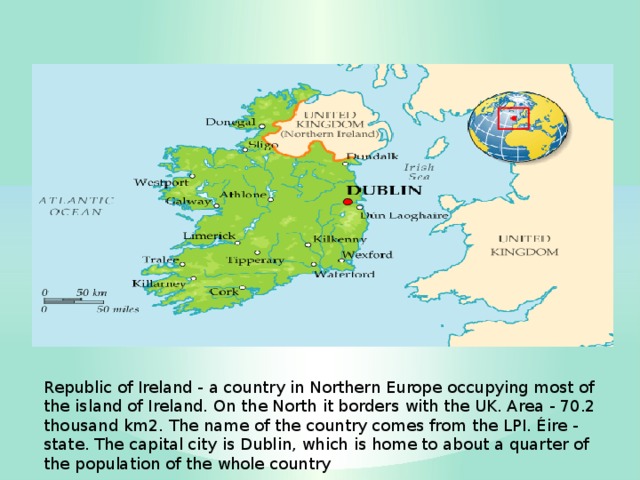
Republic of Ireland - a country in Northern Europe occupying most of the island of Ireland. On the North it borders with the UK. Area - 70.2 thousand km2. The name of the country comes from the LPI. Éire - state. The capital city is Dublin, which is home to about a quarter of the population of the whole country
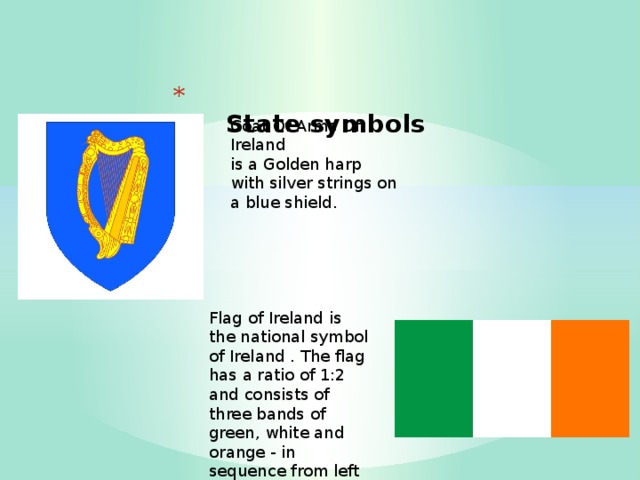
- State symbols
Coat Of Arms Of Ireland is a Golden harp with silver strings on a blue shield.
Flag of Ireland is the national symbol of Ireland . The flag has a ratio of 1:2 and consists of three bands of green, white and orange - in sequence from left to right
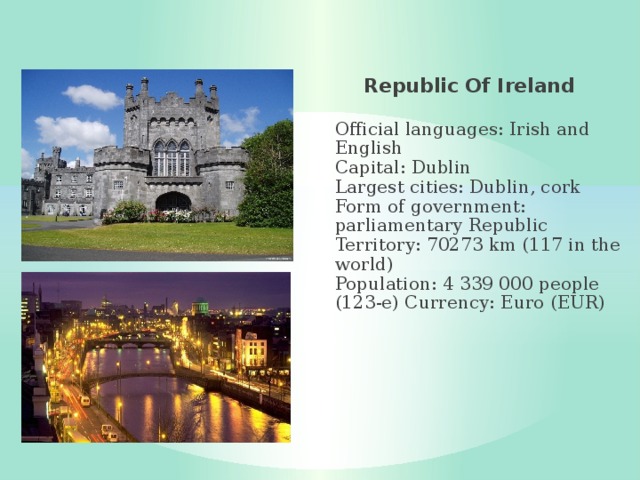
Republic Of Ireland
Official languages: Irish and English Capital: Dublin Largest cities: Dublin, cork Form of government: parliamentary Republic Territory: 70273 km (117 in the world) Population: 4 339 000 people (123-e) Currency: Euro (EUR)
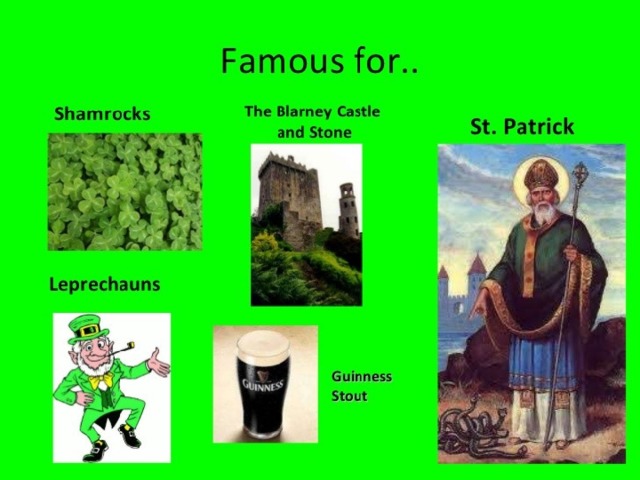
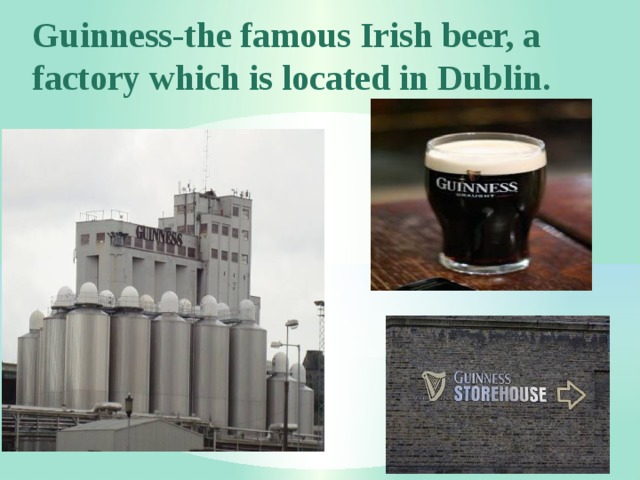
Guinness-the famous Irish beer, a factory which is located in Dublin.
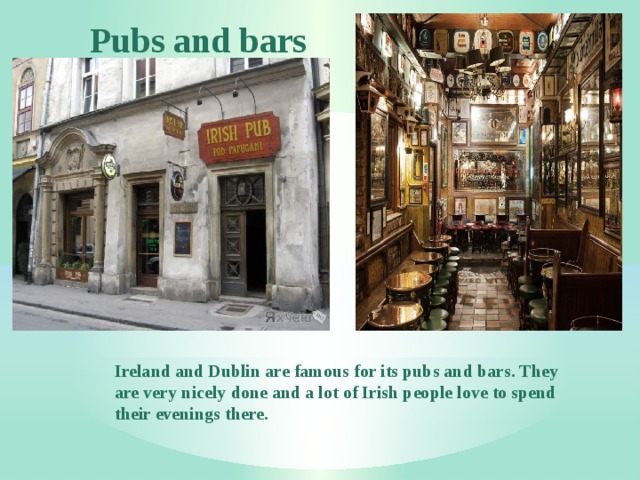
Pubs and bars
Ireland and Dublin are famous for its pubs and bars. They are very nicely done and a lot of Irish people love to spend their evenings there.
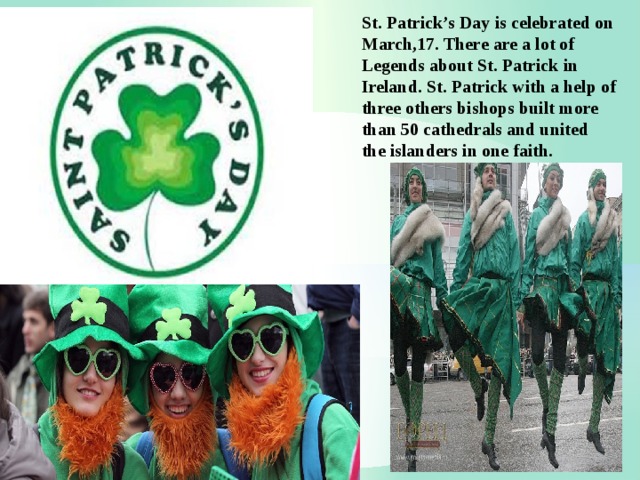
St. Patrick’s Day is celebrated on March,17. There are a lot of Legends about St. Patrick in Ireland. St. Patrick with a help of three others bishops built more than 50 cathedrals and united the islanders in one faith.
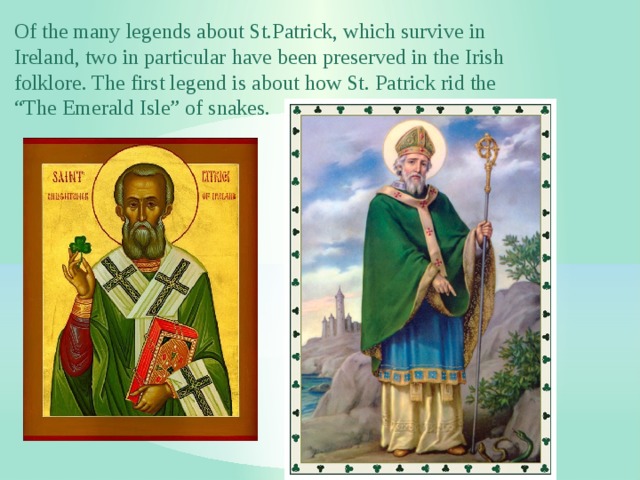
Of the many legends about St.Patrick, which survive in Ireland, two in particular have been preserved in the Irish folklore. The first legend is about how St. Patrick rid the “The Emerald Isle” of snakes.
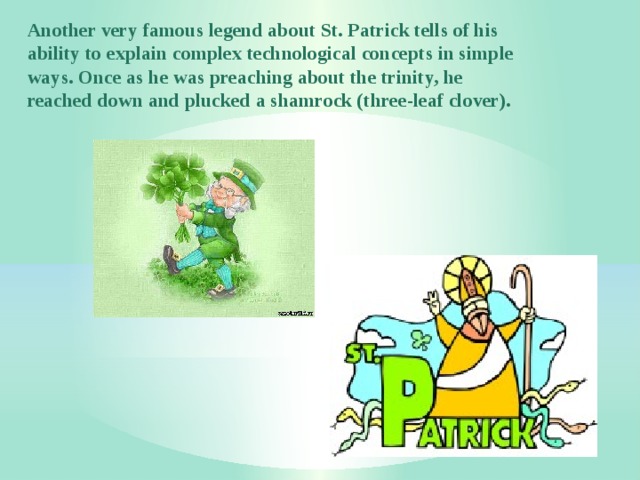
Another very famous legend about St. Patrick tells of his ability to explain complex technological concepts in simple ways. Once as he was preaching about the trinity, he reached down and plucked a shamrock (three-leaf clover).
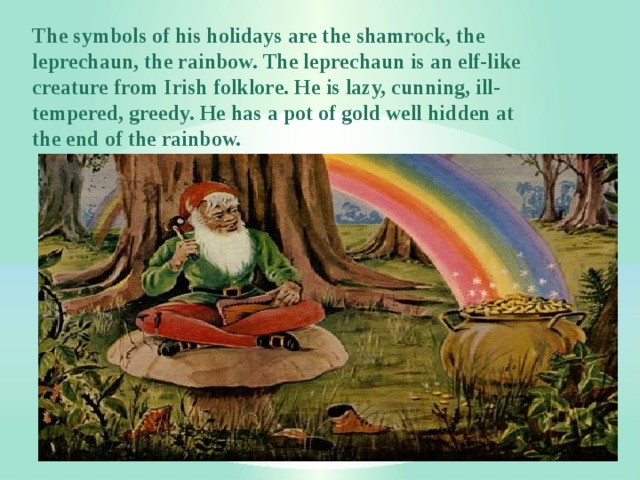
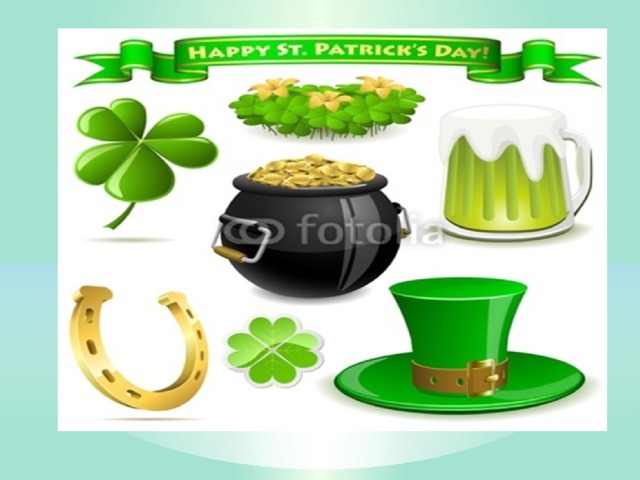
The symbols of his holidays are the shamrock, the leprechaun, the rainbow. The leprechaun is an elf-like creature from Irish folklore. He is lazy, cunning, ill-tempered, greedy. He has a pot of gold well hidden at the end of the rainbow.
Famous places in Ireland
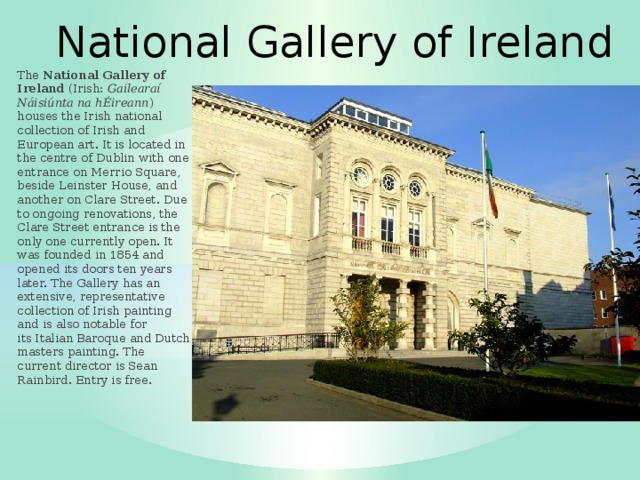
National Gallery of Ireland
The National Gallery of Ireland (Irish: Gailearaí Náisiúnta na hÉireann ) houses the Irish national collection of Irish and European art. It is located in the centre of Dublin with one entrance on Merrio Square, beside Leinster House, and another on Clare Street. Due to ongoing renovations, the Clare Street entrance is the only one currently open. It was founded in 1854 and opened its doors ten years later. The Gallery has an extensive, representative collection of Irish painting and is also notable for its Italian Baroque and Dutch masters painting. The current director is Sean Rainbird. Entry is free.
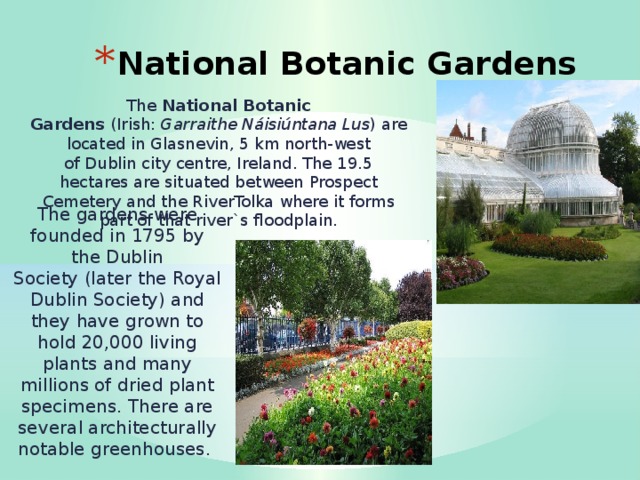
- National Botanic Gardens
The National Botanic Gardens (Irish: Garraithe Náisiúntana Lus ) are located in Glasnevin, 5 km north-west of Dublin city centre, Ireland. The 19.5 hectares are situated between Prospect Cemetery and the RiverTolka where it forms part of that river`s floodplain.
The gardens were founded in 1795 by the Dublin Society (later the Royal Dublin Society) and they have grown to hold 20,000 living plants and many millions of dried plant specimens. There are several architecturally notable greenhouses.
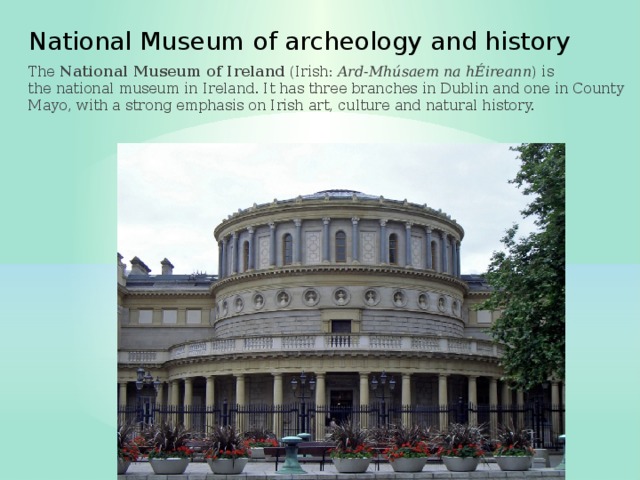
National Museum of archeology and history
The National Museum of Ireland (Irish: Ard-Mhúsaem na hÉireann ) is the national museum in Ireland. It has three branches in Dublin and one in County Mayo, with a strong emphasis on Irish art, culture and natural history.
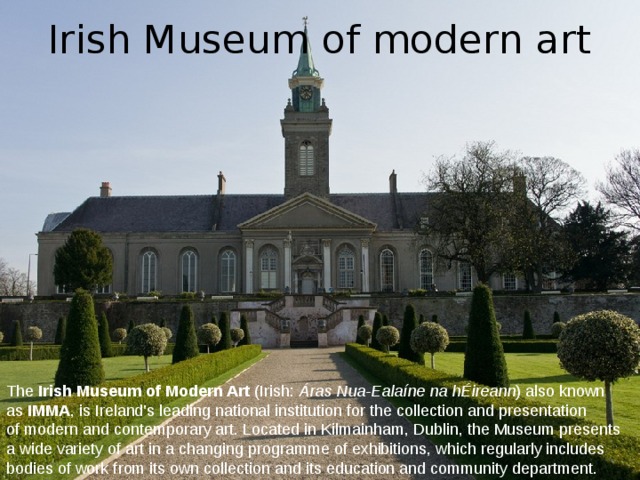
Irish Museum of modern art
The Irish Museum of Modern Art (Irish: Áras Nua-Ealaíne na hÉireann ) also known as IMMA , is Ireland's leading national institution for the collection and presentation of modern and contemporary art. Located in Kilmainham, Dublin, the Museum presents a wide variety of art in a changing programme of exhibitions, which regularly includes bodies of work from its own collection and its education and community department.
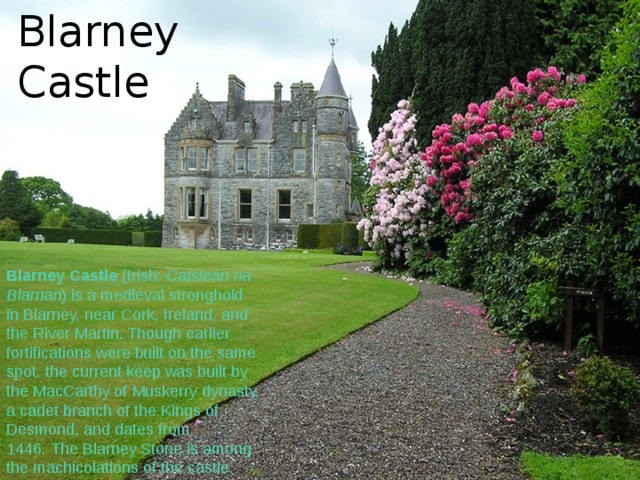
Blarney Castle
Blarney Castle (Irish: Caisleán na Blarnan ) is a medieval stronghold in Blarney, near Cork, Ireland, and the River Martin. Though earlier fortifications were built on the same spot, the current keep was built by the MacCarthy of Muskerry dynasty, a cadet branch of the Kings of Desmond, and dates from 1446. The Blarney Stone is among the machicolations of the castle.
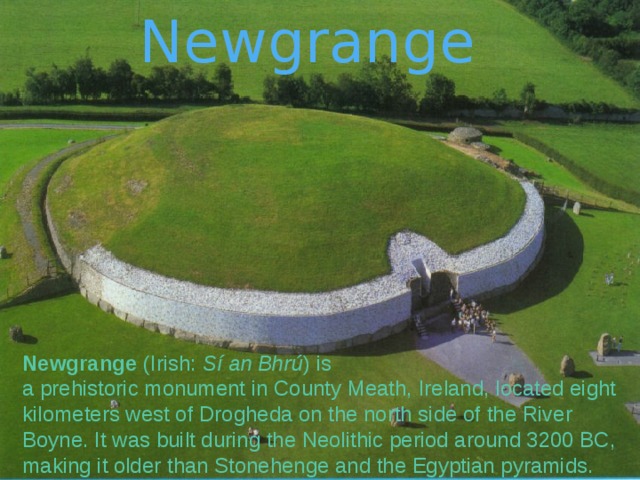
Newgrange
Newgrange (Irish: Sí an Bhrú ) is a prehistoric monument in County Meath, Ireland, located eight kilometers west of Drogheda on the north side of the River Boyne. It was built during the Neolithic period around 3200 BC, making it older than Stonehenge and the Egyptian pyramids.
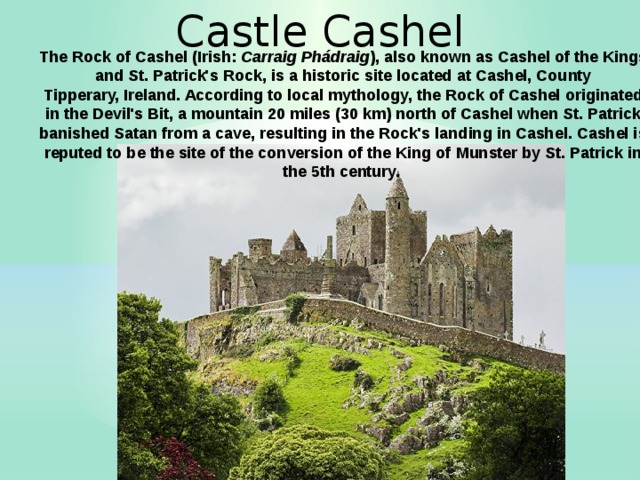
Castle Cashel
The Rock of Cashel (Irish: Carraig Phádraig ), also known as Cashel of the Kings and St. Patrick's Rock, is a historic site located at Cashel, County Tipperary, Ireland. According to local mythology, the Rock of Cashel originated in the Devil's Bit, a mountain 20 miles (30 km) north of Cashel when St. Patrick banished Satan from a cave, resulting in the Rock's landing in Cashel. Cashel is reputed to be the site of the conversion of the King of Munster by St. Patrick in the 5th century.

Thank you for attention!!!
Комплекты видеоуроков для учителей

Скачать
© 2019, Поротникова Альбина Александровна 719 6
Похожие файлы
Вебинар для учителей
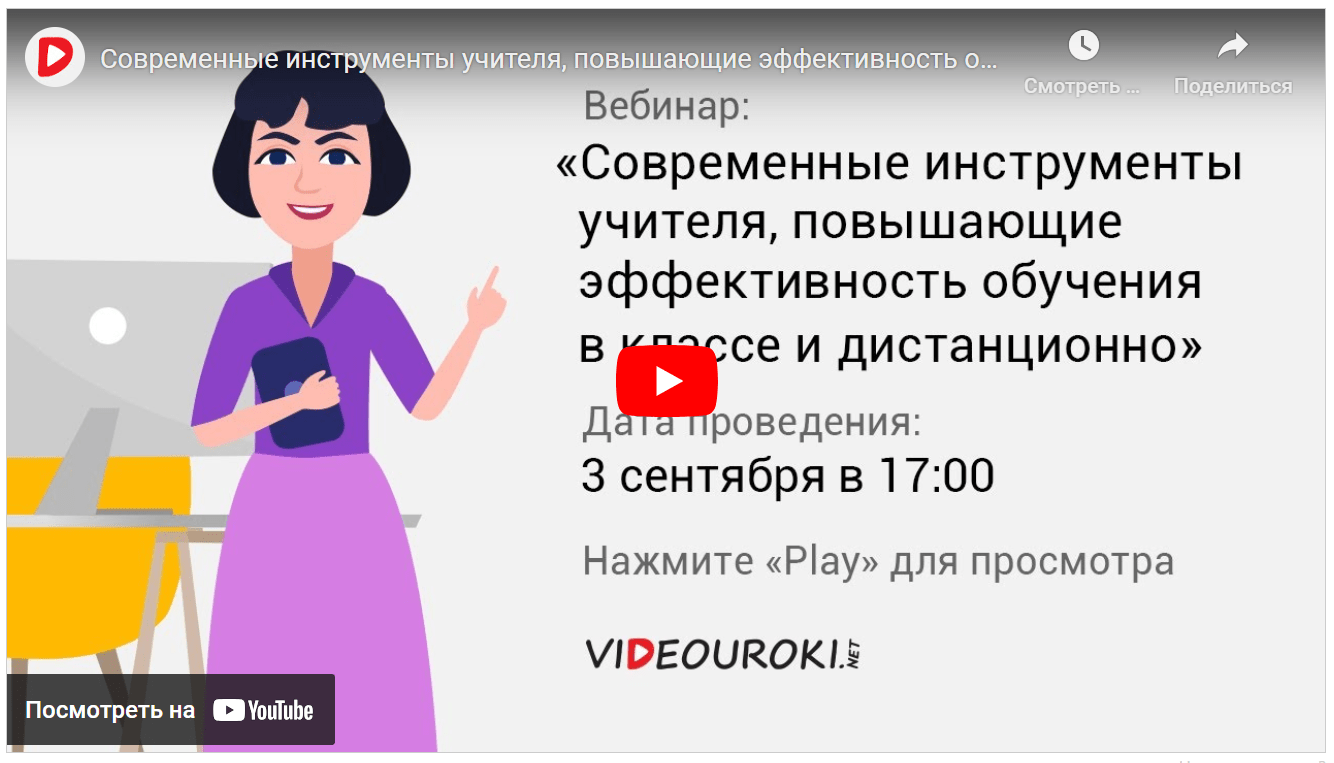
Свидетельство об участии БЕСПЛАТНО!