Россия, Ветлуга

СДЕЛАЙТЕ СВОИ УРОКИ ЕЩЁ ЭФФЕКТИВНЕЕ, А ЖИЗНЬ СВОБОДНЕЕ
Благодаря готовым учебным материалам для работы в классе и дистанционно
Скидки до 50 % на комплекты
только до
Готовые ключевые этапы урока всегда будут у вас под рукой
Организационный момент
Проверка знаний
Объяснение материала
Закрепление изученного
Итоги урока

Была в сети 04.05.2026 21:33

Кузьмина Елена Юрьевна
учитель английского языка
66 лет
 112
112
 213 136
Местоположение
Презентация "Оксфорд"
Категория:
Английский язык
19.06.2024 10:27

Просмотр содержимого документа
«Презентация "Оксфорд"»
Oxford University
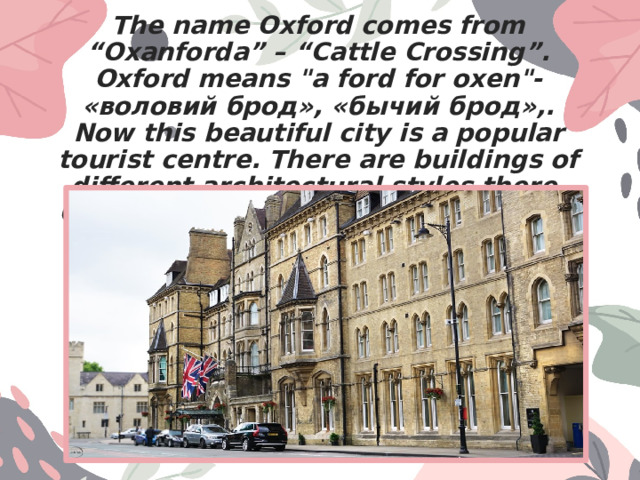
The name Oxford comes from “Oxanforda” – “Cattle Crossing”. Oxford means "a ford for oxen"- «воловий брод», «бычий брод»,. Now this beautiful city is a popular tourist centre. There are buildings of different architectural styles there. Oxford was the capital of England in 1642.
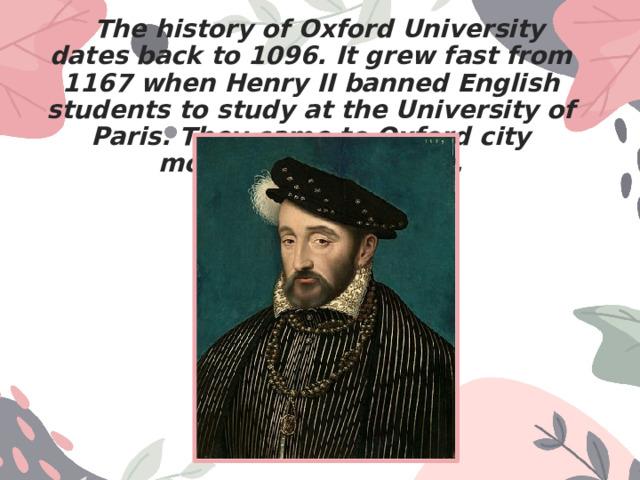
The history of Oxford University dates back to 1096. It grew fast from 1167 when Henry II banned English students to study at the University of Paris. They came to Oxford city monasteries to study.
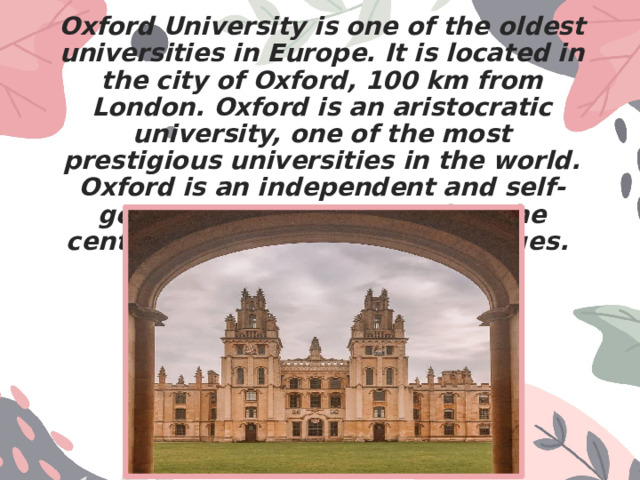
Oxford University is one of the oldest universities in Europe. It is located in the city of Oxford, 100 km from London. Oxford is an aristocratic university, one of the most prestigious universities in the world. Oxford is an independent and self-governing institution. It has the central University and the Colleges.
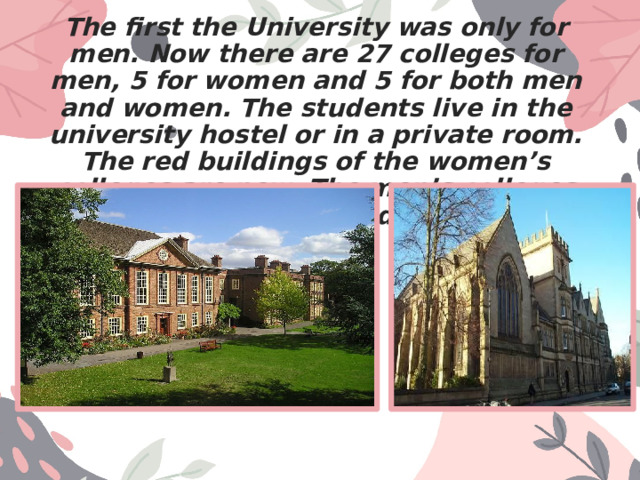
The first the University was only for men. Now there are 27 colleges for men, 5 for women and 5 for both men and women. The students live in the university hostel or in a private room. The red buildings of the women’s colleges are new. The men’s colleges are beautiful grey old buildings.
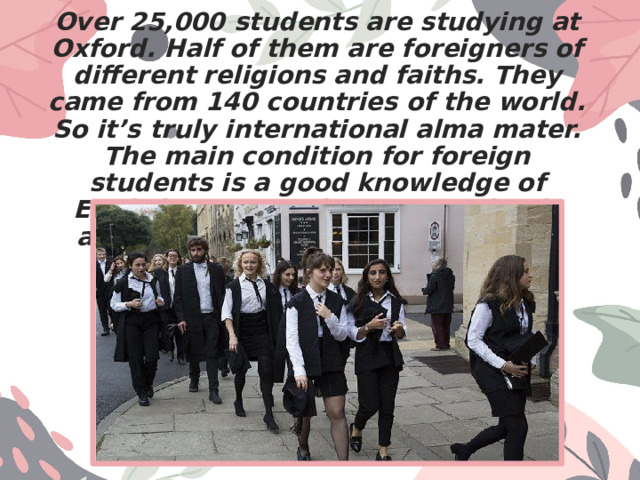
Over 25,000 students are studying at Oxford. Half of them are foreigners of different religions and faiths. They came from 140 countries of the world. So it’s truly international alma mater. The main condition for foreign students is a good knowledge of English. Summer language schools are opened to help such students.

Oxford keeps to the traditions of the past (the Middle Ages). All the students wear long black gowns and students caps. A student should wear a traditional academic dress to call on a tutor, to have dinner or attend a lecture.
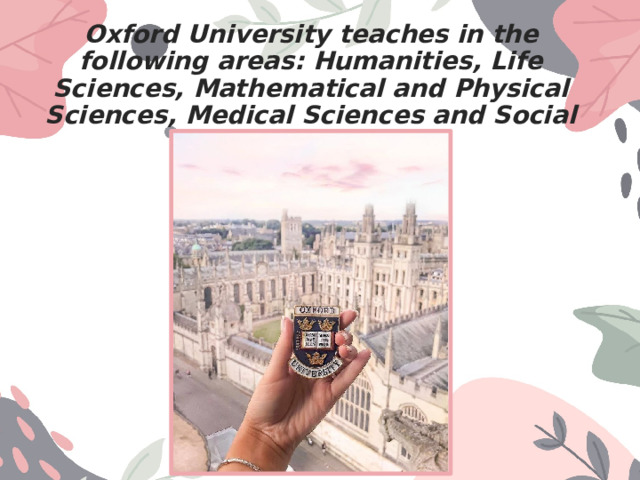
Oxford University teaches in the following areas: Humanities, Life Sciences, Mathematical and Physical Sciences, Medical Sciences and Social Sciences
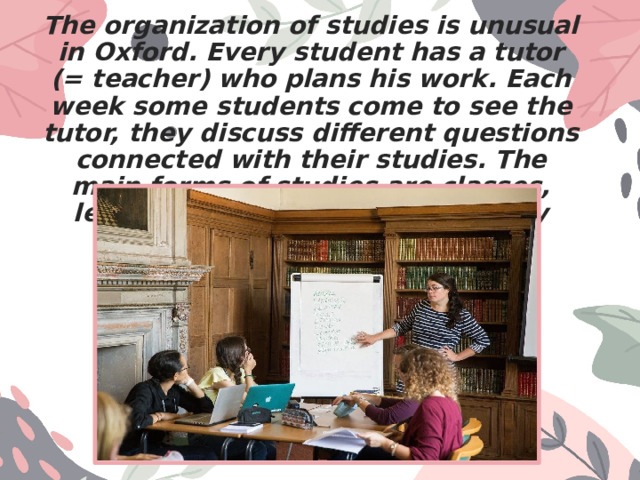
The organization of studies is unusual in Oxford. Every student has a tutor (= teacher) who plans his work. Each week some students come to see the tutor, they discuss different questions connected with their studies. The main forms of studies are classes, lectures, seminars and laboratory work.
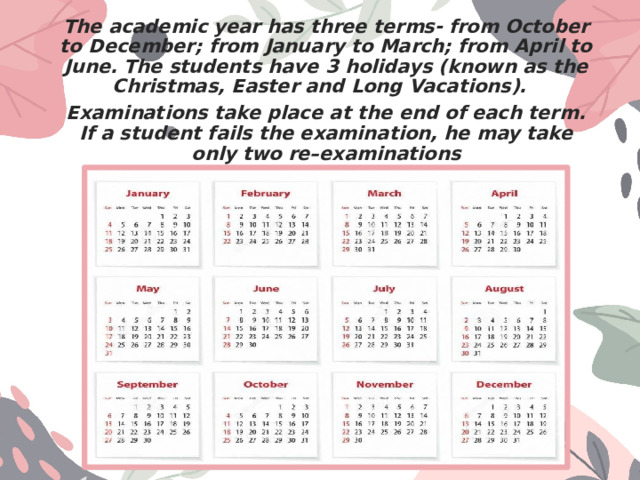
The academic year has three terms- from October to December; from January to March; from April to June. The students have 3 holidays (known as the Christmas, Easter and Long Vacations).
Examinations take place at the end of each term. If a student fails the examination, he may take only two re–examinations
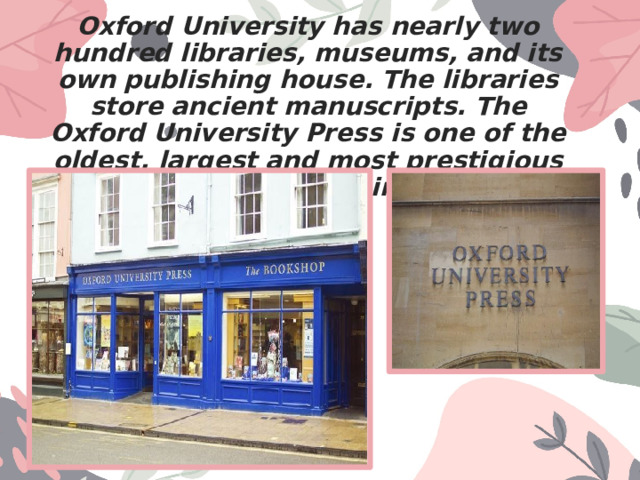
Oxford University has nearly two hundred libraries, museums, and its own publishing house. The libraries store ancient manuscripts. The Oxford University Press is one of the oldest, largest and most prestigious university publishers in the world.
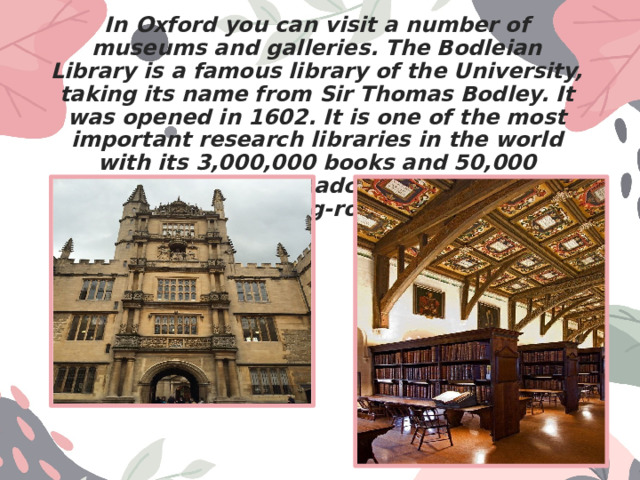
In Oxford you can visit a number of museums and galleries. The Bodleian Library is a famous library of the University, taking its name from Sir Thomas Bodley. It was opened in 1602. It is one of the most important research libraries in the world with its 3,000,000 books and 50,000 manuscripts. The Radcliffe Camera is a reading-room.
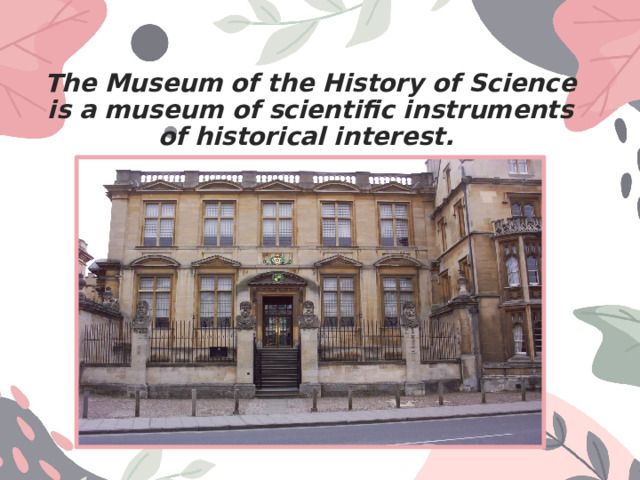
The Museum of the History of Science is a museum of scientific instruments of historical interest.
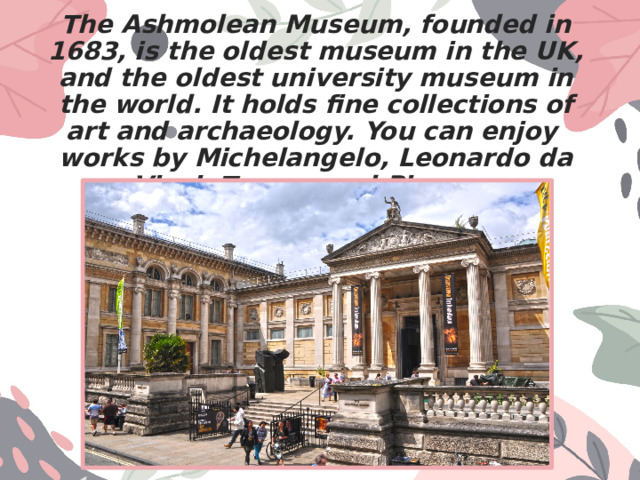
The Ashmolean Museum, founded in 1683, is the oldest museum in the UK, and the oldest university museum in the world. It holds fine collections of art and archaeology. You can enjoy works by Michelangelo, Leonardo da Vinci, Turner, and Picasso.
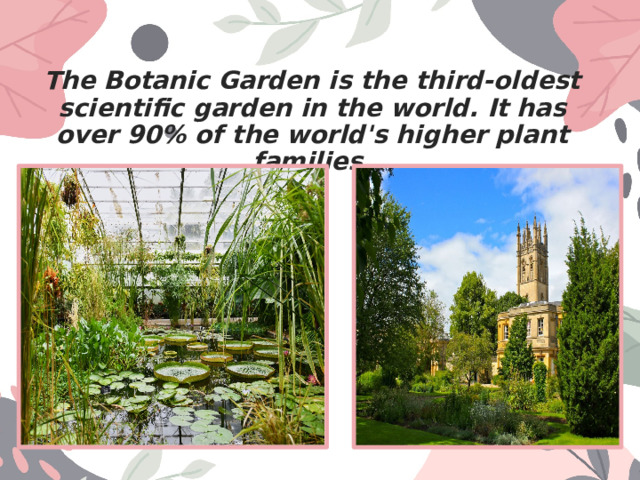
The Botanic Garden is the third-oldest scientific garden in the world. It has over 90% of the world's higher plant families.
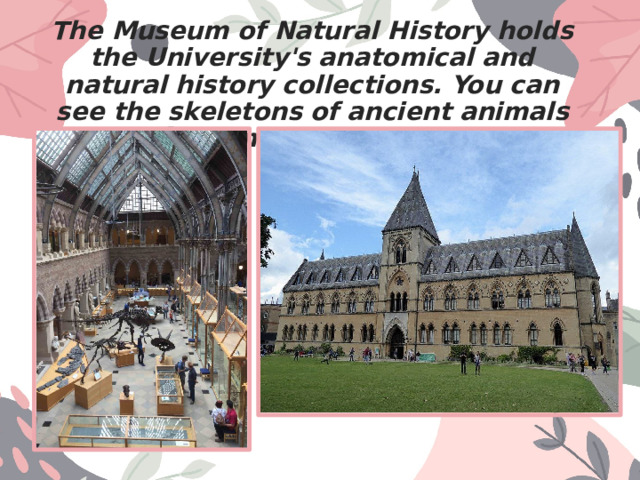
The Museum of Natural History holds the University's anatomical and natural history collections. You can see the skeletons of ancient animals and remains of a dodo.
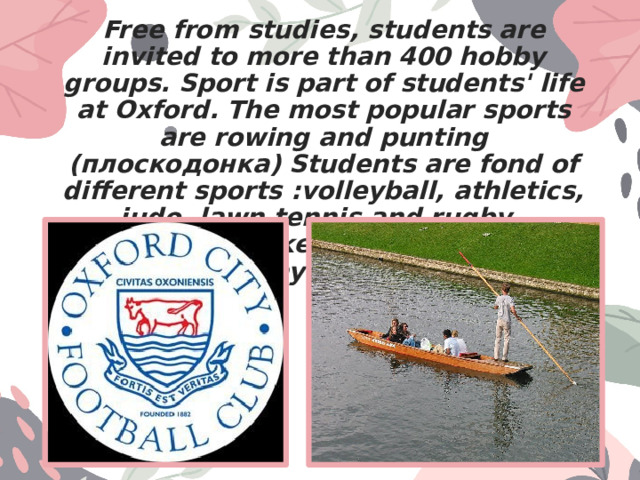
Free from studies, students are invited to more than 400 hobby groups. Sport is part of students' life at Oxford. The most popular sports are rowing and punting (плоскодонка) Students are fond of different sports :volleyball, athletics, judo, lawn tennis and rugby, basketball, cricket, golf, horse-riding and many many more.
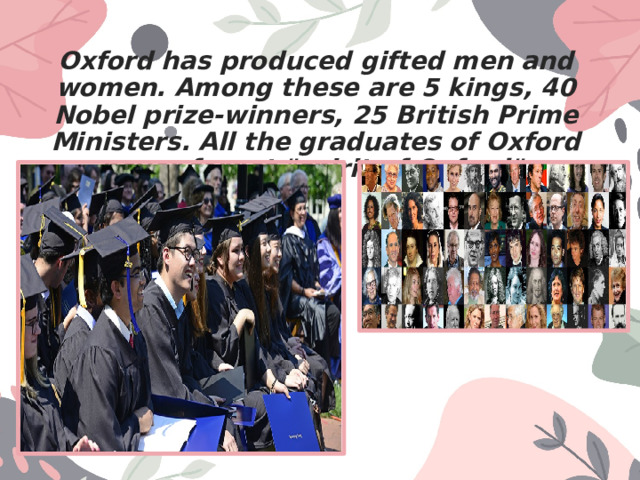
Oxford has produced gifted men and women. Among these are 5 kings, 40 Nobel prize-winners, 25 British Prime Ministers. All the graduates of Oxford never forget "spirit of Oxford".
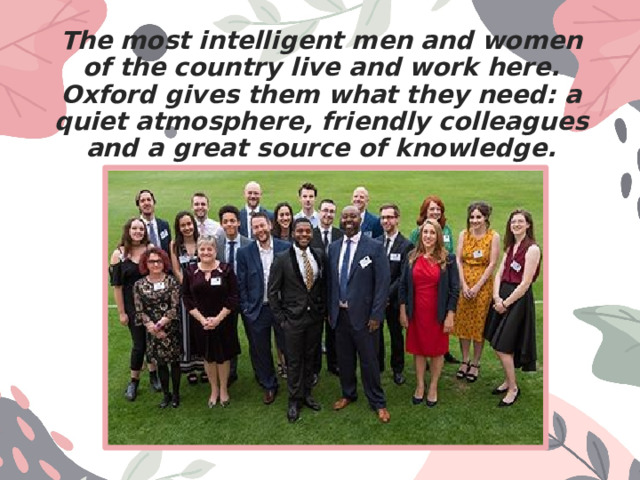
The most intelligent men and women of the country live and work here. Oxford gives them what they need: a quiet atmosphere, friendly colleagues and a great source of knowledge.
5 INTERESTING FACTS AND FIGURES ABOUT OXFORD UNIVERSITY
YOU MAY NOT HAVE KNOWN
Click icon to add picture
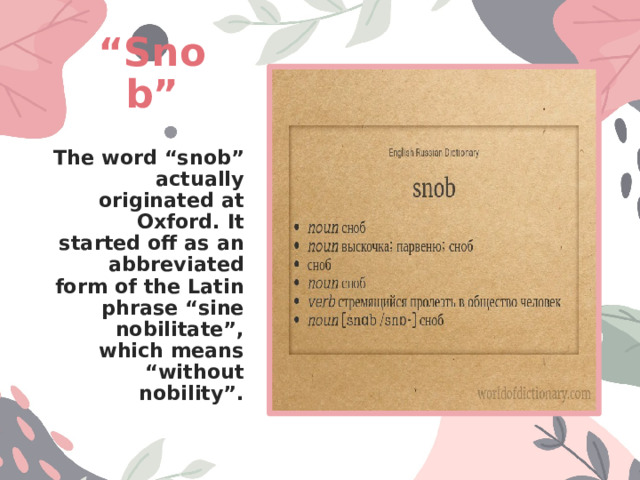
“ Snob”
The word “snob” actually originated at Oxford. It started off as an abbreviated form of the Latin phrase “sine nobilitate”, which means “without nobility”.
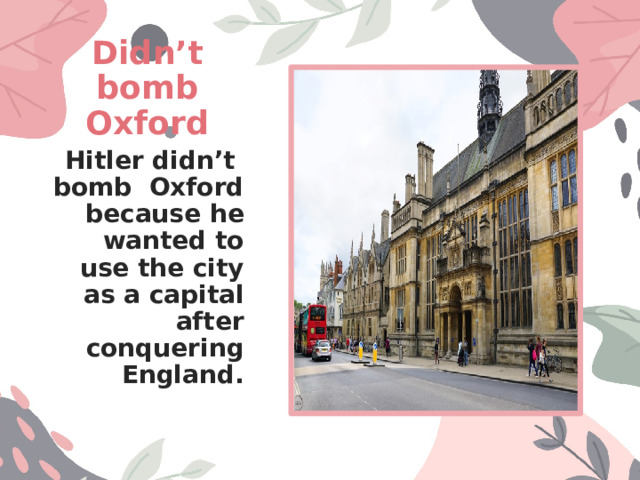
Didn’t bomb Oxford
Hitler didn’t bomb Oxford because he wanted to use the city as a capital after conquering England.
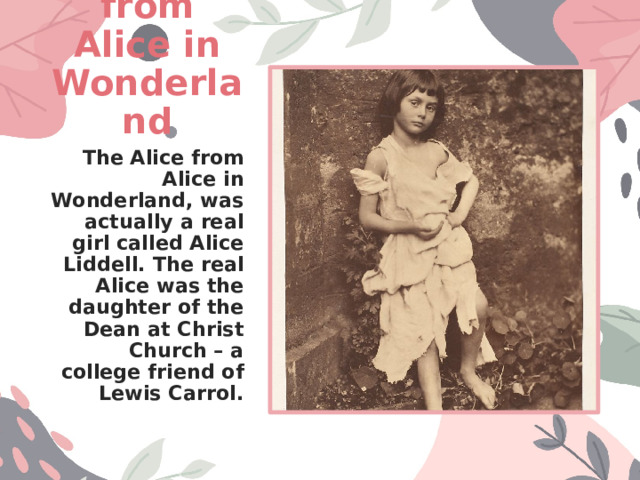
The Alice from Alice in Wonderland
The Alice from Alice in Wonderland, was actually a real girl called Alice Liddell. The real Alice was the daughter of the Dean at Christ Church – a college friend of Lewis Carrol.
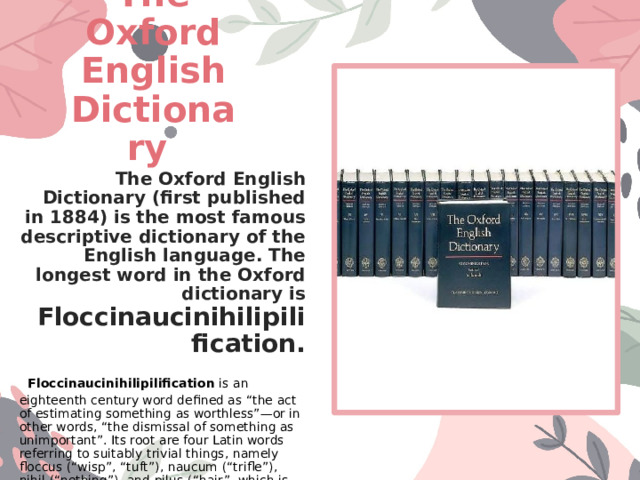
The Oxford English Dictionary
The Oxford English Dictionary (first published in 1884) is the most famous descriptive dictionary of the English language. The longest word in the Oxford dictionary is Floccinaucinihilipilification.
Floccinaucinihilipilification is an eighteenth century word defined as “the act of estimating something as worthless”—or in other words, “the dismissal of something as unimportant”. Its root are four Latin words referring to suitably trivial things, namely floccus (“wisp”, “tuft”), naucum (“trifle”), nihil (“nothing”), and pilus (“hair”, which is the rot of words like caterpillar, and the pile on your carpet).
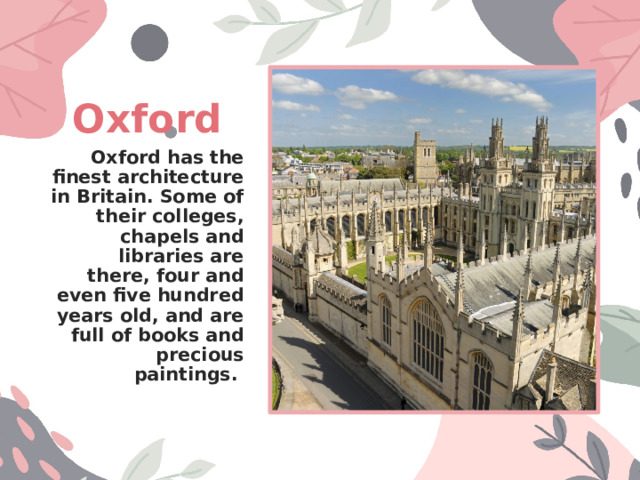
Oxford
Oxford has the finest architecture in Britain. Some of their colleges, chapels and libraries are there, four and even five hundred years old, and are full of books and precious paintings.

THANKS FOR YOUR ATTENTION!






Вебинар для учителей

Свидетельство об участии БЕСПЛАТНО!