Казахстан, Караганда

СДЕЛАЙТЕ СВОИ УРОКИ ЕЩЁ ЭФФЕКТИВНЕЕ, А ЖИЗНЬ СВОБОДНЕЕ
Благодаря готовым учебным материалам для работы в классе и дистанционно
Скидки до 50 % на комплекты
только до
Готовые ключевые этапы урока всегда будут у вас под рукой
Организационный момент
Проверка знаний
Объяснение материала
Закрепление изученного
Итоги урока
Был в сети 15.05.2026 05:52
Тимофеев Юрий Александрович
Лаборант ИВТ
33 года
 37 012
 699
699 
Местоположение
Специализация
Презентация по страноведению "Egypt"
Категория:
Английский язык
29.08.2019 17:51

Просмотр содержимого документа
«Презентация по страноведению "Egypt"»
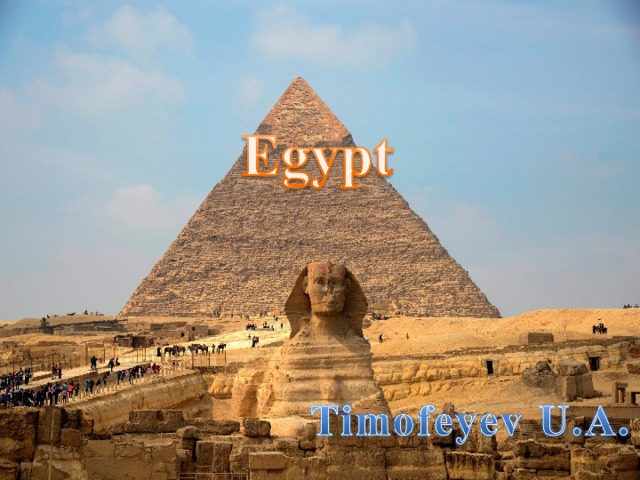
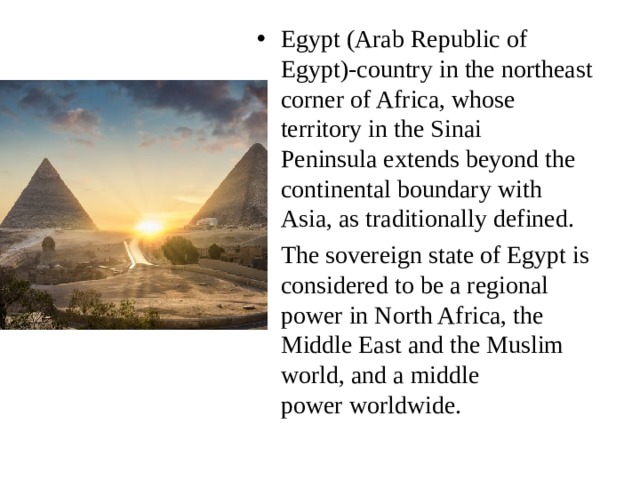
- Egypt (Arab Republic of Egypt)-country in the northeast corner of Africa, whose territory in the Sinai Peninsula extends beyond the continental boundary with Asia, as traditionally defined.
- The sovereign state of Egypt is considered to be a regional power in North Africa, the Middle East and the Muslim world, and a middle power worldwide.
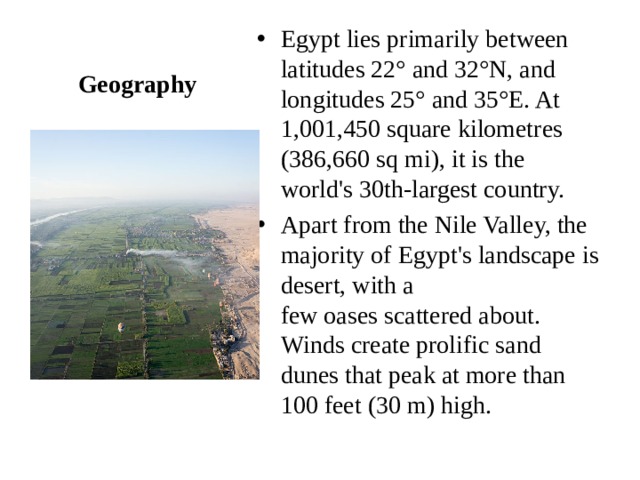
- Egypt lies primarily between latitudes 22° and 32°N, and longitudes 25° and 35°E. At 1,001,450 square kilometres (386,660 sq mi), it is the world's 30th-largest country.
- Apart from the Nile Valley, the majority of Egypt's landscape is desert, with a few oases scattered about. Winds create prolific sand dunes that peak at more than 100 feet (30 m) high.
Geography
Climate
- Most of Egypt's rain falls in the winter months. South of Cairo, rainfall averages only around 2 to 5 mm (0.1 to 0.2 in) per year and at intervals of many years. On a very thin strip of the northern coast the rainfall can be as high as 410 mm (16.1 in),mostly between October and March. Snow falls on Sinai's mountains and some of the north coastal cities such as Damietta, Baltim and Sidi Barrani, and rarely in Alexandria. A very small amount of snow fell on Cairo on 13 December 2013, the first time in many decades.
- The House of Representatives, whose members are elected to serve five-year terms, specializes in legislation. Elections were last held between November 2011 and January 2012 which was later dissolved.
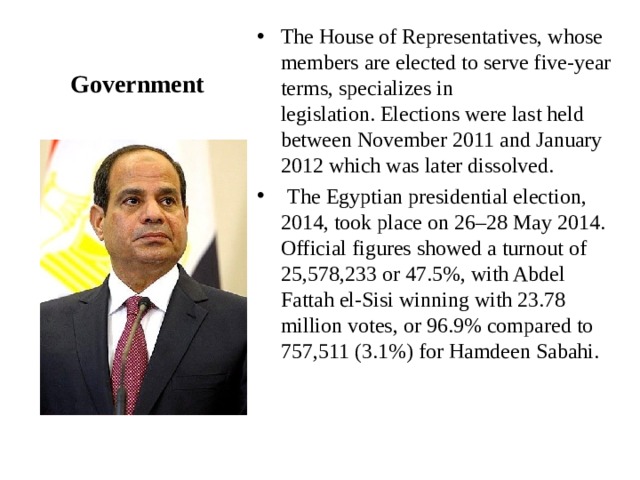
- The Egyptian presidential election, 2014, took place on 26–28 May 2014. Official figures showed a turnout of 25,578,233 or 47.5%, with Abdel Fattah el-Sisi winning with 23.78 million votes, or 96.9% compared to 757,511 (3.1%) for Hamdeen Sabahi.
Government
Transport
- Transport in Egypt is centered around Cairo and largely follows the pattern of settlement along the Nile. The main line of the nation's 40,800-kilometre (25,400 mi) railway network runs from Alexandria to Aswan and is operated by Egyptian National Railways. The vehicle road network has expanded rapidly to over 21,000 miles, consisting of 28 line, 796 stations, 1800 train covering the Nile Valley and Nile Delta, the Mediterranean and Red Sea coasts, the Sinai, and the Western oases.
Languages
- The official language of the Republic is Arabic. The spoken languages are: Egyptian Arabic (68%), Sa'idi Arabic (29%), Eastern Egyptian Bedawi Arabic (1.6%), Sudanese Arabic (0.6%), Domari (0.3%), Nobiin (0.3%), Beja (0.1%), Siwi and others. Additionally, Greek, Armenian and Italian, and more recently, African languages like Amharic and Tigrigna are the main languages of immigrants.
- The main foreign languages taught in schools, by order of popularity, are English, French, German and Italian.
Music
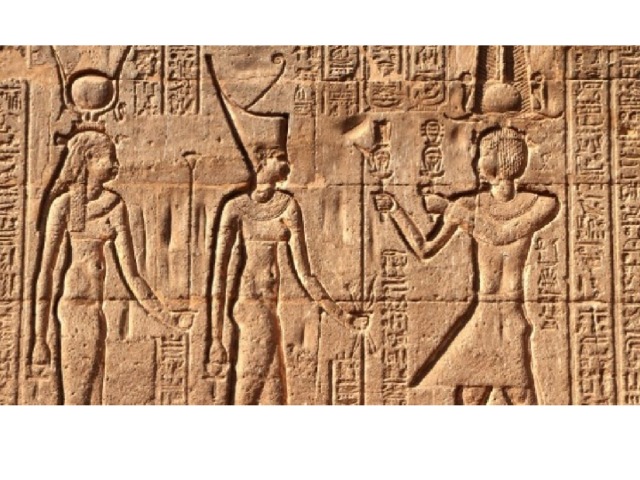
- Egyptian music is a rich mixture of indigenous, Mediterranean, African and Western elements. It has been an integral part of Egyptian culture since antiquity. The ancient Egyptians credited one of their gods Hathor with the invention of music, which Osiris in turn used as part of his effort to civilise the world. Egyptians used music instruments since then.
Education
- Basic education, which includes six years of primary and three years of preparatory school, is a right for Egyptian children from the age of six. After grade 9, students are tracked into one of two strands of secondary education: general or technical schools. General secondary education prepares students for further education, and graduates of this track normally join higher education institutes based on the results of the Thanaweya Amma, the leaving exam.
- Technical secondary education has two strands, one lasting three years and a more advanced education lasting five. Graduates of these schools may have access to higher education based on their results on the final exam, but this is generally uncommon.
- Cairo University is ranked as 401–500 according to the Academic Ranking of World Universities (Shanghai Ranking) and 551–600 according to QS World University Rankings. American University in Cairo is ranked as 360 according to QS World University Rankings and Al-Azhar University, Alexandria University and Ain Shams University fall in the 701+ range.
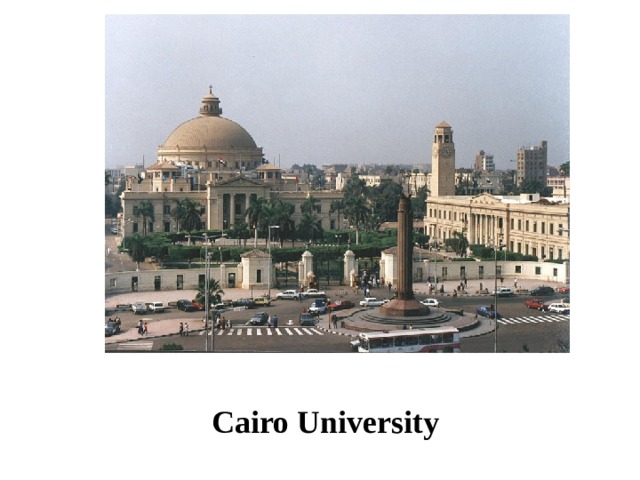
Cairo University
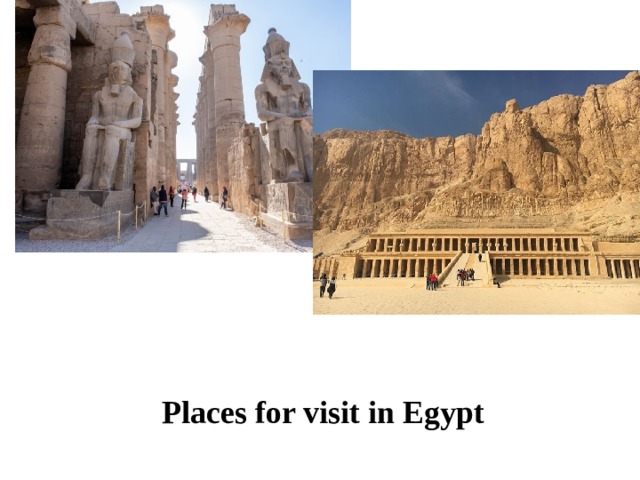
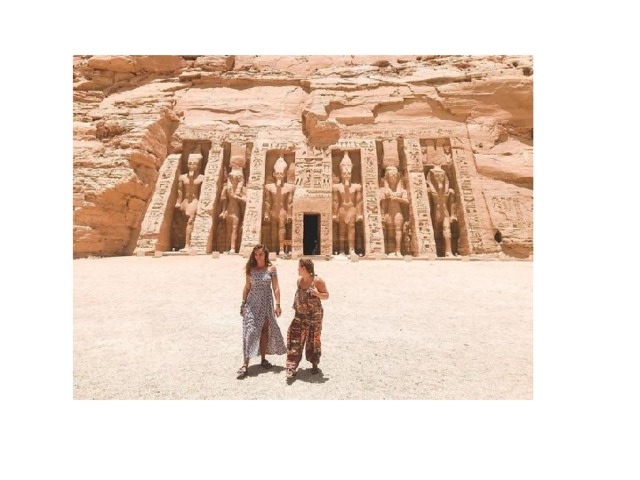
Places for visit in Egypt
Вебинар для учителей
Свидетельство об участии БЕСПЛАТНО!