Россия, Екатеринбург

СДЕЛАЙТЕ СВОИ УРОКИ ЕЩЁ ЭФФЕКТИВНЕЕ, А ЖИЗНЬ СВОБОДНЕЕ
Благодаря готовым учебным материалам для работы в классе и дистанционно
Скидки до 50 % на комплекты
только до
Готовые ключевые этапы урока всегда будут у вас под рукой
Организационный момент
Проверка знаний
Объяснение материала
Закрепление изученного
Итоги урока
Была в сети 25.08.2025 13:05

Ильиных Татьяна Викторовна
учитель иностранных языков,высшая категория.
60 лет
 1 730
1 730
 40 460
Местоположение
Специализация
Презентация "Present Perfect"
Категория:
Английский язык
26.03.2020 12:15

Просмотр содержимого документа
«Презентация "Present Perfect"»
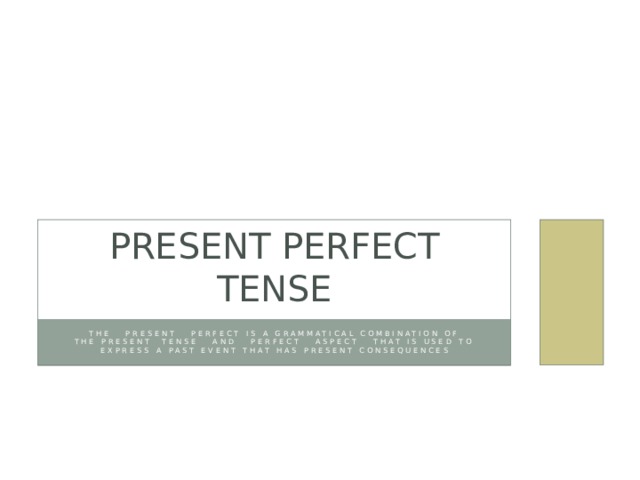
Present perfect tense
The present perfect is a grammatical combination of the present tense and perfect aspect that is used to express a past event that has present consequences
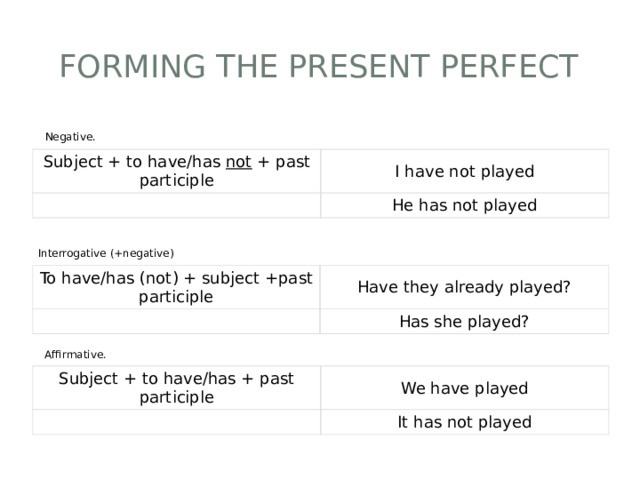
FORMING THE PRESENT PERFECT
Negative.
Subject + to have/has not + past participle
I have not played
He has not played
Interrogative (+negative)
To have/has (not) + subject +past participle
Have they already played?
Has she played?
Affirmative.
Subject + to have/has + past participle
We have played
It has not played
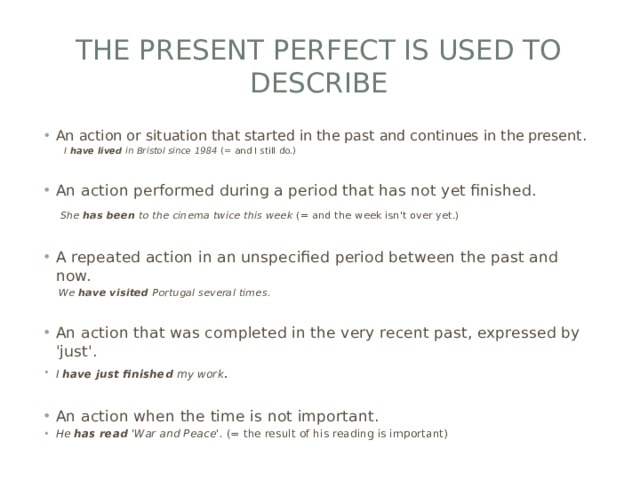
THE PRESENT PERFECT IS USED TO DESCRIBE
- An action or situation that started in the past and continues in the present.
I have lived in Bristol since 1984 (= and I still do.)
- An action performed during a period that has not yet finished.
She has been to the cinema twice this week (= and the week isn't over yet.)
- A repeated action in an unspecified period between the past and now.
We have visited Portugal several times.
- An action that was completed in the very recent past, expressed by 'just'.
- I have just finished my work .
- An action when the time is not important.
- He has read 'War and Peace'. (= the result of his reading is important)
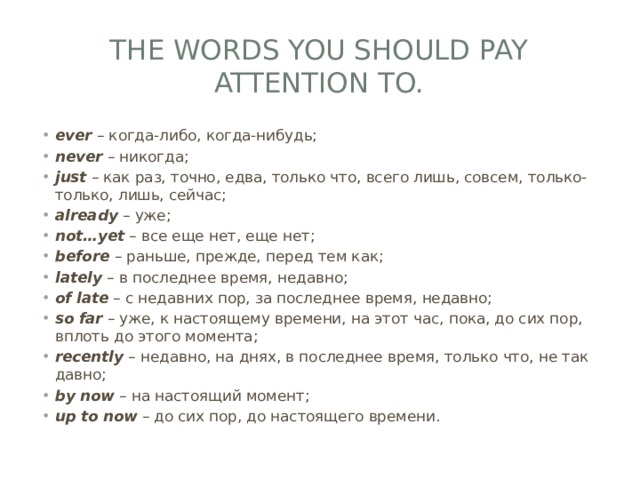
The Words you should pay attention to.
- ever – когда-либо, когда-нибудь;
- never – никогда;
- just – как раз, точно, едва, только что, всего лишь, совсем, только-только, лишь, сейчас;
- already – уже;
- not…yet – все еще нет, еще нет;
- before – раньше, прежде, перед тем как;
- lately – в последнее время, недавно;
- of late – с недавних пор, за последнее время, недавно;
- so far – уже, к настоящему времени, на этот час, пока, до сих пор, вплоть до этого момента;
- recently – недавно, на днях, в последнее время, только что, не так давно;
- by now – на настоящий момент;
- up to now – до сих пор, до настоящего времени.
Вебинар для учителей
Свидетельство об участии БЕСПЛАТНО!