Россия, Саров

СДЕЛАЙТЕ СВОИ УРОКИ ЕЩЁ ЭФФЕКТИВНЕЕ, А ЖИЗНЬ СВОБОДНЕЕ
Благодаря готовым учебным материалам для работы в классе и дистанционно
Скидки до 50 % на комплекты
только до
Готовые ключевые этапы урока всегда будут у вас под рукой
Организационный момент
Проверка знаний
Объяснение материала
Закрепление изученного
Итоги урока
Была в сети 12.05.2026 12:42

Нелькина Анна Андреевна
учитель иностранного языка
32 года
 9 093
9 093
 5 729
5 729 
Местоположение
Специализация
Презентация Reported Speech (правила перевода прямой речи в косвенную + упражнения)
Категория:
Английский язык
14.04.2024 13:41

Просмотр содержимого документа
«Презентация Reported Speech (правила перевода прямой речи в косвенную + упражнения)»

Reported speech

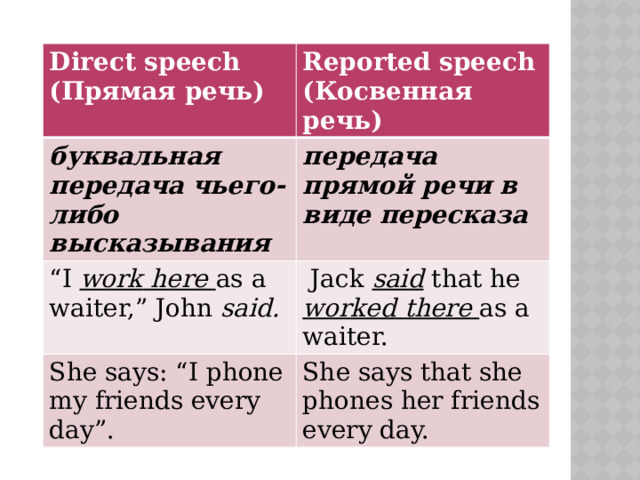
Direct speech (Прямая речь)
Reported speech (Косвенная речь)
буквальная передача чьего-либо высказывания
передача прямой речи в виде пересказа
“ I work here as a waiter,” John said.
Jack said that he worked there as a waiter.
She says: “I phone my friends every day”.
She says that she phones her friends every day.
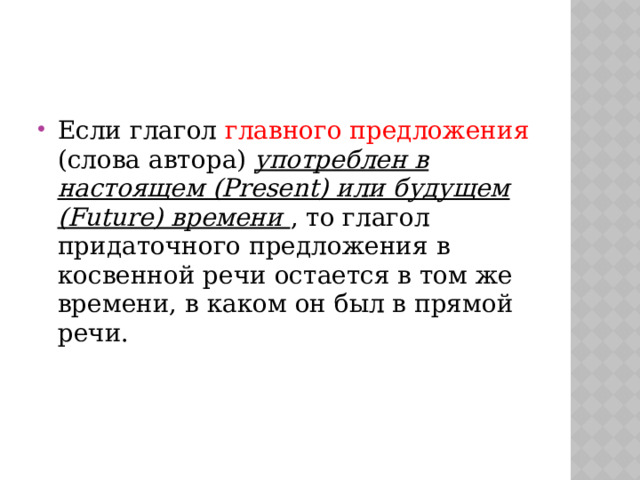
- Если глагол главного предложения (слова автора) употреблен в настоящем (Present) или будущем (Future) времени , то глагол придаточного предложения в косвенной речи остается в том же времени, в каком он был в прямой речи.

He says , “I have your T-shirt.” –
Он говорит: «У меня твоя футболка».
He says that he has my T-shirt. –
John says : “I live in New York.”
Он говорит, что у него моя футболка.
John says (that) he live in New York.
Bob says : “I am learning French.”
Bob says he is learning French.

- Глаголы в прямой речи в форме Present Tense употребляются в косвенной речи в форме Past Tense . Present Simple → Past Simple Present Continuous → Past Continuous Present Perfect → Past Perfect Present Perfect Continuous → Past Perfect Continuous

“ I always drink coffee”, she said.
«Я всегда пью кофе», – сказала она
She said that she always drank coffee.
“ I am reading a book”, he explained. «Я читаю книгу», – пояснил он.
Она сказала, что она всегда пьет кофе
He explained that he was reading a book. Он пояснил, что он читает книгу.
Kevin said: “I have been coughing for a week.
” Kevin explained he had been coughing for a week.

Глаголы в прямой речи в форме Past Tense употребляются в косвенной речи в форме Past Perfect (или могут не употребляться). Past Simple → Past Perfect Past Continuous → Past Perfect Continuous
“ Bill arrived on Saturday”, he said. «Билл приехал в субботу», – сказал он.
He said that Bill had arrived/ arrived on Saturday.
Он сказал, что Билл приехал в субботу.

Глаголы в прямой речи в форме Past Perfect не изменяются. Past Perfect → Past Perfect
Past Perfect Continuous → Past Perfect Continuous
He said, “We had finished our work by five o’clock.”
Он сказал: «Мы окончили свою работу к пяти часам».
He said that they had finished their work by five o’clock.
Он сказал, что они окончили свою работу к пяти часам.

Глаголы в прямой речи в любом будущем времени переходят в соответствующее ему будущее в прошедшем в косвенной речи. Future Simple → Future Simple in the Past Future Continuous → Future Continuous in the Past Future Perfect → Future Perfect in the Past
“ She will come soon.” «Она скоро придет».
They told me that she would come in soon time. Они сказали мне, что она скоро придет.


Questions
- Общие вопросы:
- “ Do you go to school every day?” he said.
He asked if (whether) I went to school every day.
- “ Did you work hard?” she said (asked).
She asked if I had worked hard.

Exercises
- “ Can you speak Italian?”
- “ Will you come back?”
- “ Did you go to Bill's party last night?”
- “ Have you ever been to Italy?”
- “ Do you know how to use the Internet?”
- “ Are you ready?”

Questions
- “ Can you speak Italian?”
- “ Will you come back?”
- “ Did you go to Bill's party last night?”
- “ Have you ever been to Italy?”
- “ Do you know how to use the Internet?”
- “ Are you ready?”

Exercises
- “ Where did you go on Saturday night?” Paul asked Tina.
- “ When did you graduate from university?” Laura asked Tanya.
- “ Who is your favourite actor?”
- “ Where will you go?”
- “ What can I do for you?”

- Is anything wrong with you?
What do you like about your school?
- Do you sometimes have headaches?
What school activity did you have last?

- Are you taking any medicine now?
- What good habits have you formed at school?
- Do you spend much time out- of-doors?
- What is your favorite subject?

- Do you do sports?
- What is more important for you at school?
- Have you a good appetite?
- How often do you go on school trips?

- Do you usually go to bed late?
- What is your school record?



Вебинар для учителей

Свидетельство об участии БЕСПЛАТНО!