Россия, Воронеж

СДЕЛАЙТЕ СВОИ УРОКИ ЕЩЁ ЭФФЕКТИВНЕЕ, А ЖИЗНЬ СВОБОДНЕЕ
Благодаря готовым учебным материалам для работы в классе и дистанционно
Скидки до 50 % на комплекты
только до
Готовые ключевые этапы урока всегда будут у вас под рукой
Организационный момент
Проверка знаний
Объяснение материала
Закрепление изученного
Итоги урока
Была в сети 03.11.2017 19:47

Борякова Юлия Андреевна
Учитель английского языка
 4 806
4 806
 13 330
Местоположение
Презентация "Past Simple"
Категория:
Английский язык
28.03.2017 10:29

Просмотр содержимого документа
«Презентация "Past Simple"»
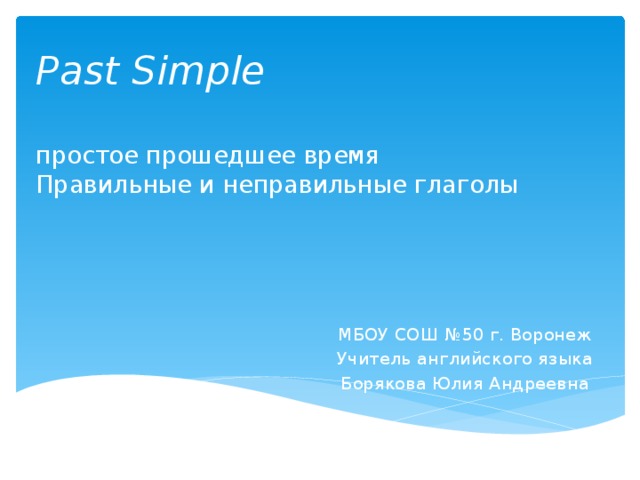
Past Simple простое прошедшее время Правильные и неправильные глаголы
МБОУ СОШ №50 г. Воронеж
Учитель английского языка
Борякова Юлия Андреевна
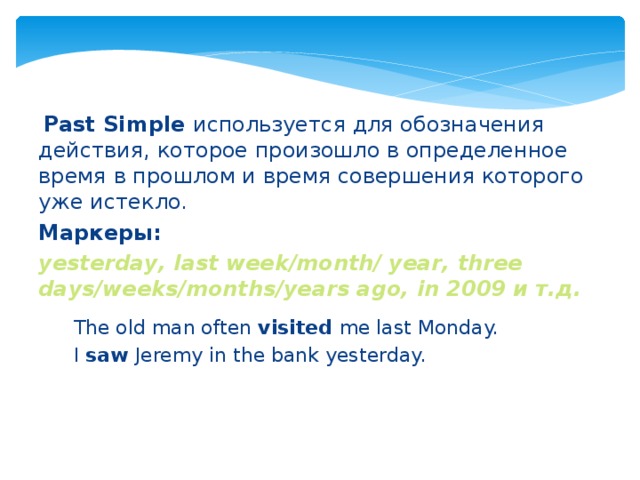
Past Simple используется для обозначения действия, которое произошло в определенное время в прошлом и время совершения которого уже истекло.
Маркеры:
yesterday, last week/month/ year, three days/weeks/months/years ago, in 2009 и т.д.
- The old man often visited me last Monday.
- I saw Jeremy in the bank yesterday.
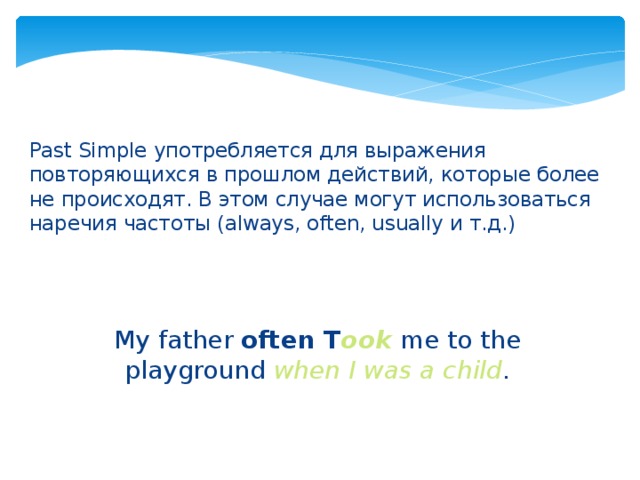
Past Simple употребляется для выражения повторяющихся в прошлом действий, которые более не происходят. В этом случае могут использоваться наречия частоты (always, often, usually и т.д.)
My father often T ook me to the playground when I was a child .
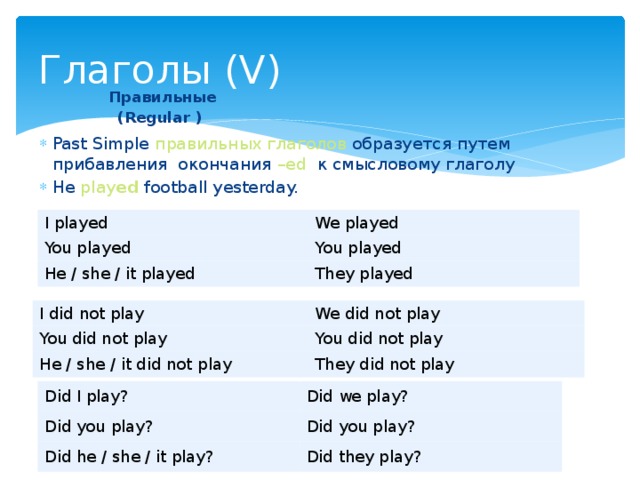
Глаголы (V)
Правильные
(Regular )
- Past Simple правильных глаголов образуется путем прибавления окончания –ed к смысловому глаголу
- He play ed football yesterday.
I played
You played
We played
He / she / it played
You played
They played
I did not play
You did not play
We did not play
He / she / it did not play
You did not play
They did not play
Did I play?
Did you play?
Did we play?
Did he / she / it play?
Did you play?
Did they play?
 V2 I understood the question. I did not (didn’t) understand the question. You did not (didn’t) understand the question. You understood the question. He/ She/ It understood the question. He/ She/ It did not (didn’t) understand the question. We understood the question. We did not (didn’t) understand the question. You understood the question. You did not (didn’t) understand the question. They understood the question. They did not (didn’t) understand the question. Did I understand the question? Did you understand the question? Did he/ she/ it understand the question? Did we understand the question? Did you understand the question? Did they understand the question? " width="640"
Глаголы (V)
Неправильные
(irregular)
- У неправильных глаголов свои правила поведения в прошедшем времени
- Неправильные глаголы «живут» в таблице. Их надо УЧИТЬ!
VERB - V2
I understood the question.
I did not (didn’t) understand the question.
You did not (didn’t) understand the question.
You understood the question.
He/ She/ It understood the question.
He/ She/ It did not (didn’t) understand the question.
We understood the question.
We did not (didn’t) understand the question.
You understood the question.
You did not (didn’t) understand the question.
They understood the question.
They did not (didn’t) understand the question.
Did I understand the question?
Did you understand the question?
Did he/ she/ it understand the question?
Did we understand the question?
Did you understand the question?
Did they understand the question?

Правописание правильных глаголов

Вывод
- ЧТОБЫ «ПОСТРОИТЬ» ПРЕДЛОЖЕНИЕ В ПРОСТОМ ПРОШЕДШЕМ ВРЕМЕНИ НАДО ПОМНИТЬ СЛОВА-ПОМОЩНИКИ (МАРКЕРЫ) И ЗНАТЬ ФОРМЫ ГЛАГОЛОВ.

Вебинар для учителей
Свидетельство об участии БЕСПЛАТНО!