Россия, г. Дагестанские Огни

СДЕЛАЙТЕ СВОИ УРОКИ ЕЩЁ ЭФФЕКТИВНЕЕ, А ЖИЗНЬ СВОБОДНЕЕ
Благодаря готовым учебным материалам для работы в классе и дистанционно
Скидки до 50 % на комплекты
только до
Готовые ключевые этапы урока всегда будут у вас под рукой
Организационный момент
Проверка знаний
Объяснение материала
Закрепление изученного
Итоги урока
Была в сети 01.03.2021 13:05

Пирмагомедова Хадижат Иззетовна
учитель английского языка
60 лет
 1 144
1 144
 58 922
Местоположение
Специализация
Проект "Традиции Дагестана"
Категория:
Английский язык
21.02.2020 12:41

Просмотр содержимого документа
«Проект "Традиции Дагестана"»
Competition
"Best project in a foreign language»
Topic:
«Traditions of Dagestan»
Author Kuliev Rasul
class 10 school № 4 Dagestanskie Ogni
Head Pirmagomedova Hadijat Izzetovna,
english teacherschool № 4 Dagestanskie Ogni
2020
Content
Introduction………………………………………………………………..……. 3
Chapter I. Republic Of Dagestan……………………………………………..…. 5
1.1 History of the region………………………………………………….. 5
1.2 The Peoples Of Dagestan……………………………………………… 5
1.3 The Linguistic composition of Dagestan……………………………… 6
1.4 Religious denominations of Dagestan………………………………… 6
1.5 Large Nations and small Nations……………………………………… 7
Chapter II. Customs and traditions of the peoples of Dagestan………………… 8
2.1 Family customs of Dagestan………………………………………….. 8
2.1.1 Veneration of elders………………………………………………… 8
2.1.2 Rites and customs related to the birth of a child……………..……... 8
2.2 Wedding customs and rites……………………...…………………… 9
2.3 Dagestani greeting rules……………………………………………… 11
2.4 Rules of hospitality ………………………………..…………………. 12
2.5 Customs of Dagestan related to kinship………………………………. 12
2.6 Training for hard work………………………………...……………… 13
2.7 Dagestani cuisine……………………………………………………… 14
Chapter ӀII. The event "LANGUAGE is a GREAT LEGACY»……………….... 15
Conclusions………………………………………………………………….…... 16
Conclusions…………………………………………………………………..….. 16
List of references………………………………………………………..……….. 17
Applications………………………………………………………….………….. 18
Introduction
Dagestan is not only a "country of mountains", but also a "country of languages". Having merged into one multinational nation, about 30 nationalities live in Dagestan-Avars, Dargins, Lezgins, Kumyks, Russians, Laks, Tabasarans, Azerbaijanis, Aguls, Rutuls, Chechens, Nogais, and many others. And how many peoples, so many adverbs that are of great interest to study.
No matter what part of the mountainous Dagestan you visit, you will be amazed by the unusual colors of nature, chased silhouettes of villages, unusual mountain roads and numerous wall ornaments. And I want to understand the silence of the mountains, the beauty of the local architecture and the soul of the people, which is reflected in the carpet songs Tabasarans, the notches Kubachi craftsmen in balkarskoy pottery, creators of the singing tree Untsukul in silver patterns Gotsatl.
In our age of civilization and modernization, you can look into the depths of centuries, see what the peoples of Dagestan lived in the past. After all, despite the progress made, the highlanders honor their customs, love for the land, respect for their elders and their past, and carefully preserve their cultural heritage.
For centuries, our ancestors developed cultural skills, moral, and then legal norms of relations within tribes and communities, which over time formed customs and traditions as the basis for a sustainable way of life of the mountain peoples. And no matter what uninvited guests visited Dagestan, they failed to erase from the consciousness and practice of life of mountaineers those moral norms, ancient beliefs, ancestral customs and traditions that have become the essence, the core of their daily life. The mentality of the mountaineers was also considered by the Arab conquerors, who sometimes had to make concessions to local societies without achieving military goals, taking a lot of mountain ADATs into their Arsenal, which made it easier for the Islamists to promote the Muslim religion into the depths of the mountains.
Every guest of Dagestan (traveler, scientist, journalist, poet and writer) is struck by these amazing customs, ADATs. As we know, Russia's direct acquaintance with Dagestan took place at the beginning of the XIX century. The annexation of Dagestan to Russia in 1813, and then the people's liberation struggle of the highlanders against the colonial policy of tsarism, aroused in Russian society a great interest and even sympathy for our land and its inhabitants. Many artists and writers have visited this place, displaying in their immortal works the hard life and courageous struggle of the mountaineers, their way of life, relationships, customs and customs.
Project goals and objectives:
- Find out what peoples live in Dagestan;
- Tell us about the traditions and customs of Dagestan.
- Talk about friendship between peoples, honesty, kindness, and hospitality.
Subject of research.
Traditions of the peoples of Dagestan.
Method of research.
Study and analysis of theoretical material, work with historical documents.
Relevance.
For many centuries, the customs of our ancestors-the ADATs-had the force of law and represented a huge moral potential, uniting and consolidating all the peoples living in Dagestan. With so many ADATs of the most diverse nature, it is rare to meet anywhere. After all, we have our own customs. However, despite their uniqueness and differences, they embody the identity and national character of all Dagestani peoples, reflect their common interests, and come from the same root. Their special value lies in the fact that they contain a generalized, time-tested centuries-old experience
Chapter I. Republic Of Dagestan.
1.1 History of the region
The people of Dagestan have passed through such a difficult and eventful path in their historical development that complete descriptions of it are not articles, but entire volumes. Some nationalities of the Republic are related to the Medes, Hittites, and peoples of ancient Sumer. The first state that included the territory of southern Dagestan was Caucasian Albania, formed in the 5th century BC. Constant wars led to the fact that the land passed from one state to another, changing rulers and religions. The gradual process of formation of Dagestan as a Union of different nationalities was due to the need to unite small tribes to protect their lands from stronger enemies. Historically, the best plains were occupied by alien peoples: Arabs, Shiites, and Sunnis. Originally, local tribes were displaced to the mountains, but over time, all became related and established their own single Dagestani epic.
1.2 The Peoples Of Dagestan
The list of main nationalities looks like this:
1. Avars – 30 % of the total population, mainly occupy the mountainous areas of Western Dagestan.
2. Dargins – 17 % of the ethnic group, traditionally settled in the mountains and foothills of the Central part of the Republic.
3. Nogai – 16 % of the population, the main residence-Nogai steppe in the North of Dagestan.
4. Kumyks – 13 % of the population, which occupies the Terk-Sulam lowlands and Northern foothills.
5. Lezgins – 12 %, places of settlement-mountains, foothills and plains of southern Dagestan.
6. The Russian population of Dagestan is also a local one, occupying 7 % of the population. Most Russians live in the capital Makhachkala and other cities and towns. Citizens among Russians make up 80 %. Representatives of Russian rural residents are mainly Terek Cossacks, whose settlements are concentrated in the lower reaches of the Terek river.
7. Laks are concentrated in the Central part of the mountains and comprise 5 % of the ethnic composition.
About 4 % each, make up the total number of such nationalities as Tabasarans, Turks (Azerbaijanis), Chechens. The number of the latter increased sharply after the beginning of hostilities in the Chechen Republic. Tats (people of Dagestan who call themselves Dagestani Jews), Rutuls, Aguls, Tsakhurs, who live mainly in certain separate territories, make up a small part of the Dagestani population.
In addition to indigenous groups, residents of Dagestan consider themselves to be Uzbeks, Kazakhs, Ukrainians, Georgians, Tatars, Belarusians, Ossetians, and Persians who have lived here since birth.
1.3 The Linguistic composition of Dagestan
Such a variety of peoples and nationalities on a relatively small piece of land is no longer in the world (Pic.1-2). The diversity of the language composition is also relevant. There are only 30 indigenous languages in Dagestan. This is also unique in Dagestan. What other people can present to the world such a difference of languages, dialects and dialects with, in General, a unified culture, customs, and everyday traditions.
Linguists together with historians have identified as the main reason for complex language differences significant isolation of villages from each other, associated with the geographical and climatic conditions of the mountainous area. Different religious preferences, political and social differences, and isolation within individual clans also contributed to the emergence of individual dialects.
By language composition the population of Dagestan is divided into three main groups:
* North Caucasian family, nakho-Dagestan branch (Avars, Dargins, Lezgins, Laks, tabarasans, Rutuls, Aguls, Tsakhurs, Chechens).
* Altaic language family, Turkic group (Turks, Kumyks, Tatars, Nogais).
* Indo-European language family (Russians, Ukrainians, Belarusians, tats, Jews, Armenians).
1.4 Religious denominations of Dagestan
In terms of religious beliefs, the modern people of Dagestan are mostly Sunni Muslims (90%). But this was not always the case. In the first century after the birth of Christ, the population of Caucasian Albania, and then all Dagestanis adopted Christianity, Islam was imposed on the Albanians as a result of the hundred-year war with the Arabs. But for many millennia, it was Islam that established itself not only in Dagestan, but also spread to other territories of the Caucasus. Another branch of Muslims is Shiites, which are mostly Turks, and some Lezgin settlements have joined them. Mountain tat Jews profess Judaism, while the Orthodox population, including adherents of the Armenian-Gregorian Church, is 9 %. There is no acute hostility to non-believers, a mixture of languages and religions fosters tolerance for the faiths of neighbors.
1.5 Large Nations and small Nations
Frequent questions about any multinational country or Republic: "What is the main and most numerous people? Whose traditions and language prevail in the region?" In this case, it is difficult to answer them, for the reason that the peoples of Dagestan, whose list is compiled in order of decreasing the percentage of the total number, include several other ethnic groups in their composition, which give the total percentage of the nation.
Avars, who make up a third of the Republic's population , are the common name of fifteen ethnic groups. The Avars belong to the Andean peoples, the Archi, advahce, baguely, bezhtintsy, bootlace, genuity, godoberins, gunzibs, TsEZ people, tendency, caratini, harshini, CEZ, camatini. 17 % of Dargins are kubachin and kaitag people. This is the Caucasian Babylon and Jerusalem.
The Tsakhurs are considered to be the smallest people in Dagestan. their number on the territory of the Republic is about 10 thousand people. The majority of Tsakhurs live in Azerbaijan. This people in Dagestan lived in the most remote high - mountain region-Rutulsky, the source of the Samur river. The village of Tsakhur is considered the oldest aul in Dagestan, its history goes back to the distant historical past, and the name translates as "Burning aul". Numerous hordes of conquerors repeatedly burned it to the ground, but the patient people restored the village again and again.
Chapter II. Customs and traditions of the peoples of Dagestan.
2.1 Family customs of Dagestan
2.1.1 Veneration of elders
One of the most important features of the Dagestani people is respect and reverence for the older generation. For the highlanders, the eldest is a truly wise representative who has an undeniable authority among the tribesmen. As a rule, it is a living embodiment of the cultural and historical memory of the nation, as well as the Keeper of the ancestral traditions, customs, rituals, etc.
No Dagestani event is held without an aksakal-a venerable and respected representative of the older generation. It is for him in any dispute or conflict that the last word remains, which is not subject to change. The majority of such persons in each nation are given the role of teachers of the younger generation. They are subject to the transfer of accumulated experience in terms of farming, hunting, animal care, etc. Aksakals with great pleasure perform this function, educating children not only economic skills, but also morally putting them on the path of life.
2.1.2 Rites and customs related to the birth of a child.
Childbirth
The birth of a child is a great joy and great happiness for any normal family. At the same time, the birth of a boy in Dagestan was always met with more joy than girls. This can be explained by the special position of men, both in the family and in society. The boy is seen as the heir, the successor of the family (surname), the defender. There are certain sayings about this.
For example, the Avars say: the birth of a daughter is like a stone that will adorn someone else's wall, and the birth of a son is a glorification for the entire family. There is even a name that means enough of the girls (Gistamin, Kisteman, Beshanum). With the birth of the girls said that the family came in kindness, mercy, compassion, and with the birth of a boy bound glory, valor, honor and power kind.
On the occasion of the birth of the boy, it was customary (observing the akika - Sunnah of the Prophet) to cut two rams, hold Mawlid and celebrate 2-3 days. And on the occasion of the girl's birth, they made ritual porridge and limited themselves to reading surahs of the Koran (although according to the Sunnah of the Prophet, it is required to cut one RAM). On the seventh day, relatives gathered with gifts to the house of the newborn and on this day named the child's name. On the same day, the child was placed in a traditional cradle, which was prepared in advance by the grandmother with a "dowry".
Naming a name
The tradition of naming Dagestan has a special significance in the fate of a newborn and it is held in the first 3 days after birth. To do this, an elder is invited, who performs the following ritual: in the right ear of the baby, he says the words of the Azan, which initiates the child to the Muslim faith. And in the left pronounced Iment (the name chosen for them in advance). Next, the baby's mouth is smeared with sweet water or put a date. This action gives him a sweet and happy life.
After the name was called, they started putting the child in the cradle. This process was entrusted to the most successful woman in the family. Be sure to put the Koran, bread and sweets under the child's head. The Koran - that the child was God-fearing; bread-that his life was full; sweets - that there were no sorrows in life. Then the sweets were sorted by children. The more children come, the more authority the child will have.( Pic.3-4)
On the fortieth day, it was customary to shave the child's head. This rite was performed by the most respected, revered, and religious man. He gave the child silver coins, and the child's mother gave him gifts. When the child's first tooth erupted, it was customary to distribute cereal porridge and read a prayer with a request to Allagu, so that the process was painless and easy.
2.2 Wedding customs and rites.
Marriage choice
The peoples of Dagestan have always attached great importance to the marriage of a son or the issue of a daughter in marriage .It wasn't just the family that was responsible for choosing the bride or groom. But also a wider range of relatives-the genus and even tuhum in General. Before going to Woo, the young man's mother observed the girl's behavior, her work, and ability as a future wife, mistress, and mother. The marriage initiative almost always belonged to the young man, not the girl.
The Courtship.
The marriage was made by collusion or by kidnapping. Collusion was considered the most common and normal marriage.
For most of the peoples of Nagorny Dagestan, the first visit to the girl's home was made by the boy's parents - first the mother, then the father, or Vice versa. Describing matchmaking among Dargins, they call it "the most difficult because it lasts 15-20 years, if it began in childhood."
Wedding in the mountains
A wedding in a Dagestani village is a truly universal holiday. On this occasion, old clothes are taken out of chests, musicians tune their instruments, and clear the most convenient platform for dancing.
The most striking moment of the wedding is the transition of the bride to the groom's house. Usually the bride's face is covered with a handkerchief at this moment to protect her from all sorts of evil forces. If the bride is being carried on a horse, then the horse is also in festive attire. At night, the bride's passage is lit by bright torches.
On the wedding day or later, the bride brings a dowry and gifts for new relatives. In some villages in the old days there was a custom: the bride herself had to tie patterned wool socks to all men-relatives of her husband, starting with infants. Therefore, from an early age, girls were taught knitting, and Dagestani craftswomen were famous throughout the Caucasus.
In the villages of Mekugi, Urkarakh bride living in the neighborhood, leading to the groom's house for many hours. This custom still exists today. This is how it happens. The wedding cortege in the evening from the groom's house goes for the bride, who is not released immediately. The auction begins on both sides, which lasts for three hours. Finally, the consent of the bride's parents was obtained. But even after that, the bride will never be released from the house before 12 o'clock in the morning. It is not until one o'clock in the morning that the wedding party heads to the groom's house. It moves so slowly that it takes 4-5 hours to walk a short distance. They move like this: the bride and all those following her step forward and form a circle for dancing. The dancing is over, and now they are moving backward instead of forward. And so it goes on until the roosters, that is, until the morning.
Wedding.
According to a long tradition , all relatives , neighbors, and kunaks from other villages were invited to the wedding .Celebrations were organized both in the house of the groom and in the house of the bride.
Those invited to the wedding mostly came to the whole family in full force and brought with them grain, flour, etc. (close relatives brought a lamb). Wedding musical instruments: zurna and drum almost all Dagestanis. All the wedding table was chaired by the master of ceremonies. He had assistants who carried out all his orders and orders. A special place was occupied by dancing, they were led by friends of the groom. The most solemn act is the arrival of the bride from her father's house to the groom's house. The bride was introduced to the groom's house with music and songs.
Dagestan wedding is very crowded, noisy and musical, tables are "bursting" with treats, as they say-a feast for the whole world.
It is customary to celebrate two weddings-first the bride's wedding in her house, and then the groom's wedding in his house. At weddings, from 500 to 1500 people gather, and sometimes more. ( Pic.5-9)
A place for a wedding celebration can be any Banquet hall, restaurant, house or shed in the open air. The wedding begins with honoring the parents, the young thank and bow to them. The wedding table is served according to all the traditions of national cuisine: kebabs, khinkali, dolma, greens, vegetables, pilaf, etc.
There are long, friendly toasts and jokes, and dancing begins. Young people are given gifts and money. The wedding ends well after midnight and everyone goes to the groom's house, where the ceremony of sprinkling nuts, sweets and coins on the bride takes place. This is not the end of the wedding, and depending on the capabilities of each couple, it lasts for several days.
2.3 Dagestani greeting rules
Dagestan rules of greeting
According to Dagestani folk etiquette it is customary to greet like this:
- you need to greet clearly and clearly;
- a man should be the first to greet a woman
- the incoming person must greet those present;
- the first person to greet the audience;
- the comer greets the sitters;
- going down (from the mountains, from the stairs) greets the person going up;
- free welcomes the busy person;
- welcomes the unladen Laden;
- healthy welcomes the patient;
- the strong welcomes the weak;
- the host greets the guest;
- the guest welcomes those standing on the godekan;
- those who come on leave visit and welcome the elderly and elderly of the family, the old residents of the village;
- the one who leaves is the first to say goodbye to the remaining ones.
2.4 Rules of hospitality
The rules of hospitality are as follows. When the host sees the guest, he must go out to meet him and greet him with the words: "Welcome! For good will be your arrival!"The older rider is helped to get off the horse and get out of the cab. Support the burden, help carry it to the house. Support the horse and take care of its feed.
An elderly guest is helped to remove clothing and equipment. Guest are invited to the guest-chamber (guest-at the Dagestanis ). The guest is put in a place of honor. The host sits after the guest or at the same time as the guest. The guest is asked about his health, state of mind, family and friends, and General acquaintances. After the rest, they ask about the news.
The guest table is served faster. The best food in the house is put on the table. Before eating, the guest is offered to wash their hands. The hosts make sure that the guest eats as much as possible and the best. It is considered tactless to eat your portion before the guest. In this case, the guest will also have to break away from the food.
The guest leaving the house is well and well fed. They help him get dressed, put on shoes, and get on a horse. It is necessary to accompany the guest to the edge of the village, at least outside the gates of the manor or house. When parting with a guest, they wish: "Happy journey! All the best!"We are strongly asked to come again. The old Dagestani teaching sounds like a wise instruction. "Cheer up your family, please your friend, be affectionate with your parents, get along with your neighbors, and be friendly to your guest." Remember this and be worthy successors of the family traditions of humanity. ( Pic.10)
2.5 Customs of Dagestan related to kinship
Twinning
This custom has ancient roots. Usually, the rite of twinning is performed by men who vow to become blood friends for the rest of their lives. This rite can take place in two ways: an oral oath of allegiance to each other or mixing of blood. To do this, each of the men causes a wound on his body and drips blood into a container of water. After that, the drink is drunk by both sides. This mixture gave men strength, courage and bravery.
In General, the custom of twinning is resorted to by people who are United by some serious life situation. For example, war, joint exploits, providing assistance in a difficult situation. First, such an attitude develops into friendship, and only then into fraternity.
The Brotherhood of milk
Dairy brotherhood is a fairly ancient and widespread tradition in Dagestan. Its essence is to feed the baby with the milk of a non-native mother, who in addition to her child feeds another one. These children become milk brothers. It is believed that milk is absorbed into the blood and spreads through the body. This is how children are related.
Feeding another woman's milk may be temporary if the mother is away, or permanent.
Kunachestvo
Among the customs of Dagestan, the custom of kunachestva is also common. Kunak is a friend. Anyone who has passed through the hospitality of a certain family can become one. It is enough to be just a guest in the house, and then really get close to its owner. Then friendly relations can reach such a level that each of the kunaks will be ready to sacrifice all the benefits for the sake of the other. Moreover, it is a common rule among kunaks to take care of children in the event of the death of the head of the family.
Also, among the peoples of Dagestan, there is a traditional kunachestvo. In this case, the Kunak is passed to the family from the older generation by inheritance. Then the friendly relations of families are preserved forever and are considered sacred. ( Pic.11)
2.6 Training for hard work
Work for every mountaineer is the most important thing at any age. That is why among the peoples of Dagestan, there is an unspoken rule to teach every child from the age of three to work of different types: grazing sheep, milking goats, mowing grass, etc.the Highlander Works not only to provide himself and his family with material goods, but also to harden his own character. To do this, the father of the family constantly takes his sons to various kinds of work, and mothers involve their daughters in household chores: cooking, caring for the elderly and men, and running the household. (Pic.12)
2.7 Dagestani cuisine.
Modern Dagestani cuisine can not be described unambiguously. Many dishes that were previously not used at all or were prepared only on the days of celebrations are now included in the daily menu of each family.
Dishes that exist in each individual district of Dagestan have a special flavor. For example, in each national region, hinkal is prepared, which is served as the first or second dish, but it is always possible to determine what its origin is (Avar, Lak, Tabasaran). Common dishes are considered "kurze", "chudu", which are prepared from different herbs, cottage cheese, vegetables, eggs, and gourmets who understand a lot about Dagestan cuisine will never make a mistake about what nationality the cook prepared this dish.
Dagestan is a multinational Republic. Each of its nationalities has its own cuisine. At the same time, these cuisines have a lot in common: a combination of plant and animal products, relatively simple cooking, and high taste qualities of dishes.
All first and second courses are mainly prepared from lamb and beef. Often use offal-intestines, scar, heart, liver, lungs.
Dishes made from wheat and corn flour are very popular in Dagestan cuisine
Chapter ӀII. The event "LANGUAGE is a GREAT LEGACY»
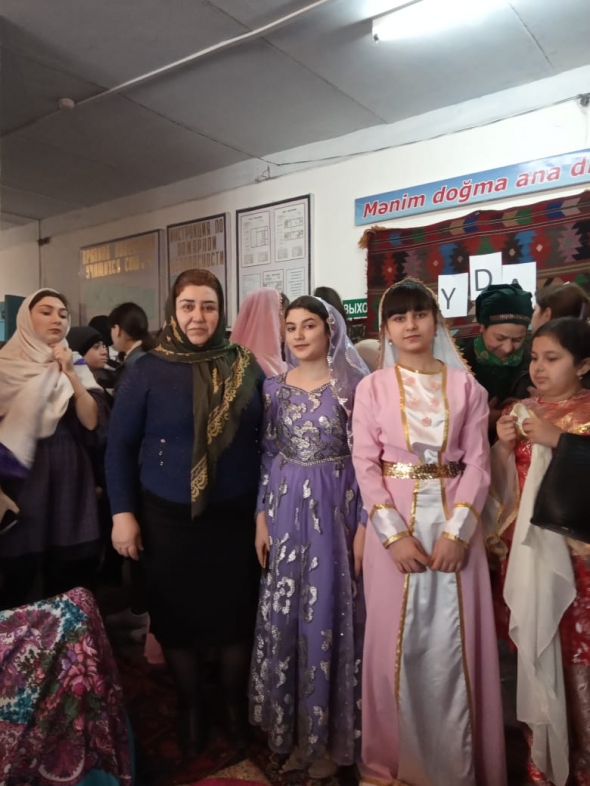
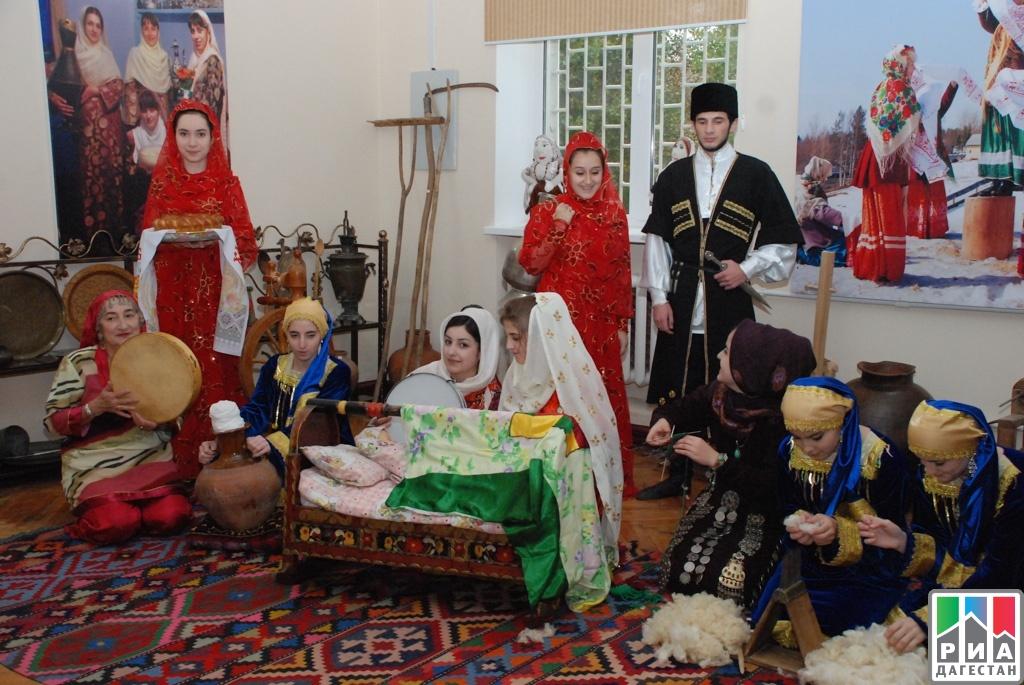
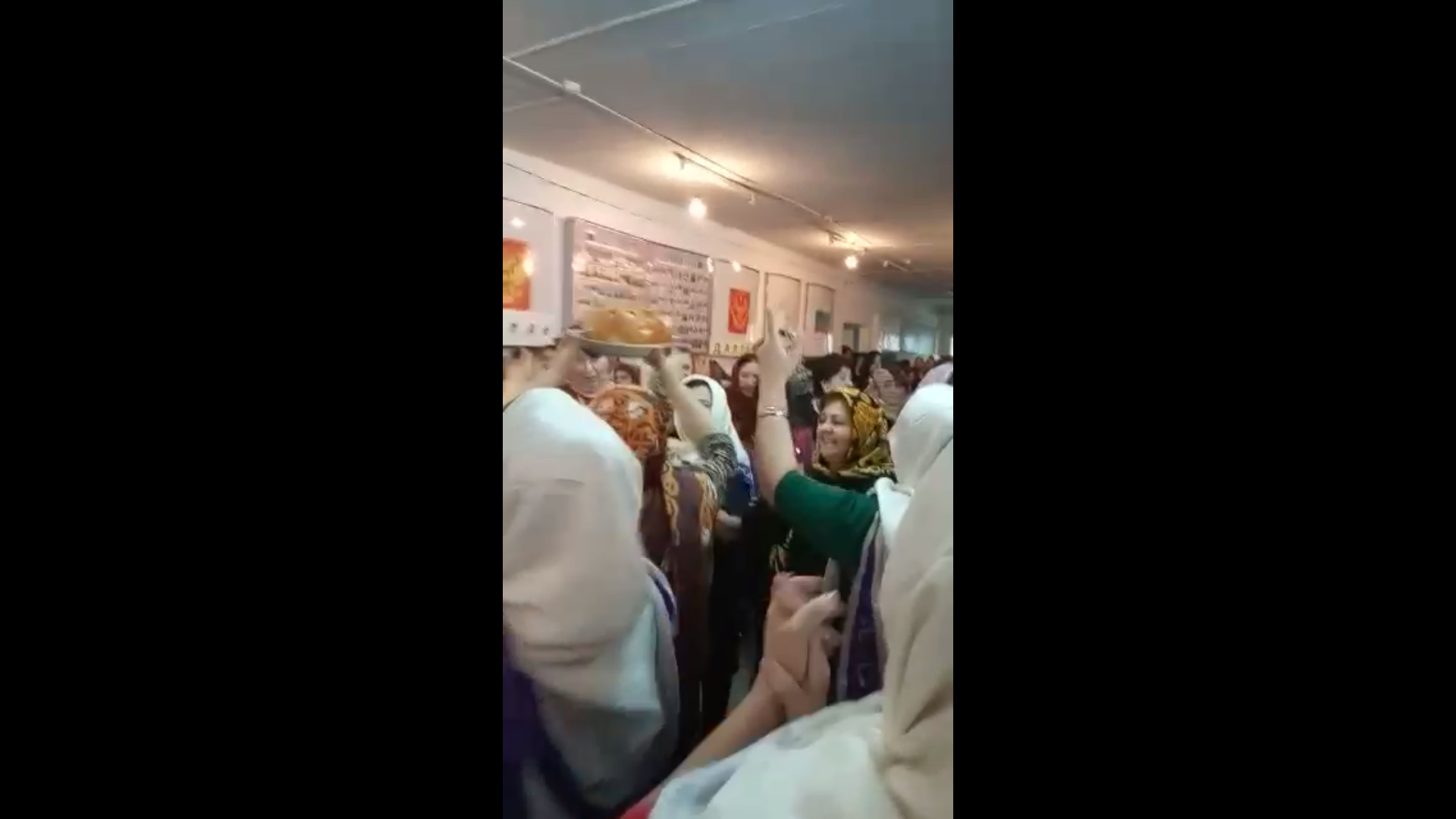
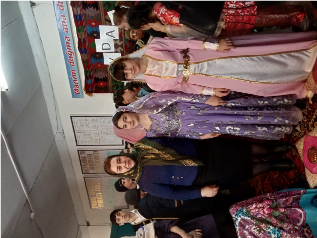
On April 4, 2019, more than 120 teachers from 27 municipalities of Dagestan gathered at the national meeting of native language and literature teachers in the city of Dagestan "school # 4". In the lobby of the school, national maydans were organized-small expositions where everyday life, crafts, clothing, jewelry, and national dishes were displayed. On the famous Dagestani carpets that symbolize the mountain saklya, women were engaged in daily activities. Someone churned oil in a jug, someone scratched wool and twisted yarn, showing a kind of master classes.
Maydans were bursting with all sorts of viands. Here and Lezgin pita, aparar, halva, Tabasaran and dargwa chudu, Azerbaijan pilaf. You could see old copper trays, jugs with which the girls went to the spring, beautiful expensive products and jewelry of the kubachin masters.
Passing from one Maidan to another, we involuntarily plunged into history. It's like a Museum. But unlike museums, here you could touch the exhibits, and if you wanted to try on a burka, put on a hat, grind wheat on a hand-made stone mill, sit on Tabasaran carpets or make a knot on a loom, taste dishes and take photos with mountain women dressed in national costumes.
There were staged dramatizations of the wedding - the bride's face was covered with a handkerchief to protect her from all sorts of evil forces, accompanied by the sounds of the zurna and the drum.
Mountain women dressed in bright national costumes taught how to put a child in a cradle.
Guests who came from all over Dagestan were interested in seeing the Maidan and sharing their impressions.
To the tune of the troubadours of the women were dancing, holding trays of sprouted wheat seed. Young girls, singing a lullaby, rocking the cradle. On the bright and colorful Maidan, guests admired the attributes of a unique ancient culture and the art of mountaineers.
The gathering of native language and literature teachers became a real holiday.
These events are aimed at making the most of the young people involved in learning their native customs and traditions. (Pic.13-15)
Conclusions.
There are about 30 nationalities in Dagestan - Avars, Dargins, Lezgins, Kumyks, Russians, Laks, Tabasarans, Azerbaijanis, Aguls, Rutuls, Chechens, Nogais, and many others.
The traditions of the peoples of Dagestan are very diverse, they were formed over many years and passed from generation to generation. Each of these peoples has its own characteristics and differences that give them identity.
Conclusion.
Observance of folk traditions and customs contributes to the revival and preservation of national culture and the formation of spiritual qualities and moral health of the younger generation. The Dagestani family is based on good folk traditions of humanity, good neighborliness, hospitality, hard work, morality, responsibility and independence. The family should introduce children from an early age to ethno-cultural traditions on the basis of learning the native language and mastering the national culture, preserving good folk national traditions and customs.
There is a great educational potential in folk traditions, customs and family rituals. They contribute to the development of moral and ethical qualities of the individual and education of the value attitude of students to the preservation of national culture. Good folk traditions, family customs and rituals allow not only to preserve the national culture of the Dagestani peoples, but also to pass on the experience of education from the older generation to the younger generation.
List of references.
1. Aytberov. Materials. - Aitberov T. M. Materials on the history of Dagestan in the XV–XVII centuries-WEED.
2. Aytberov, Shihsaidov. From memorials. — Aytberov T. M., and Shikhsaidov A. R. Of Dagestan memory. - WEED.
3. Gerberas. News. - Gerber I. G. News about the peoples and lands located on the Western side of the Caspian sea between Astrakhan and the Kuroya river and their state in 1728. Ed., Preface. and comment. G. F. Miller. - Essays and translations, for the benefit and amusement of employees. SPb., 1760, July-October.
4. Gerberas. Description of countries. - Gerber I. G. Description of countries and peoples along the Western shore of the Caspian sea. 1728-IGED.
5. Dagestan region. - Dagestan region: a Set of statistical data on the population of the Transcaucasian region, extracted from the family lists of 1886 Tiflis, 1893.
6. Newspaper "Dagestani Lights" city socio-political newspaper, no. 15, 12.04.2019
Applications
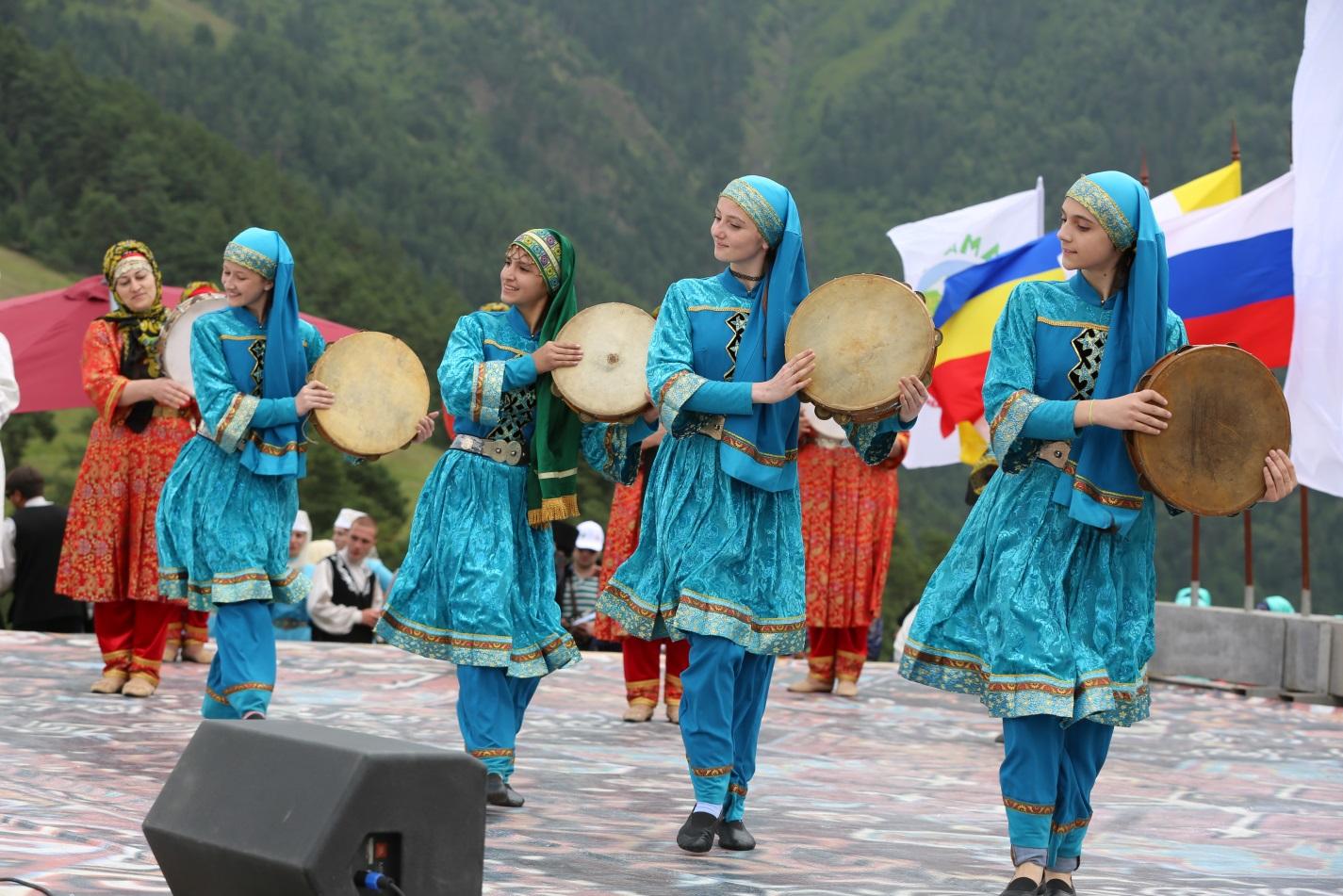
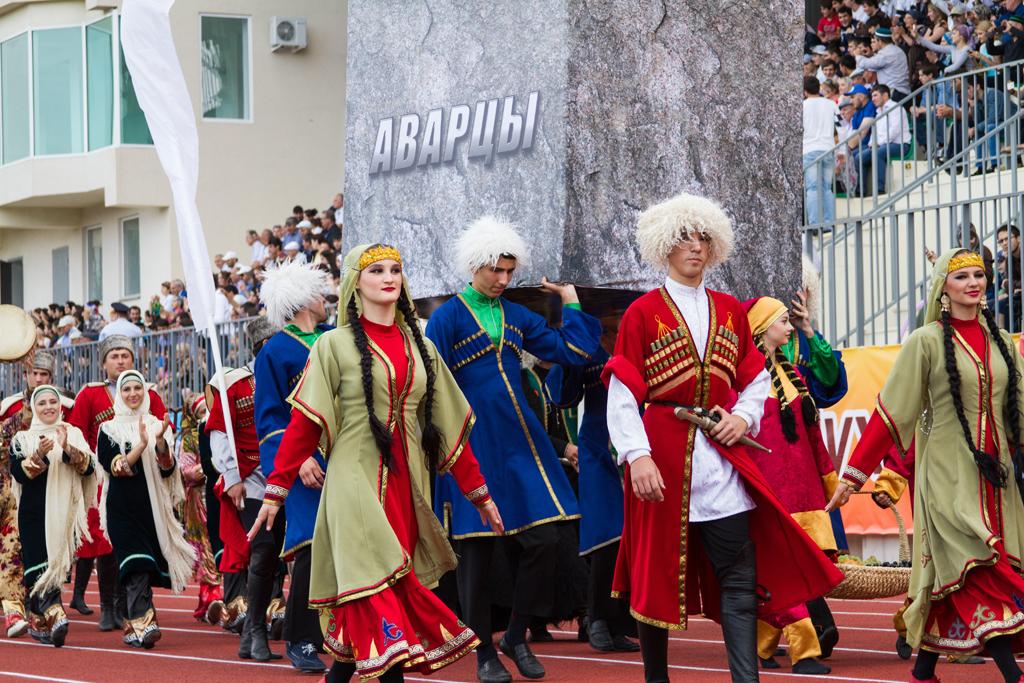
Pic.1-2. People of Dagestan
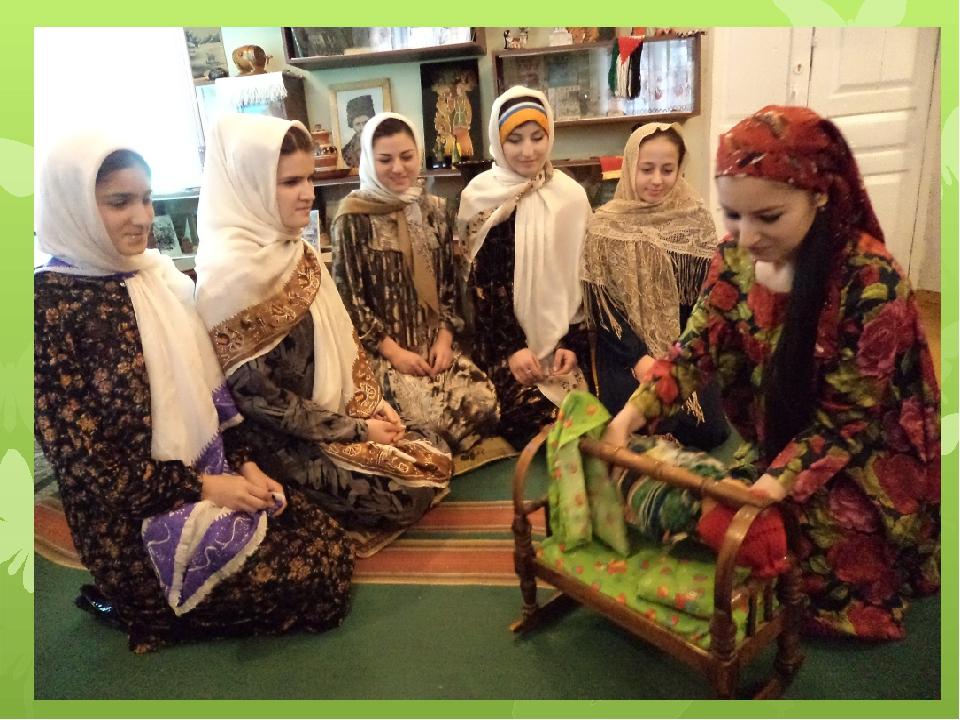
Pic.3-4. Customs related to the birth of a child

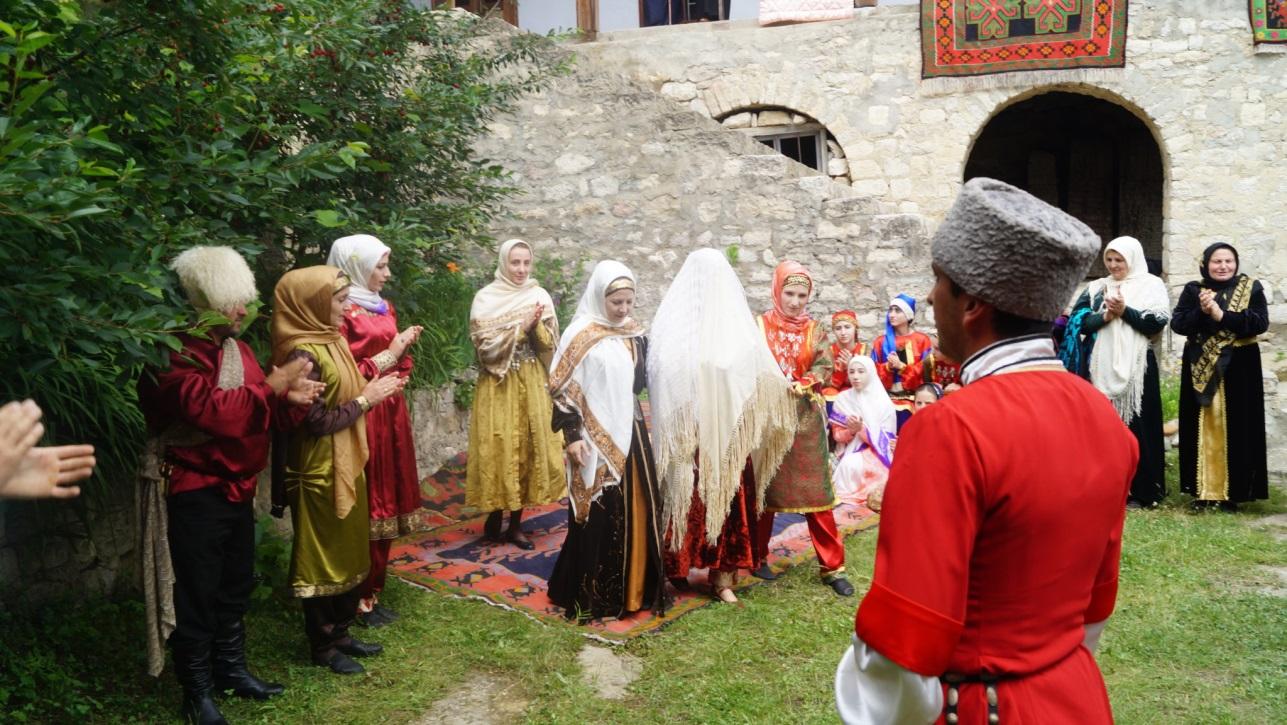
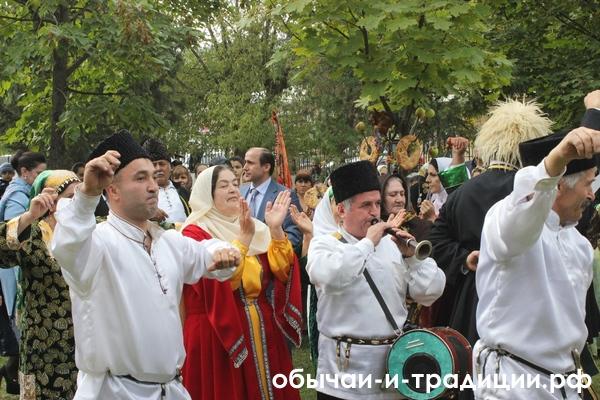
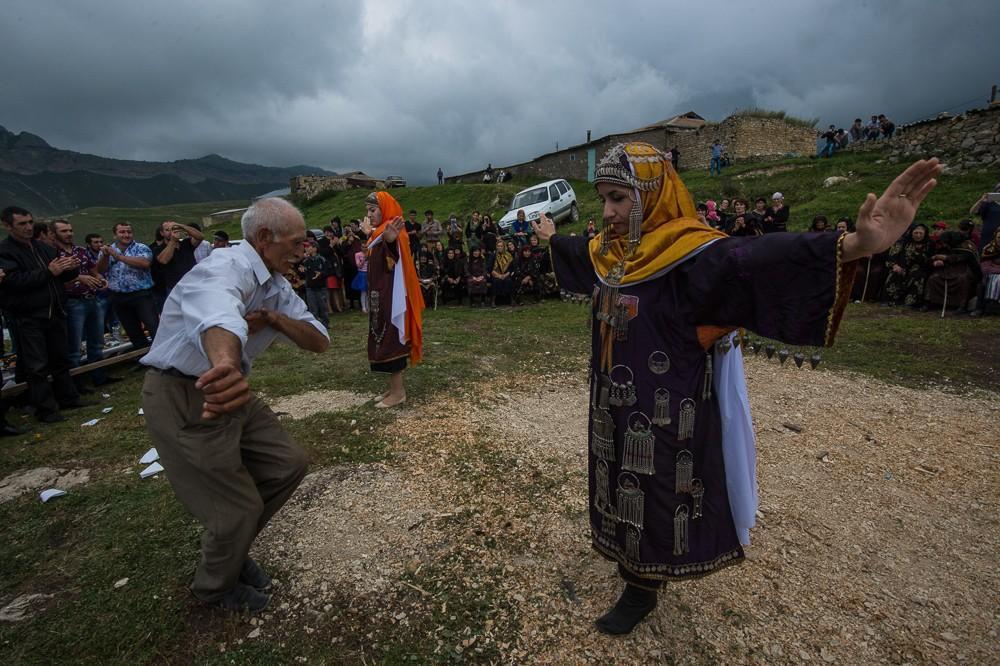
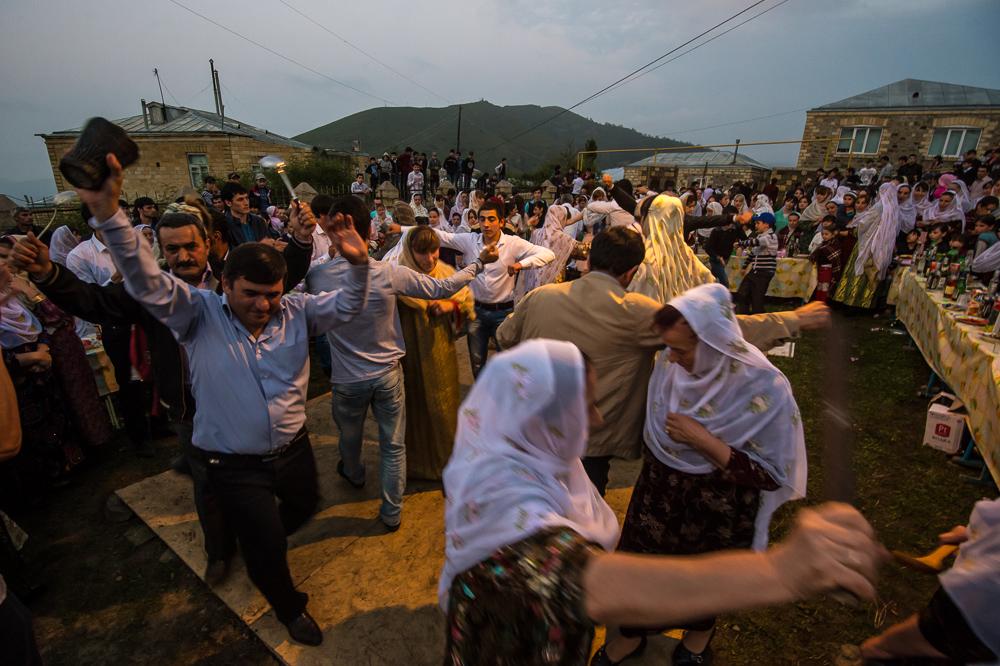
Pic.5-9. Wedding customs and rites.
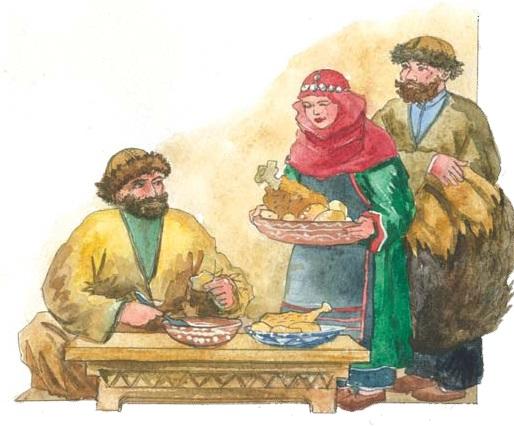
Pic.10 Rules of hospitality
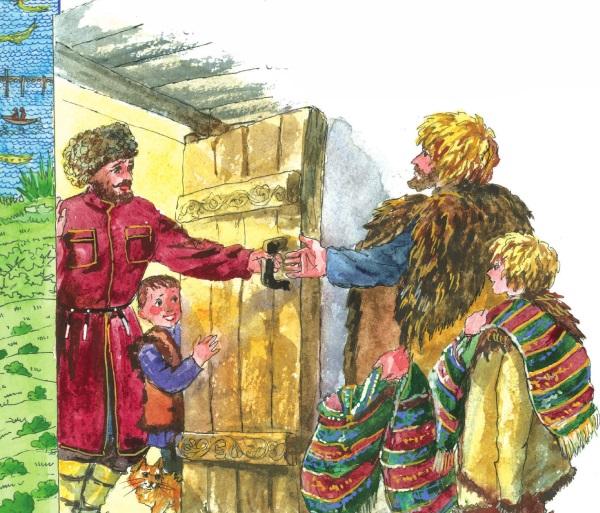
Pic.11. Kunachestvo
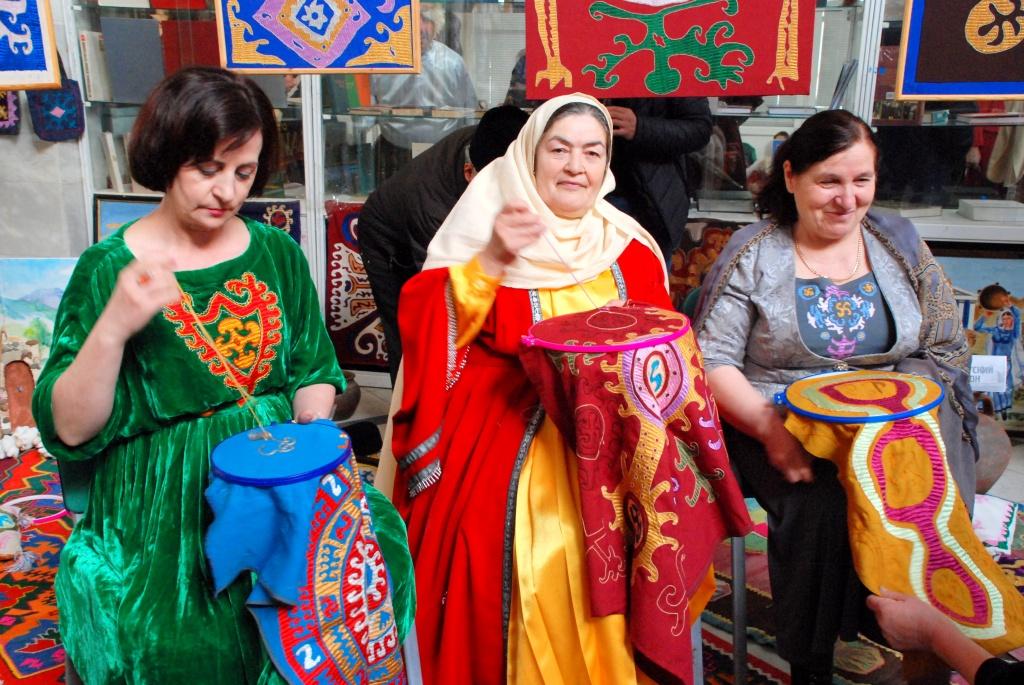
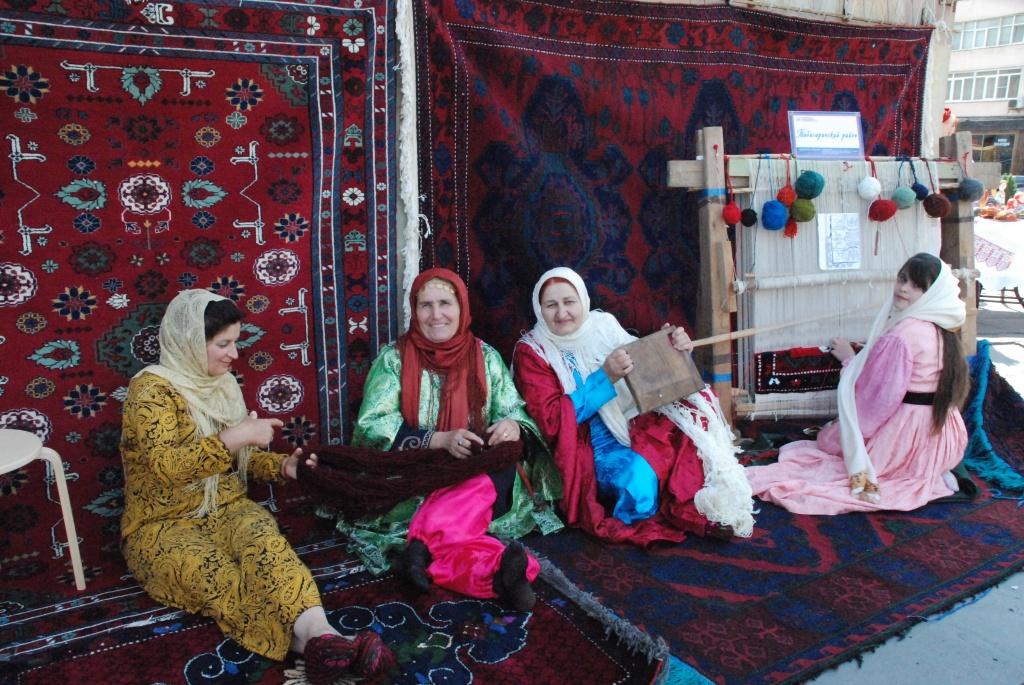
Pic.12. Training for hard work
Pic.13-15. The event "LANGUAGE is a GREAT LEGACY»
14

Вебинар для учителей

Свидетельство об участии БЕСПЛАТНО!