


Россия,

СДЕЛАЙТЕ СВОИ УРОКИ ЕЩЁ ЭФФЕКТИВНЕЕ, А ЖИЗНЬ СВОБОДНЕЕ
Благодаря готовым учебным материалам для работы в классе и дистанционно
Скидки до 50 % на комплекты
только до
Готовые ключевые этапы урока всегда будут у вас под рукой
Организационный момент
Проверка знаний
Объяснение материала
Закрепление изученного
Итоги урока

Была в сети 09.03.2026 16:13

Волковец Расима Радисовна
учитель английского языка
 16 510
 2 475
2 475 
Местоположение
Специализация
Проектная деятельность на уроках иностранных языков. (Презентация истории, культуры, традиций родного края в проектной деятельности учащихся).
Категория:
Английский язык
05.01.2022 13:42

Просмотр содержимого документа
«Проектная деятельность на уроках иностранных языков. (Презентация истории, культуры, традиций родного края в проектной деятельности учащихся).»
Проектная деятельность на уроках иностранных языков.
(Презентация истории, культуры, традиций родного края в проектной деятельности учащихся)
Главное изменение в обществе, влияющее на ситуацию в сфере образования, - ускорение темпов развития общества. В результате школа должна готовить своих учеников к жизни, к переменам, развивать у них такие качества, как мобильность, динамизм, конструктивность. Такая подготовка не может быть обеспечена за счёт усвоения определённого количества знаний. На современном этапе требуется другое: выработка умений делать выбор, эффективно использовать ресурсы, сопоставлять теорию с практикой и многие другие способности, необходимые для жизни в быстро меняющемся обществе.[1] Особая роль для достижения этих целей отводится проектной деятельности.
Проекты предполагают активизацию учащихся: они должны писать, вырезать, наклеивать, рыться в справочниках, разговаривать с другими людьми, искать фотографии и рисунки и даже самостоятельно делать записи на аудиокассету. И, наконец, учащиеся с разным уровнем языковой подготовки могут участвовать в проектной работе в соответствии со своими возможностями. Например, ученик, который недостаточно хорошо говорит по-английски, может прекрасно рисовать.
Основной задачей образования становится актуальное исследование окружающей жизни. Учитель и ученики идут этим путем вместе, от проекта к проекту. Проект, который исполняют ученики, должен вызывать в них энтузиазм, увлекать их, идти от сердца. Любое действие, выполняемое индивидуально, в группе, при поддержке учителя или других людей, дети должны самостоятельно спланировать, выполнить, проанализировать и оценить.
Сообщая другим о себе и окружающем мире по-английски, учащиеся открывают для себя ценность английского языка как языка международного общения. Они могут оказаться в ситуации, где им потребуется описать свою семью или город иностранцам, и проектная работа готовит их к этому.
Исследовательская деятельность — творческая, и не существует общих универсальных правил и схем, по которым она развивается. Но все же любое исследование, в том числе учебное, исследование школьника, состоит из нескольких обязательных приемов:
1) выделение и постановку проблемы (выбор темы исследования) 2) выработку гипотез
3) поиск и предложение возможных вариантов решения
4) сбор материала
5) анализ и обобщение полученных данных
6) подготовку и защиту итогового продукта (сообщение, доклад, макет)[4]
A personal profile
Hello! My name is Svetlana and I am from Telviska. It is a small village in the North of Russia. I am 10 years old and my birthday is on the 10th of December.
We are three in the family: my mother, my father and me. My mother’s name is Rasima and she is a teacher. My father’s name is Sergei and he is a driver.
I go to school. I am in Year three. My favourite subjects are Music and the Russian language. Also, I like English and Art.
After school I go dancing three times a week and learn to play the keyboard.
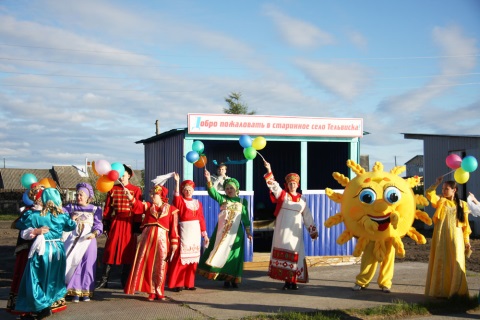 The place where I live.
My home is in the village Telviska. There is a school and there are two shops where you can buy some food near my home. My school is near my home. My friends live near my home. The place where I live is very beautiful. The people are friendly and helpful.
I think living in a village is better than living in a town or city. It is quieter and cleaner because there aren’t many cars.
 However, there are some bad things about living in a village. There aren’t any cafes or cinemas here. Also, it is more difficult to go shopping because there aren’t big shops and you have to go to the town.
I love my village. 
 My school.
My school is called Telviska Secondary School. It is in the Zapolyarny District of the North Russia. I am in Year 5. It is big and new. Classrooms are modern and comfortable.
There are six students in my class. There are four boys and two girls. My best friends are Kirill and Ilya.
We have got twelve subjects. My favourite subjects are English, Maths and History. Usually we have five or six subjects a day. Our lessons start at nine o’clock.
We have to wear a uniform at school. Boys wear white shirts, ties, black trousers and black jackets. Girls wear white blouses and black skirts.
I like my school and I like to study.
Wonderful wildlife of the Polar region.
The endless harsh Arctic stretches beyond the Arctic Circle. This is the land of snowy deserts, cold winds and permafrost. Precipitation is rare here, and the sun's rays do not penetrate the darkness of the polar night for six months.
But, despite the harsh conditions, about two dozen species of animals live in these parts.
 Polar bear
The description of the animals of the Arctic should begin with this very creature - a bright representative of the Far North fauna. It is a large mammal, second in size among mammals living on the planet, only an elephant seal. Polar bears have become heroes of many beautiful legends and fairy tales for children. These are dangerous predators that are not afraid of frost due to an excellent fur coat, white in winter and yellow in summer months.
Reindeer
Reindeer are covered with fur, which changes its color from gray to brown, depending on the season. They possess branched horns, and their eyes glow yellow in the darkness of the polar night.
 White partridge
Partridges try to keep close to the herds of reindeer. This is how these birds get access to food. Reindeer, tearing up the snow with their hooves in search of lichens, free the soil from the snow cover and open access to a source of food for their neighbours.
 The northern partridge is a famous bird, a real beauty of the permafrost region. During the period of severe frosts, it is almost completely snow-white, and only the tail is distinguished by a black tint.
Seal
It is a mammal, about two meters long and weighing up to 65 kg. These creatures live mainly in deep-sea areas, where there is enough fish for them.
These are the most numerous animals in the Arctic. They prefer to live alone and usually do not leave their homes. They dig their spacious shelters from frost and uninvited guests in the thickness of the snow, making holes outward for the possibility of escape and breathing. Baby seals, covered with white wool, are born on ice floes.
National Nenets clothes
Until now, especially in winter, the Nenets retain their traditional clothing, which is well adapted to the harsh climatic conditions of the North. The need for comfortable and very warm fur clothing was caused by the surrounding nature and the harsh climate of the Arctic. Northern clothing is a real miracle, because a person dressed in it will not freeze during rest, work or waiting for better weather in the partridge chum (a hole in the snow where the Nenets lie down in their clothes if they are caught by bad weather or at night on the way ). The name is very accurate: partridges in frost at night climb into the snow, where it is much warmer.
 Malitsa - male deaf (without a cut) clothing, sewn from calf skins (autumn) with fur inside. In cut, it resembles a spacious shirt, reaching to the knees, and the front is made somewhat shorter. Malitsa in all areas of the settlement of the Nenets has an sewn-on hood that replaces the cap.
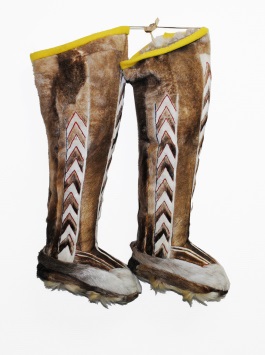
Women's pimas are the Nenets national fur footwear, which Nenets women make themselves. Pimas are very comfortable for long walking, warm and light. Pimas consist of a stocking sewn with fur inside and a lower part made of kamus (the hard-haired part of the skin of the lower part of the legs of animals) with fur outside. About eight kamuses are consumed for female pimas.
Pimas for men - Nenets national footwear, which is sewn by hand from kamus (skin removed from the feet of a special deer). Special attention is paid to the creation of shoes for a man, because a man is more involved in hard physical labor than other people in the camp. Therefore, the skins are processed, disassembled and prepared by Nenets craftswomen long before the start of sewing.
 SOVIK (goose, sokuy, kumshi, kumshin, savak, sook) is an outer fur garment with a hood, worn on a malitsa. Dressed like a malitsa, over the head, worn without a belt. It is sewn with the fur outside, pile down from the winter or autumn fur of adult deer.
It should be noted that the manufacture of a sovic, like any other type of clothing, among the Nenets is accompanied by a monologic inner speech, with which she expresses her attitude towards the one for whom it is intended. This speech may later become a song performed for everyone or even a folk song. “My husband’s, - it is sung in one Nenets folk song. - next to others. Dressed in a white and variegated goose, though it is not a rich and beautiful outfit, but in the cold he will be warm, he will only hear the howling of a blizzard and wind in his goose "
 Yagushka is a women's outerwear for winter. This women's clothing is richly decorated with sewn-in ornaments made of white and dark kamus with a layer of colored cloth on the shoulders, along the sides and cuffs of the sleeves. Mittens here are sometimes sewn to the clothes themselves, and not to the lining.


In summer, the Nenets put on worn winter yagushki with worn-out fur without lining or sew woolen clothes similar in cut to winter clothes. The main details of the summer yagushka can be red and green, and the shelves, hem and cuffs of the sleeves are blue and black. Elderly Nenets wear black summer yagushki, modestly decorated with sewn strips of yellow or red cloth.
ЗАКЛЮЧЕНИЕ
Проектное обучение активно влияет на мотивационную сферу обучаемого. Очень важно также и то, что в работе над проектом дети учатся сотрудничать, а обучение в сотрудничестве воспитывает в них такие нравственные ценности, как взаимопомощь, желание и умение сопереживать; совершенствует общую культуру общения и социального поведения в целом, формирует творческие способности и активность обучаемых, т.е. идет неразрывный процесс обучения и воспитания, и приводит учеников к практическому владению иностранным языком.
Библиография:
1. Вохменцева, Е. А. Проектная деятельность учащихся как средство формирования ключевых компетентностей / Е. А. Вохменцева. — Текст : непосредственный // Актуальные задачи педагогики : материалы I Междунар. науч. конф. (г. Чита, декабрь 2011 г.). — Чита : Издательство Молодой ученый, 2011. — С. 58-65. — URL: https://moluch.ru/conf/ped/archive/20/1390/
2. Полат Е. С. Метод проектов на уроках иностранного языка // Иностранные языки в школе –2000. — № 3 — с.3–9
3.Савченко Н. А. Метод проектов в обучении английскому языку учащихся среднего этапа обучения общеобразовательной школ [Электронный ресурс]. — Режим доступа: http://www.ioso.ru/distant/library
4. Баймуханова, Т. Ч. Исследовательская и проектная деятельность школьников / Т. Ч. Баймуханова. — Текст : непосредственный // Педагогика: традиции и инновации : материалы VI Междунар. науч. конф. (г. Челябинск, февраль 2015 г.). — Челябинск : Два комсомольца, 2015. — С. 112-115. — URL: https://moluch.ru/conf/ped/archive/147/7313/ (дата обращения: 12.03.2021).
5.Электронный ресурс https://givotniymir.ru/zhivotnye-arktiki/
6. Электронный ресурс http://gcbs.ru/cbs/pub/Odejda/ODEJDA_NENCEV.htm





Вебинар для учителей

Свидетельство об участии БЕСПЛАТНО!



