Кыргызстан, Ош обл

СДЕЛАЙТЕ СВОИ УРОКИ ЕЩЁ ЭФФЕКТИВНЕЕ, А ЖИЗНЬ СВОБОДНЕЕ
Благодаря готовым учебным материалам для работы в классе и дистанционно
Скидки до 50 % на комплекты
только до
Готовые ключевые этапы урока всегда будут у вас под рукой
Организационный момент
Проверка знаний
Объяснение материала
Закрепление изученного
Итоги урока

Была в сети 29.06.2020 15:09

Жээнбаева Нурзаада Жээнбаевна
Учитель английского языка
6 лет
 2 465
2 465
 28 361
Местоположение
Специализация
Pronoun and Antecedent agreement
Категория:
Английский язык
27.04.2020 10:48

Просмотр содержимого документа
«Pronoun and Antecedent agreement»

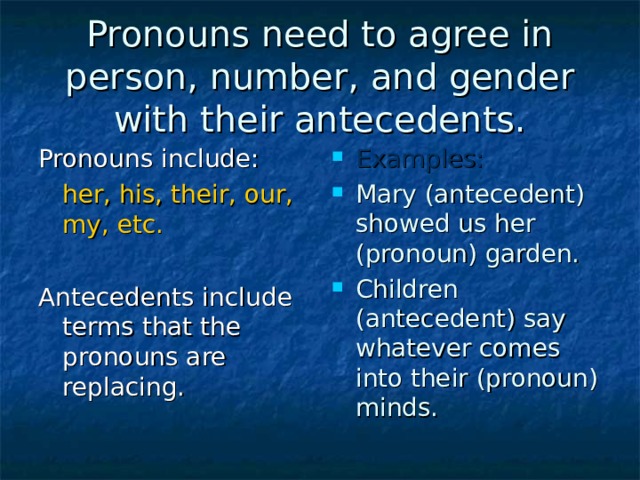
Pronouns need to agree in person, number, and gender with their antecedents.
Pronouns include:
her, his, their, our, my, etc.
Antecedents include terms that the pronouns are replacing.
- Examples:
- Mary (antecedent) showed us her (pronoun) garden.
- Children (antecedent) say whatever comes into their (pronoun) minds.
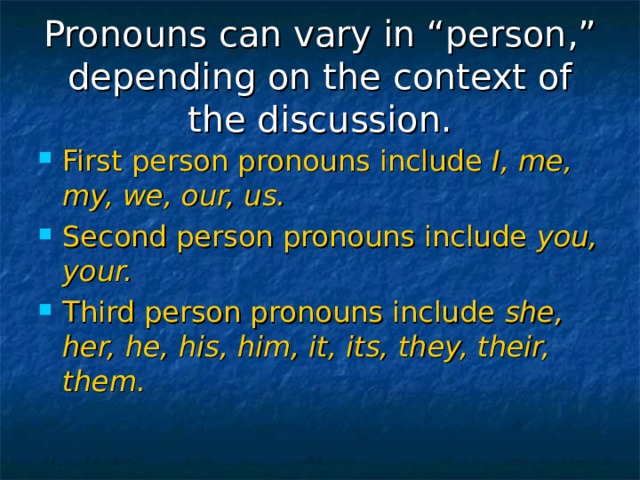
Pronouns can vary in “person,” depending on the context of the discussion.
- First person pronouns include I, me, my, we, our, us.
- Second person pronouns include you, your.
- Third person pronouns include she, her, he, his, him, it, its, they, their, them.
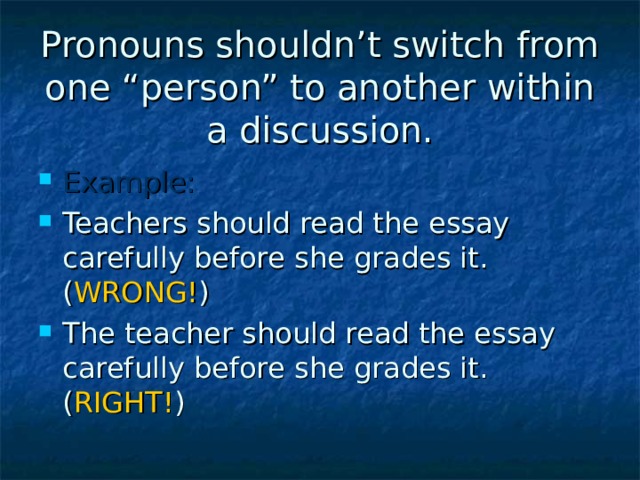
Pronouns shouldn’t switch from one “person” to another within a discussion.
- Example:
- Teachers should read the essay carefully before she grades it. ( WRONG! )
- The teacher should read the essay carefully before she grades it. ( RIGHT! )
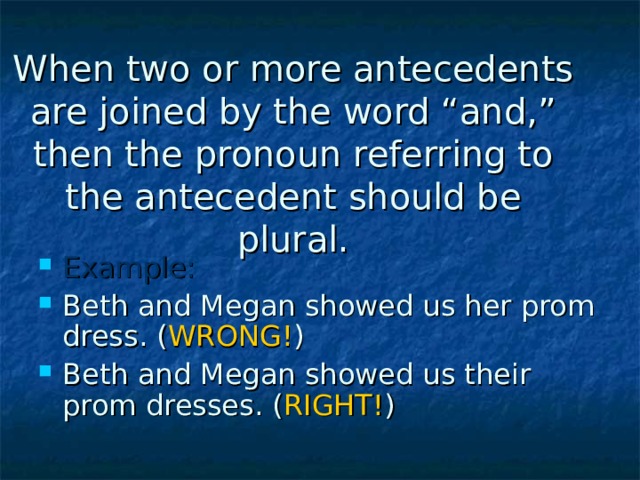
When two or more antecedents are joined by the word “and,” then the pronoun referring to the antecedent should be plural.
- Example:
- Beth and Megan showed us her prom dress. ( WRONG! )
- Beth and Megan showed us their prom dresses. ( RIGHT! )
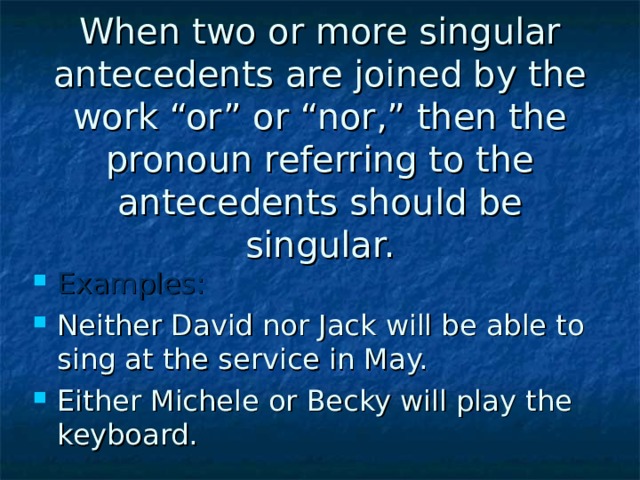
When two or more singular antecedents are joined by the work “or” or “nor,” then the pronoun referring to the antecedents should be singular.
- Examples:
- Neither David nor Jack will be able to sing at the service in May.
- Either Michele or Becky will play the keyboard.
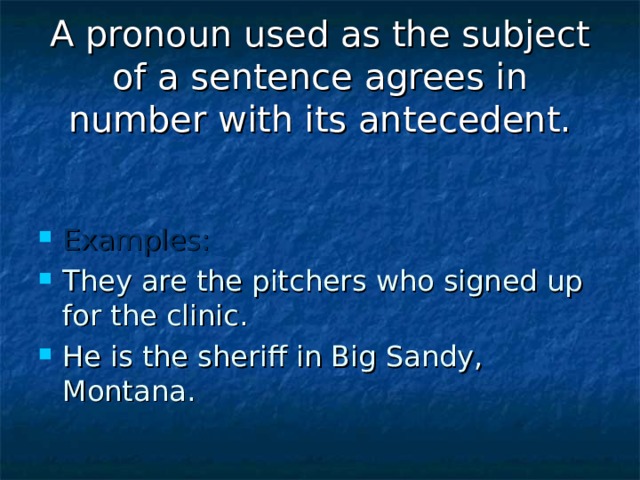
A pronoun used as the subject of a sentence agrees in number with its antecedent.
- Examples:
- They are the pitchers who signed up for the clinic.
- He is the sheriff in Big Sandy, Montana.
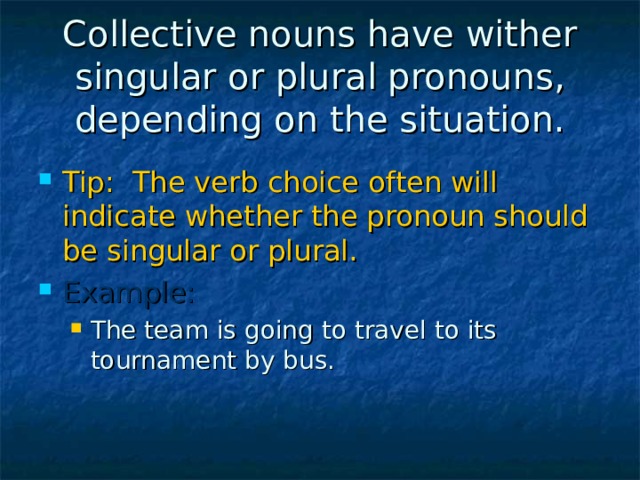
Collective nouns have wither singular or plural pronouns, depending on the situation.
- Tip: The verb choice often will indicate whether the pronoun should be singular or plural.
- Example:
- The team is going to travel to its tournament by bus.
- The team is going to travel to its tournament by bus.
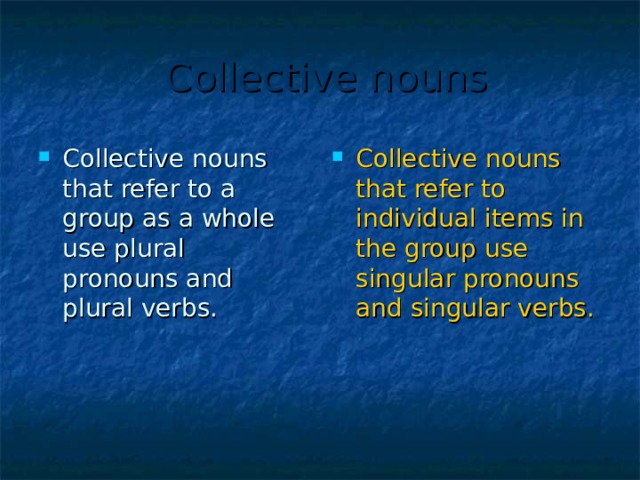
Collective nouns
- Collective nouns that refer to a group as a whole use plural pronouns and plural verbs.
- Collective nouns that refer to individual items in the group use singular pronouns and singular verbs.

- Pronouns should not default to one gender or another unless it is obvious the antecedent is one gender or another. Often, the easiest choice is to place the antecedents in plural form to make the plural pronoun agree with them.
- Example: Teachers should practice what they preach.








Вебинар для учителей

Свидетельство об участии БЕСПЛАТНО!