Россия, Калининград

СДЕЛАЙТЕ СВОИ УРОКИ ЕЩЁ ЭФФЕКТИВНЕЕ, А ЖИЗНЬ СВОБОДНЕЕ
Благодаря готовым учебным материалам для работы в классе и дистанционно
Скидки до 50 % на комплекты
только до
Готовые ключевые этапы урока всегда будут у вас под рукой
Организационный момент
Проверка знаний
Объяснение материала
Закрепление изученного
Итоги урока
Была в сети 11.05.2025 18:25

Яркова Оксана Валентиновна
Учитель английского языка
23 года
 39
39
 260 821
Местоположение
Специализация
Разработка по теме "Your Attachment Style Is Affecting Your Finances" на доске Miro
Категория:
Английский язык
24.11.2024 13:36

Просмотр содержимого документа
«Разработка по теме "Your Attachment Style Is Affecting Your Finances" на доске Miro»

Your Attachment Style Is Affecting Your Finances
@english.eto.po.lyubvi

buy loan lend spend
In an infamous Sex and the City episode, Carrie Bradshaw asks the bank for a ______ to _____her apartment—only to learn she has just $1,600. Not surprising, we later find out she’s _____ $40,000 on designer shoes. Frazzled and anxious, Carrie later asks Charlotte to ______ her a down payment. It’s just another day in the life of Carrie’s very-unaffordable-on-a-writer’s-salary lifestyle, with impulsive shopping sprees, constant cab rides, and fancy dinners out...
@english.eto.po.lyubvi
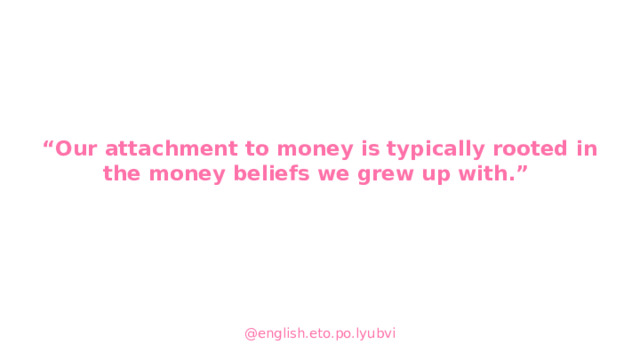
“ Our attachment to money is typically rooted in the money beliefs we grew up with.”
@english.eto.po.lyubvi

The 4 Money Attachment Styles
Anxious Attachment
Anxious attachment means that you feel anxious in your relationship with money. Such people often have “money focus”, such as “money should be saved” or “more money would make me happier.” Finally, anxious attachers have rigid budget and sometimes fixate on the cost of things so much they create a headache, tense muscles, or sleep issues.
If you compulsively check your bank account or pick the cheapest thing on the menu because spending makes you uncomfortable, you might have an anxious relationship with money.
Fearful-Avoidant Attachment
Fearful-avoidant attachment, also known as disorganized (hi, Carrie!), is characterized by both anxious and avoidant responses as a result of an inner conflict. Disorganized attachment serves as a barometer for a person’s emotional response to money: They may calm down and have a savings goal in response to anxiety, but if it’s too rigid, they could start impulsive spending as part of avoidance.
“ One minute, I have a structured budget; the next, I’m spending it out for a spontaneous trip,” she says. “One minute, I’m calculating how much I should spend eating out ; the next, I’m buying a Birkin.”
@english.eto.po.lyubvi

Dismissive-Avoidant Attachment
Secure Attachment
Do you avoid checking your bank account or opening your bills or credit card statements? You probably have a dismissive-avoidant money attachment style.
Someone with a secure money attachment style feels comfortable with the money they have. Sure, they may wish they had more money or less debt , but they accept their financial situation. They can balance saving and spending with a positive outlook. This attachment style reduces the emotional swings between anxious attachment and avoidant attachment to something more neutral. Money serves to show them of their progress, and finances feel more stable than emotional.
They often have a mindset of “I don’t want to think or talk about money ”. They may not even ask for a raise at work , which could self-sabotage their financial growth.
For example, you may keep your prices the same so you don’t upset your customers, even though you need the profits to pay your bills. These people might think they’re doing the good thing, but unfortunately, putting your financial well-being on the line for the comfort of others is a dangerous way to burnout .
@english.eto.po.lyubvi

Anxious Attachment
Fearful-Avoidant Attachment
Dismissive-Avoidant Attachment
Secure Attachment
@english.eto.po.lyubvi

@english.eto.po.lyubvi



Вебинар для учителей

Свидетельство об участии БЕСПЛАТНО!