Россия, Ярославль

СДЕЛАЙТЕ СВОИ УРОКИ ЕЩЁ ЭФФЕКТИВНЕЕ, А ЖИЗНЬ СВОБОДНЕЕ
Благодаря готовым учебным материалам для работы в классе и дистанционно
Скидки до 50 % на комплекты
только до
Готовые ключевые этапы урока всегда будут у вас под рукой
Организационный момент
Проверка знаний
Объяснение материала
Закрепление изученного
Итоги урока
Была в сети 21.12.2025 18:06
Клепова Олеся Евгеньевна
Учитель английского языка
44 года
 3 032
3 032
 22 628
Местоположение
Специализация
Разница в употреблении глаголов do и make
Категория:
Английский язык
07.10.2018 22:38

Просмотр содержимого документа
«Разница в употреблении глаголов do и make»
MAKE vs DO
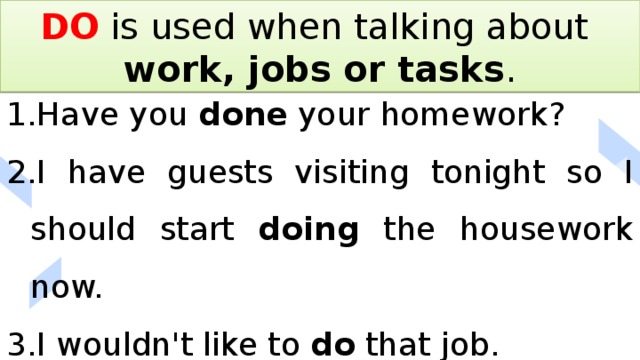
DO is used when talking about
work, jobs or tasks .
- Have you done your homework?
- I have guests visiting tonight so I should start doing the housework now.
- I wouldn't like to do that job.
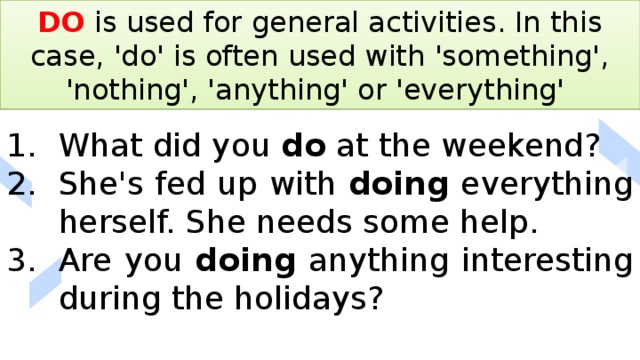
DO is used for general activities. In this case, 'do' is often used with 'something', 'nothing', 'anything' or 'everything'
- What did you do at the weekend?
- She's fed up with doing everything herself. She needs some help.
- Are you doing anything interesting during the holidays?
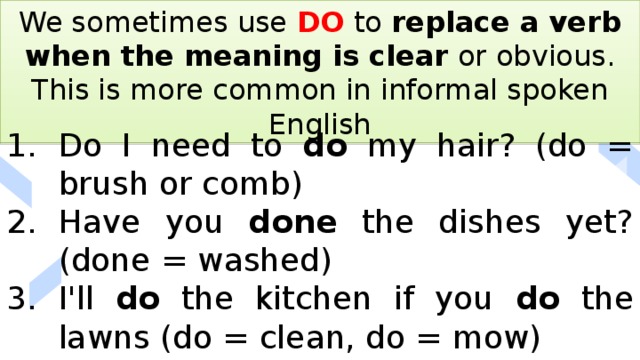
We sometimes use DO to replace a verb when the meaning is clear or obvious. This is more common in informal spoken English
- Do I need to do my hair? (do = brush or comb)
- Have you done the dishes yet? (done = washed)
- I'll do the kitchen if you do the lawns (do = clean, do = mow)
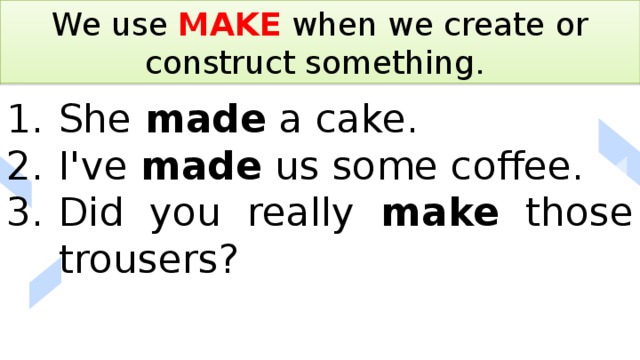
We use MAKE when we create or construct something.
- She made a cake.
- I've made us some coffee.
- Did you really make those trousers?
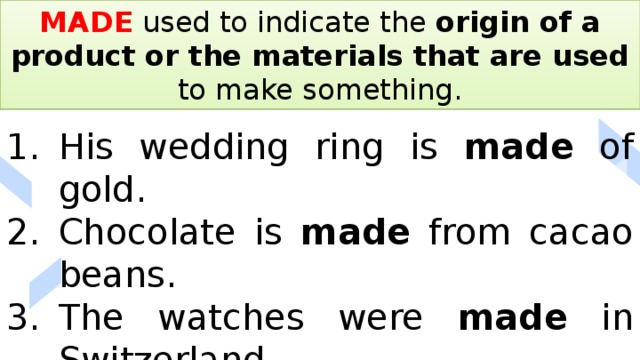
MADE used to indicate the origin of a product or the materials that are used to make something.
- His wedding ring is made of gold.
- Chocolate is made from cacao beans.
- The watches were made in Switzerland.
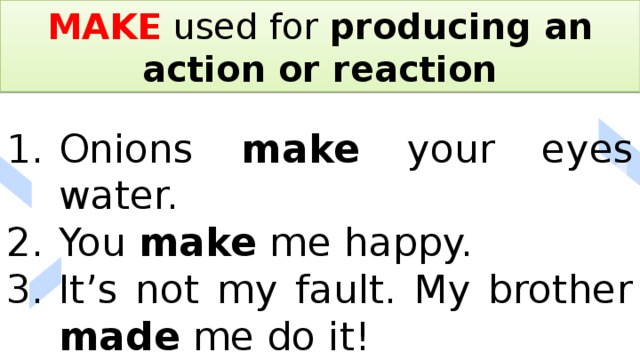
MAKE used for producing an action or reaction
- Onions make your eyes water.
- You make me happy.
- It’s not my fault. My brother made me do it!
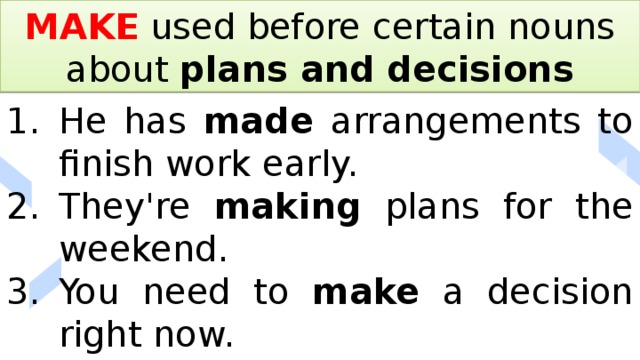
MAKE used before certain nouns about plans and decisions
- He has made arrangements to finish work early.
- They're making plans for the weekend.
- You need to make a decision right now.
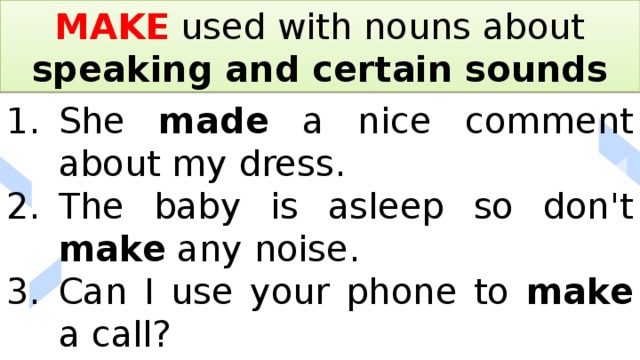
MAKE used with nouns about speaking and certain sounds
- She made a nice comment about my dress.
- The baby is asleep so don't make any noise.
- Can I use your phone to make a call?
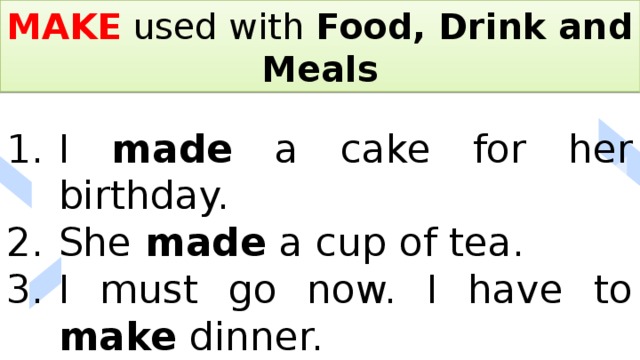
MAKE used with Food, Drink and Meals
- I made a cake for her birthday.
- She made a cup of tea.
- I must go now. I have to make dinner.
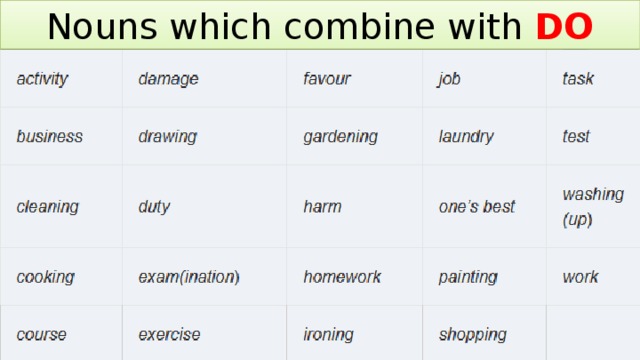
Nouns which combine with DO
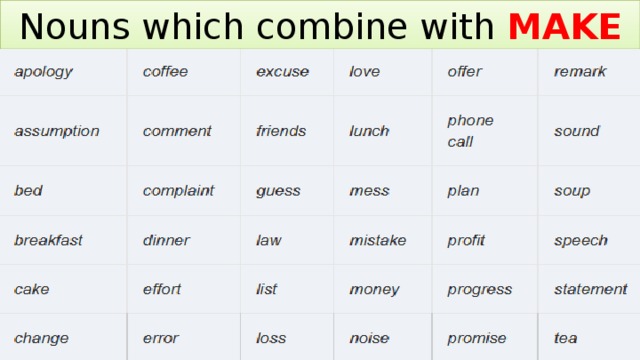
Nouns which combine with MAKE
Вебинар для учителей

Свидетельство об участии БЕСПЛАТНО!