ноокат, оше


СДЕЛАЙТЕ СВОИ УРОКИ ЕЩЁ ЭФФЕКТИВНЕЕ, А ЖИЗНЬ СВОБОДНЕЕ
Благодаря готовым учебным материалам для работы в классе и дистанционно
Скидки до 50 % на комплекты
только до
Готовые ключевые этапы урока всегда будут у вас под рукой
Организационный момент
Проверка знаний
Объяснение материала
Закрепление изученного
Итоги урока

Была в сети 25.09.2025 20:35

Акылбек кызы Элнура -----
учитель англиского языка
34 года
 1 067
1 067
 62 217
Местоположение
Специализация
Report speech gramma
Категория:
Английский язык
17.01.2024 19:03

Просмотр содержимого документа
«Report speech gramma»
REPORTED SPEECH
is very important for legal language, because it is used in newspaper reports of crimes and investigations, in reports on trials, in judicial procedure…
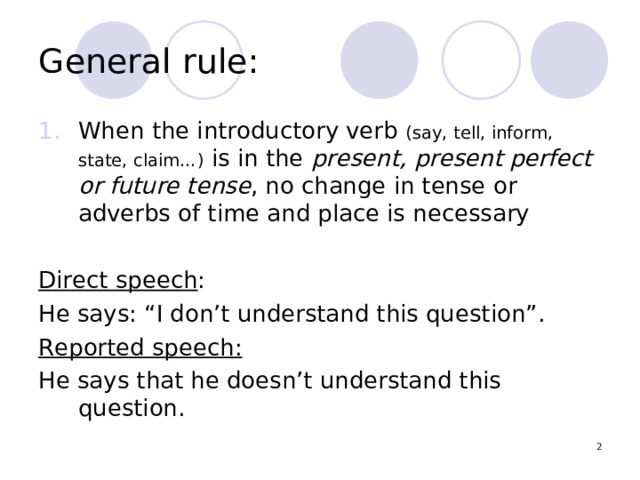
General rule:
- When the introductory verb (say, tell, inform, state, claim…) is in the present, present perfect or future tense , no change in tense or adverbs of time and place is necessary
Direct speech :
He says: “I don’t understand this question”.
Reported speech:
He says that he doesn’t understand this question.
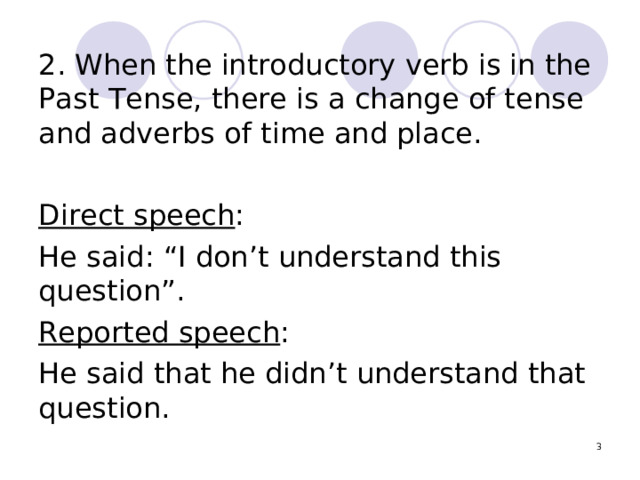
2. When the introductory verb is in the Past Tense, there is a change of tense and adverbs of time and place.
Direct speech :
He said: “I don’t understand this question”.
Reported speech :
He said that he didn’t understand that question.
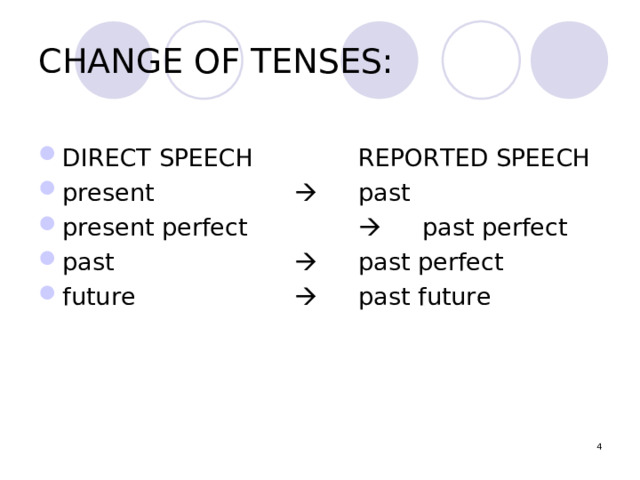
CHANGE OF TENSES:
- DIRECT SPEECH REPORTED SPEECH
- present past
- present perfect past perfect
- past past perfect
- future past future
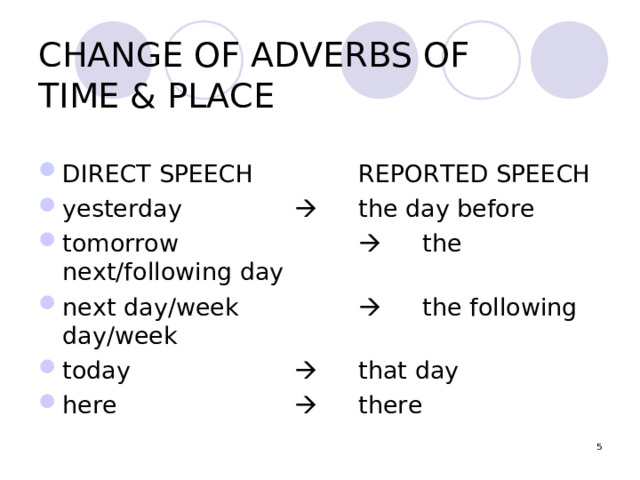
CHANGE OF ADVERBS OF TIME & PLACE
- DIRECT SPEECH REPORTED SPEECH
- yesterday the day before
- tomorrow the next/following day
- next day/week the following day/week
- today that day
- here there
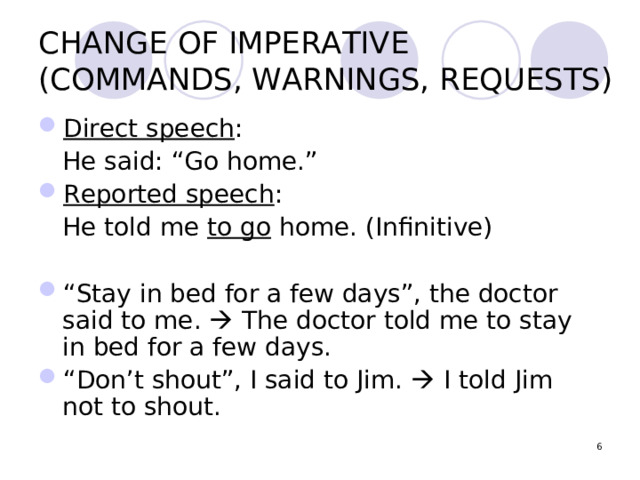
CHANGE OF IMPERATIVE (COMMANDS, WARNINGS, REQUESTS)
- Direct speech :
He said: “Go home.”
- Reported speech :
He told me to go home. (Infinitive)
- “ Stay in bed for a few days”, the doctor said to me. The doctor told me to stay in bed for a few days.
- “ Don’t shout”, I said to Jim. I told Jim not to shout.
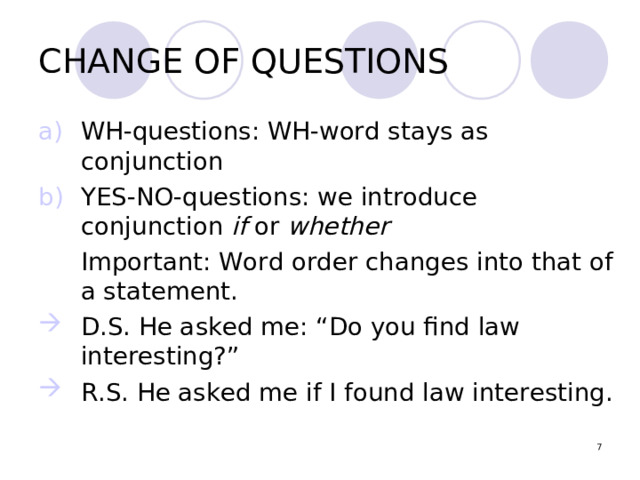
CHANGE OF QUESTIONS
- WH-questions: WH-word stays as conjunction
- YES-NO-questions: we introduce conjunction if or whether
Important: Word order changes into that of a statement.
- D.S. He asked me: “Do you find law interesting?”
- R.S. He asked me if I found law interesting.
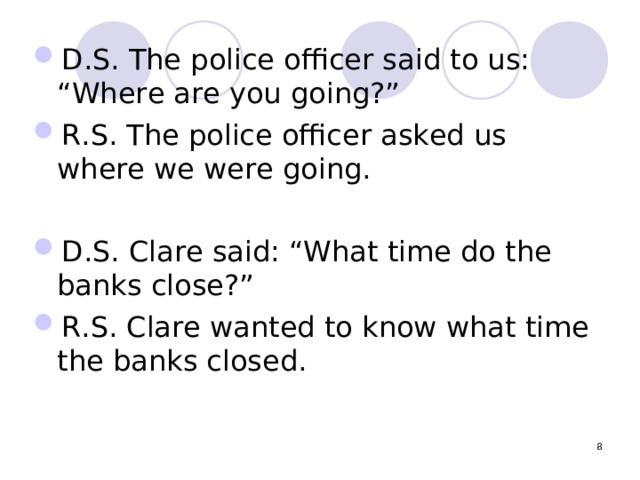
- D.S. The police officer said to us: “Where are you going?”
- R.S. The police officer asked us where we were going.
- D.S. Clare said: “What time do the banks close?”
- R.S. Clare wanted to know what time the banks closed.
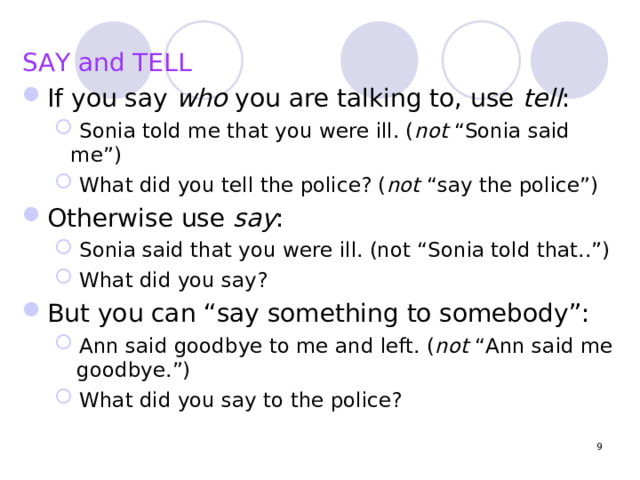
SAY and TELL
- If you say who you are talking to, use tell :
- Sonia told me that you were ill. ( not “Sonia said me”) What did you tell the police? ( not “say the police”)
- Sonia told me that you were ill. ( not “Sonia said me”)
- What did you tell the police? ( not “say the police”)
- Otherwise use say :
- Sonia said that you were ill. (not “Sonia told that..”) What did you say?
- Sonia said that you were ill. (not “Sonia told that..”)
- What did you say?
- But you can “say something to somebody”:
- Ann said goodbye to me and left. ( not “Ann said me goodbye.”) What did you say to the police?
- Ann said goodbye to me and left. ( not “Ann said me goodbye.”)
- What did you say to the police?
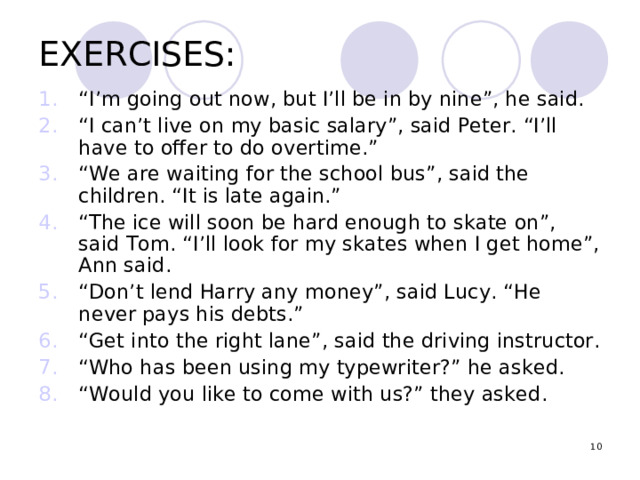
EXERCISES:
- “ I’m going out now, but I’ll be in by nine”, he said.
- “ I can’t live on my basic salary”, said Peter. “I’ll have to offer to do overtime.”
- “ We are waiting for the school bus”, said the children. “It is late again.”
- “ The ice will soon be hard enough to skate on”, said Tom. “I’ll look for my skates when I get home”, Ann said.
- “ Don ’ t lend Harry any money”, said Lucy. “He never pays his debts.”
- “ Get into the right lane”, said the driving instructor.
- “ Who has been using my typewriter?” he asked.
- “ Would you like to come with us?” they asked.
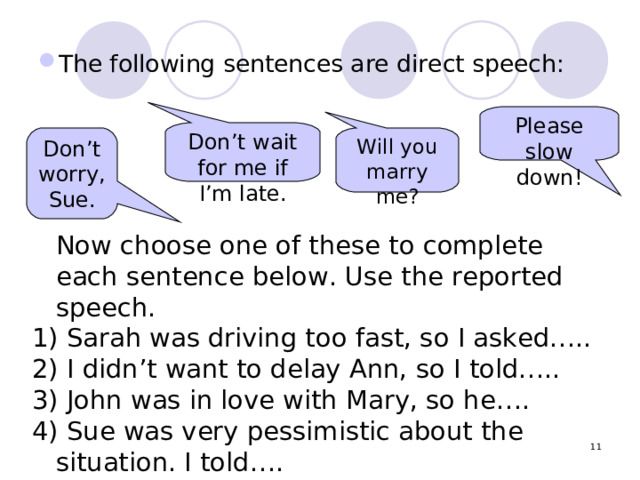
- The following sentences are direct speech:
Please slow down!
Don’t wait for me if I’m late .
Will you marry me?
Don’t worry, Sue.
Now choose one of these to complete each sentence below. Use the reported speech.
- Sarah was driving too fast, so I asked…..
- I didn’t want to delay Ann, so I told…..
- John was in love with Mary, so he….
- Sue was very pessimistic about the situation. I told….
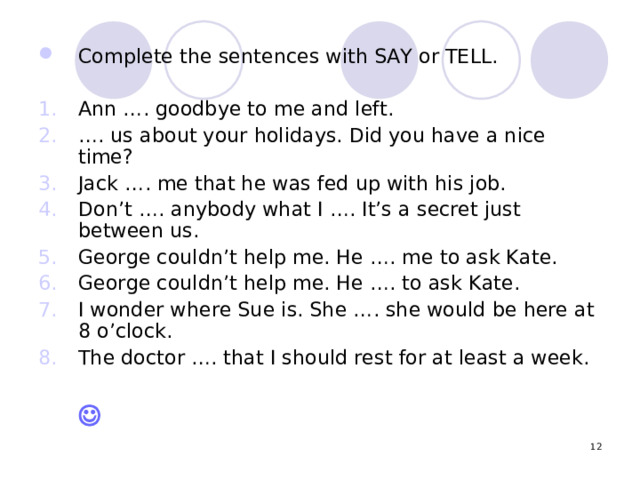
- Complete the sentences with SAY or TELL.
- Ann …. goodbye to me and left.
- … . us about your holidays. Did you have a nice time?
- Jack …. me that he was fed up with his job.
- Don’t …. anybody what I …. It’s a secret just between us.
- George couldn’t help me. He …. me to ask Kate.
- George couldn’t help me. He …. to ask Kate.
- I wonder where Sue is. She …. she would be here at 8 o’clock.
- The doctor …. that I should rest for at least a week.








Вебинар для учителей
Свидетельство об участии БЕСПЛАТНО!