Россия, Ярославль

СДЕЛАЙТЕ СВОИ УРОКИ ЕЩЁ ЭФФЕКТИВНЕЕ, А ЖИЗНЬ СВОБОДНЕЕ
Благодаря готовым учебным материалам для работы в классе и дистанционно
Скидки до 50 % на комплекты
только до
Готовые ключевые этапы урока всегда будут у вас под рукой
Организационный момент
Проверка знаний
Объяснение материала
Закрепление изученного
Итоги урока
Была в сети 14.05.2026 15:40

Коворотняя Галина Александровна
Учитель английского языка
54 года
 157
157
 191 180
Местоположение
Reported_Speech
Категория:
Английский язык
13.05.2026 12:05

Просмотр содержимого документа
«Reported_Speech»

Reported Speech
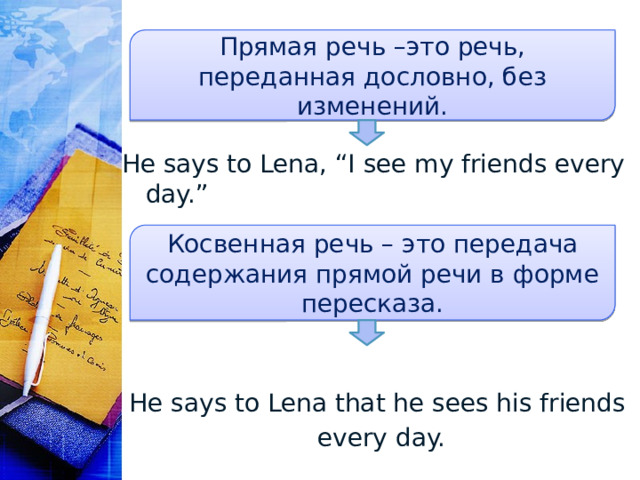
Прямая речь –это речь, переданная дословно, без изменений.
He says to Lena, “I see my friends every day.”
He says to Lena that he sees his friends
every day.
Косвенная речь – это передача содержания прямой речи в форме пересказа.
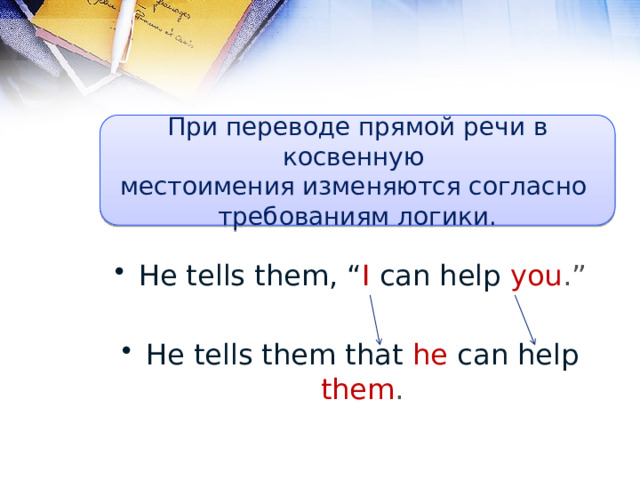
- He tells them, “ I can help you .”
- He tells them that he can help them .
При переводе прямой речи в косвенную
местоимения изменяются согласно
требованиям логики.
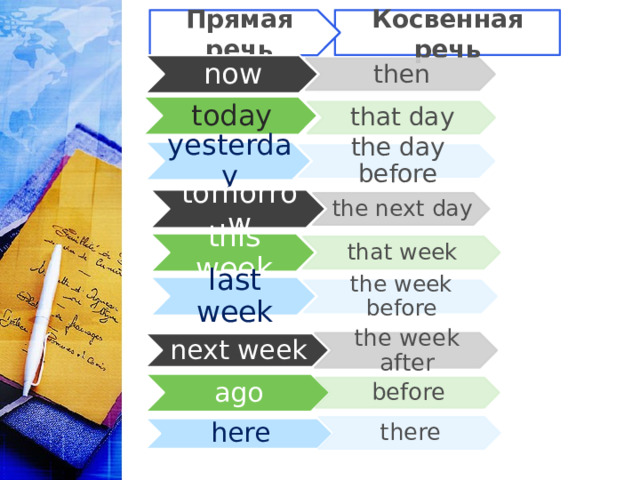
Косвенная речь
Прямая речь
now
then
today
that day
yesterday
the day before
tomorrow
the next day
this week
that week
last week
the week before
the week after
next week
ago
before
there
here
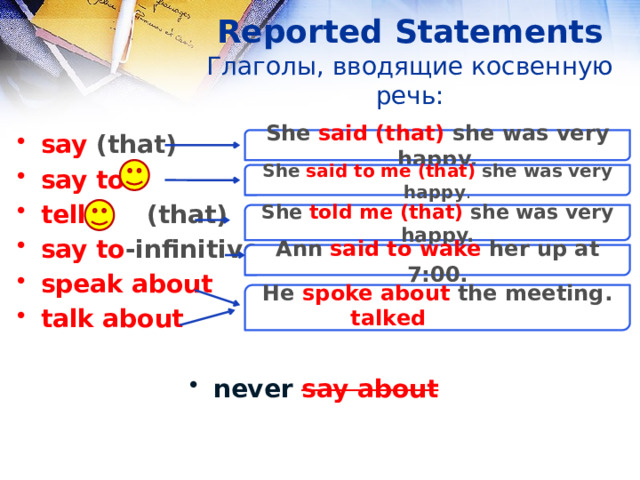
Reported Statements Глаголы, вводящие косвенную речь:
- say (that)
- say to
- tell (that)
- say to -infinitive
- speak about
- talk about
- never say about
She said (that) she was very happy.
She said to me (that) she was very happy .
She told me (that) she was very happy.
Ann said to wake her up at 7:00.
He spoke about the meeting.
talked
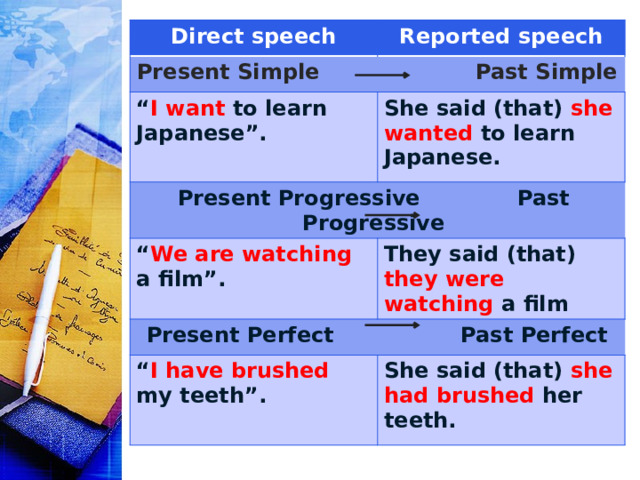
Direct speech
Present Simple Past Simple
Reported speech
“ I want to learn Japanese”.
Present Progressive Past Progressive
She said (that) she wanted to learn Japanese.
“ We are watching a film”.
They said (that) they were watching a film
Present Perfect Past Perfect
“ I have brushed my teeth”.
She said (that) she had brushed her teeth.
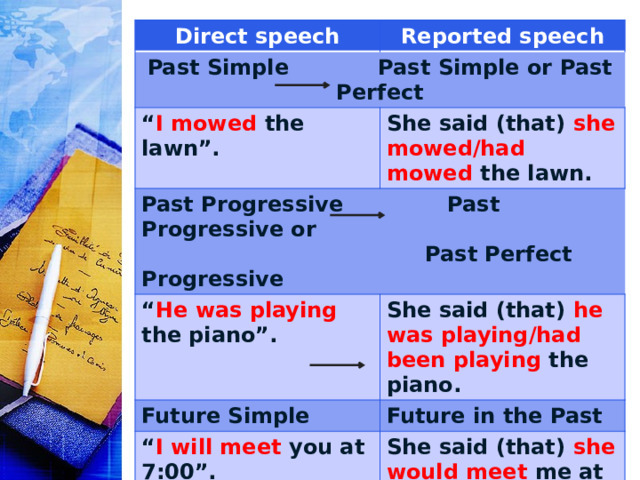
Direct speech
Reported speech
Past Simple Past Simple or Past Perfect
“ I mowed the lawn”.
She said (that) she mowed/had mowed the lawn.
Past Progressive Past Progressive or
“ He was playing the piano”.
Past Perfect Progressive
She said (that) he was playing/had been playing the piano.
Future Simple
“ I will meet you at 7:00”.
Future in the Past
She said (that) she would meet me at 7:00
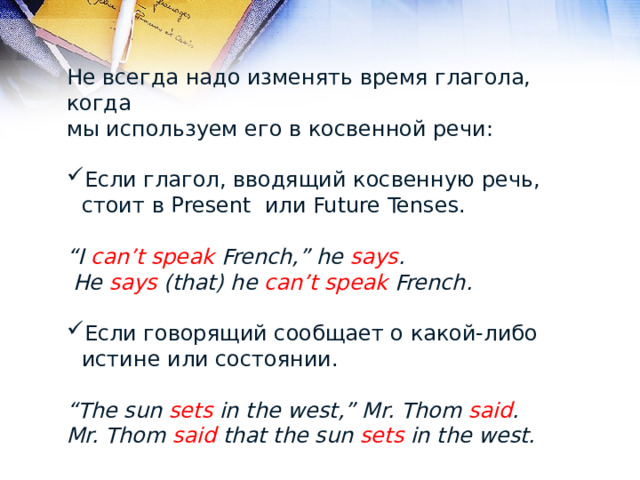
Не всегда надо изменять время глагола, когда
мы используем его в косвенной речи:
- Если глагол, вводящий косвенную речь, стоит в Present или Future Tenses.
“ I can’t speak French,” he says .
He says (that) he can’t speak French.
- Если говорящий сообщает о какой-либо истине или состоянии.
“ The sun sets in the west,” Mr. Thom said .
Mr. Thom said that the sun sets in the west.
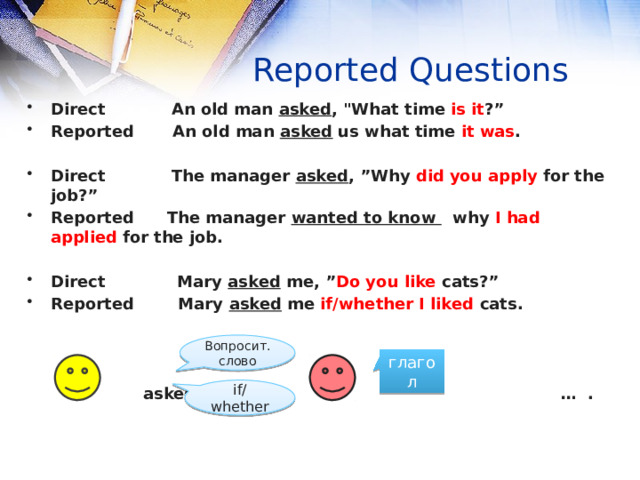
Reported Questions
- Direct An old man asked , "What time is it ?”
- Reported An old man asked us what time it was .
- Direct The manager asked , ”Why did you apply for the job?”
- Reported The manager wanted to know why I had applied for the job.
- Direct Mary asked me, ” Do you like cats?”
- Reported Mary asked me if/whether I liked cats.
asked … .
Вопросит. слово
глагол
if/whether
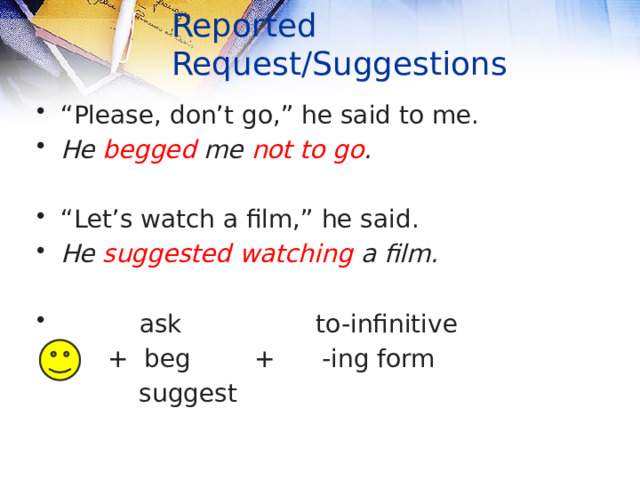
Reported Request/Suggestions
- “ Please, don’t go,” he said to me.
- He begged me not to go .
- “ Let’s watch a film,” he said.
- He suggested watching a film.
- ask to-infinitive
+ beg + -ing form
suggest
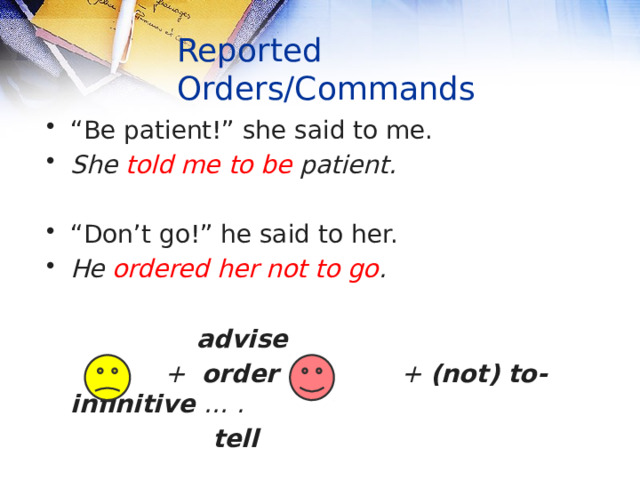
Reported Orders/Commands
- “ Be patient!” she said to me.
- She told me to be patient.
- “ Don’t go!” he said to her.
- He ordered her not to go .
advise
+ order + + (not) to-infinitive … .
tell







Вебинар для учителей
Свидетельство об участии БЕСПЛАТНО!