Кыргызстан, Ош обл

СДЕЛАЙТЕ СВОИ УРОКИ ЕЩЁ ЭФФЕКТИВНЕЕ, А ЖИЗНЬ СВОБОДНЕЕ
Благодаря готовым учебным материалам для работы в классе и дистанционно
Скидки до 50 % на комплекты
только до
Готовые ключевые этапы урока всегда будут у вас под рукой
Организационный момент
Проверка знаний
Объяснение материала
Закрепление изученного
Итоги урока
Была в сети 29.06.2020 15:09

Жээнбаева Нурзаада Жээнбаевна
Учитель английского языка
6 лет
 2 466
2 466
 28 359
Местоположение
Специализация
Simple present tense
Категория:
Английский язык
27.04.2020 08:39

Просмотр содержимого документа
«Simple present tense»

POWER POINT
LESSONS
1.
THE TENSES

Lesson: Grammar
Subject:The Simple Present Tense
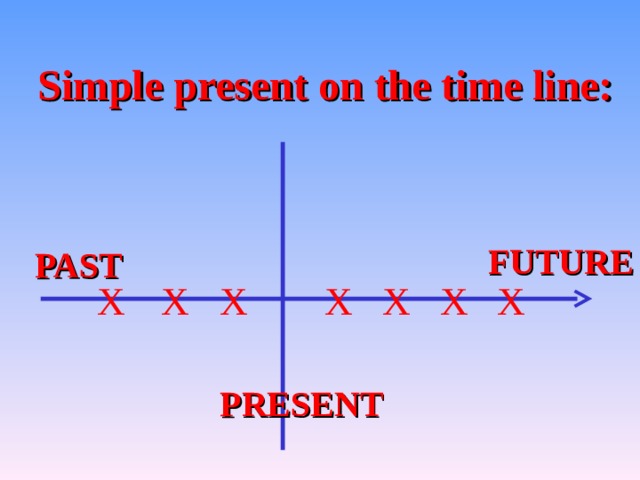
Simple present on the time line:
FUTURE
PAST
X
X
X X X X
X
PRESENT
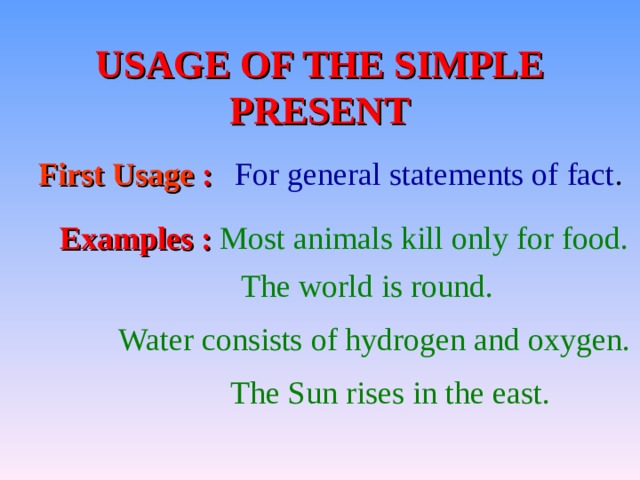
USAGE OF THE SIMPLE PRESENT
First Usage :
For general statements of fact .
Examples :
Most animals kill only for food.
The world is round.
Water consists of hydrogen and oxygen.
The Sun rises in the east.
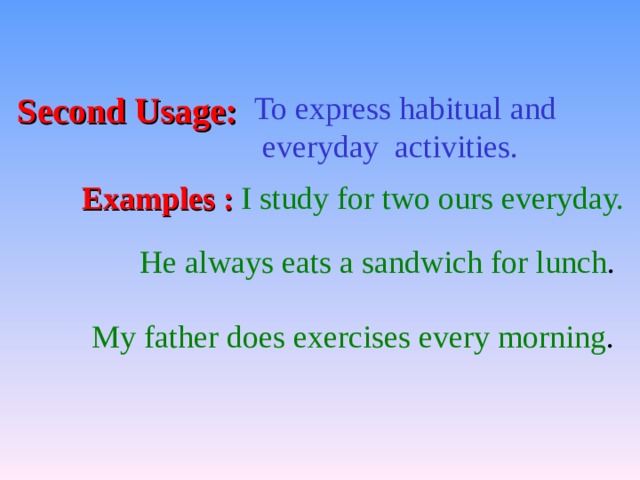
Second Usage:
To express habitual and
everyday activities.
Examples :
I study for two ours everyday.
He always eats a sandwich for lunch .
My father does exercises every morning .

NOW
THE RULES

FORMS OF THE SIMPLE PRESENT
Positive Sentence Form :
Object
Time exp.
+
Verb
+
Subject
+
I
breakfast
every
morning.
eat
Alban
drinks
milk
everyday.

BUT,
DON’T
FORGET!

THE RULE :
For 3rd person singular an “s” follows
the verb :
Examples :
He walk s to the school every morning.
She sleep s every night
Albana speak s Chinese

SPELLING
1. We usually add only -s :
____
rub s
rub
____
ride
ride s
____
smile
smile s
2. End of verb : consonant + y
spelling change y to i and add -es
____
Study
stud ies
____
cry
cr ies

3.End of verb : vowel + y add -s
____
pay s
pay
____
buy s
buy
4. End of verb : - sh ,- ch ,- ss ,- x add - es
____
push es
pu sh
____
teach es
tea ch
____
kiss es
ki ss
____
fix es
fi x
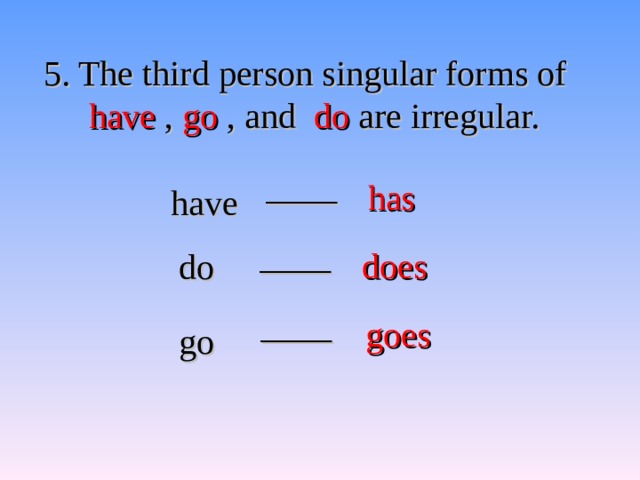
5. The third person singular forms of
have , go , and do are irregular.
____
has
have
____
does
do
____
goes
go
Now,
Examples
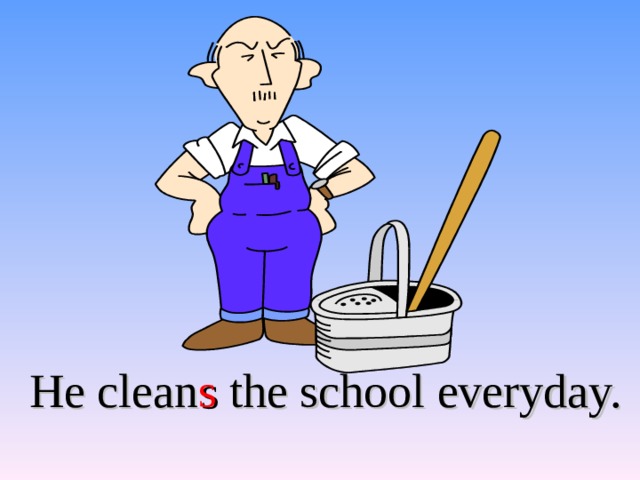
He clean s the school everyday.

They clean the streets everyday.

He wake s up early.

My friends like playing soccer.

Hakan like s playing soccer.

Tom and his family always smile.

Her mother often cr ies .

They love each other.

SUMMARY :
I
We
You
They
drive
He
She
It
drive s

Negative Sentence Form :
The Rule :
Don’t and doesn’t are
used in the negative form.
The form:
do / does
Subject
Verb
+
Obj .
not
+
+
+
We
do not
smoke
cigar
does not
eat
meat
Semra

BUT,
DON’T
FORGET!

Contractions
do not = do n’t
does not = does n’t
A Reminder
x
She doesn’t plays tennis everyday.
She doesn’t play tennis everyday.

CHART :
read newspaper.
I
We
You
They
play tennis.
don’t
like soccer.
drink alcohol .
speak French.
He
She
It
eat meat.
doesn’t
know Chinese.

Now,
Examples

He does n’t like working.

They do n’t like each other.
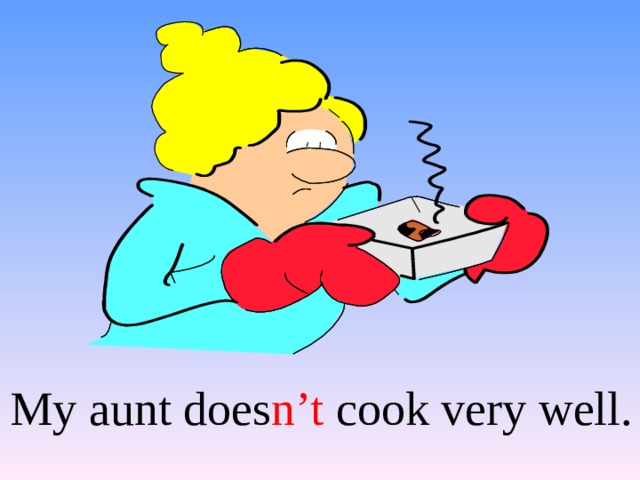
My aunt does n’t cook very well.

Interrogative sentence form :
The rule :
Do and does are used
in this form.
The Form:
?
+
+
Object
+
Subject
Do/does
Verb
Do
they
speak
English
Does
she
learn
Physics

CHART :
read newspaper ?
I
We
You
They
play tennis ?
Do
like soccer ?
drink alcohol ?
speak French ?
He
She
It
Does
eat meat ?
know Chinese ?

Now,
Examples

Do you swim
in the mornings?

Does he drink
alcohol?

Do they brush
their teeth?

WE ANSWER :
Q :
Do you swim in the mornings ?
Yes , I swim in the mornings.
(+) A :
No , I don’t swim in the mornings.
(-) A :
Q :
Does he drink alcohol?
(+) A :
Yes , he drinks alcohol.
No, he doesn’t drink alcohol.
(-) A :

Now ,
The Exercises:
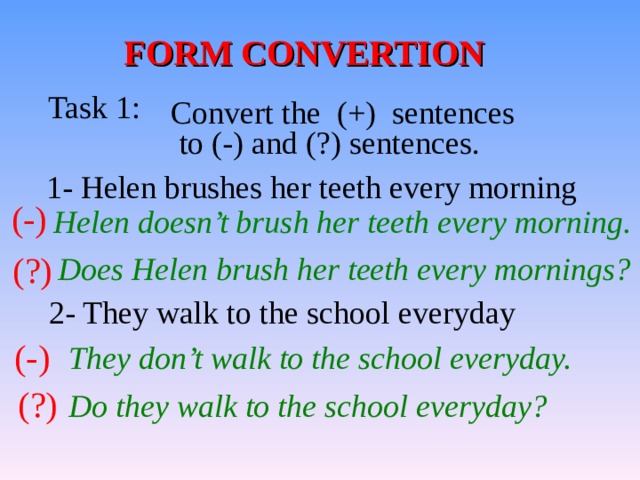
FORM CONVERTION
Task 1:
Convert the (+) sentences
to (-) and (?) sentences.
1- Helen brushes her teeth every morning
(-)
Helen doesn’t brush her teeth every morning.
(?)
Does Helen brush her teeth every mornings?
2- They walk to the school everyday
(-)
They don’t walk to the school everyday.
(?)
Do they walk to the school everyday?

3-His father smoke cigarette .
(-)
His father doesn’t smoke cigarette.
(?)
Does his father smoke cigarette ?
4- I do my homework everyday.
(-)
I don’t do my homework everyday.
(?)
Do you /I do your/my homework everyday?
5- My parents go for a walk every mornings.
(-)
They don’t go for a walk every mornings.
(?)
Do they go for a walk every mornings?




Вебинар для учителей
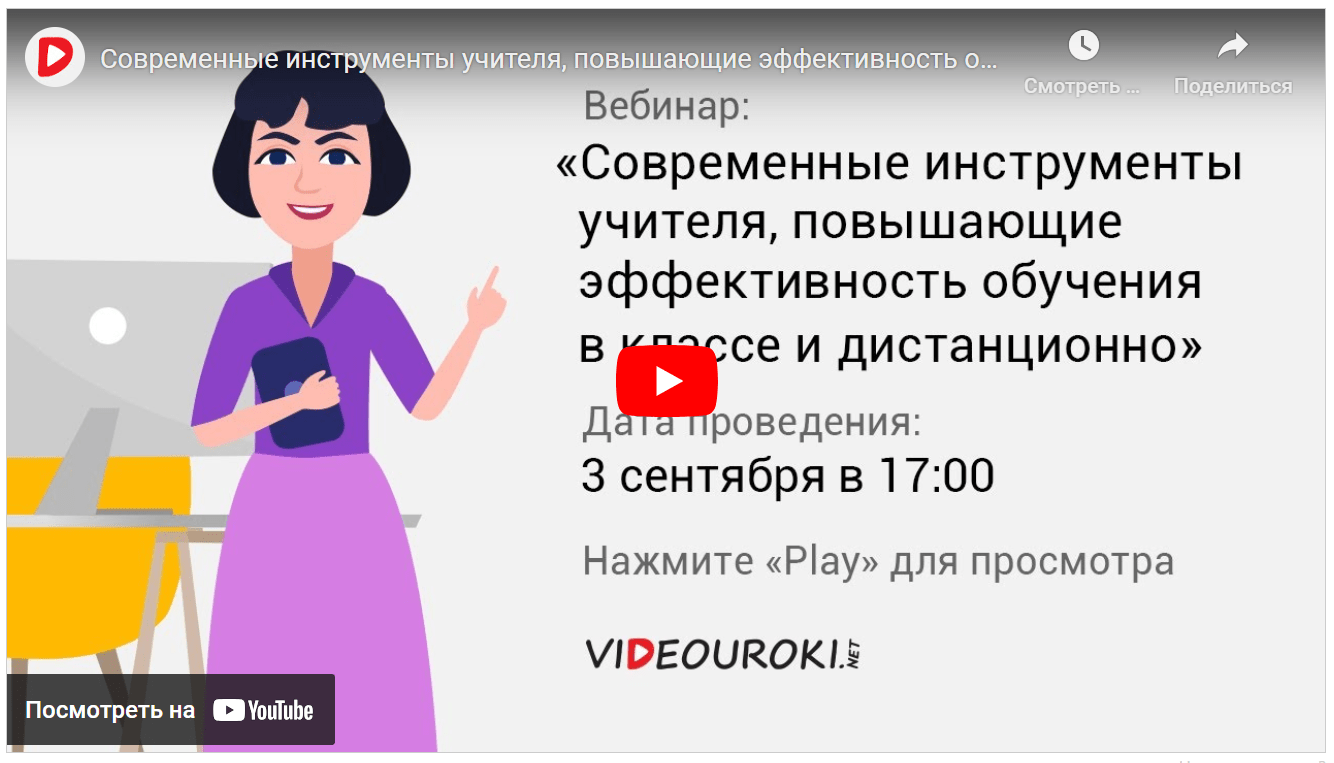
Свидетельство об участии БЕСПЛАТНО!