

Россия, Петрозаводск


СДЕЛАЙТЕ СВОИ УРОКИ ЕЩЁ ЭФФЕКТИВНЕЕ, А ЖИЗНЬ СВОБОДНЕЕ
Благодаря готовым учебным материалам для работы в классе и дистанционно
Скидки до 50 % на комплекты
только до
Готовые ключевые этапы урока всегда будут у вас под рукой
Организационный момент
Проверка знаний
Объяснение материала
Закрепление изученного
Итоги урока
Была в сети 29.03.2026 17:13

Павлова Юлия Александровна
учитель английского языка
29 лет
 212
212
 169 686
Местоположение
Специализация
Spotlight 8 Module 5c Infinitve&Gerund
Категория:
Английский язык
18.03.2026 19:21

Просмотр содержимого документа
«Spotlight 8 Module 5c Infinitve&Gerund»

The 14th of November Classwork
Gerund and infinitive

Infinitive and Gerund forms

Infinitive - неопределенная форма глагола

Infinitive - Инфинитив
«I'd like to sit down .» «Я бы хотел присесть ».
«Anna was happy to play the piano again.» «Анна была счастлива снова играть на пианино».
«We must see each other as soon as possible.» «Мы должны увидеться как можно быстрее».
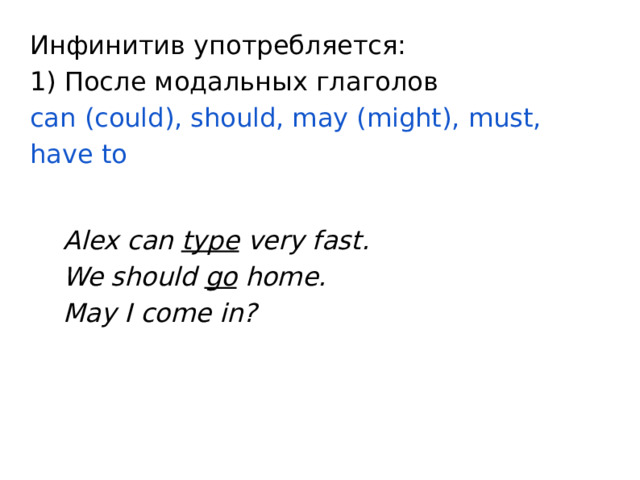
Инфинитив употребляется: 1) После модальных глаголов can (could), should, may (might), must, have to
Alex can type very fast.
We should go home.
May I come in?

2) После прилагательных (glad, happy, sad, lucky, eager, willing)
Jane is always willing to help .
You are lucky to win the first prize.
I’m glad to see you.

3) Для выражения цели
He uses his car to get home.
She went to the hairdresser’s to dye hair.

4) После определенных глаголов (decide, appear, expect, hope, promise, want, plan, refuse, help, manage etc.)
They are planning to go on holiday.
He refused to join the team.
I promise to clean the flat today.

Gerund

Gerund - герундий
Глагол отвечает на вопросы: «Что?», «Чем?», «Чего?» и т. д. Благодаря этому герундий можно использовать в качестве подлежащего или дополнения.
« Swimming is good exercise.» « Плавание — хорошее упражнение».
«I can’t imagine a holiday without swimming .» «Я не могу представить отдых без плавания ».
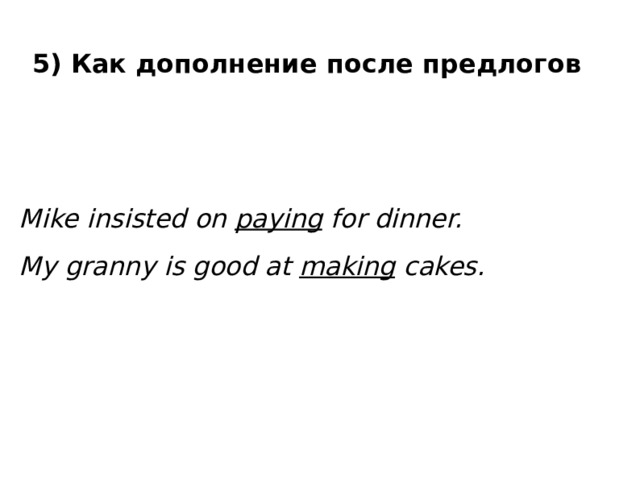
5) Как дополнение после предлогов
Mike insisted on paying for dinner.
My granny is good at making cakes.

6) Как подлежащее
Swimming is a good form of exercise.
Reading is important for studying.

7) После выражений (to be busy, it's no use, to have difficulty (in), it's (not) worth, can't help, look forward to etc.)
He was busy doing his homework right now.
I can't help laughing at his joke.

8) После определенных глаголов (admit, fancy, deny, start, continue, imagine, avoid, suggest, go(for activities), spend, waste, etc.)
He continued reading at night.
He spent 4 hours watching this film.
They suggested going to the mall.

Forget
- + infinitive
- Забыть, не помнить
- I forgot to phone Mr. Jones.
- + -ing form
- Забыть, не помнить о событии в прошлом
- I will never forget driving in that terrible storm.

Remember
- + infinitive
- Помнить, не забывать
- Ann always remembers to lock the door.
- + -ing form
- Помнить, не забывать о событии в прошлом
- I remember walking in the park with my dad.

Mean
- + infinitive
- Намереваться, собираться
- I meant to visit you, but I was too busy.
- + -ing form
- Подразумевать, предполагать
- Growing up means having new responsibilities.

Regret
- + infinitive
- + -ing form
- Сожалеть о чем-то.
- I regret being so rude with you.
- Сожалеть, что приходится сообщать неприятную новость. (чаще с Present Simple)
- I regret to inform you that your flight has been delayed.

Try
- + infinitive
- Стараться, делать все возможное
- She tried to carry this box, but it was too heavy.
- + -ing form
- Делать что-то в качестве эксперимента
- Try making a cake for your birthday.

Stop
- + infinitive
- Остановиться с целью что-то сделать.
- He stopped to tie his shoelaces.
- + -ing form
- Прекратить делать что-то.
- Stop eating so many sweets!
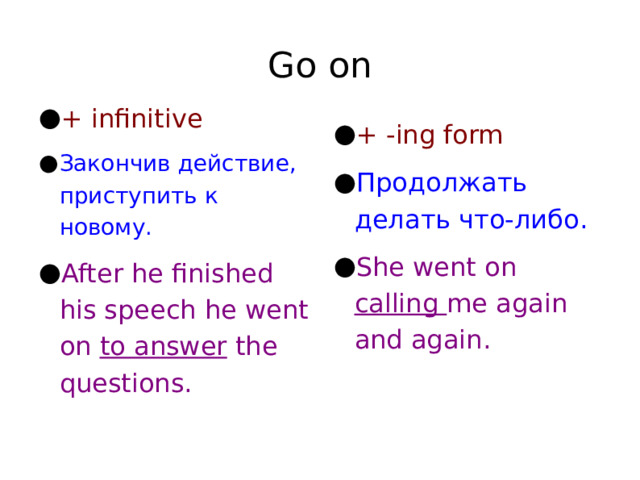
Go on
- + infinitive
- Закончив действие, приступить к новому.
- After he finished his speech he went on to answer the questions.
- + -ing form
- Продолжать делать что-либо.
- She went on calling me again and again.

Hate
- + infinitive
- Испытывать неудовольствие по поводу предстоящего действия.
- I hate to tell you that you are fired.
- + -ing form
- Не любить что-то делать.
- I hate waking up early in the morning.





Вебинар для учителей

Свидетельство об участии БЕСПЛАТНО!



