Россия, Стерлитамак

СДЕЛАЙТЕ СВОИ УРОКИ ЕЩЁ ЭФФЕКТИВНЕЕ, А ЖИЗНЬ СВОБОДНЕЕ
Благодаря готовым учебным материалам для работы в классе и дистанционно
Скидки до 50 % на комплекты
только до
Готовые ключевые этапы урока всегда будут у вас под рукой
Организационный момент
Проверка знаний
Объяснение материала
Закрепление изученного
Итоги урока
Была в сети 19.03.2025 19:05

Сироткина Марина Юрьевна
Учитель английского языка
52 года
 1 776
1 776
 39 386
Местоположение
Специализация
Страноведение .Queen Victoria
Категория:
Английский язык
27.11.2019 21:08

Просмотр содержимого документа
«Страноведение .Queen Victoria»
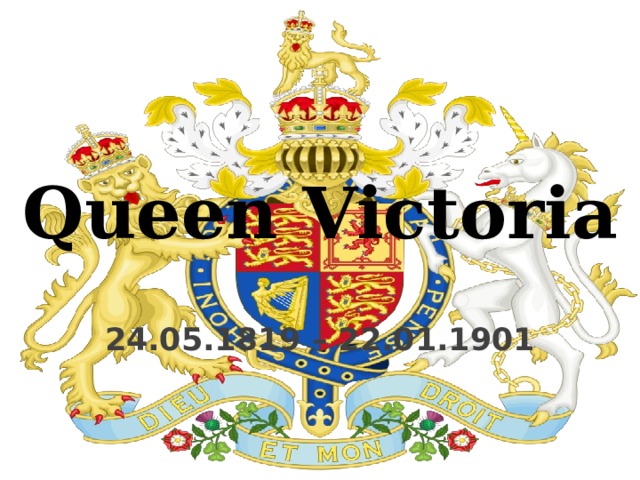
Queen Victoria
24.05.1819 – 22.01.1901
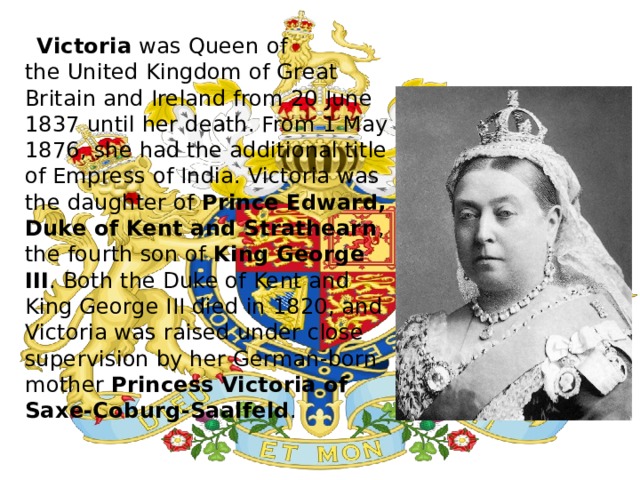
Victoria was Queen of the United Kingdom of Great Britain and Ireland from 20 June 1837 until her death. From 1 May 1876, she had the additional title of Empress of India. Victoria was the daughter of Prince Edward, Duke of Kent and Strathearn , the fourth son of King George III . Both the Duke of Kent and King George III died in 1820, and Victoria was raised under close supervision by her German-born mother Princess Victoria of Saxe-Coburg-Saalfeld .
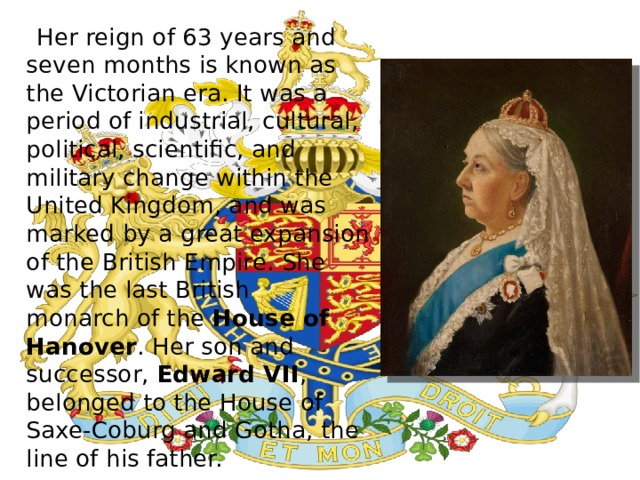
Her reign of 63 years and seven months is known as the Victorian era. It was a period of industrial, cultural, political, scientific, and military change within the United Kingdom, and was marked by a great expansion of the British Empire. She was the last British monarch of the House of Hanover . Her son and successor, Edward VII , belonged to the House of Saxe-Coburg and Gotha, the line of his father.
Birth and family
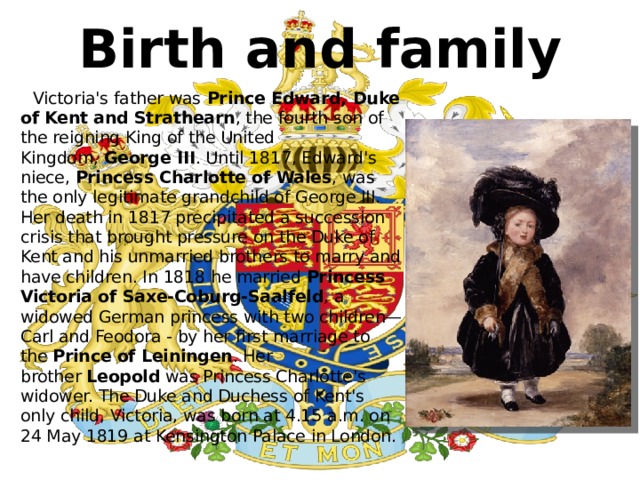
Victoria's father was Prince Edward, Duke of Kent and Strathearn , the fourth son of the reigning King of the United Kingdom, George III . Until 1817, Edward's niece, Princess Charlotte of Wales , was the only legitimate grandchild of George III. Her death in 1817 precipitated a succession crisis that brought pressure on the Duke of Kent and his unmarried brothers to marry and have children. In 1818 he married Princess Victoria of Saxe-Coburg-Saalfeld , a widowed German princess with two children—Carl and Feodora - by her first marriage to the Prince of Leiningen . Her brother Leopold was Princess Charlotte's widower. The Duke and Duchess of Kent's only child, Victoria, was born at 4.15 a.m. on 24 May 1819 at Kensington Palace in London.
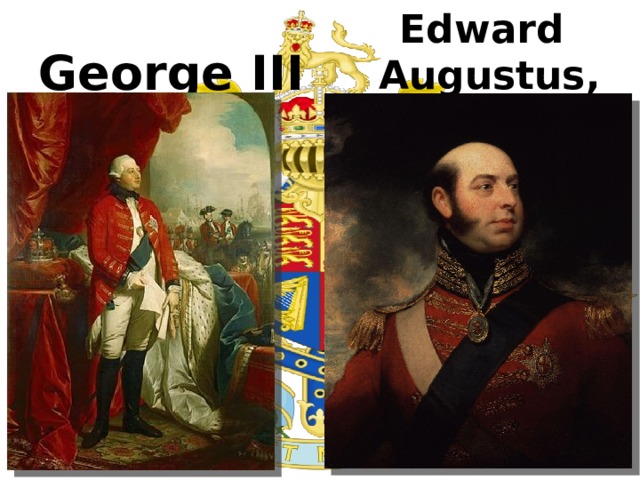
Edward Augustus, Duke of Kent
George III
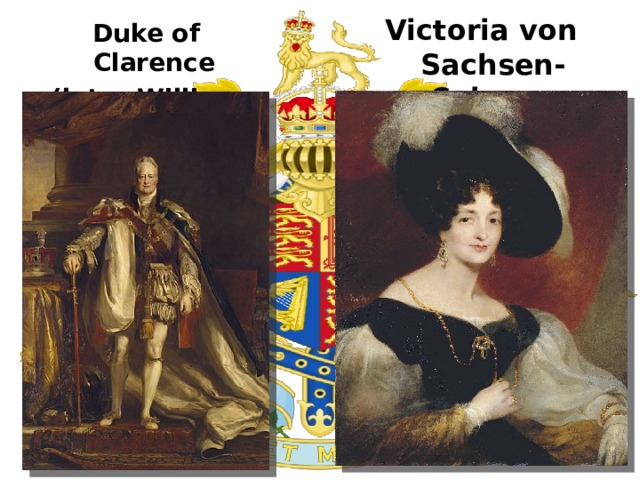
Victoria von Sachsen-Coburg-Saalfeld
Duke of Clarence
(later William IV)
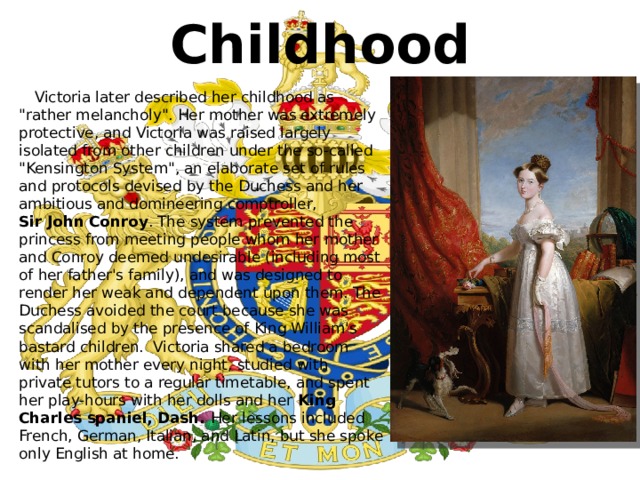
Childhood
Victoria later described her childhood as "rather melancholy". Her mother was extremely protective, and Victoria was raised largely isolated from other children under the so-called "Kensington System", an elaborate set of rules and protocols devised by the Duchess and her ambitious and domineering comptroller, Sir John Conroy . The system prevented the princess from meeting people whom her mother and Conroy deemed undesirable (including most of her father's family), and was designed to render her weak and dependent upon them. The Duchess avoided the court because she was scandalised by the presence of King William's bastard children. Victoria shared a bedroom with her mother every night, studied with private tutors to a regular timetable, and spent her play-hours with her dolls and her King Charles spaniel, Dash. Her lessons included French, German, Italian, and Latin, but she spoke only English at home.
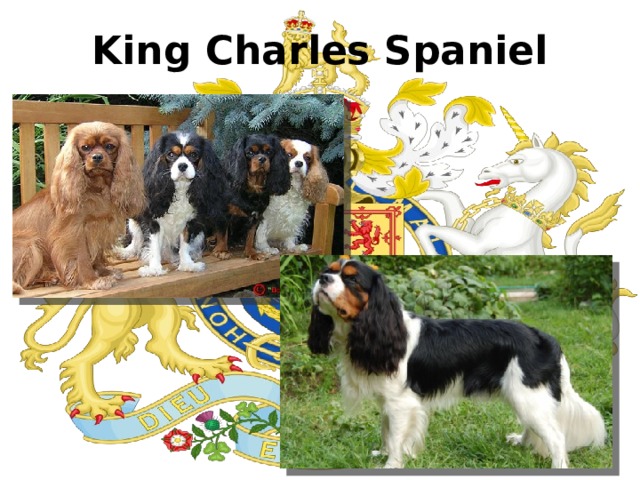
King Charles Spaniel
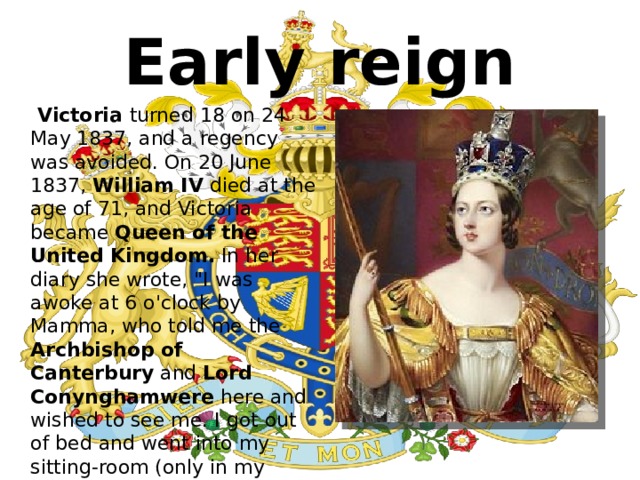
Early reign
Victoria turned 18 on 24 May 1837, and a regency was avoided. On 20 June 1837, William IV died at the age of 71, and Victoria became Queen of the United Kingdom. In her diary she wrote, "I was awoke at 6 o'clock by Mamma, who told me the Archbishop of Canterbury and Lord Conynghamwere here and wished to see me. I got out of bed and went into my sitting-room (only in my dressing gown) and alone, and saw them. Lord Conyngham then acquainted me that my poor Uncle, the King, was no more, and had expired at 12 minutes past 2 this morning, and consequently that I am Queen ."
Marriage
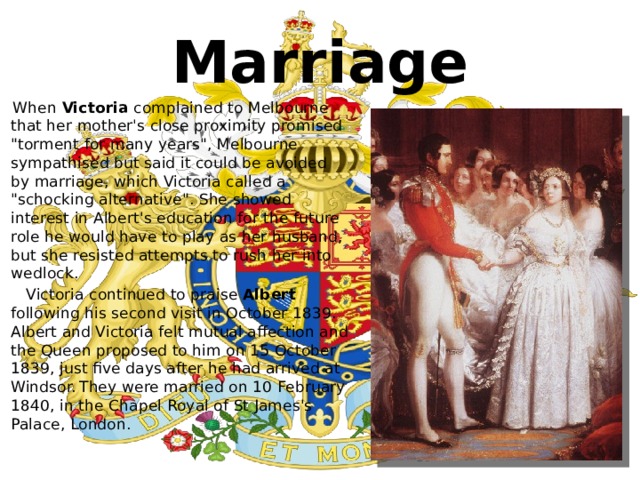
When Victoria complained to Melbourne that her mother's close proximity promised "torment for many years", Melbourne sympathised but said it could be avoided by marriage, which Victoria called a "schocking alternative". She showed interest in Albert's education for the future role he would have to play as her husband, but she resisted attempts to rush her into wedlock.
Victoria continued to praise Albert following his second visit in October 1839. Albert and Victoria felt mutual affection and the Queen proposed to him on 15 October 1839, just five days after he had arrived at Windsor. They were married on 10 February 1840, in the Chapel Royal of St James's Palace, London.
Children
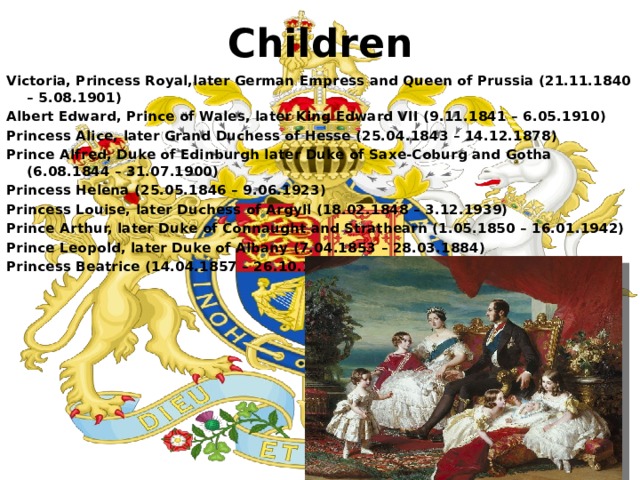
Victoria, Princess Royal,later German Empress and Queen of Prussia (21.11.1840 – 5.08.1901)
Albert Edward, Prince of Wales, later King Edward VII (9.11.1841 – 6.05.1910)
Princess Alice, later Grand Duchess of Hesse (25.04.1843 – 14.12.1878)
Prince Alfred, Duke of Edinburgh later Duke of Saxe-Coburg and Gotha (6.08.1844 – 31.07.1900)
Princess Helena (25.05.1846 – 9.06.1923)
Princess Louise, later Duchess of Argyll (18.02.1848 – 3.12.1939)
Prince Arthur, later Duke of Connaught and Strathearn (1.05.1850 – 16.01.1942)
Prince Leopold, later Duke of Albany (7.04.1853 – 28.03.1884)
Princess Beatrice (14.04.1857 – 26.10.1944)
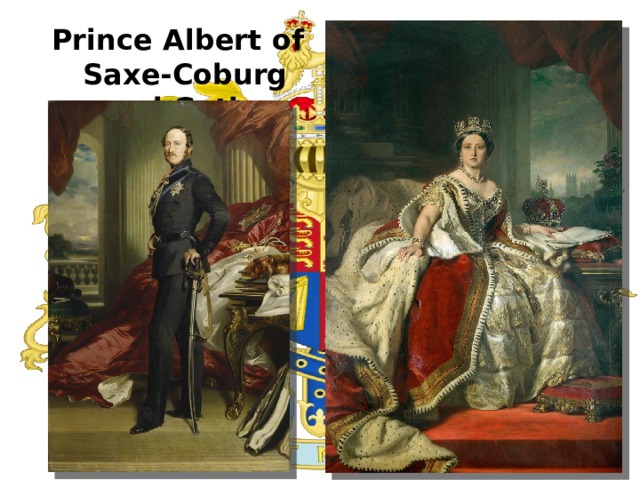
Prince Albert of Saxe-Coburg and Gotha

The Victoria Memorial in Kolkata, India
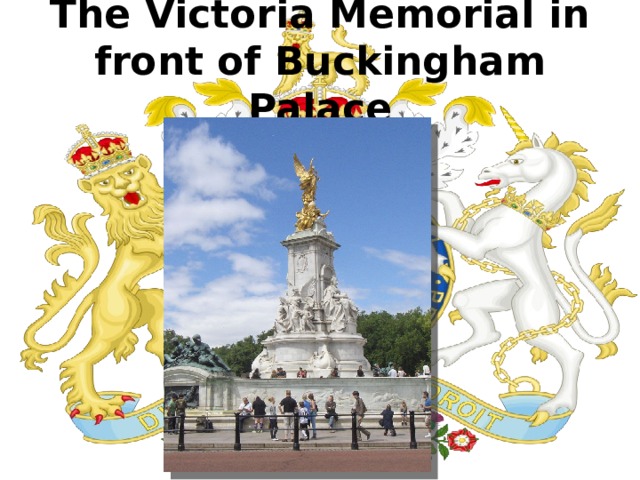
The Victoria Memorial in front of Buckingham Palace
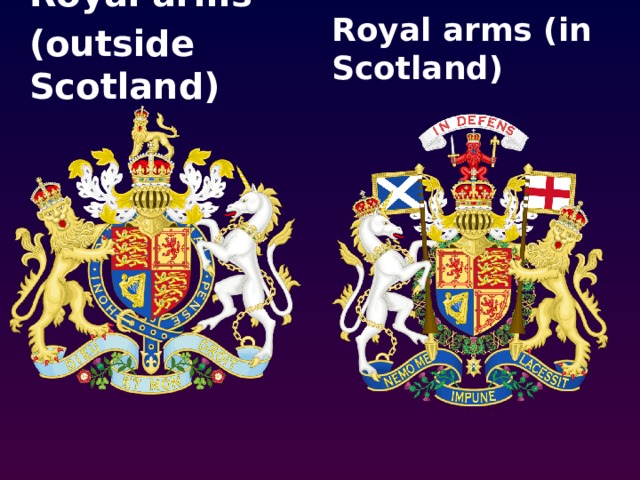
Royal arms
Royal arms (in Scotland)
(outside Scotland)
Thank you for attention

Вебинар для учителей
Свидетельство об участии БЕСПЛАТНО!