Россия, Екатеринбург

СДЕЛАЙТЕ СВОИ УРОКИ ЕЩЁ ЭФФЕКТИВНЕЕ, А ЖИЗНЬ СВОБОДНЕЕ
Благодаря готовым учебным материалам для работы в классе и дистанционно
Скидки до 50 % на комплекты
только до
Готовые ключевые этапы урока всегда будут у вас под рукой
Организационный момент
Проверка знаний
Объяснение материала
Закрепление изученного
Итоги урока
Была в сети 25.08.2025 13:05
Ильиных Татьяна Викторовна
учитель иностранных языков,высшая категория.
60 лет
 1 730
1 730
 40 460
Местоположение
Специализация
Презентация по теме "Past tenses"
Категория:
Английский язык
26.03.2020 11:58

Просмотр содержимого документа
«Презентация по теме "Past tenses"»
- The past tenses in English.
Past simple
Use this form to refer to a single action/state in the past. The time when it happened is either given in the sentence, or understood from the context:
- I got up early yesterday. (when? yesterday)
- Picasso was an outstanding artist. (when? understood: He isn’t alive anymore.)
You can also use it talk about past events in the order they happened:
- I got up, went to the bathroom and had a shower. (First, I got up, then I went to the bathroom, then I had a shower.)
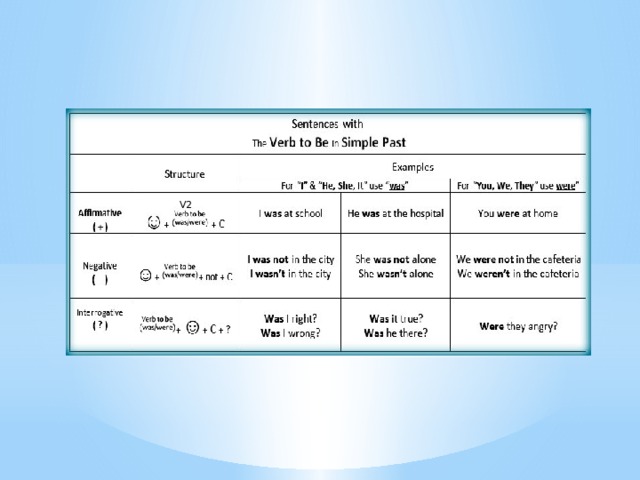
V2
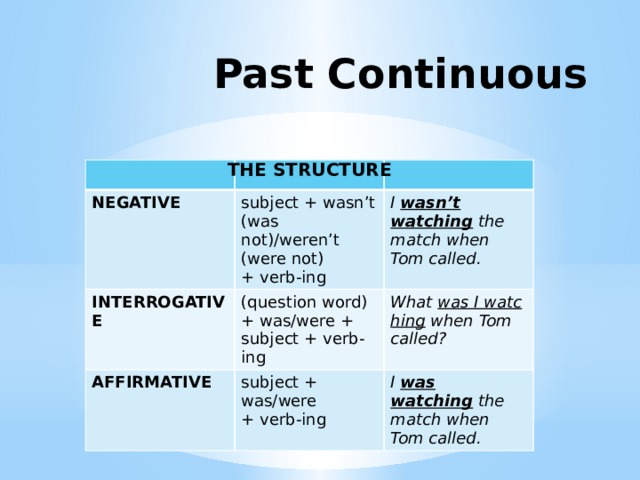
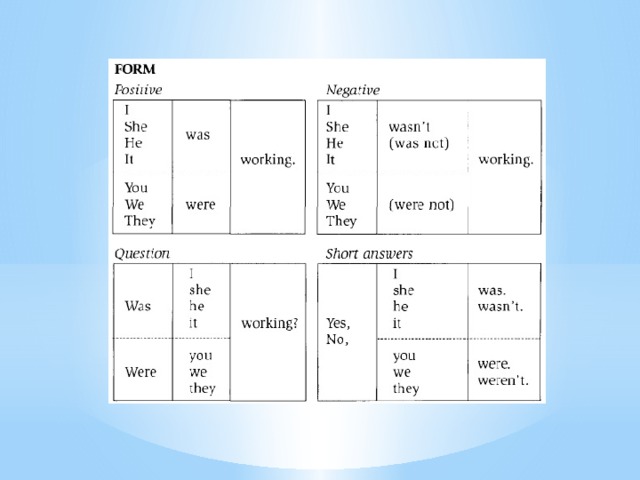
Past Continuous
THE STRUCTURE
NEGATIVE
subject + wasn’t (was not)/weren’t (were not) + verb-ing
INTERROGATIVE
(question word) + was/were + subject + verb-ing
I wasn’t watching the match when Tom called.
AFFIRMATIVE
What was I watching when Tom called?
subject + was/were + verb-ing
I was watching the match when Tom called.
WHEN TO USE?
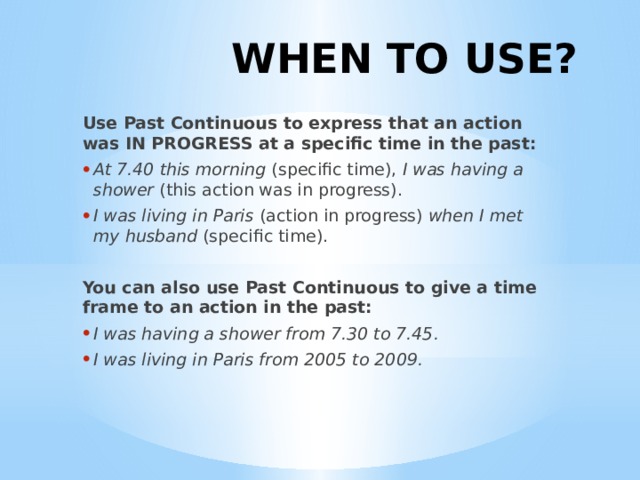
Use Past Continuous to express that an action was IN PROGRESS at a specific time in the past:
- At 7.40 this morning (specific time), I was having a shower (this action was in progress).
- I was living in Paris (action in progress) when I met my husband (specific time).
You can also use Past Continuous to give a time frame to an action in the past:
- I was having a shower from 7.30 to 7.45.
- I was living in Paris from 2005 to 2009.
WHEN TO USE?
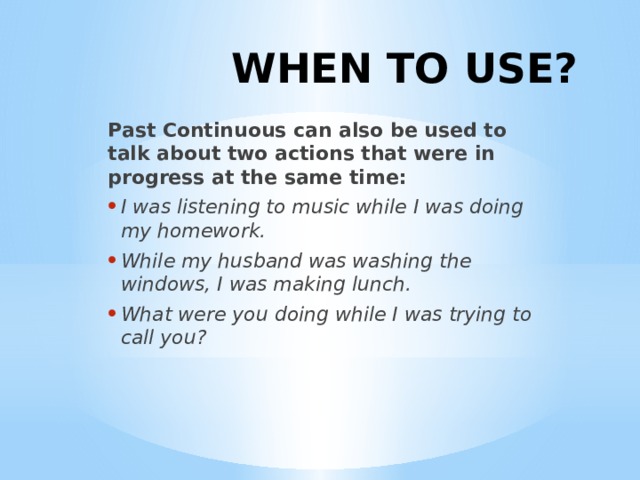
Past Continuous can also be used to talk about two actions that were in progress at the same time:
- I was listening to music while I was doing my homework.
- While my husband was washing the windows, I was making lunch.
- What were you doing while I was trying to call you?
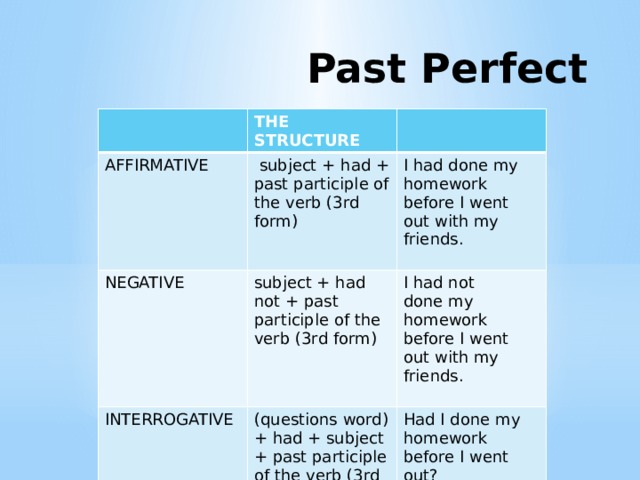
Past Perfect
THE STRUCTURE
AFFIRMATIVE
subject + had + past participle of the verb (3rd form)
NEGATIVE
subject + had not + past participle of the verb (3rd form)
I had done my homework before I went out with my friends.
INTERROGATIVE
I had not done my homework before I went out with my friends.
(questions word) + had + subject + past participle of the verb (3rd form)
Had I done my homework before I went out?
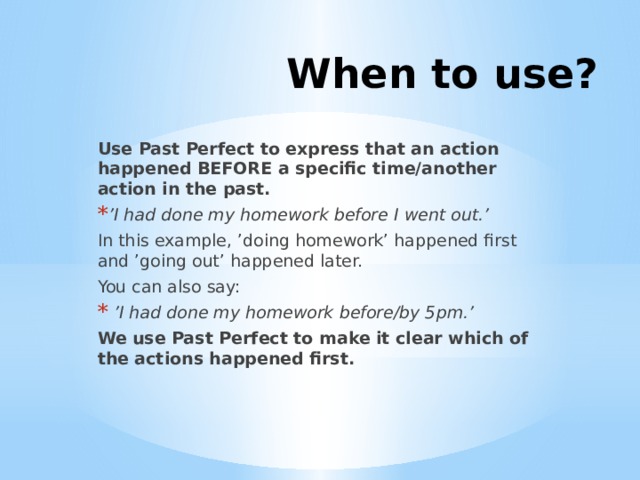
When to use?
Use Past Perfect to express that an action happened BEFORE a specific time/another action in the past.
- ’ I had done my homework before I went out.’
In this example, ’doing homework’ happened first and ’going out’ happened later.
You can also say:
- ’ I had done my homework before/by 5pm.’
We use Past Perfect to make it clear which of the actions happened first.
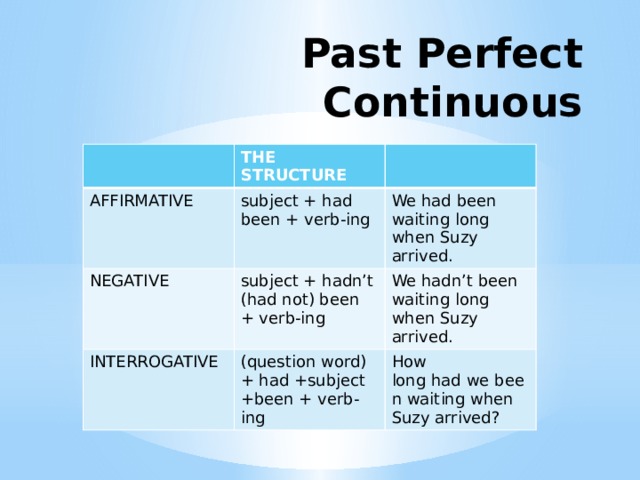
Past Perfect Continuous
THE STRUCTURE
AFFIRMATIVE
subject + had been + verb-ing
NEGATIVE
subject + hadn’t (had not) been + verb-ing
We had been waiting long when Suzy arrived.
INTERROGATIVE
We hadn’t been waiting long when Suzy arrived.
(question word) + had +subject +been + verb-ing
How long had we been waiting when Suzy arrived?
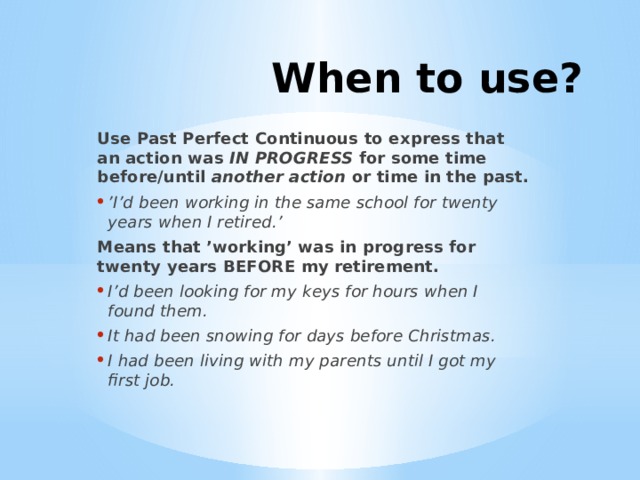
When to use?
Use Past Perfect Continuous to express that an action was IN PROGRESS for some time before/until another action or time in the past.
- ’ I’d been working in the same school for twenty years when I retired.’
Means that ’working’ was in progress for twenty years BEFORE my retirement.
- I’d been looking for my keys for hours when I found them.
- It had been snowing for days before Christmas.
- I had been living with my parents until I got my first job.
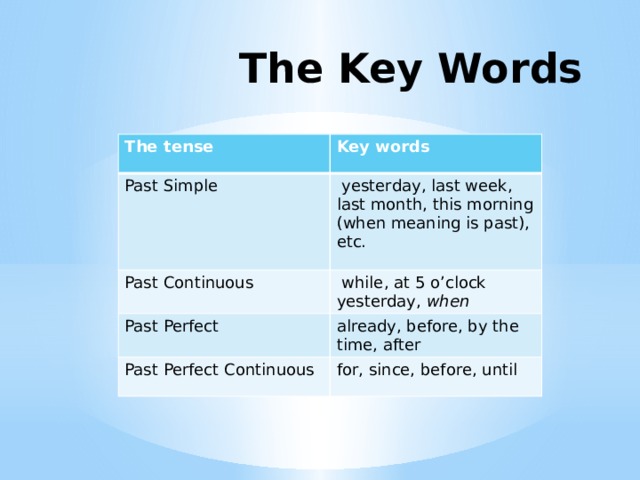
The Key Words
The tense
Key words
Past Simple
yesterday, last week, last month, this morning (when meaning is past), etc.
Past Continuous
while, at 5 o’clock yesterday, when
Past Perfect
already, before, by the time, after
Past Perfect Continuous
for, since, before, until
Вебинар для учителей

Свидетельство об участии БЕСПЛАТНО!