Россия, Ейск

СДЕЛАЙТЕ СВОИ УРОКИ ЕЩЁ ЭФФЕКТИВНЕЕ, А ЖИЗНЬ СВОБОДНЕЕ
Благодаря готовым учебным материалам для работы в классе и дистанционно
Скидки до 50 % на комплекты
только до
Готовые ключевые этапы урока всегда будут у вас под рукой
Организационный момент
Проверка знаний
Объяснение материала
Закрепление изученного
Итоги урока
Была в сети 13.04.2026 15:58

Толок Дарья Дмитриевна
Преподаватель Английского языка
36 лет
 1 279
1 279
 53 651
Местоположение
Специализация
The healthcare system in Russia
Категория:
Английский язык
20.06.2024 12:11

Просмотр содержимого документа
«The healthcare system in Russia»
The healthcare system in Russia
foreword
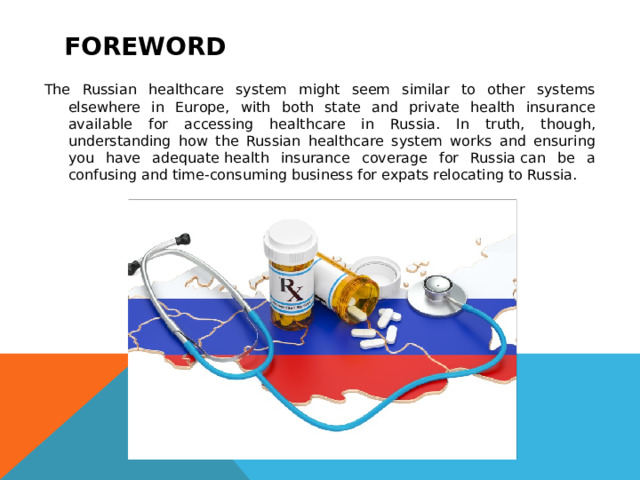
The Russian healthcare system might seem similar to other systems elsewhere in Europe, with both state and private health insurance available for accessing healthcare in Russia. In truth, though, understanding how the Russian healthcare system works and ensuring you have adequate health insurance coverage for Russia can be a confusing and time-consuming business for expats relocating to Russia.
Overview of healthcare in Russia
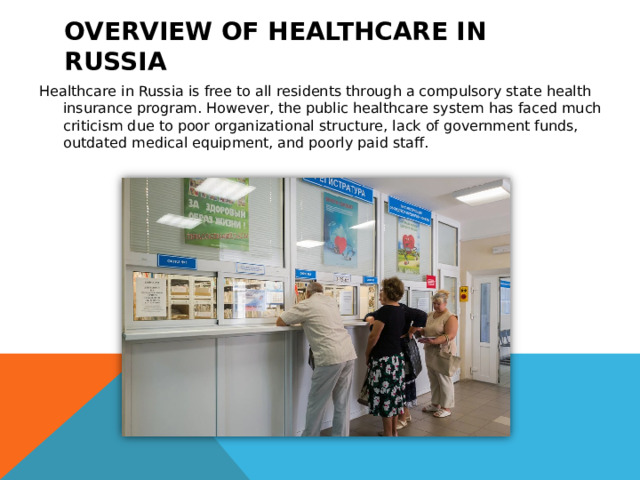
Healthcare in Russia is free to all residents through a compulsory state health insurance program. However, the public healthcare system has faced much criticism due to poor organizational structure, lack of government funds, outdated medical equipment, and poorly paid staff.
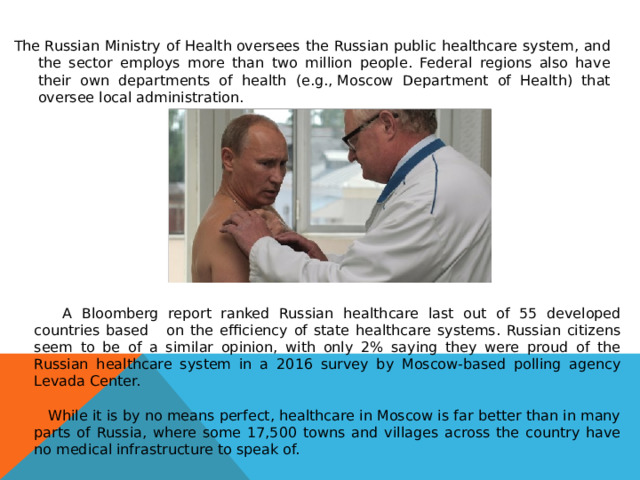
The Russian Ministry of Health oversees the Russian public healthcare system, and the sector employs more than two million people. Federal regions also have their own departments of health (e.g., Moscow Department of Health) that oversee local administration.
A Bloomberg report ranked Russian healthcare last out of 55 developed countries based on the efficiency of state healthcare systems. Russian citizens seem to be of a similar opinion, with only 2% saying they were proud of the Russian healthcare system in a 2016 survey by Moscow-based polling agency Levada Center.
While it is by no means perfect, healthcare in Moscow is far better than in many parts of Russia, where some 17,500 towns and villages across the country have no medical infrastructure to speak of.
Costs of healthcare in Russia
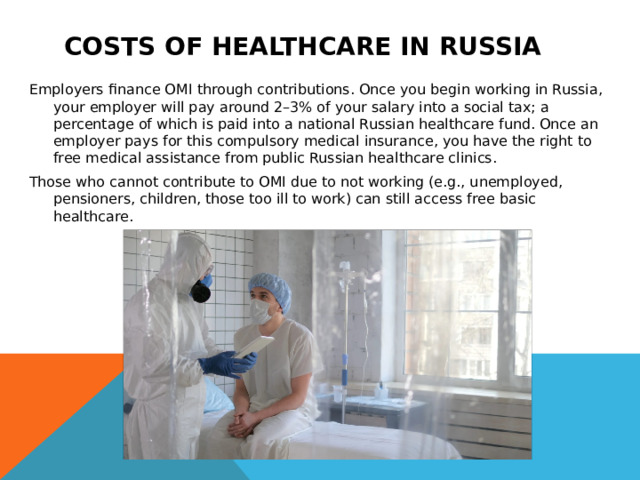
Employers finance OMI through contributions. Once you begin working in Russia, your employer will pay around 2–3% of your salary into a social tax; a percentage of which is paid into a national Russian healthcare fund. Once an employer pays for this compulsory medical insurance, you have the right to free medical assistance from public Russian healthcare clinics.
Those who cannot contribute to OMI due to not working (e.g., unemployed, pensioners, children, those too ill to work) can still access free basic healthcare.

Private healthcare in Russia
The private healthcare sector in Russia has grown over the past couple of decades, especially in the bigger cities such as Moscow and St Petersburg. To access private treatment, you will need to take out a private health insurance plan.
There are many private insurers operating in Russia that will cover treatments such as dental care, specialist care, and mental health treatments. You will usually need to pay fees upfront and claim reimbursement.
Doctors and specialists in Russia
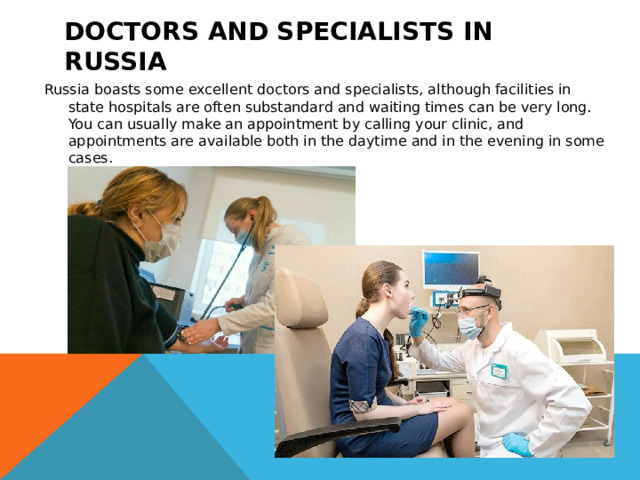
Russia boasts some excellent doctors and specialists, although facilities in state hospitals are often substandard and waiting times can be very long. You can usually make an appointment by calling your clinic, and appointments are available both in the daytime and in the evening in some cases.
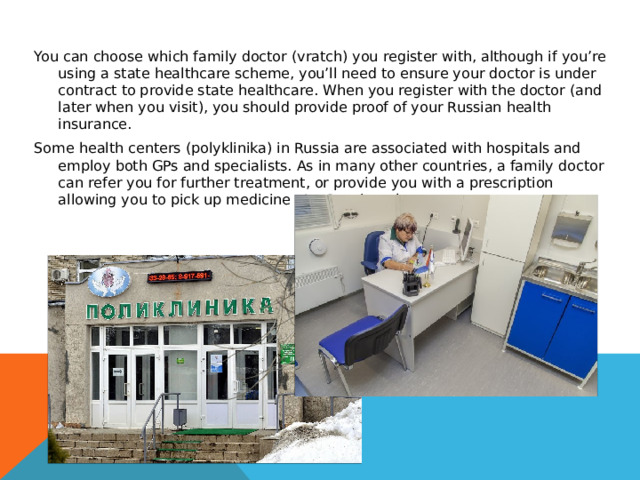
You can choose which family doctor (vratch) you register with, although if you’re using a state healthcare scheme, you’ll need to ensure your doctor is under contract to provide state healthcare. When you register with the doctor (and later when you visit), you should provide proof of your Russian health insurance.
Some health centers (polyklinika) in Russia are associated with hospitals and employ both GPs and specialists. As in many other countries, a family doctor can refer you for further treatment, or provide you with a prescription allowing you to pick up medicine at a Russian pharmacy.
Hospitals in Russia
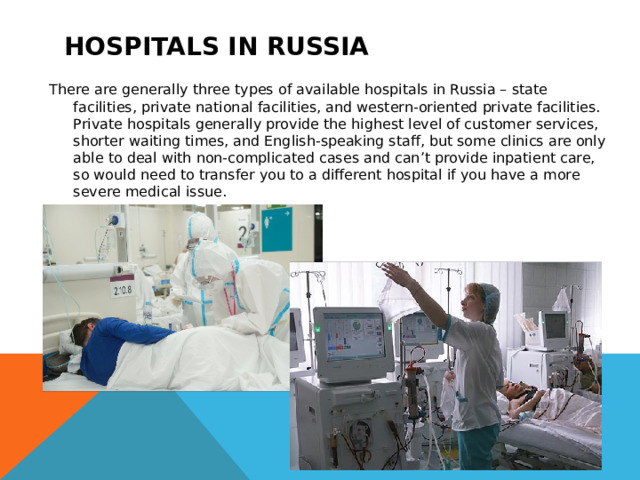
There are generally three types of available hospitals in Russia – state facilities, private national facilities, and western-oriented private facilities. Private hospitals generally provide the highest level of customer services, shorter waiting times, and English-speaking staff, but some clinics are only able to deal with non-complicated cases and can’t provide inpatient care, so would need to transfer you to a different hospital if you have a more severe medical issue.
Mental healthcare in Russia
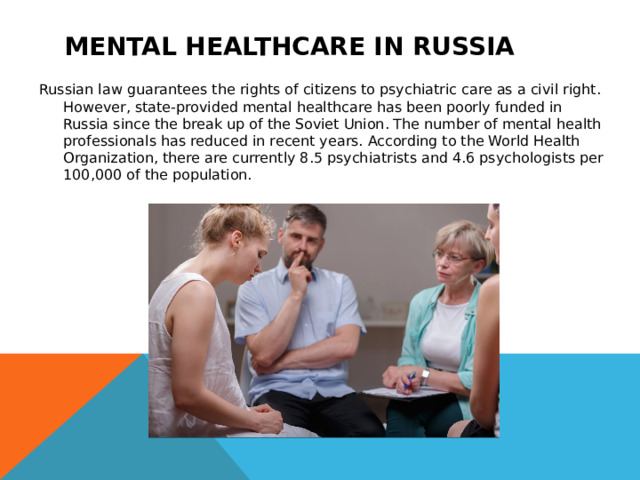
Russian law guarantees the rights of citizens to psychiatric care as a civil right. However, state-provided mental healthcare has been poorly funded in Russia since the break up of the Soviet Union. The number of mental health professionals has reduced in recent years. According to the World Health Organization, there are currently 8.5 psychiatrists and 4.6 psychologists per 100,000 of the population.
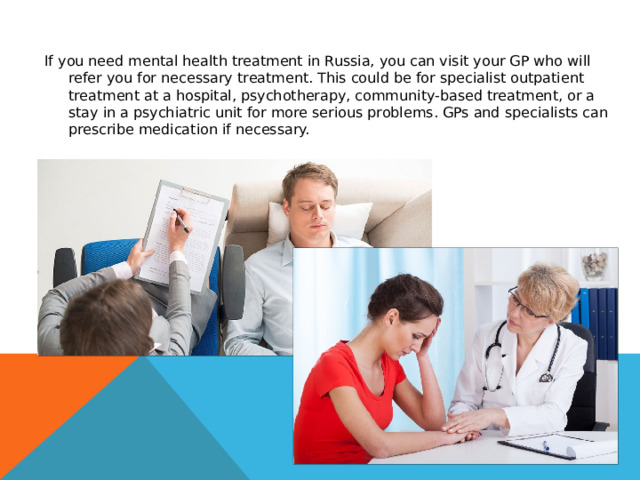
If you need mental health treatment in Russia, you can visit your GP who will refer you for necessary treatment. This could be for specialist outpatient treatment at a hospital, psychotherapy, community-based treatment, or a stay in a psychiatric unit for more serious problems. GPs and specialists can prescribe medication if necessary.
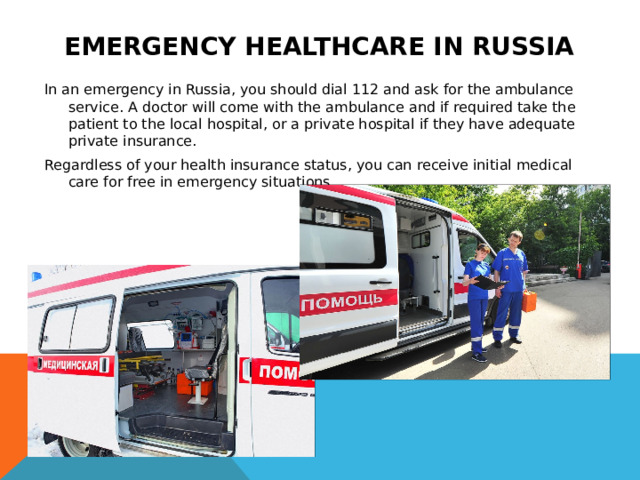
Emergency healthcare in Russia
In an emergency in Russia, you should dial 112 and ask for the ambulance service. A doctor will come with the ambulance and if required take the patient to the local hospital, or a private hospital if they have adequate private insurance.
Regardless of your health insurance status, you can receive initial medical care for free in emergency situations.
conclusion
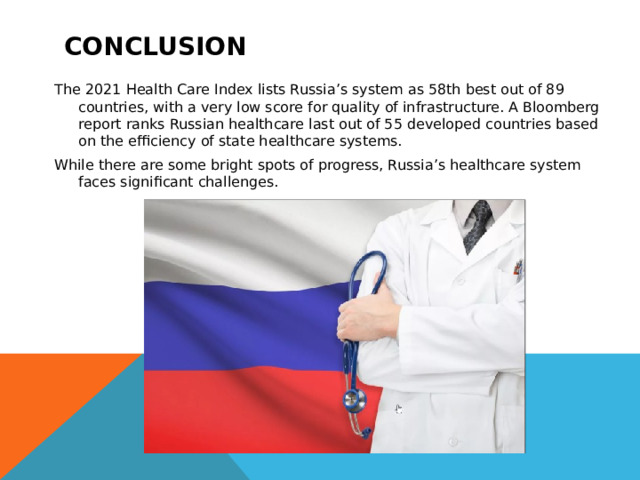
The 2021 Health Care Index lists Russia’s system as 58th best out of 89 countries, with a very low score for quality of infrastructure. A Bloomberg report ranks Russian healthcare last out of 55 developed countries based on the efficiency of state healthcare systems.
While there are some bright spots of progress, Russia’s healthcare system faces significant challenges.

Вебинар для учителей

Свидетельство об участии БЕСПЛАТНО!