Россия, Ейск

СДЕЛАЙТЕ СВОИ УРОКИ ЕЩЁ ЭФФЕКТИВНЕЕ, А ЖИЗНЬ СВОБОДНЕЕ
Благодаря готовым учебным материалам для работы в классе и дистанционно
Скидки до 50 % на комплекты
только до
Готовые ключевые этапы урока всегда будут у вас под рукой
Организационный момент
Проверка знаний
Объяснение материала
Закрепление изученного
Итоги урока
Была в сети 14.06.2026 15:52

Толок Дарья Дмитриевна
Преподаватель Английского языка
36 лет
 1 437
1 437
 48 616
Местоположение
Специализация
Tuberculosis disease
Категория:
Английский язык
09.06.2026 22:54

Просмотр содержимого документа
«Tuberculosis disease»

Tuberculosis disease

Tuberculosis disease
Tuberculosis (TB) is an infection from a type of bacteria call Mycobacteria tuberculosis. It is different than many common bacteria as it is very slow growing and may not cause symptoms for a long time after a person gets infected.
Tuberculosis disease is a leading cause of infectious disease morbidity and mortality worldwide

Individuals infected with Mycobacterium tuberculosis may develop symptoms and signs of disease or may have no clinical evidence of disease (latent tuberculosis infection).

Transmission of tuberculosis bacteria Mtb is transmitted from person to person via the airborne route. Several factors determine the probability of bacteria transmission:
host susceptibility of the contact
duration of exposure of the contact to the source patient
infectiousness of the source patient

- A body mass index (BMI) below 18.5 increases the risk by 2 to 3 times.
- Smoking more than 20 cigarettes a day increases the risk of TB by two to four times
- Infants and young children have immature immune systems, making them more susceptible to severe forms of TB.
- Polluted air and overcrowding increase the risk of tuberculosis infection.
- Previous untreated or inadequately treated TB
Pollutions
BMI
Smoking
Treated
Age

Signs and symptoms of TB disease
Symptoms are usually mild and tend to present over a period of weeks, months, or sometimes years. Classic symptoms of TB in the lungs include:
- Cough lasting more than three weeks
- Unexplained weight loss
- Low-grade fever
- Night sweats
Although these symptoms are initially mild, without out treatment they usually get much worse.

TB diagnosis
Diagnosis of the disease is carried out using two main methods: the Tuberculin Skin Test (TST), also known as the Mantoux test, or a blood test called an Interferon Gamma Release Assay (IGRA). The skin test is interpreted by a medical provider 2–3 days later; a positive result appears as a red and raised area.
TB disease is often diagnosed by microscopic examination of three separate samples of coughed-up sputum, but this test is not always positive as there may be only a small number of bacteria.
In addition to these tests, chest X-ray and CT chest imaging are performed to evaluate for any lung abnormalities. While TB usually occurs in the lungs it can infect any organ in the body.
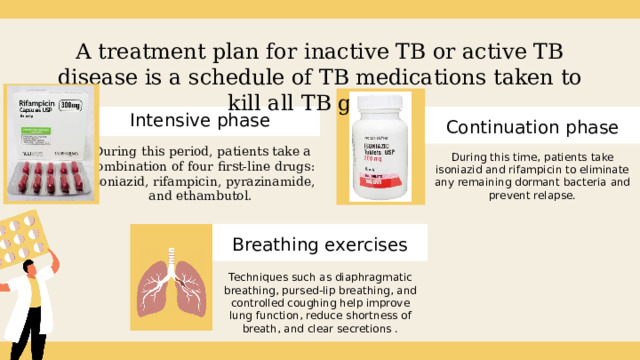
A treatment plan for inactive TB or active TB disease is a schedule of TB medications taken to kill all TB germs.
Intensive phase
Continuation phase
During this period, patients take a combination of four first-line drugs: isoniazid, rifampicin, pyrazinamide, and ethambutol.
During this time, patients take isoniazid and rifampicin to eliminate any remaining dormant bacteria and prevent relapse.
Breathing exercises
Techniques such as diaphragmatic breathing, pursed-lip breathing, and controlled coughing help improve lung function, reduce shortness of breath, and clear secretions .

Tuberculosis prevention
Prevention of tuberculosis includes respiratory hygiene, infection control, and medical treatment. Covering the mouth and nose when coughing reduces the spread of airborne bacteria. For active TB, wearing a mask and limiting contact is necessary until a healthcare provider confirms the end of contagiousness.
Vaccination with BCG is another important preventive measure, especially for children
Early diagnosis and treatment are essential-treatment stops contagiousness and prevents further transmission.
Вебинар для учителей

Свидетельство об участии БЕСПЛАТНО!