Россия, Архангельск


СДЕЛАЙТЕ СВОИ УРОКИ ЕЩЁ ЭФФЕКТИВНЕЕ, А ЖИЗНЬ СВОБОДНЕЕ
Благодаря готовым учебным материалам для работы в классе и дистанционно
Скидки до 50 % на комплекты
только до
Готовые ключевые этапы урока всегда будут у вас под рукой
Организационный момент
Проверка знаний
Объяснение материала
Закрепление изученного
Итоги урока

Была в сети 27.04.2026 10:35

Пантелеева Людмила Геннадьевна
Преподаватель дисциплин профессионального цикла и английского языка
 55 963
 377
377 
Местоположение
Специализация
Упражнения по теме Scientific and technical progress of the XXI century / Научно-технический прогресс XXI века
Категория:
Английский язык
04.01.2021 19:42

Просмотр содержимого документа
«Упражнения по теме Scientific and technical progress of the XXI century / Научно-технический прогресс XXI века»
Scientific and technical progress of the XXI century
1. Read the text and do some exercises.
Technology means the use of people’s inventions and discoveries to satisfy their needs. Since people appeared on the Earth, they had to get food, clothes and shelter. Through the ages people invented tools, machines and materials to make work easier.
 Nowadays, when people speak of technology, they generally mean industrial technology. Industrial technology began about 200 years ago with the development of the steam engine, the growth of factories, and the mass production of goods. It influenced different aspects of people’s lives. The development of the car influenced where people lived and worked. Radio and television changed their leisure time. The telephone revolutionized communication.
Science contributed much to modern technology. Science attempts to explain how and why things happen. Technology makes things happen. But not all technology is based on science. For example, people made different objects from iron for centuries before they learnt the structure of the metal. But some modern technologies, such as nuclear power production and space travel, depend heavily on science.
On the Internet, you can read dozens of articles about 10 / 15 / 20 of the most significant discoveries made in various fields of science and technology in the 21st century. We live in an era when scientific and technological progress has reached an incredible speed. If earlier it took decades for the emergence and development of technologies, now everything happens in a matter of years.
 Think back to the first mobile phones or Walkmans – now they seem as outdated as Bell’s first phone and gramophones. But only 30 years have passed since their appearance! We can no longer imagine ourselves without a smartphone in our hands, a device that replaces our phone, computer, camera, player, calculator, clock and much more. But such a device was difficult to imagine 10 years ago! When Skype first appeared, it felt like an unprecedented innovation. Videophones have been the subject of the futuristic dreams of science fiction writers. Nowadays, every messenger and social network has the ability to communicate via video communication.
It can be an endless list. Therefore, let’s dwell on the main directions of science and technology progress, which are now developing especially actively.
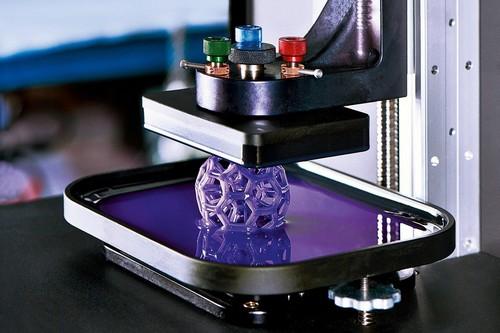
1. Additive Technologies or Additive Manufacturing (AM) (from the word to add) is a layer-by-layer build-up and synthesis of an object using 3D computer technologies. The invention belongs to Charles Hull, who in 1986 designed the first stereolithographic three-dimensional printer. What does the additive process of layer-by-layer model creation mean and how does it work? In modern industry, these are several different processes, as a result of which a 3d object is modeled:
UV irradiation;
extrusion;
spraying;
fusion;
lamination.
Materials used in AM:
wax;
gypsum powder;
liquid photopolymers;
metal powders;
various kinds of polyamides;
polystyrene.
Application of AM.
Technological progress contributes to the production of many useful things for everyday life, health and safety of a person, for example, AM in aircraft construction help to create more highly economical and lighter in weight aircraft, while its aerodynamic properties are fully preserved. This became possible as a result of the application of the principles of the structure of the bones of the bird’s wing in the design of aircraft wings. Other areas of application of AM:
construction;
agricultural industry;
mechanical engineering;
shipbuilding;
astronautics;
medicine and pharmacology.
Dynamically developing at a fast pace, additive 3D printing technologies are used in progressive industries. There are several innovative types of additive technologies:
FDM (Fused deposition modeling) - a product is formed layer by layer from a molten plastic filament.
CJP (ColorJet printing) is the only 3D full color printing in the world with the principle of gluing gypsum powder.
SLS (Selective Laser Sintering) is a laser baking technology that produces particularly durable objects of any size.
MJM (MultiJet Modeling) multi-jet 3D modeling using photopolymers and wax.
SLA (Laser Stereolithography) - with the help of a laser, layer-by-layer solidification of a liquid polymer occurs.
In a pandemic of COVID-19, the use of 3-D technologies has shown its high efficiency compared to traditional subtractive technologies. When medical equipment factories could no longer cope with the increased production of facemasks, ventilator tubes, etc., ordinary owners of household 3D printers came to the rescue. With the help of social networks, they united into a kind of “factories” that worked on the orders of hospitals, saving the lives of thousands of people. And this is just one example of how such complex technologies can make our life easier.
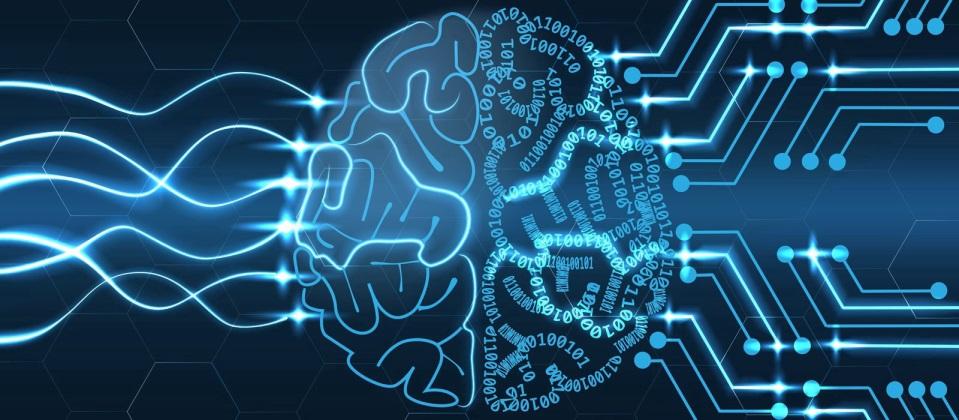 2. Neural networks are self-learning models that mimic the activity of the human brain. They are able not only to perform a once programmed sequence of actions on predetermined data, but also to analyze the newly received information themselves. The main advantage of neural networks is the ability to construct nonlinear dependencies that more accurately describe datasets in comparison with linear statistical methods. This handler allows you to set the structure of the neural network, determine its parameters and train using one of the algorithms available in the system. The result will be a neural network emulator that can be used to solve problems of forecasting, classification, searching for hidden patterns, data compression, and many other applications.
A neural network consists of the simplest computational elements - artificial neurons, interconnected. Each neuron has several input and one output connections. During the operation of the neural network, the values of the input variables are transmitted through interneuronal connections and multiplied by weight coefficients, the obtained values are weightedly summed up in the neuron. In neural networks, neurons are combined into layers, while the outputs of the neurons of the previous layer are the inputs of the neurons of the next layer. In each layer, neurons perform parallel data processing.
Application examples
Assessment of the client’s creditworthiness when issuing loans. Scoring cards, application and behavioral scoring models are built on the basis of the algorithm. This allows you to pursue the selected credit policy and reduce the level of overdue debt.
Medical diagnostics. The algorithm, processing the accumulated data of clinical trials, simulates complex relationships between symptoms and diseases. This allows you to make the correct diagnosis, monitor the patient's condition, evaluate the effectiveness of treatment ...
Forecast of account balances. Using information about daily balances on clients' accounts, the processor will transform it into time series and forecast the balance for the future. This makes it possible to manage the bank's liquidity.
Analysis of customer migration - moving customers between suppliers of goods and services. The algorithm allows you to assess the likelihood of a client leaving. Based on the results of such research, you can develop methods of working with customers to increase their loyalty to the company.
But perhaps the most useful and frequently used neural network-based service is online translators. For example, Google started using neural machine translation instead of traditional statistical translation back in 2012. Yandex and Promt have been using mixed translation technology since 2015. The use of a self-learning neural network in translating texts has significantly improved the quality of translation. Also, online translation of photos (which you probably use now when reading this text, my dear students) and even automatic creation of a translation of a sounding speech in the form of subtitles with a split second delay has become available!
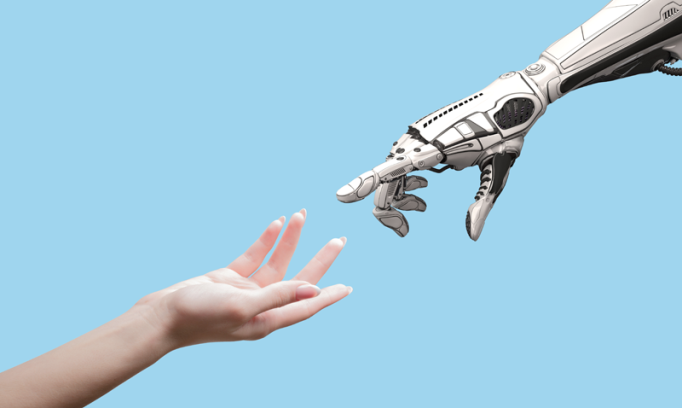 3. What do you associate with the concept of robotics? Agree, the imagination draws something, humanoid, with mechanical arms and legs, or, arachnid. In short, the idea of robots for many is rather narrow and one-sided. In fact, in the modern world, robots are quite in demand. They are used in completely different areas of life, which many may not even know about.
The medicine
In the most amazing way, robots save human lives. You might not guess, but modern limb prostheses are directly related to robotics. Immovable artificial hands are in the distant past, modern prostheses are able to move fingers. Their control is directly related to the electrical impulses transmitted by the body. However, artificial limbs are not the only merit of robots in medicine. The most progressive specimens are able to carry out high-tech operations!
Space
Probably, no one will have any doubts that space is like intended for robots. Indeed, if you look at the history of space exploration, you can see that most of the space exploration fell on the shoulders of robots. The Moon Rover, Mars Rover and Robot Avatar are the most famous of the space robots. In fact, there are a lot of their varieties, all of them are designed to work in space and perform actions that would be unbearable or extremely dangerous for a person.
Security systems
Robotic systems perform well in the field of security. These robots are the first to detect fire situations and successfully prevent them. Modern military exercises are as close as possible to the conditions of reality, thanks to robots that imitate the enemy. Robots for military exercises are not stylishly designed, but they mimic human impulses and habits quite well. Also, robots are capable of long-term tracking of objects that are suspicious of law enforcement agencies.
Robots are perfectly applicable in everyday life. The most famous of them are the robot vacuum cleaner and the lawn mower. Also, you can find robots specially designed to perform more complex everyday tasks.
Entertainment
And of course, no one canceled robots designed to bring joy to people, entertaining them with their skills. For the most part, such robots represent the world of children's toys: all kinds of singing and dancing animals, interactive toys, radio-controlled cars and helicopters. However, robots for entertaining adults differ from children's robots, perhaps in size.
Of course, these three areas do not exhaust the list of technical innovations that have appeared in the 21st century. One could talk about the use of stem cells in medicine, about the sequencing of the human genome, about the development of genetic engineering, about Wi-Fi, fiber-optic Internet, quantum transmission of information over long distances, augmented reality and much more.
Tell me, which of these advances in science and technology are making our lives better now?
Which ones, in your opinion, will improve it in the near future?
And what technologies can lead to sad, in your opinion, consequences?
2. Read the text and do some exercises.
Futurology can deal with such issues mentioned above. Futurology is a collective term for a variety of studies and concepts about the future of humanity; in a narrow sense – the field of scientifically oriented knowledge, covering the prospects of social processes and phenomena (in this sense, futurology is synonymous with forecasting). The term “futurology” was introduced into scientific circulation in 1943 by the German sociologist O. Flechtheim to designate the social discipline “philosophy of the future”, the main subject of which was to be the future of mankind and human society. In this sense, the term, however, has not become widespread.
Since the early 1960s, futurology has been understood as the “science of the future” and “history of the future”, focused on the knowledge of the prospects of all phenomena of reality, and above all, social. This understanding of futurology was associated with the appearance of special institutions that developed scientific, technical and socio-economic forecasts, and contained a claim to monopolize the predictive functions of the existing scientific disciplines. However, the fact that the futurology understood in this way has its own subject and the limited understanding of the future by analogy with the past revealed the inconsistency of this approach, which by the beginning of the 1970s led to the practical withdrawal of this meaning of the term “futurology” from use. It was replaced by the interpretation of futurology as a complex of widely understood social forecasting (a closely interconnected set of predictive functions of social sciences and forecasting as a science about the laws of forecasting). In the 1970s, due to the ambiguity and ambiguity, the term “futurology” is mainly used as a figurative synonym for “future research”, and is partially supplanted by it.
a. Forecasts about the future of humankind have always had two directions: optimistic and pessimistic. The latter became especially acute when the consequences of the use of nuclear weapons and human activities, which inevitably lead to a climate catastrophe, became clear.
Watch an American (https://www.youtube.com/watch?v=oXXSUzbKxZ4) and Soviet (https://www.youtube.com/watch?v=YnhkOaw2Yj8&feature=emb_logo) videos about how people who lived in the 20s and 60s of the 20th century imagined the 21st century. Watch a Soviet cartoon based on a story by Ray Bradbury (https://www.youtube.com/watch?v=wCdyljKZoIs). What sense of the future is close to you? Why?
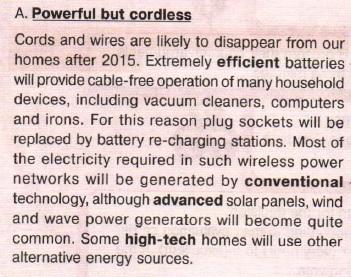
b. Read five short texts about imagining the home of the future in 2012. Which of the following technologies have already become part of our present?
|
|
|
|
|
|
|
|
|
|
|
|
|
|
|


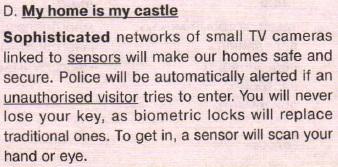
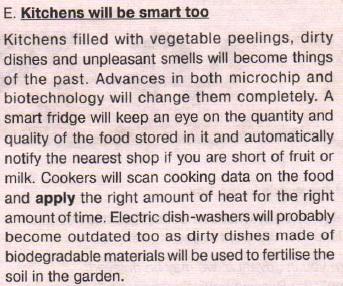
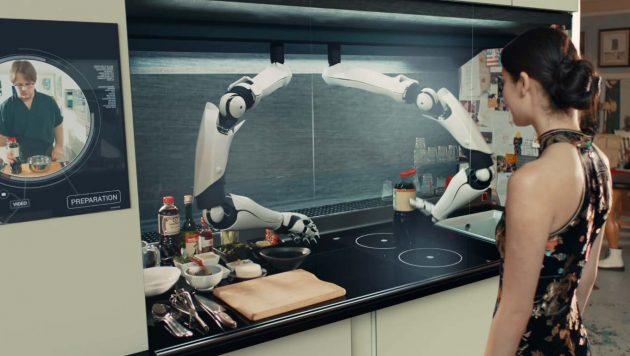


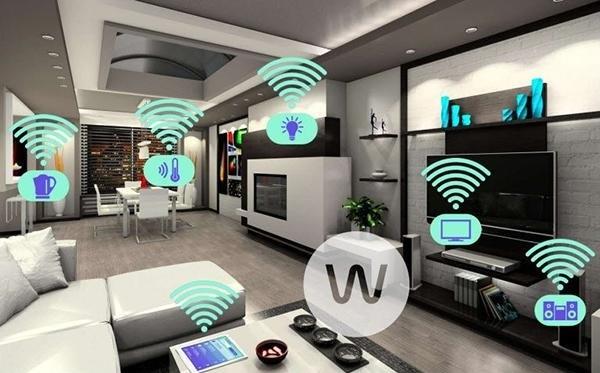
с. Write about a normal day for someone in 2030 / 2050 / 2100.
Imagine yourself living a normal day in the year 2030 / 2050 / 2100.
Think how the technology of the future may change people’s lives.
Remember that for the people of the future this fascinating technology is as common as the telephone or TV for us.
Your text could be a diary, an adventure story, or just a description of a person’s day.
4







Вебинар для учителей

Свидетельство об участии БЕСПЛАТНО!