Россия, Архангельск

СДЕЛАЙТЕ СВОИ УРОКИ ЕЩЁ ЭФФЕКТИВНЕЕ, А ЖИЗНЬ СВОБОДНЕЕ
Благодаря готовым учебным материалам для работы в классе и дистанционно
Скидки до 50 % на комплекты
только до
Готовые ключевые этапы урока всегда будут у вас под рукой
Организационный момент
Проверка знаний
Объяснение материала
Закрепление изученного
Итоги урока
Была в сети 18.05.2026 14:31
Пантелеева Людмила Геннадьевна
Преподаватель дисциплин профессионального цикла и английского языка
 56 260
 376
376 
Местоположение
Специализация
Упражнения по теме Television / Телевидение
Категория:
Английский язык
09.01.2021 19:34

Просмотр содержимого документа
«Упражнения по теме Television / Телевидение»
1. Read the text and do some exercises below.
Television is one of the most popular mass media in Britain. About 96 per cent of population have television in their homes. It is estimated that about 10 per cent of household have two or more sets. Average viewing time per person is over 17 hours a week.
Four main television channels are in operation: BBC-1. BBC-2, ITV, Channel-4.
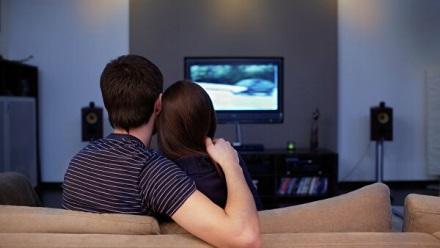 The BBC has been providing regular television broadcasts since 1936. BBC television productions come from main studios at the Television Centre in west London and other studios in various parts of London.
The first regular independent television broadcast began in London in 1955. Independent television programmes are produced at 18 studio centres throughout the country.
Television is the most popular leisure pastime in Russia also. Several television channels are in operation: “The First Channel”, “Russia Channel”, “Independent TV Channel – NTV”. Besides there are local TV channels and local commercial TV channels in big cities and republics of Russia.
Much attention is paid to foreign films, American in particular, foreign TV programmes, soap operas and political and entertainment talk shows.
The quality of television content in Britain, America and Russia varies greatly. This happens for several reasons: historical, political and economic. Britain is home to free, independent mass media, and America has inherited this trait from it. In these countries, the media are indeed “the fourth power”. We can’t say that there is absolutely no censorship on TV channels in the West. Of course, there are topics like justification of terrorism, extreme right and extreme left views, sexism and any other discrimination, which it is better not to speak out not to be ostracized. But the fact is that such statements are not prohibited at the state level, they are condemned by the society itself. There are talk shows on television, the hosts of which express completely different political views, and their statements cause extensive public debate. But it is difficult to imagine a situation in which the US Congress, President, Parliament, Prime Minister or Queen could directly intervene and prohibit something.
 In Russia, from the very beginning, television was formed under the strict control of the state, being, along with radio and newspapers, the main means of state propaganda. In the 90s, there was a short period when the TV channel’s agenda was determined by money and government intervention was minimal. But since the early 2000s, Russian television has become almost completely state-owned again. And now the political structures decide which topics can be discussed on political talk shows and which not, which people can be invited to TV shows and which cannot, etc. A significant part of the airtime on the country’s main channels is occupied by political talk shows, the hosts of which have become odious figures and heroes of Internet memes for young people: Vladimir Soloviev, Vladimir Kiselev, Petr Tolstoy, Olga Skabeeva, etc. Outwardly, such programs look like a platform for expressing diametrically opposed points of view. In fact, they are designed to broadcast state propaganda on key issues of Russian foreign policy and distract citizens from problems within the country.
A simple TV viewer in Russia, even if he wants to, will not be able to influence the situation and change the broadcast network, although he has the right to do so: state TV channels are financed from the state budget, which is made up of citizens’ taxes. And in the UK and USA it is possible. In the first case, because legally every BBC TV viewer is a shareholder of the company, paying a licence fee. Therefore, for example, when this TV channel decided to remove one of the favorite TV presenters of Top Gear, hundreds of people demanded that BBC not do this, and their demand was satisfied. In America, the situation is somewhat different: airtime for any TV channel is an opportunity to earn huge money from advertising. If the content does not satisfy the viewer, he will turn to another “service provider” and the TV channel will lose its money. TV viewers in America “vote with their wallet.”
a. Check the BBC (https://www.bbc.com/) and ABC (https://abc.com/) feed. Compare it with the Russian federal channels one. What other differences between Western and Russian TV can you name?
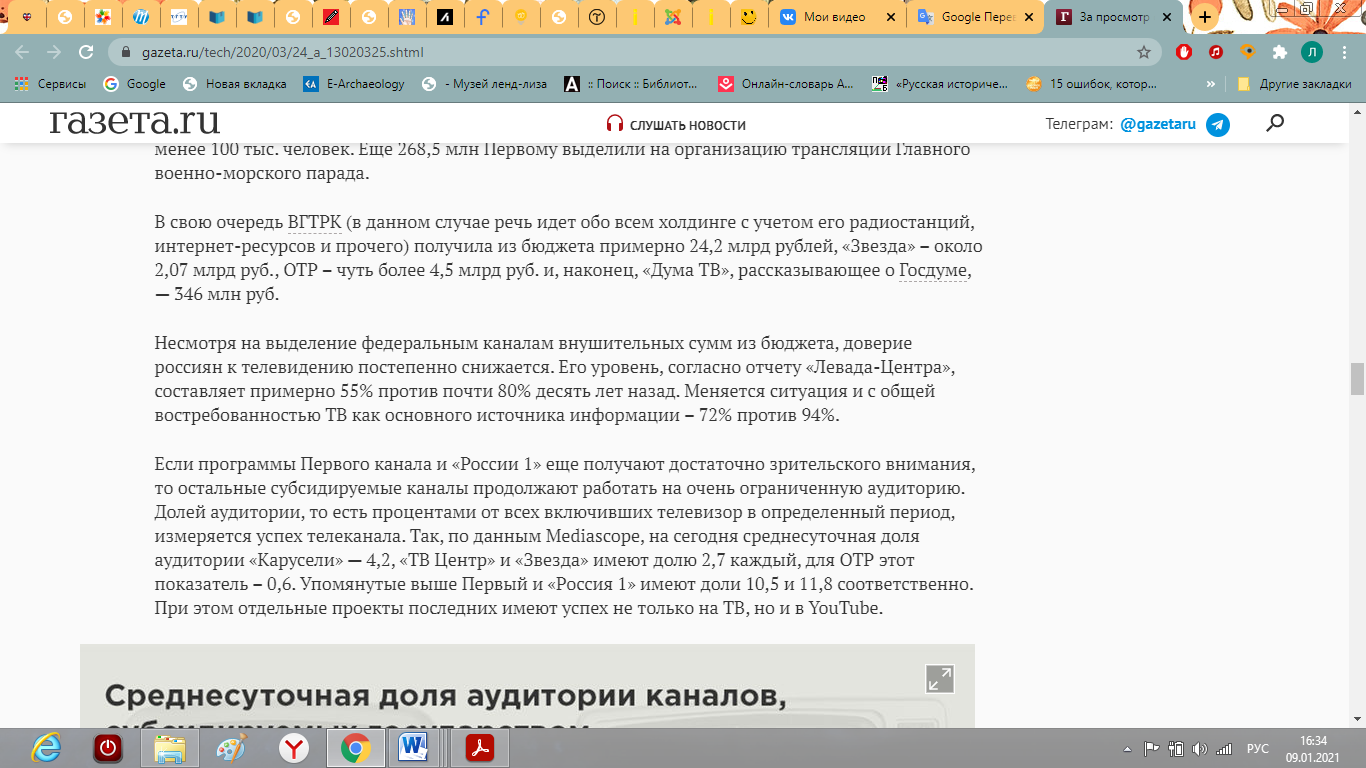
b. Comment on the data below. Why do fewer and fewer people in Russia watch TV?

2. Read the text and do some exercises below.
Television: Society’s Mirror
Television gives a sharp reflection of real life and times in America. Consider the shows that are popular as the 21st century begins. One network has earned high ratings with Survivor. On this show, healthy contestants come together from all walks of life and all parts of the country. These hardy people team up to use their physical and mental prowess to “survive” in a scenic, remote region. Team members have to fight the elements. And they also have to compete to be most favored by their group members. To remain on the team and in the “game,” they must be popular. Not surprisingly, winners are strong, clever, and ambitious. They not only have to overcome threats in nature, they must beat out their own teammates.
 Situation comedies, or sitcoms, have always mirrored the times. Early TV sitcoms, such as Leave It to Beaver, depicted two-parent, two-child families. The mother stayed at home and could usually be found in the kitchen. June Cleaver, mother of the mischievous Beaver Cleaver, is remembered for her pearl necklace and full-skirted, small-waisted dresses. Mrs. Cleaver cheerfully cleaned house, cooked dinner, and doled out wise advice. From the pilot show to the last episode, she represented the ideal mom of her day!
 Now compare June Cleaver with more modern sitcom moms. Think about Roseanne Barr, starring in Roseanne, and Peggy Bundy in Married With Children. The pearls and frilly skirts are gone! These moms have a much rougher edge. Roseanne works hard for a living, and Peggy makes a career of doing as little as possible for her family. Actually, it’s hard to find a “typical” family in the modern-day sitcoms. Many of today’s plots revolve around young adults launching careers. Others are built around single moms and dads struggling to make a new life.
Watching TV can give us insight into what the American public is doing and thinking. In no small way, TV programming mirrors the values and the social climate of the times.
a. This text was written in 2002. During this time, society has changed a lot, which, of course, is reflected in popular TV series. Here is the list of the 21st century most watched TV shows by Netflix. They are all different: both in the place of action, and in the genre, etc. But there are several key points that reflect the mood and expectations of modern society. Can you name them?
| The Game of Thrones How I Met Your Mother Clinic Grey’s Anatomy The Big Bang Theory The Walking Dead Stranger Things 13 Reasons Why Supernatural Downton Abbey Sex and the City Lost Californication The Crown Sherlock Doctor Who Desperate Housewives | Body of Proof Criminal Minds House M.D Bones Dexter Shameless True Detective American Horror Story Black Mirror Westworld The Knick The Office Breaking Bad Vikings Mad Men Parks and Recreations Misfits |
b. “Women’s” series on the TV channel “Russia 1” and “cops”series on NTV have become Internet memes for young people, but remain incredibly popular with the older generation. What moods of society do they reflect, in your opinion?
3. Work in pairs.
a. Exchange your opinions on the matter
1. Television helps us to learn more about the world and to know and see many new things.
2. Television can make us passive. We don’t have to think and our brains become lazy.
3. It has increased the popularity of sports and arts.
4. It takes time away from activities such as reading, conversation, and games.
5. It is an enjoyable way to relax.
6. It encourages us to buy things that we don’t need, and can make us unhappy with our own lives.
7. It has made us aware of our global responsibilities. In 1985, for example, 1.5 billion people in 147 countries watched TV pop concert and helped to collect more than $100 million for people in Africa.
b. Would you prefer life without television?
- One person in your pair should be for and one – against television;
- Try to persuade each other to change his / her opinion;
- Use these phrases:
formal
I can assure you that …
I urge you to …
I call upon you to …
I appeal to you to …
less formal
Please consider + Ving …
As I’m sure you’ll agree …
You can take my word for it that …
You can take it from me that …
You need to think about …
fairly informal
The truth / fact is that …
informal
Believe me, …

4. Do you think violent TV programmes should be forbidden?
Split into groups and brainstorm ideas to support your point of view. Choose one of the tasks below:
- You are a member of an online discussion group. Today’s topic is TV violence. Write an e-mail stating your viewpoint on the problem;
- Write a letter of appeal against TV violence to the television executives of Russia, in the name of all teenagers;
- Write a letter of appeal to parents explaining that TV violence doesn’t influence teenagers.
3
Вебинар для учителей

Свидетельство об участии БЕСПЛАТНО!