Россиия, Ленск

СДЕЛАЙТЕ СВОИ УРОКИ ЕЩЁ ЭФФЕКТИВНЕЕ, А ЖИЗНЬ СВОБОДНЕЕ
Благодаря готовым учебным материалам для работы в классе и дистанционно
Скидки до 50 % на комплекты
только до
Готовые ключевые этапы урока всегда будут у вас под рукой
Организационный момент
Проверка знаний
Объяснение материала
Закрепление изученного
Итоги урока
Была в сети 19.10.2019 09:05
Лазарева Татьяна Викторовна
учитель английского языка
65 лет
 212
212
 168 175
Местоположение
Специализация
Welcome to London
Категория:
Английский язык
03.05.2017 06:41

Просмотр содержимого документа
«Welcome to London»
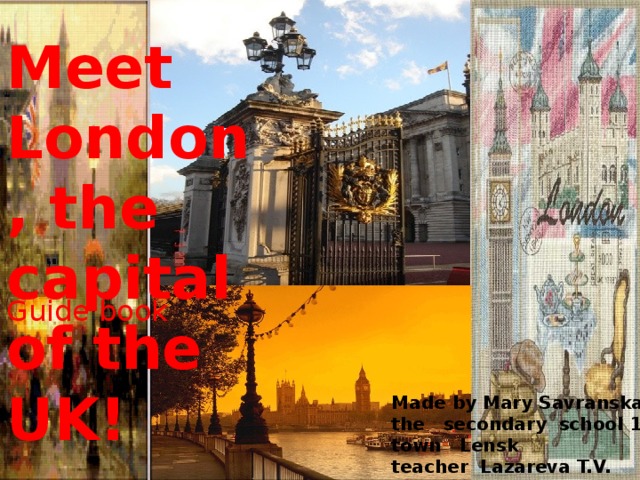
Meet London, the capital of the UK!
Guide book
Made by Mary Savranskaya the secondary school 1 town Lensk teacher Lazareva T.V.
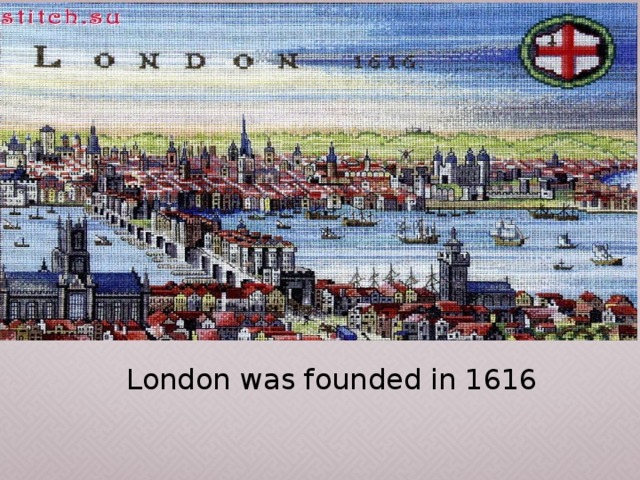
London was founded in 1616
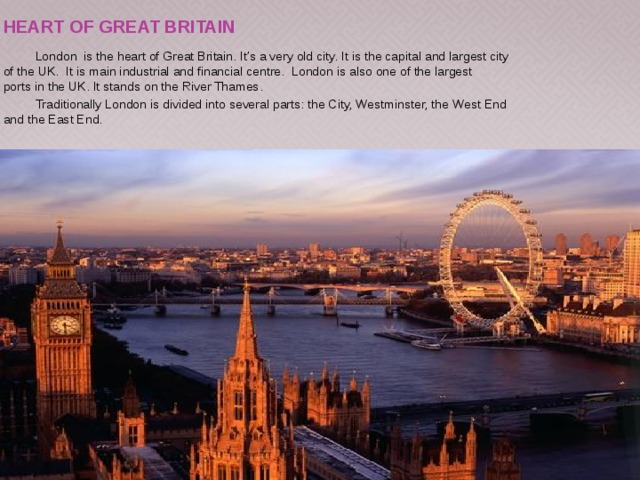
HEART OF Great Britain
London is the heart of Great Britain. It’s a very old city. It is the capital and largest city of the UK. It is main industrial and financial centre. London is also one of the largest ports in the UK. It stands on the River Thames.
Traditionally London is divided into several parts: the City, Westminster, the West End and the East End.
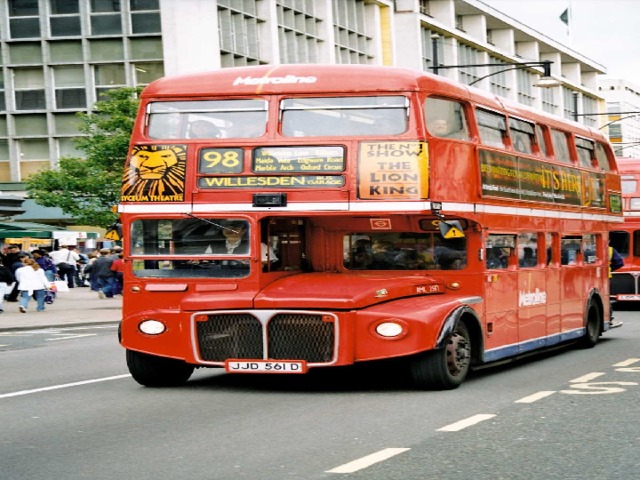
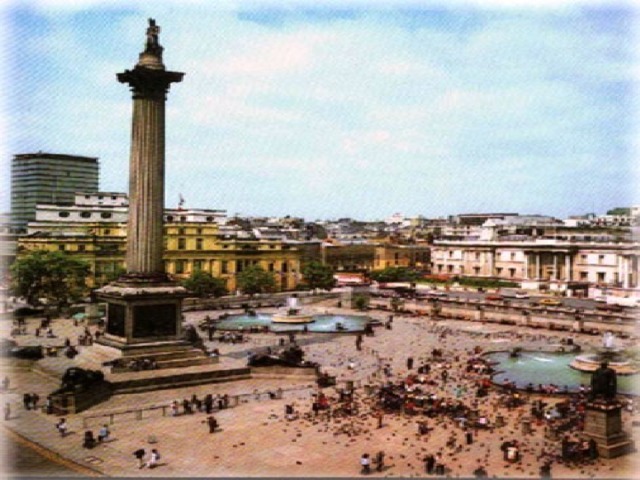
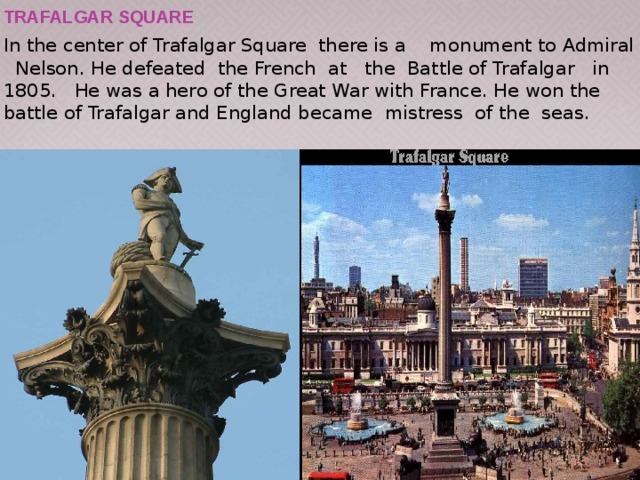
Trafalgar Square
In the center of Trafalgar Square there is a monument to Admiral Nelson. He defeated the French at the Battle of Trafalgar in 1805. He was a hero of the Great War with France. He won the battle of Trafalgar and England became mistress of the seas.
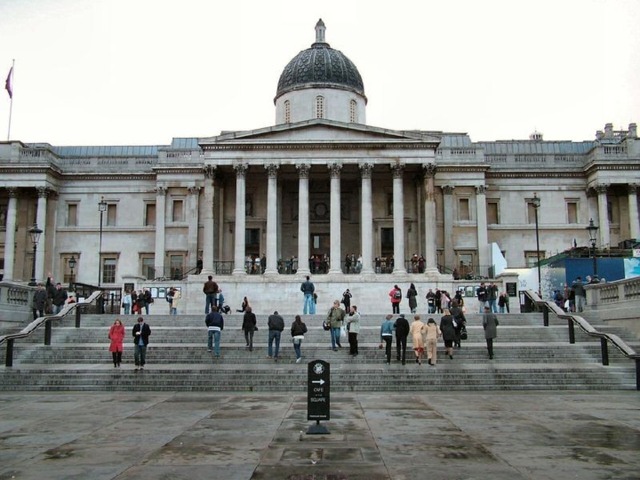
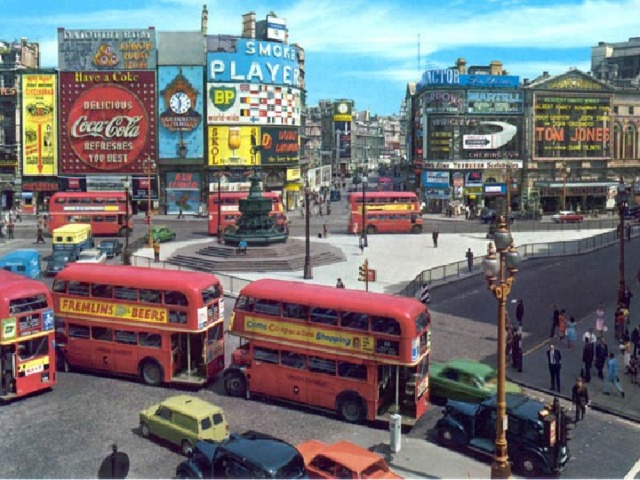
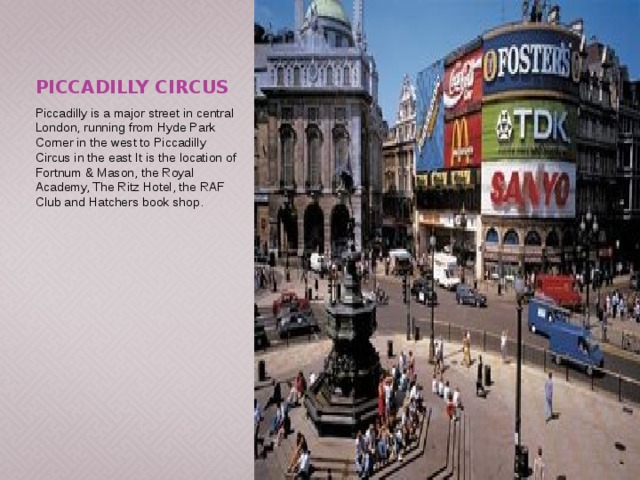
Piccadilly Circus
Piccadilly is a major street in central London, running from Hyde Park Corner in the west to Piccadilly Circus in the east It is the location of Fortnum & Mason, the Royal Academy, The Ritz Hotel, the RAF Club and Hatchers book shop.
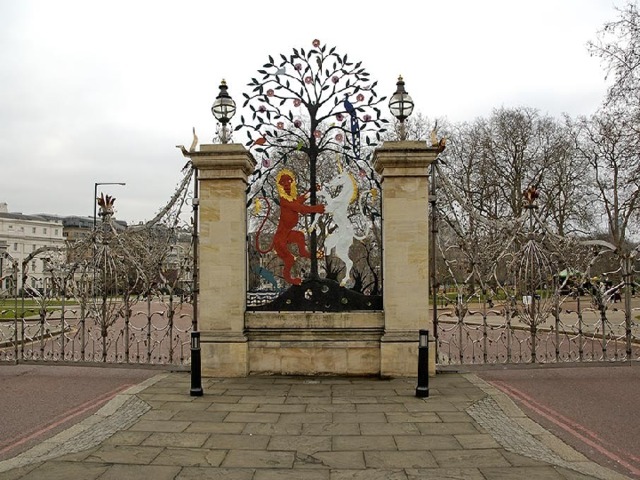
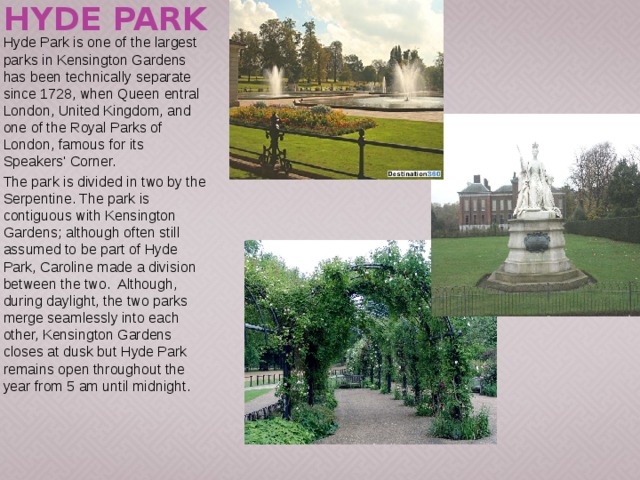
Hyde Park
Hyde Park is one of the largest parks in Kensington Gardens has been technically separate since 1728, when Queen entral London, United Kingdom, and one of the Royal Parks of London, famous for its Speakers' Corner.
The park is divided in two by the Serpentine. The park is contiguous with Kensington Gardens; although often still assumed to be part of Hyde Park, Caroline made a division between the two. Although, during daylight, the two parks merge seamlessly into each other, Kensington Gardens closes at dusk but Hyde Park remains open throughout the year from 5 am until midnight.
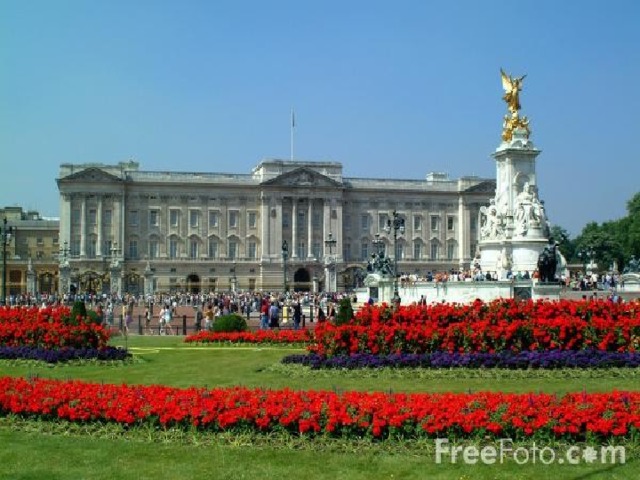
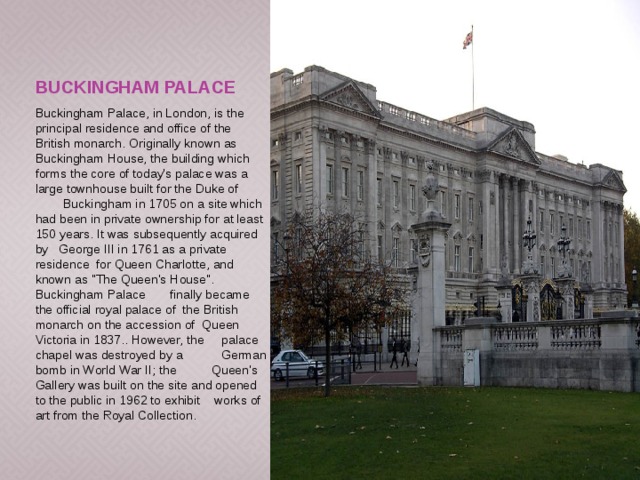
Buckingham Palace
Buckingham Palace, in London, is the principal residence and office of the British monarch. Originally known as Buckingham House, the building which forms the core of today's palace was a large townhouse built for the Duke of Buckingham in 1705 on a site which had been in private ownership for at least 150 years. It was subsequently acquired by George III in 1761 as a private residence for Queen Charlotte, and known as "The Queen's House". Buckingham Palace finally became the official royal palace of the British monarch on the accession of Queen Victoria in 1837.. However, the palace chapel was destroyed by a German bomb in World War II; the Queen's Gallery was built on the site and opened to the public in 1962 to exhibit works of art from the Royal Collection.
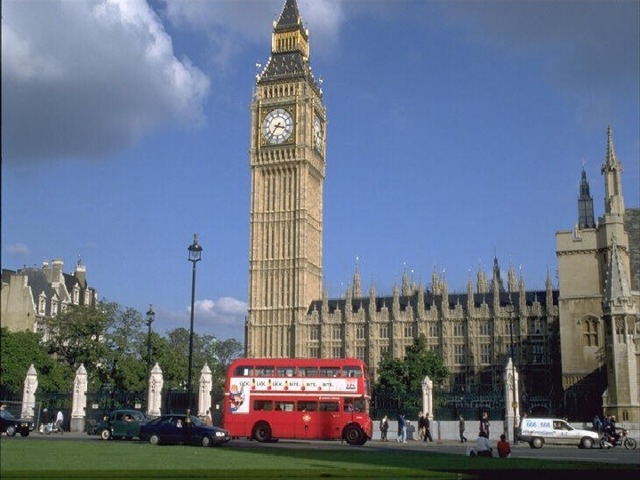
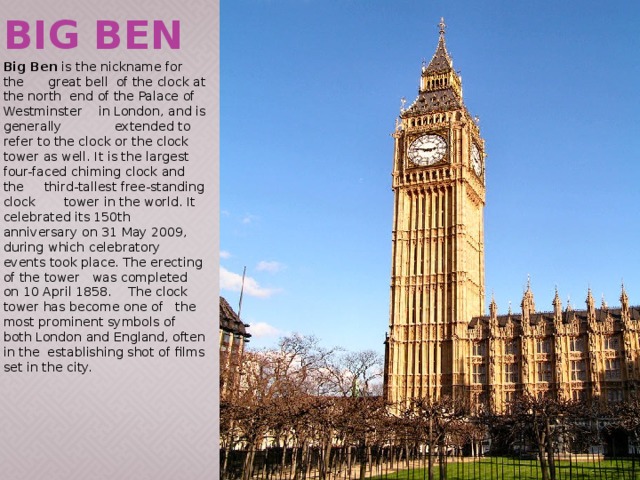
Big Ben
Big Ben is the nickname for the great bell of the clock at the north end of the Palace of Westminster in London, and is generally extended to refer to the clock or the clock tower as well. It is the largest four-faced chiming clock and the third-tallest free-standing clock tower in the world. It celebrated its 150th anniversary on 31 May 2009, during which celebratory events took place. The erecting of the tower was completed on 10 April 1858. The clock tower has become one of the most prominent symbols of both London and England, often in the establishing shot of films set in the city.
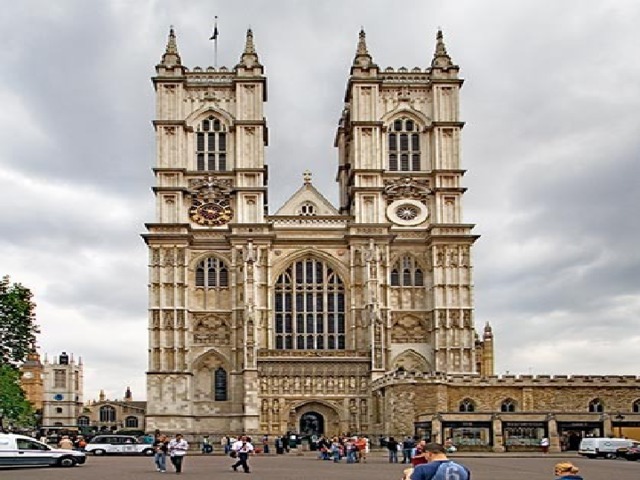
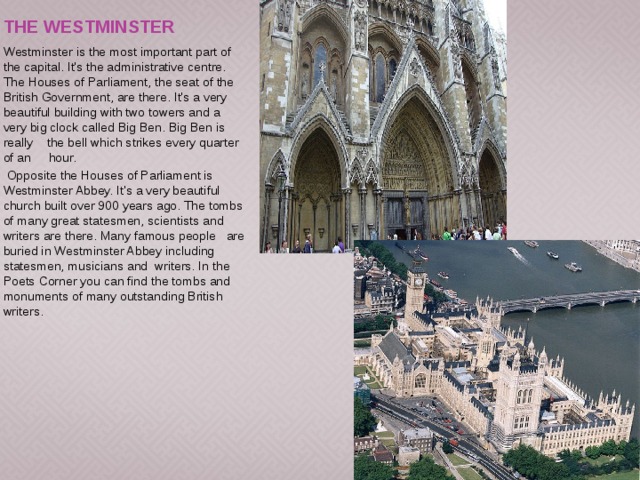
The Westminster
Westminster is the most important part of the capital. It's the administrative centre. The Houses of Parliament, the seat of the British Government, are there. It's a very beautiful building with two towers and a very big clock called Big Ben. Big Ben is really the bell which strikes every quarter of an hour.
Opposite the Houses of Parliament is Westminster Abbey. It's a very beautiful church built over 900 years ago. The tombs of many great statesmen, scientists and writers are there. Many famous people are buried in Westminster Abbey including statesmen, musicians and writers. In the Poets Corner you can find the tombs and monuments of many outstanding British writers.
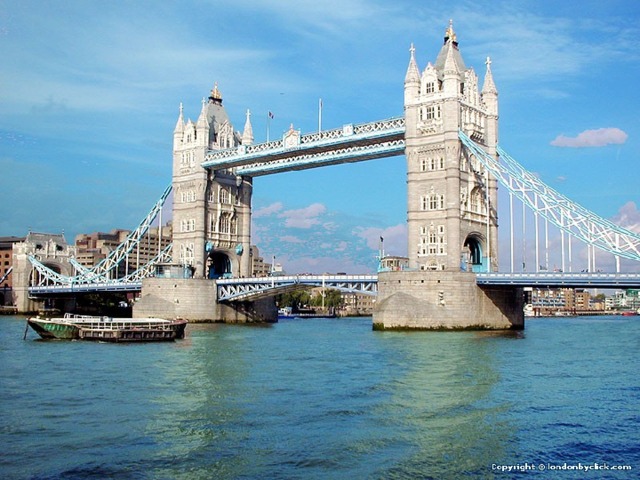
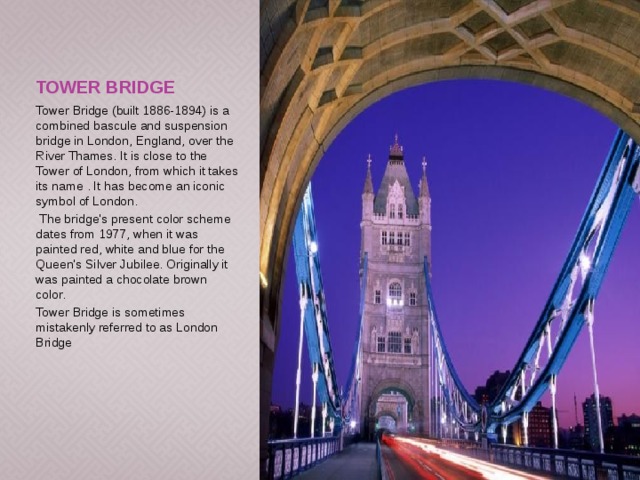
Tower Bridge
Tower Bridge (built 1886-1894) is a combined bascule and suspension bridge in London, England, over the River Thames. It is close to the Tower of London, from which it takes its name . It has become an iconic symbol of London.
The bridge's present color scheme dates from 1977, when it was painted red, white and blue for the Queen's Silver Jubilee. Originally it was painted a chocolate brown color.
Tower Bridge is sometimes mistakenly referred to as London Bridge
Tower of London
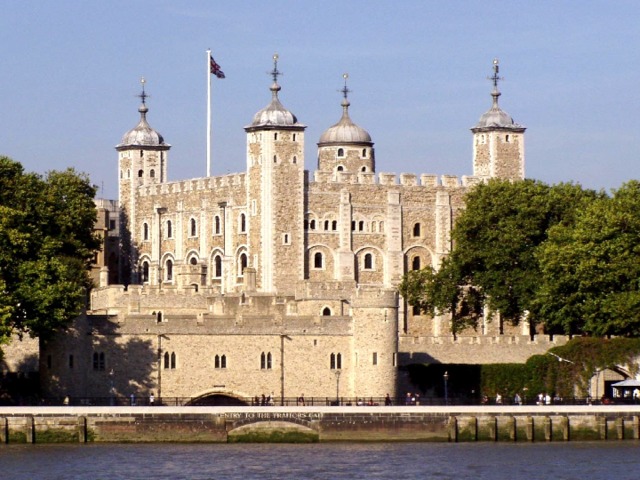
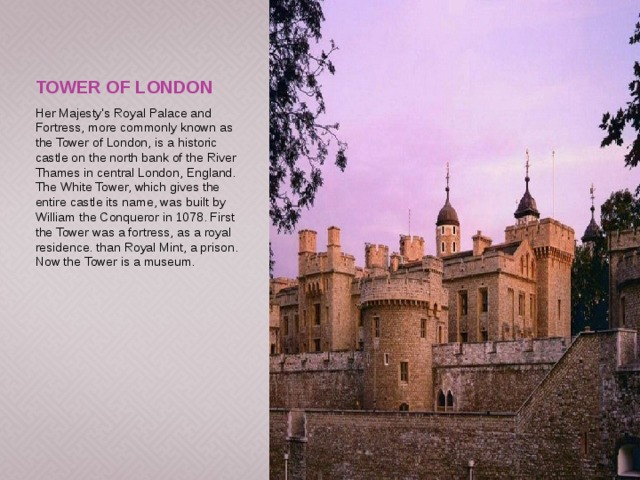
Her Majesty's Royal Palace and Fortress, more commonly known as the Tower of London, is a historic castle on the north bank of the River Thames in central London, England. The White Tower, which gives the entire castle its name, was built by William the Conqueror in 1078. First the Tower was a fortress, as a royal residence. than Royal Mint, a prison. Now the Tower is a museum.
St. Paul's Cathedral
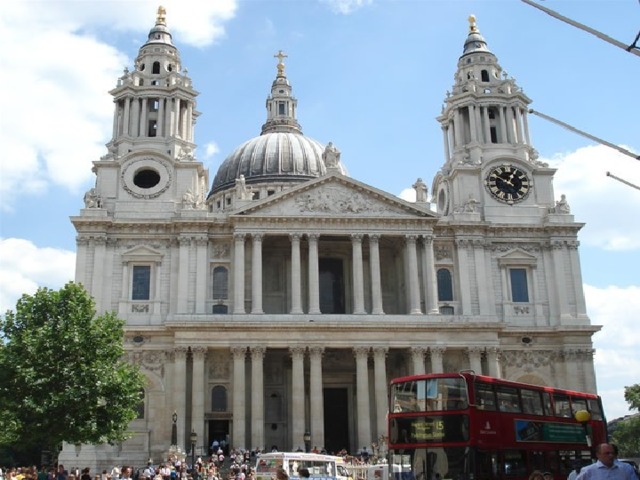
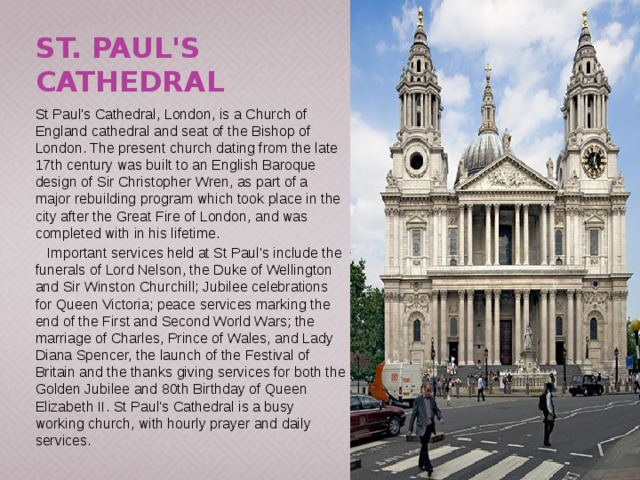
St Paul's Cathedral, London, is a Church of England cathedral and seat of the Bishop of London. The present church dating from the late 17th century was built to an English Baroque design of Sir Christopher Wren, as part of a major rebuilding program which took place in the city after the Great Fire of London, and was completed with in his lifetime.
Important services held at St Paul's include the funerals of Lord Nelson, the Duke of Wellington and Sir Winston Churchill; Jubilee celebrations for Queen Victoria; peace services marking the end of the First and Second World Wars; the marriage of Charles, Prince of Wales, and Lady Diana Spencer, the launch of the Festival of Britain and the thanks giving services for both the Golden Jubilee and 80th Birthday of Queen Elizabeth II. St Paul's Cathedral is a busy working church, with hourly prayer and daily services.
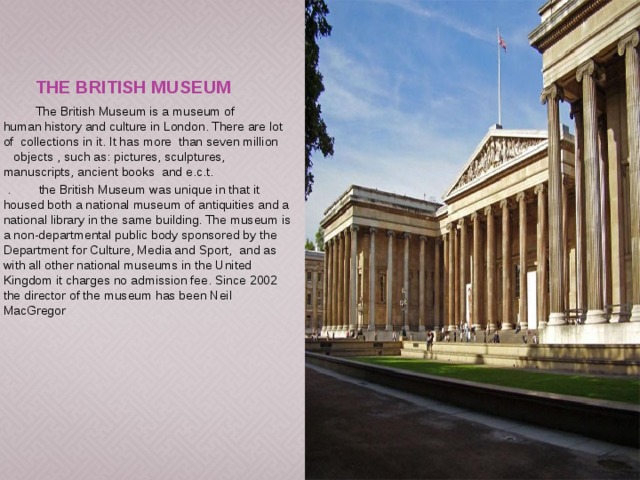
The British Museum
The British Museum is a museum of human history and culture in London. There are lot of collections in it. It has more than seven million objects , such as: pictures, sculptures, manuscripts, ancient books and e.c.t.
. the British Museum was unique in that it housed both a national museum of antiquities and a national library in the same building. The museum is a non-departmental public body sponsored by the Department for Culture, Media and Sport, and as with all other national museums in the United Kingdom it charges no admission fee. Since 2002 the director of the museum has been Neil MacGregor
THANK YOU AND GOODBYE



Вебинар для учителей

Свидетельство об участии БЕСПЛАТНО!